Choosing the right 304 Stainless Steel Strip Supplier is not just a purchasing decision. It is a long-term investment in product quality, manufacturing efficiency, and brand reputation. Across industries ranging from food processing to automotive manufacturing, 304 stainless steel strip remains one of the most widely specified materials due to its balanced performance, corrosion resistance, and cost efficiency.
At Myriad, we understand that buyers do not simply want steel. They want consistency, traceability, and a partner who understands how stainless steel behaves in real-world production. This in-depth guide explains what 304 stainless steel strip is, how it is made, where it is used, and why working with an experienced supplier like Myriad through stainlesssteelfoil makes a measurable difference.
What Is 304 Stainless Steel Strip
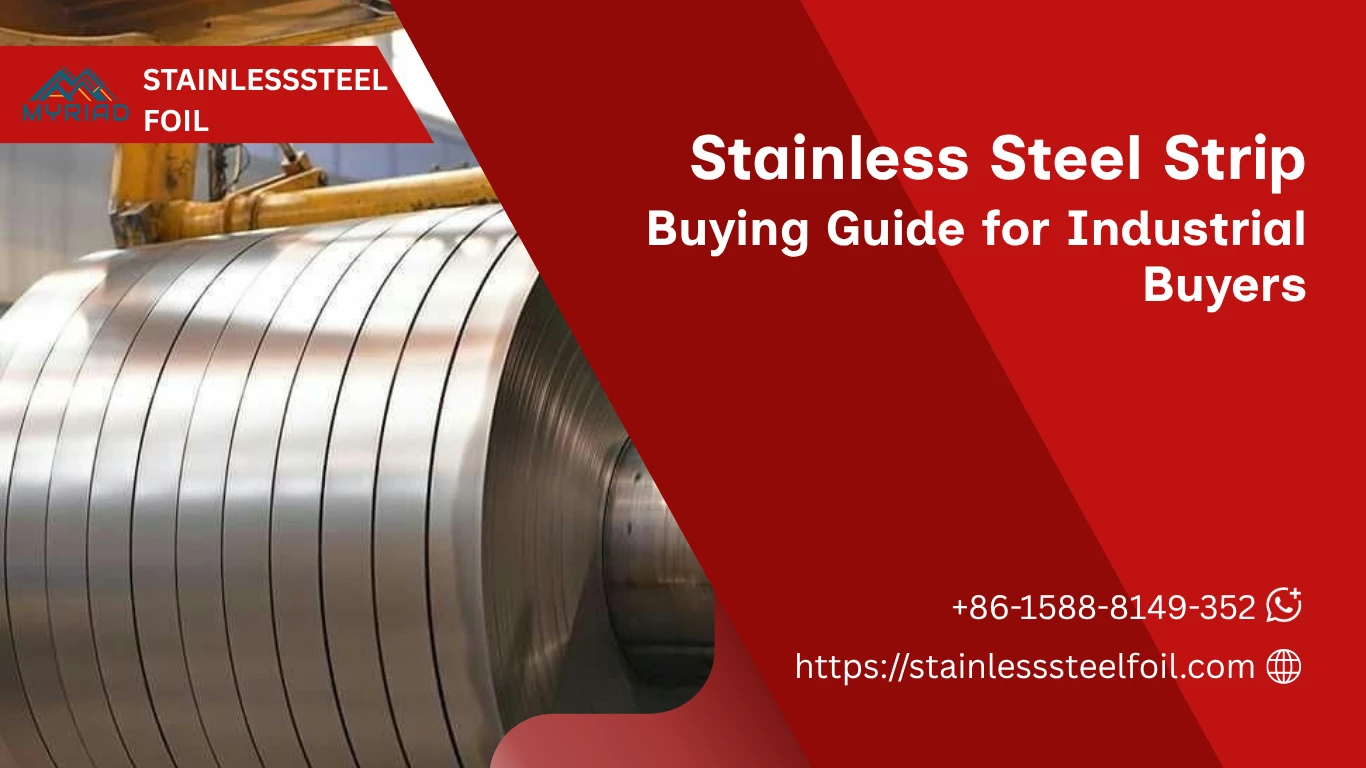
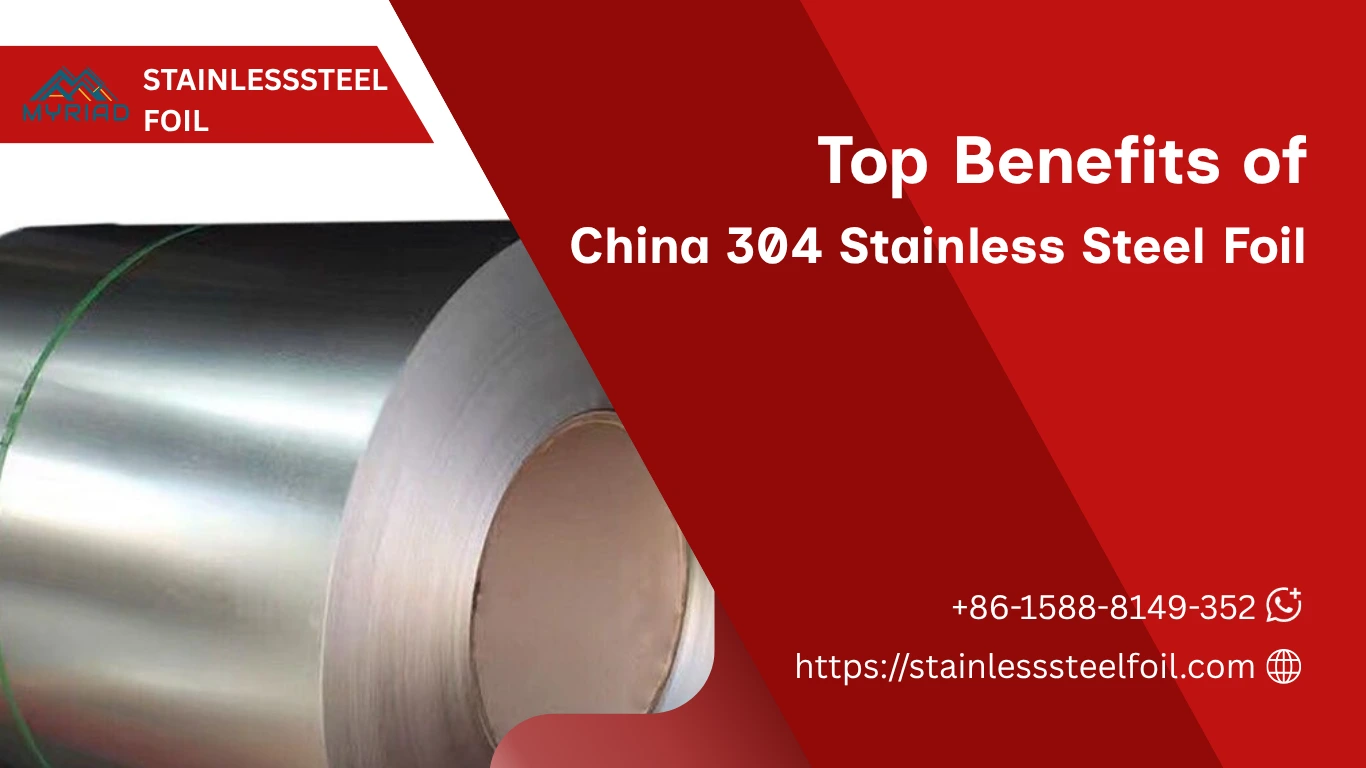
304 stainless steel strip is a flat-rolled product manufactured from austenitic stainless steel. It contains chromium and nickel as its primary alloying elements, which give the material its well-known corrosion resistance and non-magnetic structure in the annealed condition.
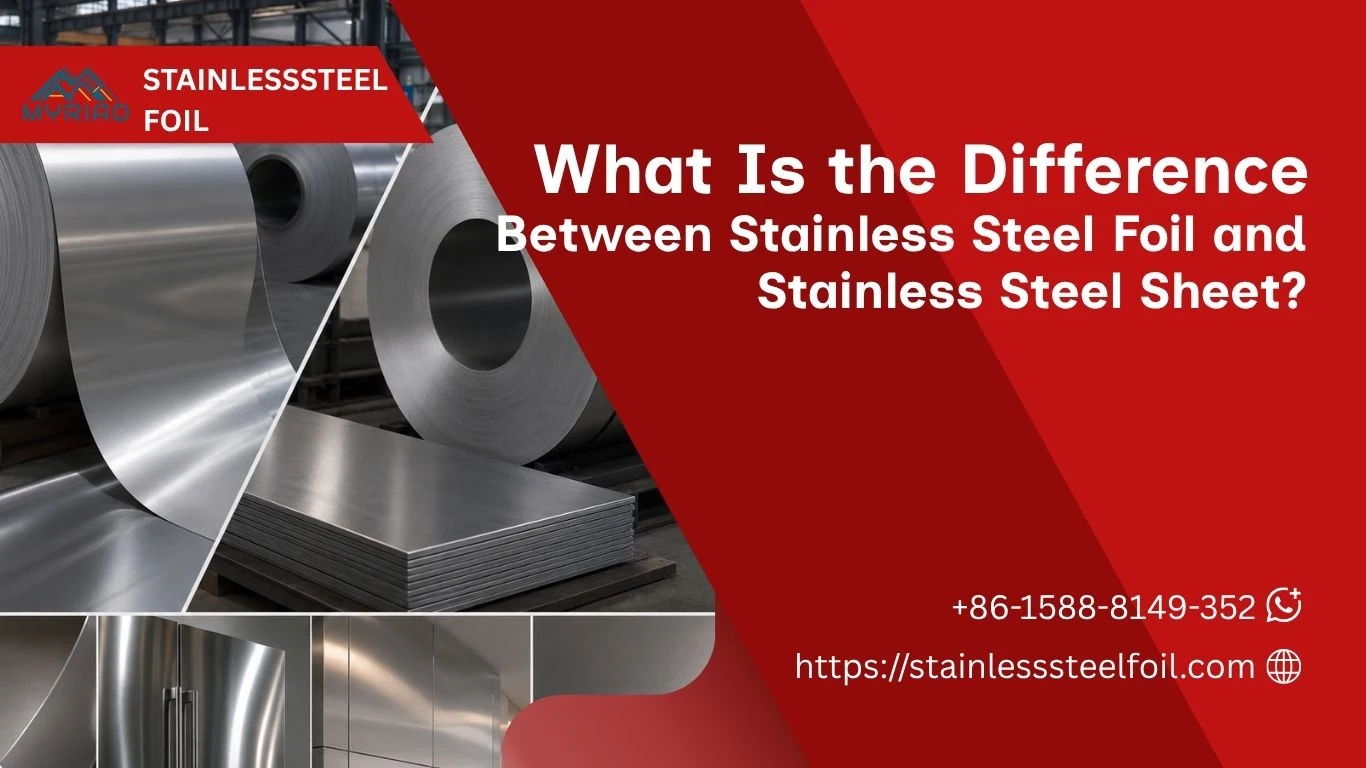
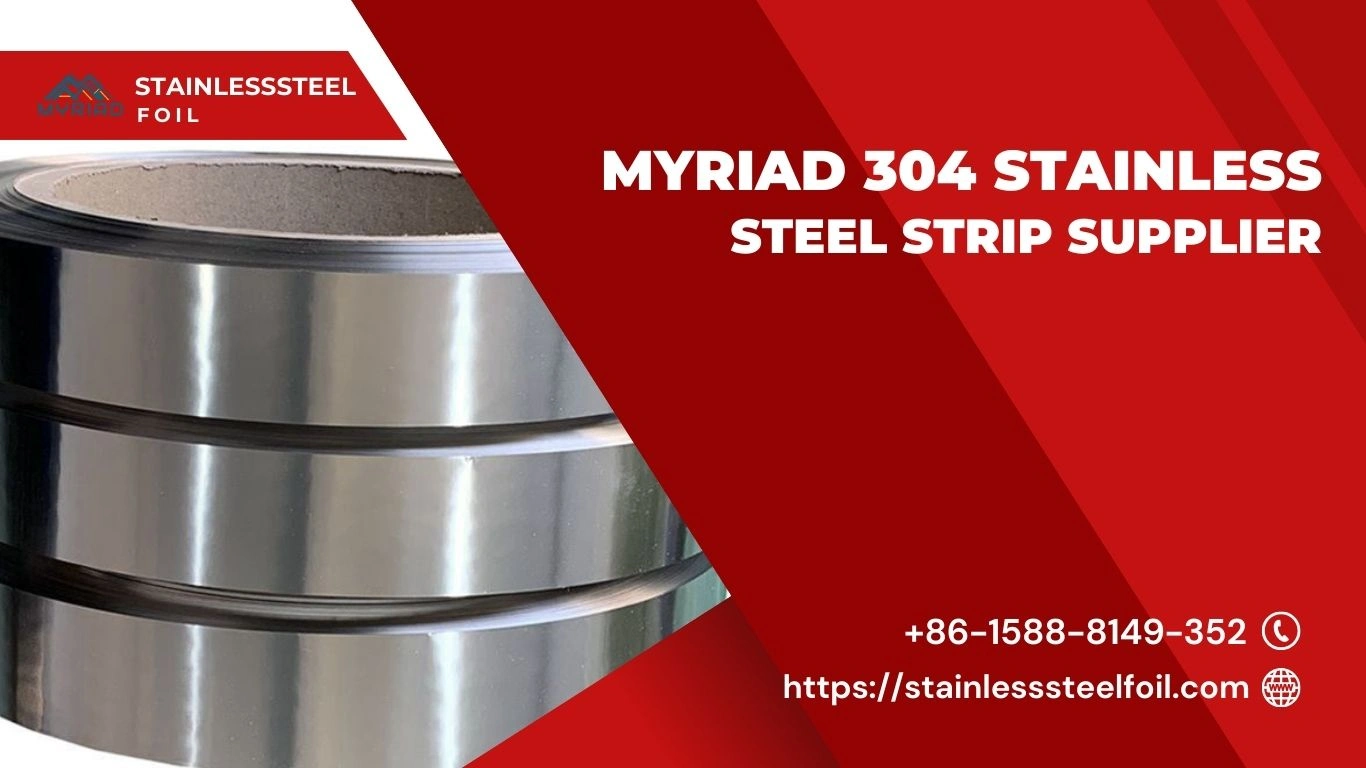
Unlike stainless steel sheet or plate, strip is produced in narrower widths and tighter thickness tolerances. This makes it ideal for precision applications such as stamping, forming, bending, and roll forming. As a leading 304 Stainless Steel Strip Supplier, Myriad delivers strip material that performs reliably during high-speed production while maintaining surface integrity.
According to widely accepted metallurgical references, including the definition of stainless steel on Wikipedia, grade 304 accounts for more than 50 percent of stainless steel consumption worldwide. This popularity is driven by its excellent balance of strength, corrosion resistance, and fabrication flexibility.
304 Stainless Steel Strip Features
One reason manufacturers consistently choose 304 stainless steel strip is its versatile feature set. The alloy resists oxidation in most indoor and mild outdoor environments. It also maintains mechanical stability across a wide temperature range.
Another important feature is formability. 304 stainless steel strip can be deep drawn, stamped, or bent without cracking when supplied in the correct temper. This makes it suitable for complex shapes used in consumer goods, appliances, and industrial components.
As an experienced 304 Stainless Steel Strip Supplier, Myriad focuses on uniform grain structure, consistent hardness, and clean edges. These details reduce tool wear and help customers achieve higher yields during fabrication.
304 Stainless Steel Strip Applications
The application range of 304 stainless steel strip is broad because the material performs well in environments where cleanliness, durability, and appearance matter.
In the food and beverage industry, 304 stainless steel strip is commonly used for processing equipment, conveyor components, and packaging machinery. Its resistance to organic acids and ease of cleaning support hygiene requirements.
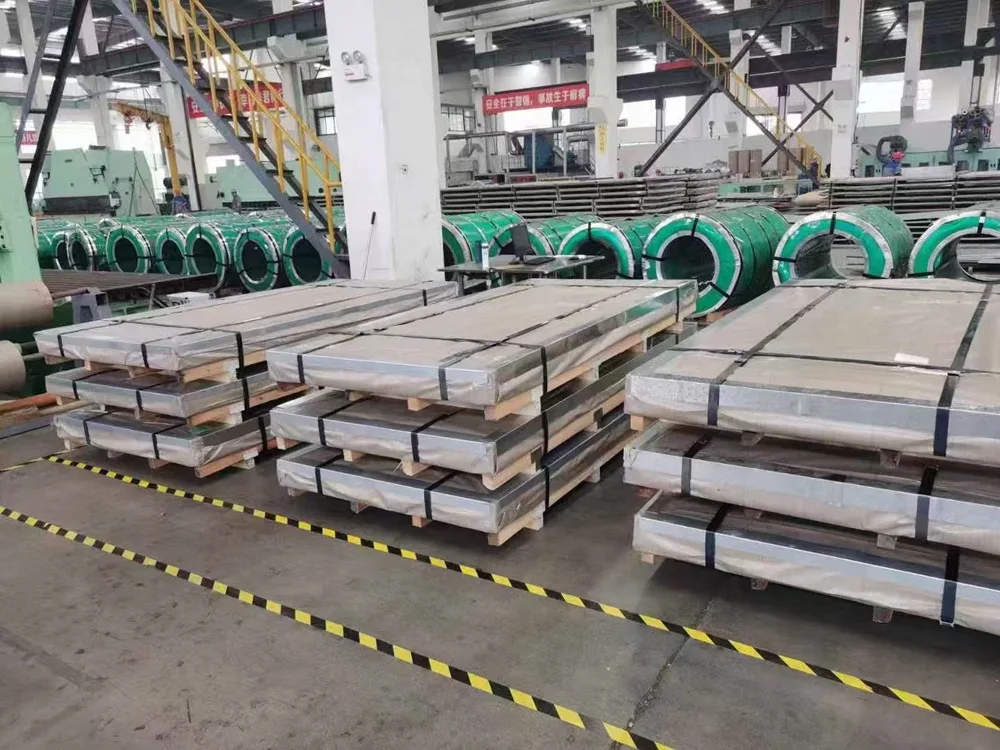
In consumer goods manufacturing, the material appears in kitchen appliances, cookware, and decorative trim. You can explore related use cases through stainless steel strips in home appliances.
Automotive and electronics manufacturers rely on 304 stainless steel strip for brackets, clips, and shielding components. Its consistent performance during stamping operations is discussed further in stainless steel strip for stamping operations.
304 Stainless Steel Strip Chemical Composition
The chemical composition of 304 stainless steel strip defines its corrosion resistance and mechanical behavior. While exact ranges may vary slightly by standard, the core elements remain consistent.
Chromium content typically ranges from 18 to 20 percent. Chromium forms a passive oxide layer that protects the steel surface from corrosion. Nickel content usually falls between 8 and 10.5 percent, stabilizing the austenitic structure and improving ductility.
Carbon levels remain low to prevent carbide precipitation during welding. Manganese and silicon appear in controlled amounts to enhance strength and processing characteristics. A reliable 304 Stainless Steel Strip Supplier ensures full material traceability and compliance with international standards such as ASTM A240 and EN 10088.
304 Stainless Steel Strip Mechanical Property
Mechanical properties determine how 304 stainless steel strip behaves under load and during fabrication. In the annealed condition, the material offers moderate tensile strength with excellent elongation.
Typical tensile strength values range around 515 MPa, while yield strength averages near 205 MPa. Elongation often exceeds 40 percent, allowing complex forming without fracture.
Work hardening is another defining characteristic. As the strip undergoes forming, its strength increases. This feature benefits applications requiring final-part rigidity without additional heat treatment. Myriad, as a dedicated 304 Stainless Steel Strip Supplier, offers multiple tempers to match specific forming and strength requirements.
304 Stainless Steel Strip Production Tolerance
Production tolerance plays a critical role in downstream manufacturing efficiency. Tight thickness and width control reduce scrap rates and ensure predictable forming behavior.
Modern rolling mills achieve thickness tolerances measured in microns. Edge camber, flatness, and surface consistency are also carefully controlled. These parameters matter most in automated production lines where even small deviations cause feeding issues or tool misalignment.
At Myriad, production tolerance aligns with global customer expectations. Detailed tolerance guidance can also be found in the broader stainless steel coil production process guide, which explains how strip quality begins at the coil level.
Surface Finishes for 304 Stainless Steel Strip
Surface finish affects appearance, corrosion resistance, and cleanability. Common finishes for 304 stainless steel strip include 2B, BA, and polished finishes.
The 2B finish offers a smooth, matte appearance suitable for most industrial applications. BA, or bright annealed, provides a reflective surface often used in decorative or visible components.
Polished finishes improve aesthetic appeal and reduce surface roughness, which can enhance corrosion resistance in certain environments. Myriad provides multiple finish options, supported by technical insight shared in 304 stainless steel strip surface finish options.
304 Stainless Steel Strip Edges Options
Edge condition is often overlooked, yet it significantly impacts processing safety and performance. Common edge options include slit edge, deburred edge, and rounded edge.
Slit edges suit general applications where minor burrs do not affect function. Deburred and rounded edges reduce handling risk and prevent stress concentration during forming.
As a professional 304 Stainless Steel Strip Supplier, Myriad matches edge condition to customer tooling and application requirements, ensuring smooth integration into production lines.
304 Stainless Steel Strip Hardness
Hardness varies based on temper and processing history. Annealed 304 stainless steel strip remains relatively soft, supporting deep drawing and complex forming.
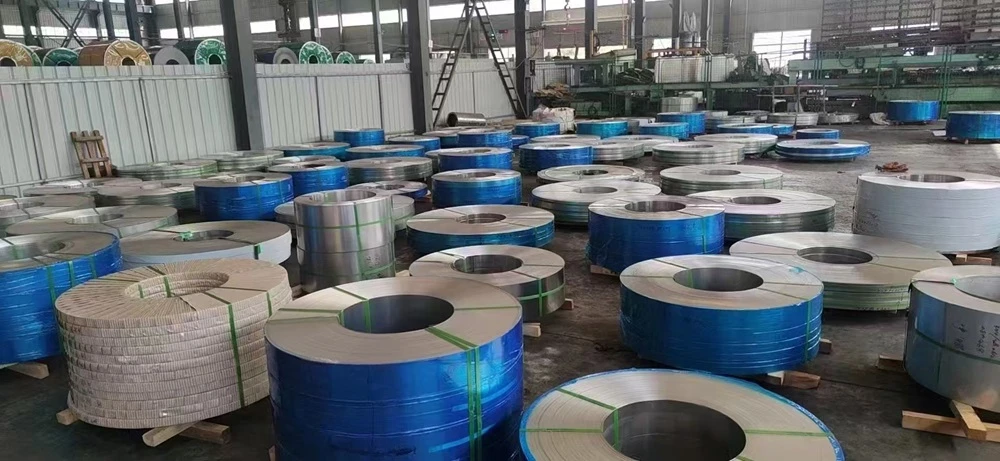
Cold-rolled tempers increase hardness and tensile strength. This option suits applications where rigidity and wear resistance matter more than extreme formability.
By offering a range of hardness levels, Myriad helps customers optimize material selection without overengineering or unnecessary cost.
What Are the Advantages of Using 304 Stainless Steel Strips
The advantages of 304 stainless steel strip extend beyond corrosion resistance. The alloy balances performance and cost better than many alternative grades.
Its recyclability supports sustainability goals, while its long service life reduces maintenance and replacement costs. Fabricators appreciate its predictable forming behavior, which improves throughput and reduces tooling damage.
Working with an established 304 Stainless Steel Strip Supplier further amplifies these benefits through consistent quality, technical support, and dependable logistics.
How 304 Stainless Steel Strips Are Made
The production of 304 stainless steel strip begins with melting raw materials in electric arc or induction furnaces. After refining, the steel is cast into slabs and hot rolled into coils.
These coils undergo cold rolling to achieve precise thickness and surface finish. Annealing restores ductility, while pickling removes surface oxides. Final slitting produces strip widths tailored to customer needs.
An overview of how stainless steel integrates into consumer manufacturing appears in how stainless steel coil is used in the production of consumer goods.
Why Choose Myriad as Your 304 Stainless Steel Strip Supplier
Selecting Myriad means choosing reliability. Through stainlesssteelfoil products, customers access a wide range of 304 stainless steel strip specifications backed by quality assurance and responsive service.
Our technical team supports material selection, while efficient logistics ensure timely delivery. For project discussions or quotations, customers can connect directly via the contact us page.
Summary
304 stainless steel strips are a versatile, durable, and reliable material suitable for a wide range of industries. Their excellent corrosion resistance, mechanical strength, and aesthetic versatility make them ideal for applications from home appliances to industrial equipment. Choosing a reputable 304 Stainless Steel Strip Supplier ensures high-quality material, precise tolerances, and excellent customer support. Explore our products and blog to learn more about stainless steel solutions for your next project.
FAQs
What makes Myriad a reliable 304 Stainless Steel Strip Supplier
Myriad combines strict quality control, material traceability, and application-focused support, making it a trusted 304 Stainless Steel Strip Supplier for diverse industries.
Is 304 stainless steel strip suitable for food-grade applications
Yes, when sourced from a certified 304 Stainless Steel Strip Supplier, the material meets hygiene and corrosion resistance requirements for food processing environments.
Can I order custom widths and finishes from a 304 Stainless Steel Strip Supplier
A professional 304 Stainless Steel Strip Supplier like Myriad offers custom slitting, surface finishes, and edge options to match specific production needs.
How does 304 stainless steel strip compare to other grades
Compared to alternatives, 304 offers better formability and cost balance, especially when supplied by an experienced 304 Stainless Steel Strip Supplier.
Does Myriad support bulk and long-term supply contracts
Yes, Myriad works closely with customers to provide stable, long-term supply as a dedicated 304 Stainless Steel Strip Supplier.