
Stainless steel price depends on alloy grade, raw materials, product specifications, processing, order size and delivery terms. Track several signals together: nickel prices, stainless steel futures, mill alloy surcharges and regional finished-product assessments. None is a universal supplier quote. To compare countries, match the grade and product, align dates and currencies, and calculate delivered cost on the same tax and freight basis.
“What is the price of stainless steel?” is a useful starting question, but it needs a product definition. A scrap price, a standard coil assessment and a precision-foil quotation describe different purchases. Dividing each by kilograms does not make them equivalent.
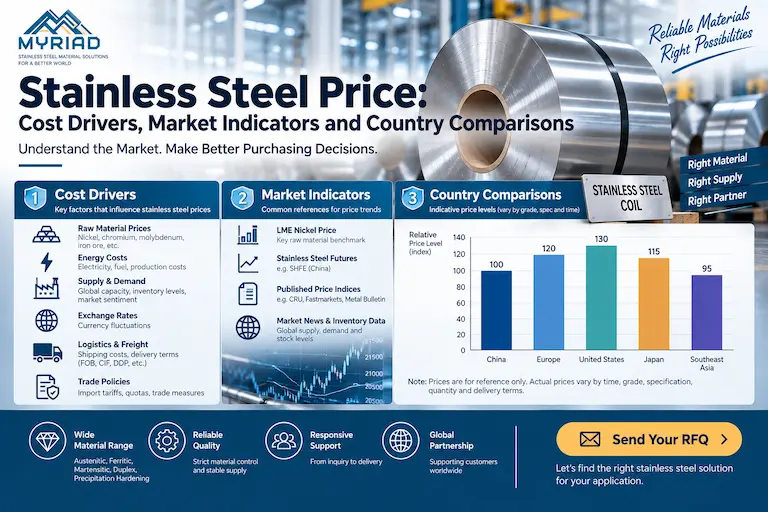
For buyers sourcing through Myriad, market information can support budgeting and quotation discussions. The most useful approach separates the movement of the wider market from the cost of meeting a particular specification. This guide explains what drives the stainless steel rate, where to find public market signals, and how to compare international offers without mistaking an index for a transaction price.
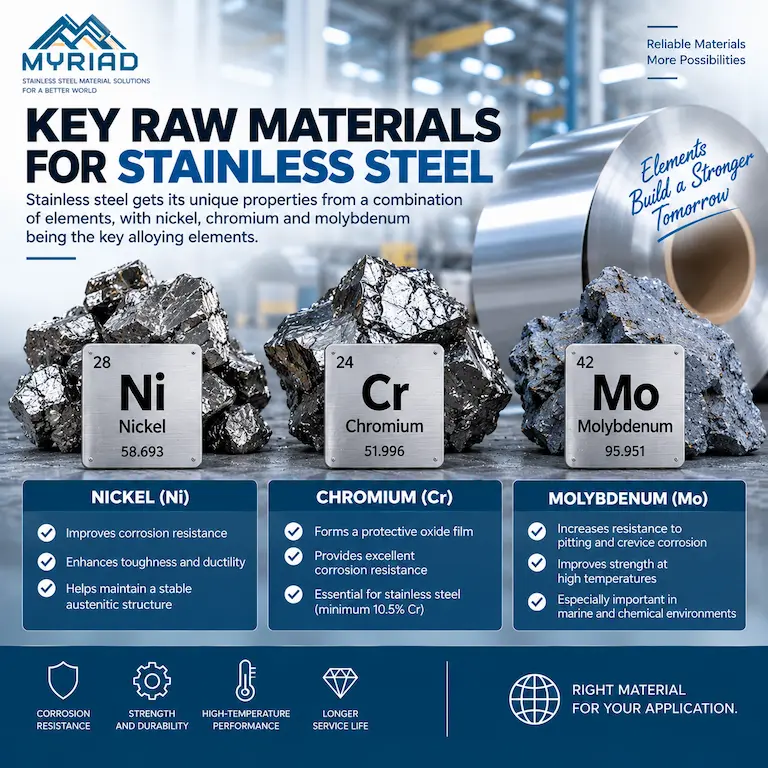
Stainless steel prices reflect both material economics and the work needed to deliver a usable product. Grade determines the alloy inputs; dimensions, condition and finish determine processing requirements. Market balance and commercial terms then influence the negotiated price. A change in one factor does not necessarily move the entire quotation by the same percentage.
Outokumpu describes its stainless pricing as base price, extras and alloy surcharge. Its published explanation identifies special thicknesses, surfaces and packaging as examples of extras; alloy surcharges transmit changes in alloy costs and commonly use a prior calculation period. This explains why a monthly surcharge may lag a daily commodity move. Outokumpu: Surcharges.
Treat that structure as a documented pricing model, not a compulsory formula used by every supplier. Some offers are all-in prices. Ask what is already included before adding a surcharge yourself.
Standard wide coil and precision stainless steel foil require separate comparisons. For foil or narrow strip, ask how thickness tolerance, width, temper, surface condition, edge requirements and inspection affect the offer. Do not infer a universal percentage premium for thinner or harder material.
Order quantity, coil configuration, packaging and required delivery date also belong in the RFQ. A supplier offering material from stock may have a different cost structure from one arranging a dedicated production lot. “Mill direct” alone does not prove the lowest delivered cost.
Available stock, mill lead times and buyers’ order activity help explain differences between raw-material movements and actual offers. Track these alongside prices rather than treating a single exchange chart as a complete market explanation.
Currency conversion, transport, insurance and applicable import charges can change the buyer’s final cost. Request destination-specific calculations using the actual product classification and origin. This guide does not assume a universal tariff or tax rate.
Use a small group of indicators with different roles. Raw-material references show input pressure; stainless futures show a standardised contract market; surcharges show a producer’s alloy-cost adjustment; spot assessments describe a defined physical market. “Publicly described” does not always mean that live prices or downloadable histories are free.
Source and indicator | What it helps you observe | Access and main limitation |
LME Nickel | Nickel market direction | Public reports and delayed information; live/history access can require licensing. Not a stainless finished-product price |
World Bank Pink Sheet | Monthly commodity history, including nickel | Public data downloads; useful for longer trends, not daily supplier pricing |
SHFE stainless steel futures | Chinese standard-coil futures market | Public contract information and market reports; contract month and delivery specification matter |
Mill alloy surcharges | Grade-specific alloy adjustments | Public producer reports; surcharge is only a price component |
Regional price assessments | Defined finished-product markets | Public descriptions or samples; current/full series often require subscriptions |
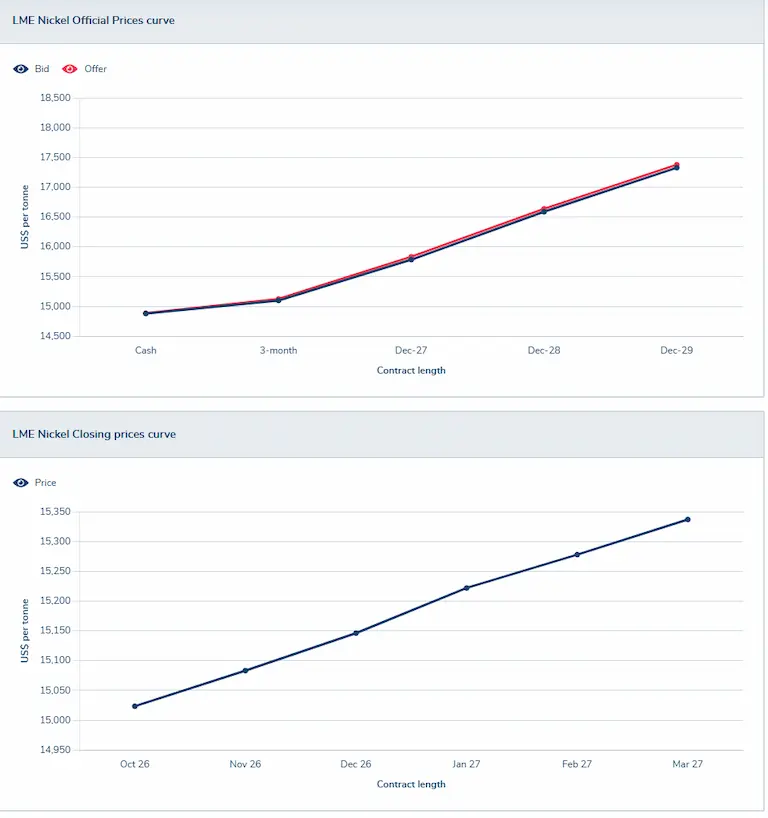
The London Metal Exchange nickel page provides routes to reference prices and market-data services. Choose a consistent series, such as cash or three-month nickel, and record its date and unit. LME nickel is a nickel-metal reference, not a nickel-ore quotation, a stainless scrap price or a finished-coil offer.
The World Bank Commodity Markets page offers Pink Sheet monthly and annual data. It is a practical starting point for a longer historical chart. Select the nickel series rather than treating a broad metals index as a stainless steel index.
Neither series measures every input used by every stainless producer. Use nickel as one explanatory signal, and check whether local finished-product prices confirm the direction.
SHFE identifies its standard deliverable as cold-rolled austenitic 304 coil, 2.0 mm thick and 1,219 mm wide, with a 2B finish and trimmed edges. Its stainless steel futures page links contract rules and market information.
This is a useful Chinese-market reference, but it is not a price for 316, custom foil or an export shipment. Record the contract month and whether the observation is a settlement or another price field. Changing between contract months can create a misleading apparent jump in a chart.
Use the relevant Europe or Americas report from Outokumpu, or the applicable Aperam surcharge report. Match the grade, currency and effective month. Do not add an alloy surcharge again if the finished-product price already includes it.
For physical-market context, MEPS World Stainless Steel Prices publishes product-specific information and subscription data. Its world series averages Europe, US and Asia prices after currency conversion. A world average can help describe a broad trend, but it cannot establish the price in a particular country or at a particular port.
Start with a country-specific physical-market assessment where available, then verify it against comparable local quotations. Use regional averages only as context. The following sources offer practical starting points; check the product specification, publication date and access terms before using any number in a purchasing comparison.
| Market | Where to look | What to check before comparing |
|---|---|---|
| China | SHFE stainless futures; SMM stainless assessments; BigMint China listings | Futures versus spot; city, mill/brand, grade, finish, RMB unit and tax basis |
| United States | Platts or Fastmarkets stainless assessments; mill Americas surcharges | Grade, sheet/coil specification, ex-works or mill basis, $/cwt versus $/lb, surcharge inclusion |
| Germany, Italy and other European markets | MEPS Europe data; Outokumpu or Aperam surcharges; local supplier offers | Regional average versus country observation; EUR unit, delivery and effective month |
| India | BigMint stainless price listings and local mill/service-centre quotations | Domestic versus import/export series, location, INR unit, GST treatment and product form |
| Japan and South Korea | Local mill/distributor quotations, supported by MEPS Asia context | Require country-specific offers; an Asia average is not a Japanese or Korean domestic price |
| Other import markets | Local quotations and UN Comtrade trade statistics | Historical trade unit value is not a current domestic spot price |
China: SMM publishes a stainless steel price methodology through its methodology directory. Use its current methodology and the individual assessment description to establish the basis before comparing an assessment with a supplier quote. Full price histories or reports may require an account or subscription.
United States: Platts’ US stainless assessment launch notice defines 304 and 316 cold-rolled sheet assessments with minimum 20-short-ton parcels and an ex-works domestic-mill basis. This illustrates why a bulk-market assessment may not match a small distributor order. Confirm the current specification before purchasing data. Fastmarkets also lists defined stainless series in its metals price directory.
Europe and Asia: MEPS Europe and MEPS Asia provide regional series with monthly subscription updates. If you need a German, Italian, Japanese or Korean number, ask the provider whether that exact country/product series is included. Do not relabel a regional average as a national price.
India: BigMint’s stainless listings distinguish products such as Mumbai 304/316 hot- and cold-rolled material from stainless scrap and export bar. Public descriptions help identify the appropriate series; numeric values may be gated. Avoid using the more visible scrap quote as a substitute for finished-coil cost.
UN Comtrade provides trade value and net weight by reporting country, partner, product and period. Where the relevant fields are valid, value divided by net weight produces an average trade unit value in USD/kg. Use a suitably narrow commodity category and consistent trade flow.
This is a historical cross-check, not a spot-price substitute: product mix, reporting delays and missing or estimated weights can distort comparisons. Imports and exports may also use different valuation bases. Consult UN Comtrade’s valuation guidance before interpreting a gap as a supplier-price advantage.

Convert the weight unit first, then align currency, product and commercial scope. A stainless steel price comparison is meaningful only when these conditions match. “Cost of stainless steel per kg” can describe raw stock, delivered material or usable output; label which one you are calculating.
| Original unit | Conversion to the same currency per kg | Important distinction |
|---|---|---|
| Per metric tonne | Divide by 1,000 | A metric tonne is 1,000 kg |
| Per pound | Multiply by 2.20462262 | A pound is 0.45359237 kg |
| Per US short ton | Divide by 907.18474 | A short ton is 2,000 lb, not a metric tonne |
| Per US hundredweight (cwt) | Divide by 45.359237 | US cwt is 100 lb; confirm the convention |
To convert a stainless steel price per kg into a stainless steel price per pound, multiply by 0.45359237. Convert currencies using the same dated exchange-rate convention for both offers. The pound-to-kilogram factor is documented by NIST.
Illustrative conversion, not a market quote: USD 3.00/kg equals approximately USD 1.361/lb and USD 3,000/metric tonne. The arithmetic changes the unit, not the underlying price or included services.
For a purchasing comparison, calculate:
Comparable delivered cost per kg = total included purchase and destination costs ÷ accepted net kilograms.
Add only costs not already included in the quotation. Separate recoverable taxes from non-recoverable cost where applicable, and compare both cash outlay and economic cost if necessary.
Illustrative landed-cost comparison: Offer A is USD 3.00/kg plus USD 0.30/kg of otherwise excluded delivery costs. Offer B is USD 3.20/kg delivered. If specifications, quantities, taxes and all remaining charges match, B is USD 0.10/kg lower. These invented figures demonstrate the comparison method; they do not describe any current country price.
For fabrication, also consider usable yield. A lower incoming stainless price per kg may not be cheaper per accepted component if it produces more rejected or unusable material. Keep that production calculation separate from the supplier’s material unit price.
Build a repeatable comparison rather than reacting to one headline. Follow the same product definition and date convention, compare raw-material and finished-market movements, and then request updated offers. The result should be a documented explanation of price pressure, not a promise that the next quote will rise or fall.
A practical weekly review can record:
Illustrative interpretation: Nickel rises while the local 304 assessment remains flat. Record “higher nickel input pressure; finished-market confirmation absent.” Ask suppliers about pricing periods and inventory before assuming an immediate increase. If several relevant series and like-for-like offers move together, the direction is better supported, but it remains specific to that product and market.
For a Myriad quotation, provide grade, thickness, width, tolerances, temper, finish, quantity, destination and requested delivery terms. For 304 stainless steel foil, include the required coil or sheet format and inspection documents. Confirm quote validity and what the offered price includes before comparing it with market indicators.

There is no single price for all stainless steel. Obtain a dated assessment or quotation for a defined grade, product, market and quantity. Check the data’s own timestamp rather than assuming a search result shows today’s rate.
In a purchasing enquiry, the terms often describe the quoted unit price. “Stainless steel per kg rate” still needs a currency, specification, date and delivery basis. It should also identify whether tax and processing are included.
No. Nickel is one input signal, while grade, other alloy inputs, processing, supply and commercial terms affect the offer. A percentage change in nickel does not justify applying the same percentage change to the entire stainless quotation.
Start with SHFE public reports, World Bank commodity data and published mill surcharges. These cover different parts of the pricing picture. Detailed country-specific finished-product series and extensive histories often require subscriptions.
A meaningful answer requires comparable, dated offers delivered to the same destination. Regional averages and supplier headline prices cannot establish a universal cheapest country. Compare the full specification, usable quantity, delivery cost and commercial terms.