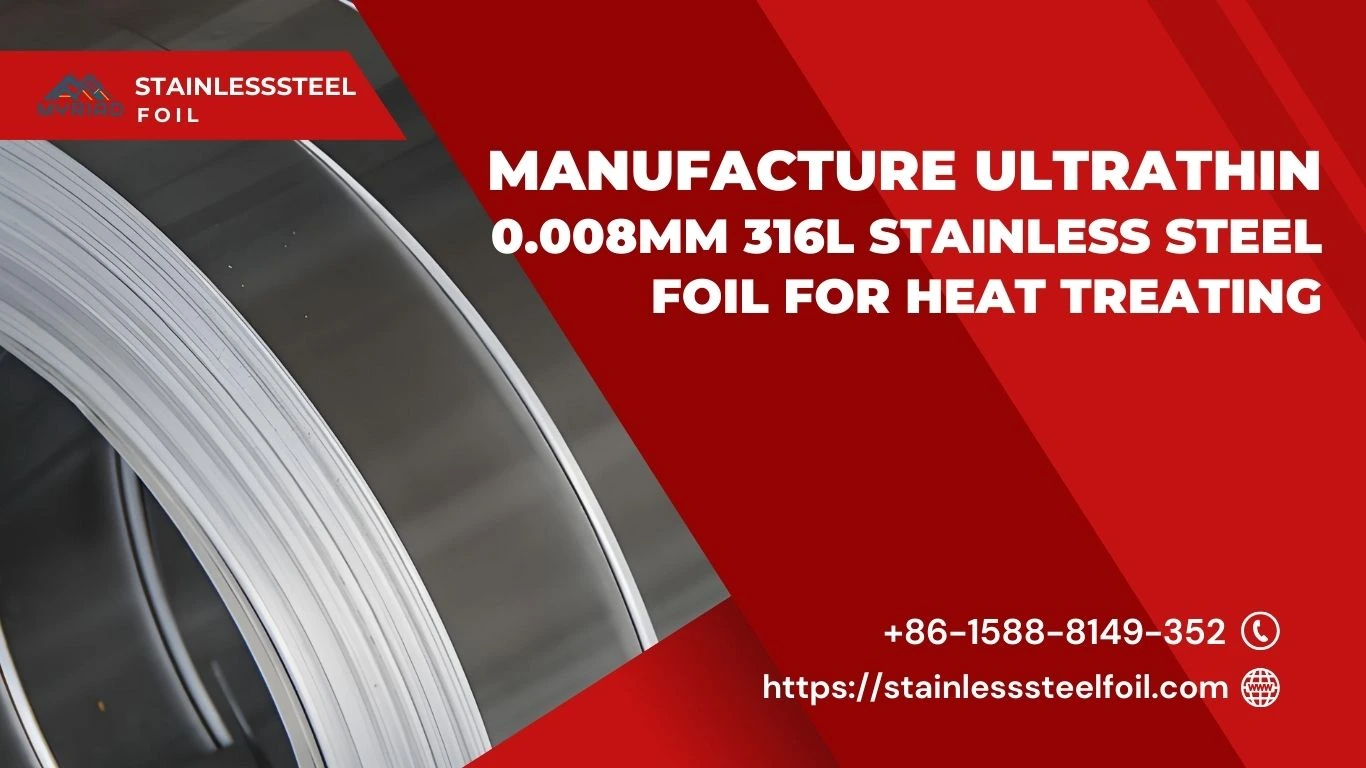
Manufacturing ultrathin 0.008mm 316L stainless steel foil for heat treating is one of the most demanding processes in modern precision metallurgy. At this thickness, even the smallest variation in rolling pressure, grain structure, or surface tension can affect performance during thermal cycles. Yet, industries ranging from aerospace to electronics continue to demand this material for one simple reason: nothing else performs quite like 316L stainless steel foil under heat.
This article explores how 316L stainless steel foil for heat is manufactured at an ultra-thin 0.008mm level, why heat-treating applications rely on it, and how controlled production ensures consistency, corrosion resistance, and mechanical stability. Along the way, we will reference proven manufacturing practices, real-world applications, and material science principles—without unnecessary jargon.
To understand why this foil matters, it helps to first understand what stainless steel truly is and how it behaves under heat. According to the foundational definition on Wikipedia’s stainless steel overview, stainless steel is valued for its chromium-based corrosion resistance and structural integrity. When that alloy becomes ultrathin, its behavior becomes even more sensitive—and more powerful when engineered correctly.
Understanding 316L Stainless Steel at the Micro Level
316L stainless steel is a low-carbon variation of standard 316 stainless steel. The reduced carbon content plays a crucial role during heat exposure. While standard grades may suffer carbide precipitation at grain boundaries, 316L maintains corrosion resistance even after repeated heat cycles.
This is exactly why manufacturers choose 316L stainless steel foil for heat-intensive environments such as vacuum furnaces, thermal insulation layers, and protective heat-treating wraps. The “L” grade significantly reduces the risk of intergranular corrosion, especially after welding or prolonged heating.
A deeper comparison between these grades is explained in the detailed guide on 316 vs 316L stainless steel strip, which clearly outlines why 316L dominates heat-processing applications.
Why 0.008mm Thickness Changes Everything
Producing stainless steel foil at 0.008mm thickness pushes metallurgical limits. At this scale, the foil becomes flexible, almost paper-like, yet must still retain tensile strength, uniform grain orientation, and surface stability.
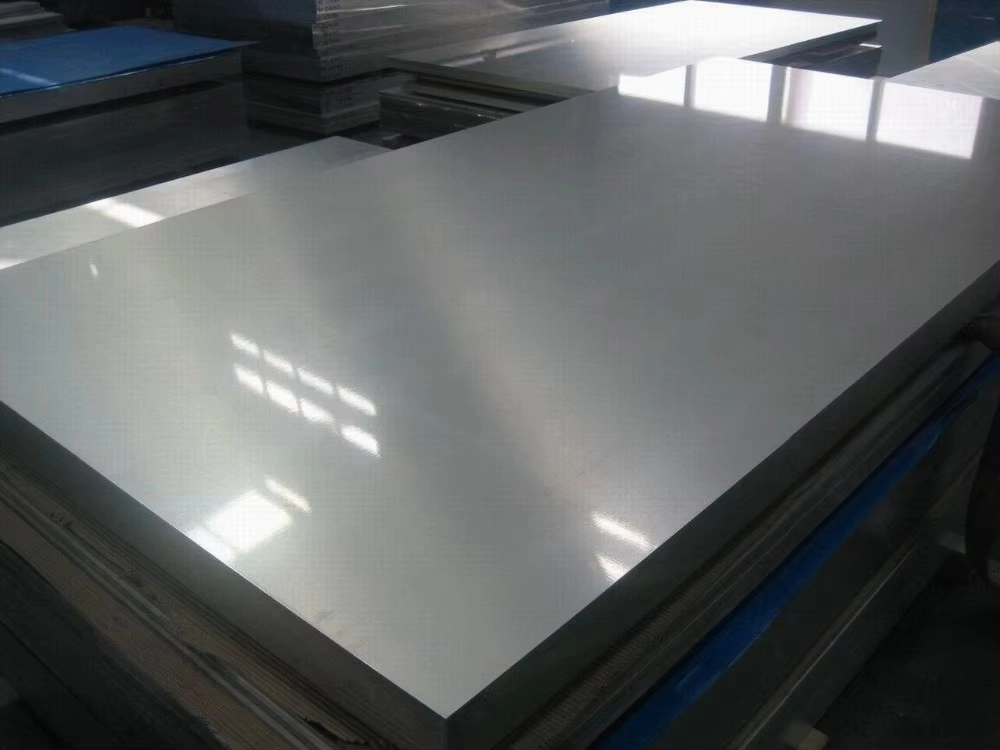
Traditional rolling methods alone cannot achieve this. Manufacturers must combine multi-stage cold rolling, precision annealing, and tension-controlled finishing. Even a microscopic surface defect can propagate during heat treating and cause failure.
For industries using 316L stainless steel foil for heat, thickness uniformity directly affects thermal conductivity and oxidation resistance. That is why leading manufacturers rely on ultra-precision rolling lines rather than conventional strip mills.
How Ultrathin Stainless Steel Foil Is Manufactured
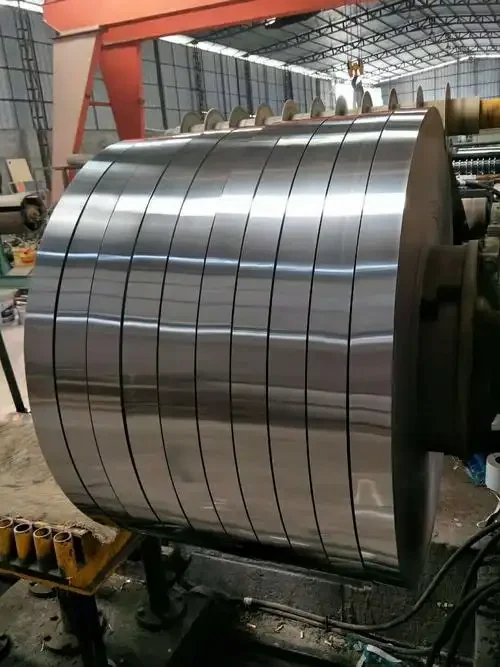
The transformation from hot-rolled coil to ultrathin foil is neither quick nor simple. The full process is explained in detail in this guide on how stainless steel foil is made from hot rolled coil to ultra-thin precision, but the key stages deserve attention here.
The process begins with high-quality stainless steel coils produced through controlled melting and casting. These coils undergo hot rolling to establish base thickness, followed by pickling to remove surface oxides. Cold rolling then gradually reduces thickness through multiple passes, each pass carefully monitored to maintain flatness and surface quality.
Between rolling stages, the material undergoes annealing. This heat treatment restores ductility while refining grain structure. According to Wikipedia’s heat treating overview, annealing plays a critical role in controlling hardness and internal stress—especially in stainless alloys.
For 316L stainless steel foil for heat, annealing parameters must remain exceptionally stable. Any deviation can alter grain growth and compromise heat resistance.
Precision Control in Ultrathin Rolling
Rolling stainless steel to 0.008mm demands extreme tension control. Unlike thicker strips, ultrathin foil reacts instantly to pressure changes. Manufacturers use feedback-driven rolling mills that adjust force in real time.
Surface finish also becomes critical. Foil used in heat-treating environments must resist scaling and oxidation. Polished or bright-annealed finishes reduce surface reaction during thermal exposure, extending service life.
For a broader understanding of stainless steel coil handling, the stainless steel coil production process guide offers useful background on how precision starts at the coil level.
Why Heat Treating Applications Demand 316L Foil
Heat treating environments expose materials to extreme temperatures, controlled atmospheres, and rapid thermal cycling. Not every metal survives these conditions repeatedly.
316L stainless steel foil for heat applications offers a unique combination of thermal stability, oxidation resistance, and chemical inertness. It does not scale easily, resists acidic vapors, and maintains structural integrity even after prolonged exposure.
Industries using heat-treating foil include aerospace component manufacturing, semiconductor processing, medical device sterilization, and industrial furnace operations. In many of these sectors, foil acts as a barrier, liner, or protective wrap during thermal processing.
Heat Treatment Compatibility and Performance
Although 316L is often used during heat treatment, it is also frequently heat treated itself for stress relief or microstructural optimization. The controlled response of 316L foil to thermal cycles makes it predictable and reliable.
A technical discussion of this behavior is available in the article on 316 stainless steel strip heat treatment, which explains how temperature ranges influence mechanical properties.
For ultrathin foil, even stress relief cycles must be carefully calibrated. Excessive heat can cause distortion, while insufficient heat may leave residual stress.
Comparing 316L Foil to Other Stainless Grades
When compared to 304 or 430 stainless foils, 316L stands out in high-temperature, corrosive environments. While 304 offers good general corrosion resistance, it lacks molybdenum, which significantly improves pitting resistance in 316L.
The difference becomes more apparent during heat exposure. 316L maintains stability where other grades may oxidize or warp. This makes 316L stainless steel foil for heat a long-term cost-effective choice, despite its higher initial price.
Real-World Industrial Applications
Ultrathin 316L foil appears in more places than most people realize. In consumer goods, it supports thermal shielding and electromagnetic insulation. In home appliances, it contributes to durability and heat management, as discussed in stainless steel strips in home appliances.
In advanced manufacturing, foil protects sensitive components during vacuum heat treating. Its low outgassing properties make it suitable for cleanroom environments.
Manufacturers sourcing these materials often explore available grades and thicknesses through curated catalogs like the one found on the stainless steel foil products page.
Quality Control for Ultrathin Foil Production
Quality control becomes increasingly strict as thickness decreases. Ultrathin foil production relies on laser thickness measurement, surface inspection systems, and metallographic analysis.
Manufacturers test tensile strength, elongation, and grain uniformity to ensure each batch performs consistently during heat exposure. These checks protect downstream users from costly failures.
A strong understanding of foil fundamentals, as explained in what is stainless steel foil, helps buyers evaluate quality beyond thickness alone.
Sustainability and Material Efficiency
Using ultrathin foil supports material efficiency. Less metal achieves the same functional role, reducing waste and energy consumption. For heat treating operations running continuously, this efficiency adds up over time.
As industries seek sustainable manufacturing solutions, 316L stainless steel foil for heat continues to align with long-term environmental goals.
Choosing the Right Supplier Matters
Not all stainless steel foil is created equal. Ultrathin foil production requires specialized equipment, experienced metallurgists, and strict process control. Buyers should evaluate technical documentation, production capability, and application support.
Exploring educational resources available through the stainless steel foil blog helps decision-makers stay informed about material selection and industry trends.

When ready to discuss custom requirements or technical questions, contacting a knowledgeable supplier through the contact page ensures proper guidance.
Summary
Manufacturing ultrathin 0.008mm 316L Stainless Steel Foil for Heat treating requires precision engineering and advanced metallurgy. Its superior corrosion resistance, weldability, and stability under high temperatures make it indispensable in aerospace, medical, and industrial applications. For more details or inquiries, visit the contact us.
FAQs
What makes 316L stainless steel foil suitable for heat treating?
316L stainless steel foil for heat resists oxidation, maintains corrosion resistance, and performs reliably during repeated thermal cycles.
Can 0.008mm 316L foil withstand repeated heating?
Yes, when manufactured correctly, 316L stainless steel foil for heat maintains stability even after repeated exposure to high temperatures.
Is ultrathin foil more difficult to heat treat?
Ultrathin materials require precise temperature control, but 316L stainless steel foil for heat responds predictably when handled properly.
How does 316L foil compare to 304 foil in heat applications?
316L stainless steel foil for heat outperforms 304 due to improved molybdenum content and lower carbon levels.
Where is ultrathin 316L foil commonly used?
Industries using furnaces, vacuum systems, and thermal processing rely on 316L stainless steel foil for heat protection and insulation.