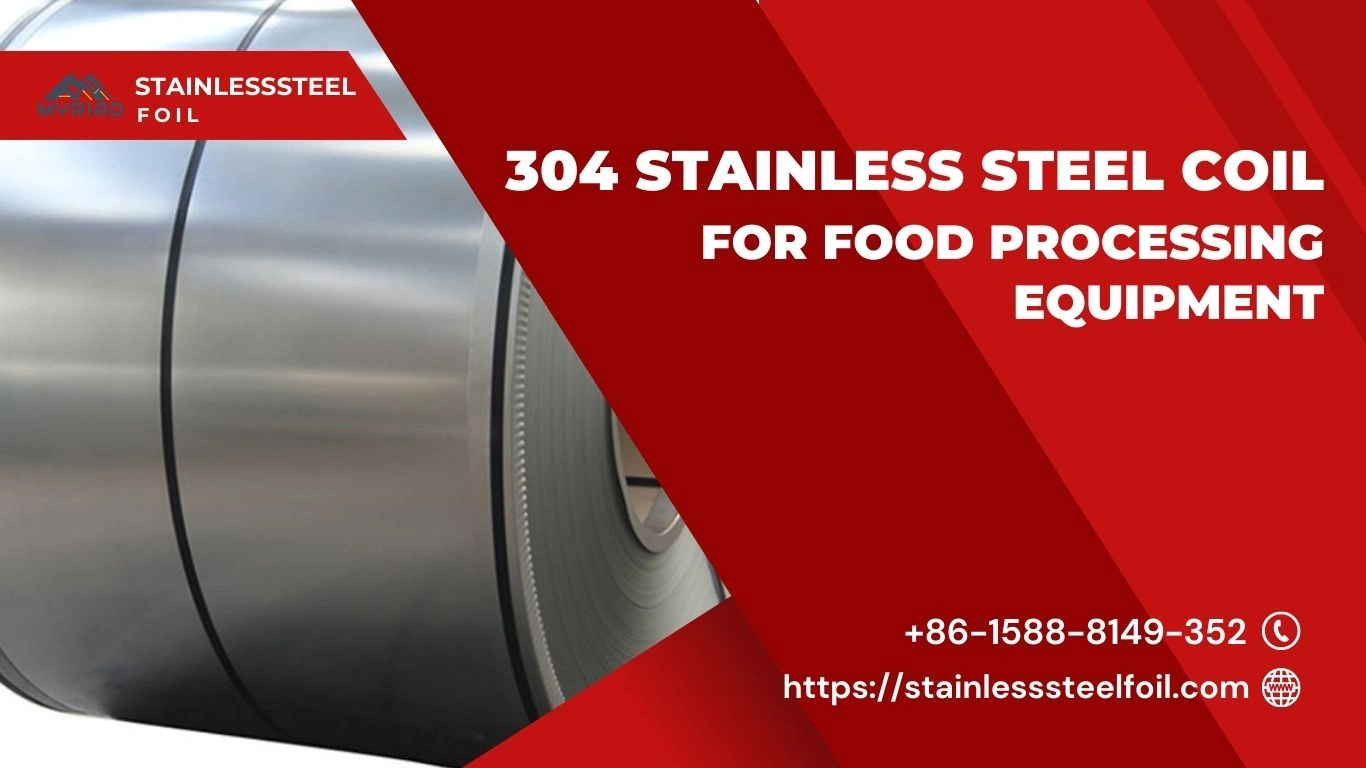
Food safety does not start in the kitchen. It begins much earlier—inside factories, processing plants, and production lines where raw ingredients transform into finished products. In these environments, materials face constant exposure to moisture, acids, heat, cleaning chemicals, and mechanical stress. That is precisely why the 304 stainless steel coil has become the backbone of modern food processing equipment across the world.
From conveyor systems and storage tanks to mixing vessels and food-grade enclosures, manufacturers rely on this for one clear reason: it delivers consistent hygiene, corrosion resistance, and long-term reliability without excessive cost. Unlike many alternatives, it meets both regulatory expectations and real-world performance demands.
This article explores why it is the preferred choice for food processing equipment, how it compares to other grades, and what manufacturers should consider when sourcing coils for hygienic applications.
Understanding 304 Stainless Steel Coil
Before examining applications, it helps to understand what makes this material special.
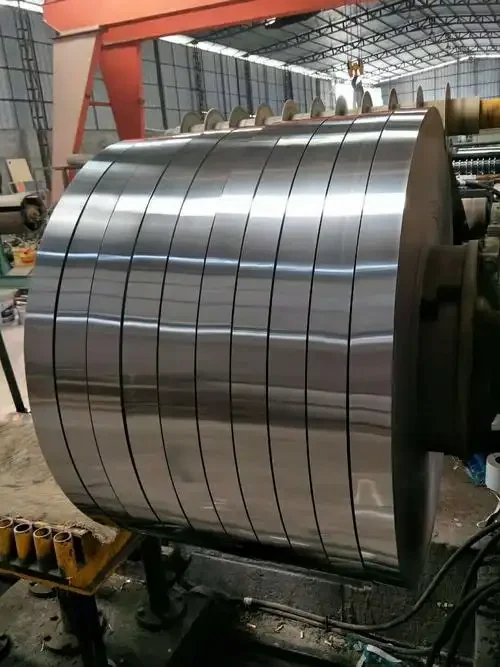
304 stainless steel coil is an austenitic stainless steel alloy containing approximately 18% chromium and 8% nickel. This balanced composition creates a stable passive oxide layer that protects the surface from corrosion while maintaining excellent formability.
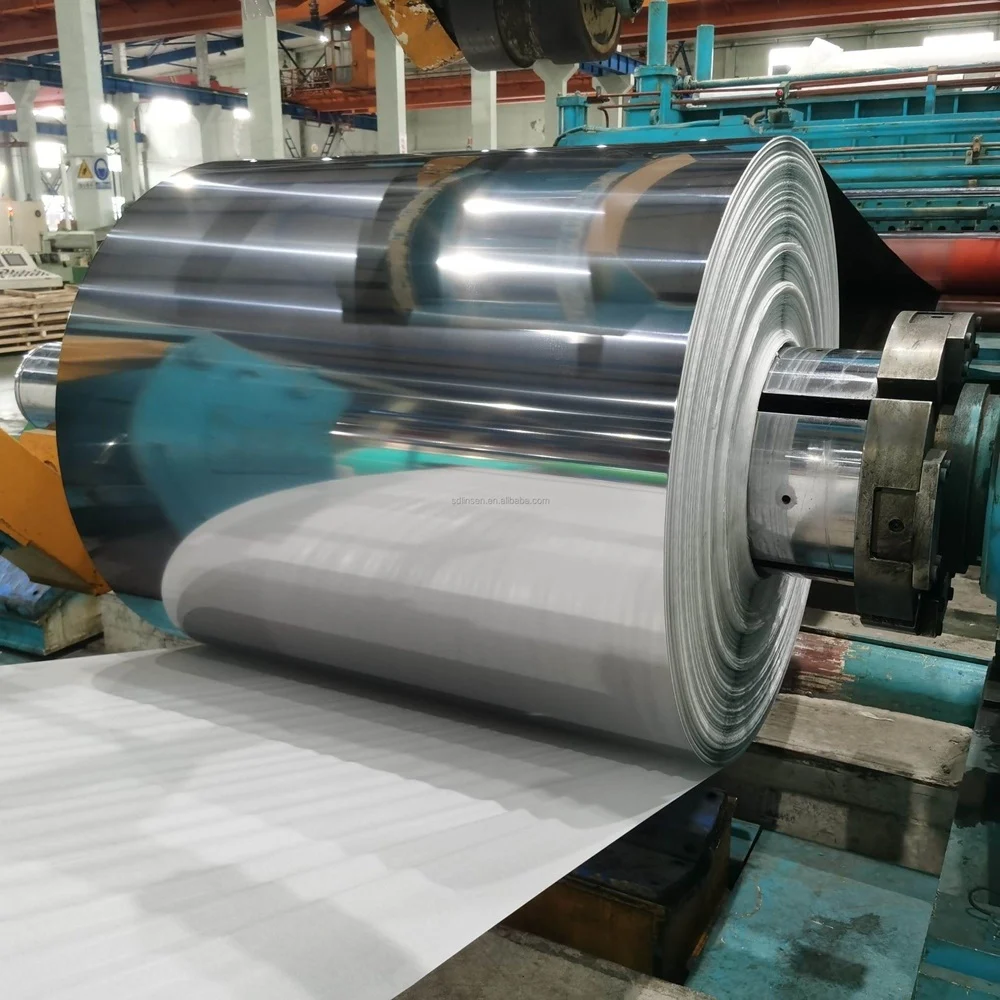
According to Wikipedia’s stainless steel overview, chromium enables corrosion resistance, while nickel enhances ductility and toughness. Together, these elements allow 304 stainless steel to withstand harsh processing conditions without cracking, rusting, or contaminating food.
Unlike carbon steel, it does not require coatings or treatments to remain hygienic. Its natural resistance makes it suitable for direct food contact across diverse processing environments.
Why Food Processing Equipment Demands Specialized Materials
Food processing environments are unforgiving. Equipment must survive daily exposure to steam, salt, organic acids, and aggressive washdown cycles. At the same time, surfaces must remain smooth enough to prevent bacteria buildup.
In this context, it stands out because it satisfies three essential requirements simultaneously.
First, it resists corrosion from moisture and mildly acidic foods. Second, it maintains structural integrity under thermal stress. Third, it provides a non-reactive surface that does not alter food taste or composition.
Many manufacturers also favor stainless steel coil formats because they enable precision fabrication, allowing consistent thickness, smooth finishes, and uniform performance across production batches.
Key Properties of 304 Stainless Steel Coil
Excellent Corrosion Resistance
Corrosion poses one of the biggest risks in food processing. Rust not only weakens equipment but also creates contamination hazards. The chromium-rich surface of 304 stainless steel coil forms a self-healing oxide layer that resists oxidation even after repeated cleaning cycles.
This makes it suitable for environments involving water, dairy products, fruits, vegetables, and mildly acidic ingredients.
Outstanding Hygiene Performance
Smooth stainless steel surfaces are easy to clean and sanitize. Bacteria struggle to adhere to properly finished 304 stainless steel, especially when polished or brushed.
That hygiene advantage explains why stainless steel dominates food equipment manufacturing, as discussed in many industry resources found on the stainless steel foil blog.
High Temperature Stability
Food processing equipment often operates under heat. Whether used in baking lines or pasteurization systems, it retains strength and shape at elevated temperatures. It also tolerates sudden temperature changes without warping.
Formability and Fabrication Flexibility
Manufacturers prefer materials that adapt easily to complex designs. this bends, rolls, and welds smoothly, which simplifies fabrication while reducing waste.
The stainless steel coil production process guide explains how consistent coil quality supports efficient manufacturing.
Applications of 304 Stainless Steel Coil in Food Processing Equipment
Food Conveyors and Processing Lines
Conveyors must remain clean, durable, and corrosion-resistant. it provides the ideal surface for belts, frames, and guide rails used in continuous processing lines.
Because it resists cleaning chemicals, operators can sanitize systems frequently without damaging the metal.
Mixing Tanks and Storage Vessels
Large tanks used for mixing sauces, beverages, or dairy products often rely on 304 stainless steel. The coil form allows manufacturers to create seamless cylindrical vessels that minimize contamination risks.
Food Preparation Surfaces
Cutting tables, prep stations, and work surfaces require smooth finishes that resist scratches. this maintains appearance and performance even after years of heavy use.
Packaging and Filling Equipment
Packaging machinery requires precision components. Stainless steel coils ensure consistent thickness, which improves alignment and reduces equipment downtime.
More examples of coil applications appear in how stainless steel coil is used in the production of consumer goods.
Benefits of 304 Stainless Steel Coil in Food Processing Equipment
Food processing equipment must perform reliably under strict hygiene and safety conditions. 304 stainless steel coil is widely used in this industry because it combines corrosion resistance, food safety, and long-term durability. In environments exposed to moisture, food acids, and frequent cleaning, this material maintains surface integrity and prevents rust, ensuring consistent product quality.
One of the strongest advantages of 304 stainless steel coil is its non-reactive surface. It does not contaminate food or affect taste, making it ideal for direct food-contact applications. Its smooth finish also supports easy cleaning and sanitation, helping manufacturers meet regulatory standards. Businesses sourcing materials through a trusted stainless steel platform like stainless steel foil benefit from consistent quality and technical reliability.
From a manufacturing standpoint, 304 stainless steel coil offers excellent formability and weldability. Equipment such as tanks, conveyors, and processing lines can be efficiently produced using proven methods explained in this stainless steel coil production process guide. Compared to higher-alloy options like 316 stainless steel coil, 304 provides a cost-effective solution for most food processing environments.
304 Stainless Steel Coil vs Other Stainless Grades
Choosing the right grade matters. While several stainless steel types exist, food processors often compare 304 with alternatives.
| Property | 304 Stainless Steel Coil | 316 Stainless Steel Coil |
|---|---|---|
| Corrosion Resistance | Excellent | Superior (chloride environments) |
| Cost | Moderate | Higher |
| Food Processing Use | Widely used | Specialized |
| Molybdenum Content | None | Present |
In environments with heavy salt exposure, manufacturers sometimes upgrade to 316 stainless steel coil. However, for most food processing applications, 304 delivers the best balance between performance and cost.
Regulatory Compliance and Food Safety Standards
Food processing equipment must comply with strict regulations. Fortunately, this meets global hygiene standards when properly fabricated and finished.
Organizations such as the FDA and EFSA recognize stainless steel as safe for food contact. Additionally, stainless steel supports sustainable manufacturing goals, as explained in the environmental benefits of stainless steel coil.
Sustainability and Long-Term Value
Sustainability increasingly influences purchasing decisions. Stainless steel coils are fully recyclable without quality loss. That feature reduces environmental impact while extending material life cycles.
Moreover, longer equipment lifespan means fewer replacements. Over time, that durability offsets the initial investment cost, making it’s a financially sound choice.
Insights into renewable and sustainable infrastructure applications can be found in stainless steel coil renewable infrastructure.
Why Manufacturers Choose Stainless Steel Foil
Sourcing matters as much as material selection. At stainless steel foil, customers gain access to precision-engineered stainless steel coils tailored for demanding industries.
The platform offers detailed product guidance, technical support, and reliable supply chains. Manufacturers can explore the full range of offerings through the products section or request assistance via the contact page.
Summary
304 stainless steel coil is the backbone of food processing equipment worldwide. Its corrosion resistance, durability, and hygienic properties make it the most practical choice for industries that demand reliability and safety. Whether used in storage tanks, conveyor systems, or commercial kitchens, 304 stainless steel coil ensures efficiency and sustainability.For more insights, visit the Stainless Steel Foil Blog or contact us for expert guidance.
FAQs
Why is 304 stainless steel coil preferred in food processing equipment?
it is preferred because it resists corrosion, maintains hygiene, and offers durability at an affordable cost.
Can 304 stainless steel coil handle acidic food products?
Yes, this can handle mild acids found in food processing, making it safe for beverages, dairy, and sauces.
How does 304 stainless steel coil compare to 316 in food processing?
While it offers better resistance to chlorides, it is more cost-effective and widely used in food-grade applications.
Is 304 stainless steel coil environmentally friendly?
Yes, it is 100% recyclable, making it a sustainable choice for food processing industries.
Where can I buy 304 stainless steel coil?
You can explore high-quality stainless steel coil products at Stainless Steel Foil.