In today’s fast-evolving automotive industry, material selection plays a decisive role in determining product quality, safety, and long-term performance. Manufacturers are under constant pressure to reduce weight, improve durability, enhance fuel efficiency, and meet strict environmental regulations. In this demanding environment, Stainless Steel Strip has become one of the most trusted and versatile materials in automotive manufacturing.
From structural components and exhaust systems to battery housings and decorative trims, Stainless Steel Strip supports nearly every stage of vehicle production. Its unique combination of strength, corrosion resistance, formability, and recyclability makes it indispensable for both traditional and electric vehicles.
In this comprehensive guide, we explore how stainless steel strips are used in automotive manufacturing, their technical advantages, selection criteria, market trends, and how to source high-quality materials for long-term success.
Stainless Steel Strip in Automotive Manufacturing
Before discussing applications and performance, it is important to understand what stainless steel strip actually is and why it is so valuable in vehicle production.
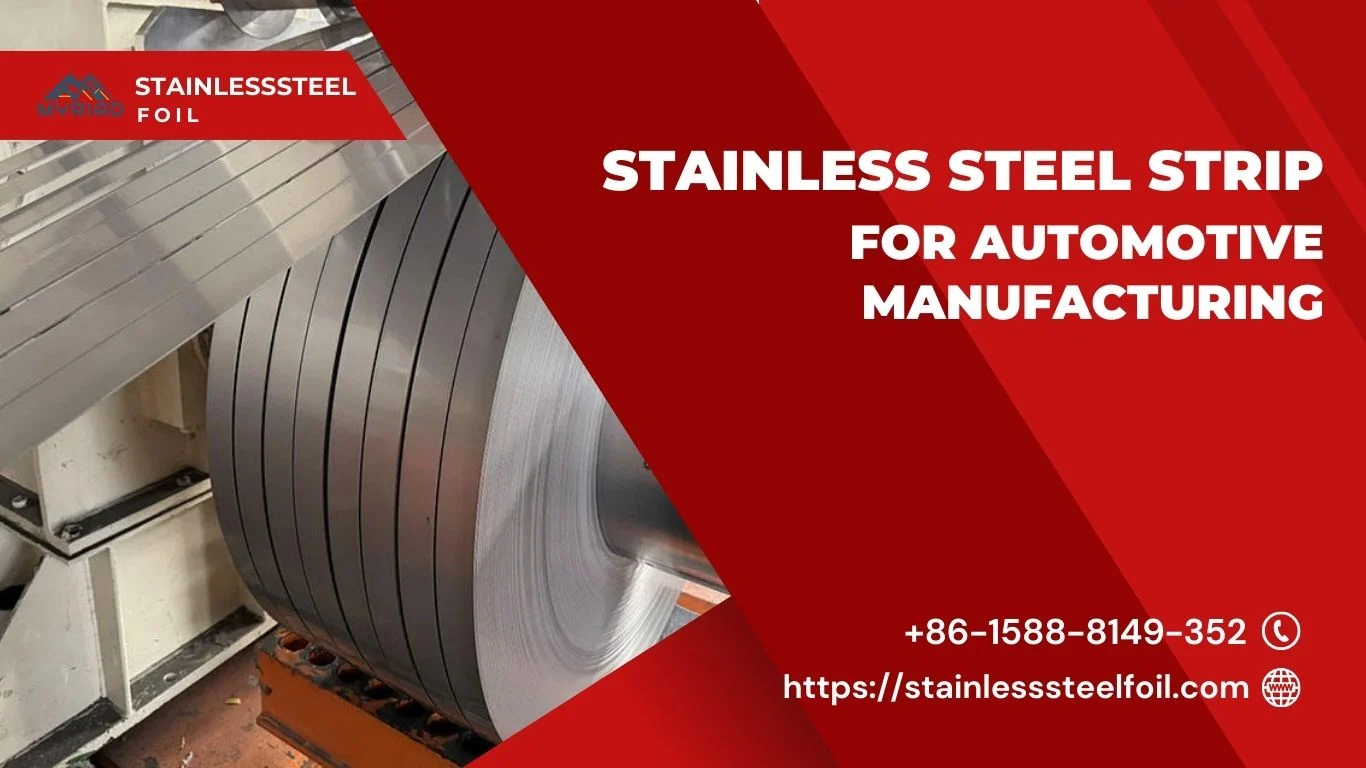
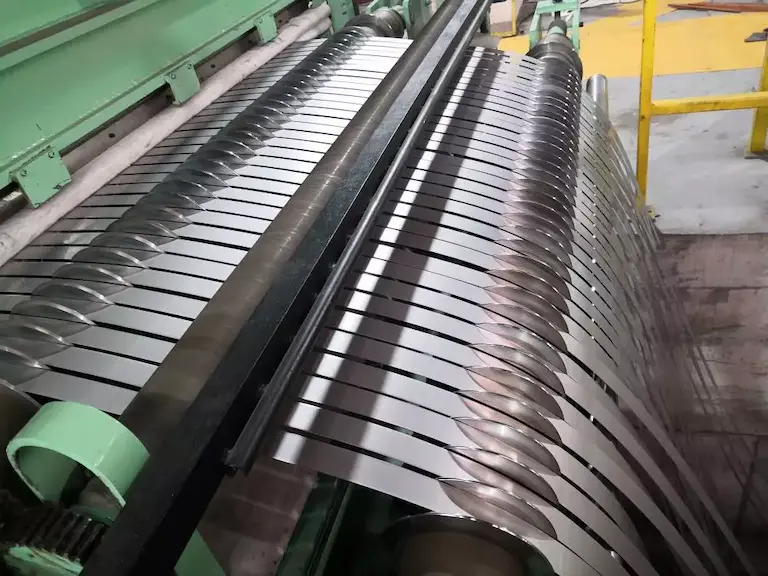
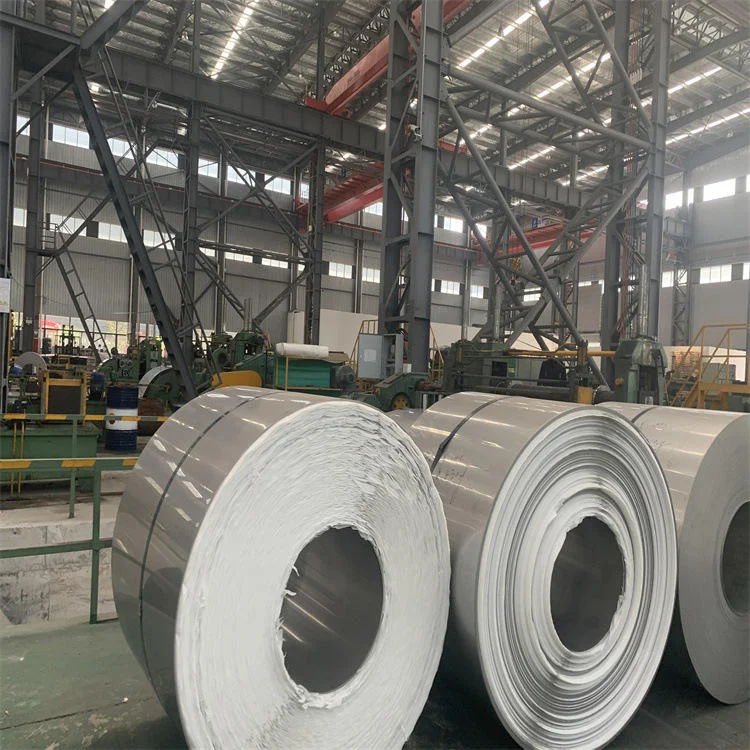
Stainless steel strip refers to flat-rolled stainless steel that has been slit or cut into narrow widths from larger coils. These strips are produced with precise thickness, surface finish, and mechanical properties. Automotive manufacturers use them to fabricate components that require consistency and reliability.
According to material science definitions provided by Wikipedia, stainless steel is an alloy containing at least 10.5% chromium. This chromium content forms a passive oxide layer on the surface, protecting the metal from corrosion and environmental damage.
This natural protection is one of the key reasons why Stainless Steel Strip performs so well in automotive environments where moisture, heat, and chemicals are common.
Why Stainless Steel Strip Is Essential for Automotive Production
Modern vehicles operate in harsh and unpredictable conditions. They face temperature extremes, road salt, humidity, vibration, and constant mechanical stress. Materials must perform reliably under these pressures for many years.
Outstanding Corrosion Resistance
Corrosion remains one of the biggest threats to vehicle longevity. Conventional carbon steel deteriorates quickly when exposed to moisture and salt. In contrast, Stainless Steel Strip forms a self-healing protective layer that resists rust and oxidation.
This feature is especially valuable in underbody parts, exhaust systems, and coastal-region vehicles.
High Strength and Durability
Automotive components must absorb impact, resist fatigue, and maintain dimensional stability. Stainless steel strips provide high tensile strength and excellent fatigue resistance. As a result, manufacturers can design thinner, lighter components without compromising safety.
Excellent Formability
Many automotive parts require deep drawing, bending, and stamping. Stainless Steel Strip offers excellent ductility, allowing manufacturers to create complex shapes with minimal cracking or distortion.
Thermal and Chemical Stability
Exhaust systems, battery enclosures, and engine compartments operate at elevated temperatures. Stainless steel strips retain their mechanical properties even under prolonged heat exposure and chemical contact.
Major Automotive Applications of Stainless Steel Strip
Structural and Safety Components
Vehicle safety depends heavily on structural integrity. Stainless steel strips are commonly used in:
- Chassis reinforcements
- Crash beams
- Seat belt anchors
- Door impact bars
These components rely on the predictable strength of Stainless Steel Strip to meet international safety standards.
Exhaust and Emission Control Systems
Exhaust systems face extreme thermal and chemical stress. Stainless steel strips are widely used in manufacturing:
Exhaust pipes
Mufflers
Catalytic converter housings
Heat shields
Grades such as 304 and 316 stainless steel dominate this segment due to their heat resistance and corrosion protection.
Electric Vehicle and Battery Systems
With the rapid growth of electric vehicles, stainless steel strips have become critical in battery technology. They are used in:
Battery casings
Cooling plates
Shielding components
Mounting brackets
These parts require corrosion resistance, thermal management, and structural stability, all provided by Stainless Steel Strip.
Interior and Exterior Trim
Design and aesthetics matter in modern vehicles. Polished and brushed stainless steel strips are used in:
Dashboard accents
Window frames
Door trims
Roof rails
They offer a premium appearance while maintaining durability.
Stainless Steel Grades Used in Automotive Strips
Selecting the right grade is essential for achieving optimal performance.
304 Stainless Steel Strip
304 is the most widely used austenitic grade. It offers excellent corrosion resistance, good formability, and moderate strength.
You can explore detailed technical insights in the guide on 304 stainless steel strip properties and uses.
316 Stainless Steel Strip
316 contains molybdenum, which improves resistance to chlorides and aggressive chemicals. It is ideal for harsh environments and premium applications.
Learn more about processing techniques at 316 stainless steel strip heat treatment.
430 Stainless Steel Strip
430 is a ferritic grade with moderate corrosion resistance and lower cost. It is often used in decorative or non-critical parts.
Technical Comparison of Automotive Stainless Steel Grades
| Grade | Corrosion Resistance | Strength | Formability | Cost Level | Typical Applications |
|---|---|---|---|---|---|
| 304 | High | High | Excellent | Medium | Exhaust, trims |
| 316 | Very High | High | Good | High | EV parts, marine |
| 430 | Moderate | Medium | Fair | Low | Decorative parts |
This comparison explains why most automotive manufacturers prefer 304 and 316 Stainless Steel Strip for critical components.
Manufacturing Process: From Coil to Stainless Steel Strip
Producing high-quality stainless steel strips requires advanced technology and strict quality control.
Coil Slitting
Large stainless steel coils are slit into narrower widths using precision slitting machines. This step determines final strip dimensions.
Cold Rolling
Cold rolling reduces thickness and improves surface finish. It also enhances mechanical strength.
Annealing and Pickling
Annealing restores ductility after cold rolling. Pickling removes surface oxides and contaminants.
Surface Finishing
Depending on application, strips may receive:
2B finish
Bright annealed finish
Mirror polish
Matte texture
Quality Inspection
Each batch undergoes testing for thickness tolerance, hardness, flatness, and surface defects. Only premium Stainless Steel Strip meets automotive standards.
Performance Advantages in Automotive Manufacturing
Reduced Maintenance Costs
Vehicles built with stainless steel components experience fewer corrosion-related failures. This lowers repair costs and warranty claims.
Improved Fuel Efficiency
Lightweight design remains a priority. High-strength stainless steel strips allow manufacturers to reduce material thickness without losing strength.
Enhanced Safety
Crash-resistant structures rely on consistent material behavior. Stainless Steel Strip provides predictable energy absorption.
Environmental Sustainability
Stainless steel is fully recyclable. Industry studies indicate that more than 80% of stainless steel is recycled globally, supporting circular manufacturing.
Industry Trends Driving Demand for Stainless Steel Strip
Several global trends continue to boost demand:
Rapid growth of electric vehicles
Stricter emission regulations
Lightweight vehicle designs
Increased focus on sustainability
Expansion of automotive manufacturing in Asia
As these trends accelerate, demand for high-quality Stainless Steel Strip continues to rise.
Choosing the Right Supplier for Stainless Steel Strip
Material quality directly affects production efficiency and product reliability. Selecting a reliable supplier is therefore essential.
A trustworthy supplier should provide:
Material certification and traceability
Custom slitting services
Consistent surface quality
Global logistics support
Technical consultation
Manufacturers can explore high-quality materials at Stainless Steel Foil and review available options on the products page.
For large-scale production, many companies also rely on stainless steel strip rolls for manufacturing.
Cross-Industry Applications Strengthening Automotive Innovation
Automotive manufacturers often share materials with other industries, leading to innovation and efficiency.
For example, similar stainless steel strips are used in household appliances. Learn more through stainless steel strips in home appliances.
In renewable energy systems, stainless steel strips play a vital role in durability and performance. Explore this topic at advantages in renewable energy systems.
Ultra-precision components are supported by ultra-thin stainless steel foil strips, which also benefit automotive electronics.
Customization and Innovation in Stainless Steel Strip Production
Modern suppliers offer advanced customization options:
Laser-cut strips
Edge-conditioned materials
Custom alloy compositions
Ultra-thin precision strips
Pre-polished surfaces
These services help automotive manufacturers reduce processing time and improve consistency.
Regulatory and Quality Standards
Automotive materials must comply with strict international standards, including:
ASTM A240
EN 10088
JIS G4305
ISO 9001
Certified Stainless Steel Strip ensures compliance with OEM and regulatory requirements.
Staying Updated with Industry Knowledge
Continuous learning supports long-term competitiveness. Manufacturers can access technical articles and market insights on the company blog.
For customized solutions and technical support, visit the contact page.
Summary
In the modern automotive industry, material reliability determines success. Stainless Steel Strip delivers unmatched strength, corrosion resistance, precision, and sustainability for manufacturing high-performance vehicle components.
From safety structures and exhaust systems to EV batteries and decorative trims, stainless steel strips support every stage of vehicle production. By selecting the right grades and working with reliable suppliers, manufacturers can improve efficiency, reduce costs, and meet future challenges.
For companies focused on long-term quality and competitiveness, Stainless Steel Strip remains a cornerstone of automotive manufacturing excellence.
FAQs
Why is Stainless Steel Strip preferred for automotive components?
Stainless Steel Strip offers excellent corrosion resistance, strength, and durability, making it ideal for structural and exhaust parts.
Can Stainless Steel Strip be customized for specific vehicle designs?
Yes, suppliers can provide Stainless Steel Strip in customized widths, thicknesses, finishes, and grades.
Is Stainless Steel Strip suitable for electric vehicle manufacturing?
Absolutely. Stainless Steel Strip is widely used in EV battery housings, cooling systems, and protective enclosures.
How long do parts made from Stainless Steel Strip typically last?
With proper design and processing, components made from Stainless Steel Strip can last over two decades.
Does Stainless Steel Strip support sustainable manufacturing?
Yes, Stainless Steel Strip is fully recyclable and aligns with global sustainability initiatives.