Sourcing the right material can make or break a production line. For manufacturers across the automotive, electronics, medical devices, and construction industries, stainless steel strip has become one of the most relied-upon materials for precision components, structural parts, and corrosion-resistant applications. Yet with so many grades, finishes, and suppliers on the market, choosing the right stainless steel strip for your project isn’t always straightforward.
This guide breaks down everything industrial buyers need to know, from understanding what stainless steel strip is to selecting the right grade to evaluating suppliers, so you can make confident, cost-effective purchasing decisions.
What Is Stainless Steel Strip?
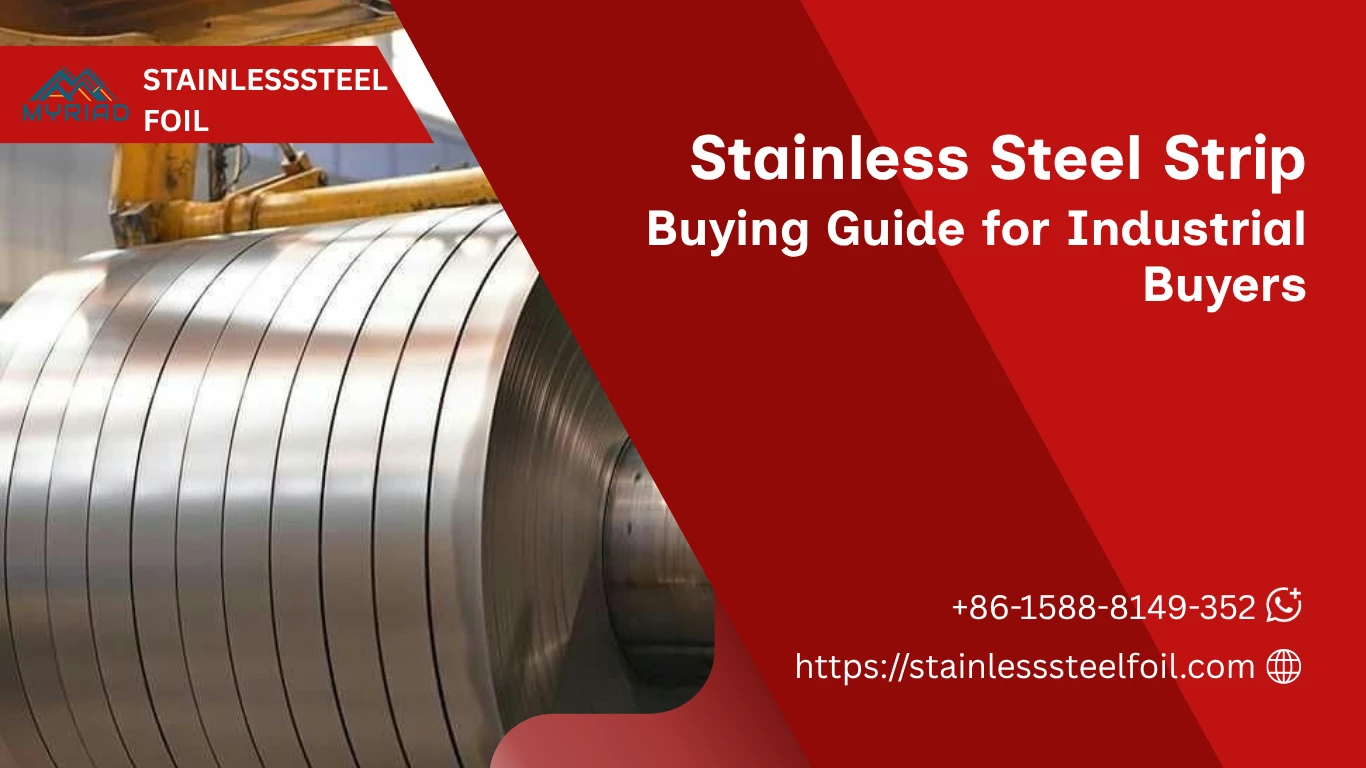
Stainless steel strip is a thin, flat-rolled steel product manufactured in narrow widths and long coiled lengths. Often referred to simply as SS strip, it is produced by cold or hot rolling stainless steel into precise thicknesses, then slitting it into strips suited for specific manufacturing needs.
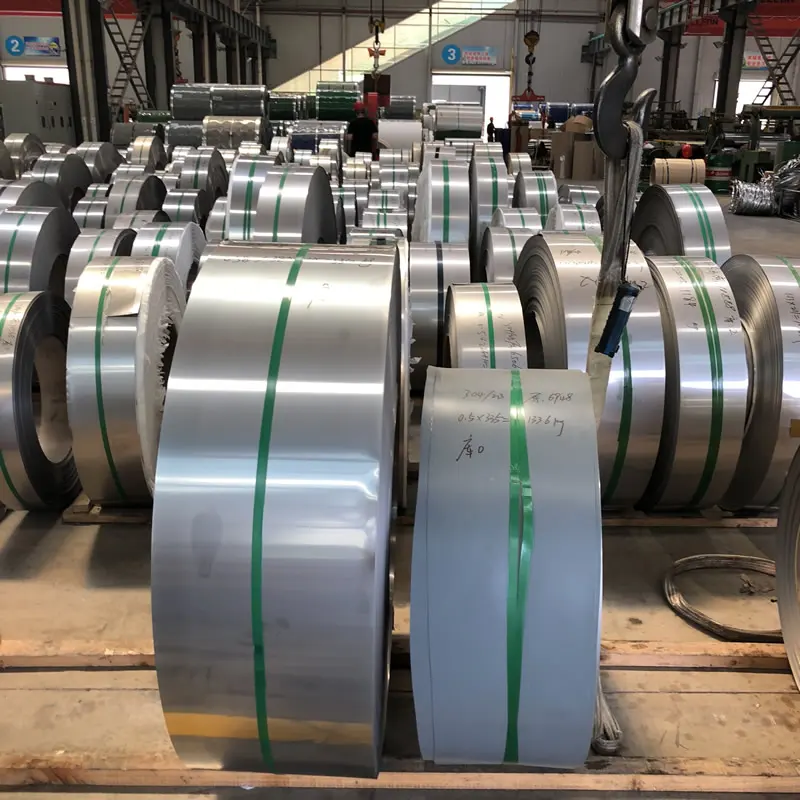
Unlike stainless steel sheet, which typically comes in larger, flat panels, strip stainless steel is supplied in coil form, making it ideal for continuous, high-volume manufacturing processes like stamping, forming, and roll-forming. This is why you’ll often see it marketed and purchased as stainless steel coil strip; the coiled format is what enables efficient, automated production.
Because of its corrosion resistance, strength, and formability, it is used extensively in:
- Automotive components (clips, springs, exhaust systems)
- Electronics and electrical connectors
- Medical and surgical instruments
- Kitchen equipment and appliances
- Construction and architectural fittings
- Springs, gaskets, and precision stamped parts
Why Grade Selection Matters When Buying Stainless Steel Strip
Not all stainless steel strip is created equal. Grade selection directly affects corrosion resistance, mechanical strength, weldability, and cost — so getting it right upfront saves money and prevents performance failures down the line.
304 Stainless Steel Strip: The Industry Workhorse
Among all grades, 304 stainless steel strip is by far the most widely used in industrial manufacturing. It offers an excellent balance of corrosion resistance, formability, and affordability, making it suitable for a broad range of applications.
Key advantages of 304 stainless steel strip include:
- Excellent corrosion resistance in most environments, including mild chemical exposure
- Good weldability, making it easy to fabricate into finished components
- High ductility, allowing it to be stamped, bent, and formed without cracking
- Cost-effectiveness compared to higher-alloy grades like 316
Because of these properties, 304 stainless steel strip is commonly specified for food-grade equipment, consumer electronics, appliance components, and general industrial fabrication.
Other Common Grades to Consider
While 304 dominates the market, buyers should also be aware of alternative grades depending on application requirements:
- 301 SS Strip – Higher strength and hardness, often used in springs and clips
- 316 SS Strip – Superior corrosion resistance, ideal for marine or chemical environments
- 430 SS Strip – A more economical ferritic option for less demanding applications
When evaluating stainless steel strip for your project, always match the grade to your environmental exposure, mechanical load requirements, and budget constraints, not just the lowest quoted price.
Key Specifications to Evaluate Before Purchasing Stainless Steel Strip
Beyond grade selection, several technical specifications determine whether a stainless steel strip product will perform as expected in your manufacturing process.
Thickness and Width Tolerances
Precision manufacturing depends on tight dimensional tolerances. When sourcing stainless steel strip, confirm the supplier can consistently hold thickness tolerances suited to your stamping or forming process; inconsistent gauge can cause tooling wear, part rejection, and production downtime.
Surface Finish
SS strip is available in a range of finishes, including 2B, BA (bright annealed), No. 4 brushed, and mirror polish. The right finish depends on whether the final application prioritizes aesthetics, friction reduction, or further processing (such as coating or plating).
Temper and Mechanical Properties
It is available in various tempers from soft/annealed to full hard. Buyers working with high-speed stamping or deep-drawing processes should confirm the temper aligns with their forming requirements to avoid cracking or spring-back issues.
Coil Weight and Packaging
Since stainless steel coil strip is typically supplied on reels or in coil form, confirm coil weight, inner diameter, and packaging standards match your production line equipment to avoid handling delays.
How to Choose the Right Stainless Steel Strip Supplier
Selecting a reliable stainless steel strip supplier is just as important as choosing the right grade and specification. A strong supplier relationship reduces lead times, ensures consistent quality, and supports your production schedule without costly interruptions.
1. Verify Manufacturing Capabilities
A capable supplier should have in-house rolling, slitting, and annealing capabilities. This vertical integration typically translates to tighter quality control, faster turnaround, and more competitive pricing compared to suppliers who outsource production steps.
2. Check Quality Certifications
Look for suppliers who provide material test certificates (MTCs) and comply with international standards such as ASTM, EN, or JIS specifications. This is especially critical for industries like medical devices or food processing, where material traceability and compliance are non-negotiable.
3. Evaluate Minimum Order Quantities (MOQs) and Lead Times
Depending on your production volume, some suppliers may require high MOQs that don’t align with smaller or prototype runs. A good supplier should offer flexibility whether you need a single trial coil or continuous bulk supply.
4. Assess Customization Options
Many manufacturers require custom widths, edge conditions (slit edge, rounded edge, deburred), or specific coil packaging. Partnering with a supplier that offers tailored solutions rather than only standard stock sizes gives you more control over downstream processing efficiency.
5. Consider Supply Chain Reliability
Global sourcing can introduce risk if a supplier lacks consistent inventory or reliable logistics. Ask potential suppliers about production capacity, average lead times, and their track record for on-time delivery, particularly during periods of high demand.
Common Applications Where Stainless Steel Strip Delivers Value
Understanding real-world use cases can help buyers validate whether their chosen stainless steel strip specification is fit for purpose.
- Automotive manufacturing: It is used for exhaust clamps, seals, and structural clips due to its heat resistance and durability.
- Electronics: Thin-gauge 304 stainless steel strip is used in connectors, battery components, and shielding due to its excellent conductivity balance and corrosion resistance.
- Medical devices: Precision stainless steel coil strip is essential for surgical instruments and implantable components requiring biocompatibility and hygiene compliance.
- Consumer appliances: Brushed-finish SS strip is widely used in kitchen equipment for its aesthetic appeal and resistance to staining.
- Construction and architecture: It is used in trims, railings, and decorative fittings for its long-term weather resistance.
Cost Considerations When Buying Stainless Steel Strip
While price is always a factor, industrial buyers should evaluate total cost of ownership rather than unit price alone. Cheaper SS strip with inconsistent tolerances or inferior surface quality can lead to higher scrap rates, tooling damage, and production delays — costs that quickly outweigh any upfront savings.
When comparing quotes from different stainless suppliers, request:
- Sample coils for trial runs
- Detailed technical data sheets
- Clear pricing broken down by grade, thickness, and finish
- Transparent freight and packaging costs
This approach ensures you’re comparing true value, not just sticker price.
Final Summary
Choosing the right stainless steel strip for your manufacturing operation comes down to three core factors: selecting the correct grade (with 304 SS Strip being the go-to choice for most general industrial applications), confirming precise technical specifications, and partnering with a proven supplier who can consistently deliver quality material on schedule.
Whether you’re sourcing standard SS strip for high-volume stamping or custom stainless steel coil strip for a specialized application, taking the time to evaluate these factors upfront will protect your production efficiency, product quality, and bottom line.
If you’re currently evaluating suppliers, request sample coils, review certifications, and confirm technical capabilities before committing to a bulk order. A small amount of due diligence now can prevent significant production headaches later.
FAQs
What is Stainless Steel Strip used for?
It is used in automotive, electronics, medical equipment, construction, machinery, and general manufacturing. Its strength, corrosion resistance, and dimensional accuracy make it suitable for precision components and industrial parts.
What are the main benefits of Stainless Steel Strip?
The main benefits of Stainless Steel Strip include excellent corrosion resistance, durability, strength, formability, and long service life. It can also be manufactured in different grades, thicknesses, widths, finishes, and tempers to meet specific industrial requirements.
How do I choose the right Stainless Steel Strip for my application?
Consider the required grade, thickness, width, surface finish, temper, dimensional tolerances, and operating environment. You should also consider whether the material needs to withstand chemicals, moisture, high temperatures, or mechanical stress.
What is 304 Stainless Steel Strip commonly used for?
It is widely used for general industrial manufacturing, automotive components, food-processing equipment, electrical components, machinery, fasteners, and metal stamping. It offers a good balance of corrosion resistance, strength, and formability.