The global automotive supply chain is undergoing its most radical transformation in a century. Driven by strict corporate average fuel economy (CAFE) standards, aggressive decarbonization goals, and the structural complexities of Electric Vehicle (EV) architectures, Tier-1 suppliers and original equipment manufacturers (OEMs) cannot afford material inefficiencies. Every gram of weight, every square millimeter of space, and every second of stamping press cycle time directly impacts a platform’s profitability.
At the center of this manufacturing evolution is a deceptively simple yet highly engineered raw material: the stainless steel coil strip. Far from being a commodity, precision-slit, tightly calibrated stainless steel coil strip provides the baseline structural, thermal, and corrosion-resistant performance required by modern internal combustion engines (ICE), hybrids, and electric powertrains alike. For Tier-1 procurement teams and plant managers, sourcing the exact gauge, temper, and alloy of this foundational metal is often the thin line between an optimized high-yield production line and a catastrophic multi-million dollar recall.
What Is Stainless Steel Coil Strip?
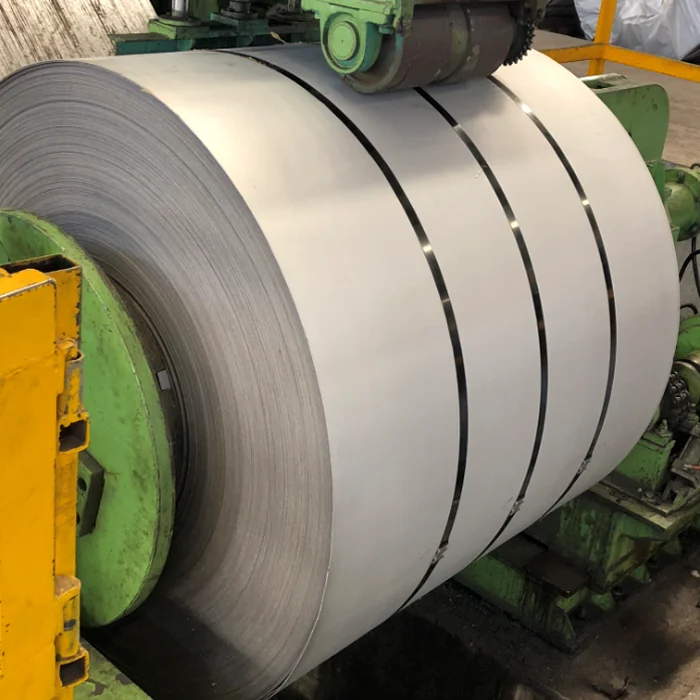
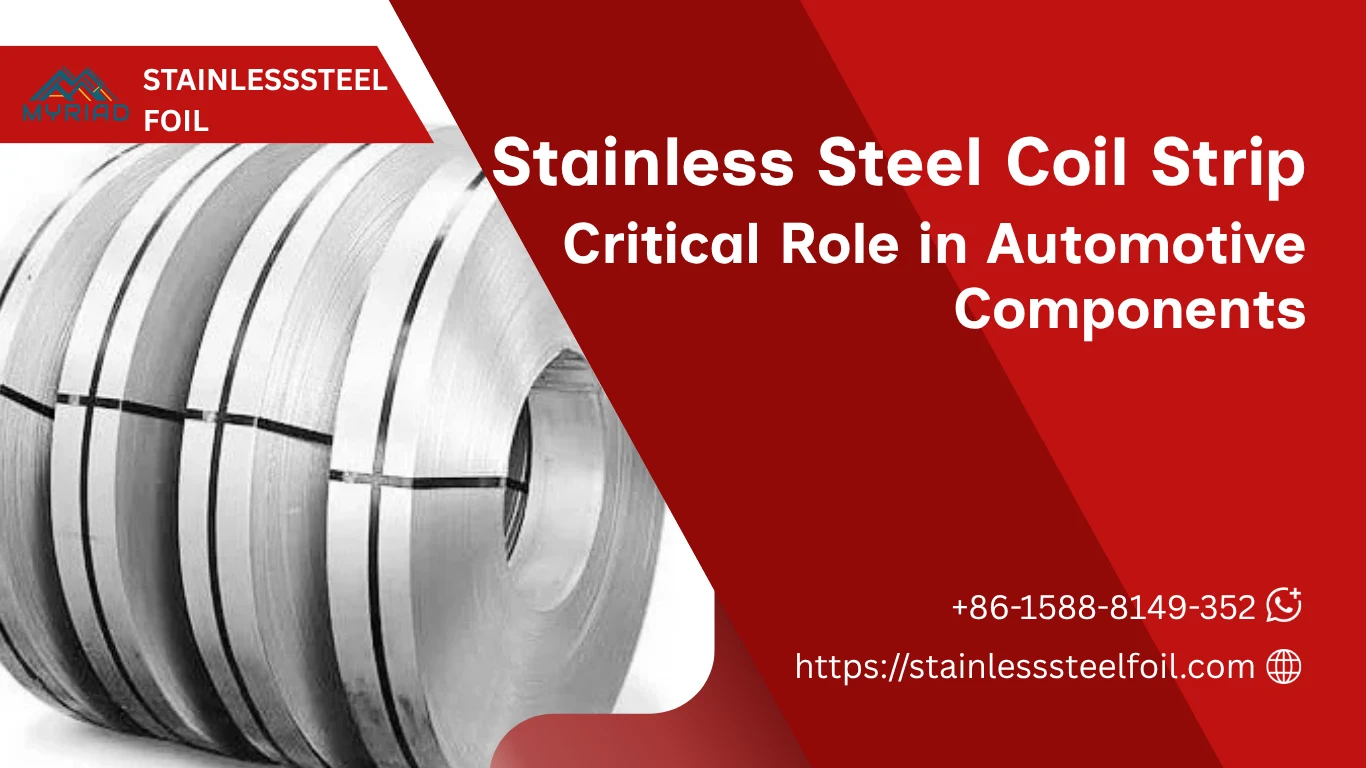
Stainless steel coil strip is a flat-rolled stainless steel product manufactured in continuous coils and processed into specific widths and thicknesses to meet industrial requirements. It is produced from high-quality stainless steel alloys containing chromium, and often nickel, molybdenum, or other elements that enhance corrosion resistance, strength, and durability. Due to its excellent mechanical properties and versatility, stainless steel coil strip is widely used across industries such as automotive, construction, electronics, medical equipment, and manufacturing. The material is available in various grades, including 304, 316, 430, and 409 stainless steel, each designed for specific applications and operating environments. Stainless steel coil strips can be further processed through slitting, stamping, bending, welding, and forming to create precision components.
Why the Automotive Sector Relies Heavily on Stainless Steel Coil Strip
Automotive components operate in an unforgiving operating window. They must withstand rapid thermal cycling, atmospheric moisture, chemical de-icers, and continuous structural fatigue while maintaining lightweight geometries. Utilizing high-quality stainless steel strip ensures that components satisfy these rigorous performance requirements without adding unnecessary density to the vehicle frame.
Unlike carbon steels or aluminum alternatives, precision-rolled stainless steel strip delivers a superior strength-to-weight ratio alongside intrinsic corrosion resistance. This allows design engineers to specify ultra-thin gauges—down to fractions of a millimeter—without jeopardizing structural integrity.
When supplied in a continuous coil format, this material unlocks maximum automated efficiency for high-speed progressive die stamping, roll forming, and deep-drawing processes. This minimizes manual coil changeover intervals, maximizes stamping plant throughput, and stabilizes production yields across million-unit program runs.
Selecting Your Stainless Steel Coil Strip Alloy Grade
Selecting the appropriate metallurgical formulation for your stainless steel strips dictate both the manufacturing yield on the plant floor and the ultimate lifespan of the component in the field. Different regions of the vehicle necessitate highly specialized chemical configurations. Tier-1 buyers typically navigate three main categories of alloy structures when procuring raw stock:
1. Austenitic Stainless Steel Coil Strip (300-Series Alloys)
Austenitic alloys, primarily containing chromium and nickel, are the workhorses of components requiring supreme ductile performance and high-temperature corrosion survival.
Grade 301: Renowned for its rapid work-hardening rate, making it ideal for spring-loaded clips, fasteners, and structural retainers requiring high tensile strength.
Grade 304: The global standard for balancing chemical stability and exceptional formability, extensively utilized in exhaust components, fuel lines, and deep-drawn decorative trim.
Grade 316: Enhanced with molybdenum to protect against severe pitting corrosion, specified for premium marine-exposed sensors, critical fuel cell connectors, and heavy-duty commercial truck sub-assemblies.
2. Ferritic Stainless Steel Coil Strip (400-Series Alloys)
Ferritic alloys are nickel-free, chromium-rich alternatives that exhibit excellent thermal fatigue resistance and lower, more stable raw material pricing profiles. Grade 409 and 439 coils are frequently deployed in the hot-end and cold-end zones of internal combustion exhaust systems, where they effectively resist oxidation and cyclic heat scaling without the cost premium of nickel-heavy blends.
| Alloy Category | Common Grades | Key Mechanical Properties | Primary Automotive Applications |
| Austenitic | 301, 304, 316 | High ductility, supreme corrosion resistance, work-hardens rapidly | Fuel delivery rails, EV battery enclosures, structural spring clips, trim |
| Ferritic | 409, 430, 439 | Excellent thermal fatigue limits, magnetic, highly cost-stable | Exhaust manifolds, catalytic converter shells, muffler assemblies |
| Martensitic | 410, 420 | Heat-treatable, high hardness, high wear resistance | Brake discs, safety belt buckles, transmission washers |
Critical Automotive Applications Utilizing Custom Stainless Steel Coil Strip
Modern vehicle engineering depends heavily on the versatility of precision metal ribbons. The unique combination of mechanical resilience and chemical inertness positions the stainless steel coil strip as an irreplaceable asset across several vehicle zones:
EV Battery Packs and Enclosures
In the electric vehicle ecosystem, thermal runaways must be contained at all costs. Precision-rolled, ultra-thin stainless steel coil strip is stamped into internal battery module separators, busbar cooling plates, and outer structural battery trays. The material provides a crucial fire barrier, EMI (electromagnetic interference) shielding, and structural crash protection while occupying minimal geometric volume.
Exhaust and Emissions Systems
Exhaust manifolds, downpipes, oxygen sensor bungs, and catalytic converter wraps endure temperatures scaling past 800°C alongside constant exposure to corrosive condensates. High-frequency welded tubes formed directly from ferritic or heat-resistant austenitic stainless steel coil strip provide the continuous wall integrity needed to meet zero-emissions leakage regulations over a vehicle’s mandated 150,000-mile operational lifecycle.
Precision Fuel Delivery Rails
Direct injection systems mandate fuel delivery pressures exceeding 350 bar. Fuel rails stamped and deep-drawn from highly ductile stainless steel coil strip retain precise inner dimensions and smooth internal surface finishes, preventing microscopic fuel swirling, friction, or chemical degradation caused by modern ethanol-blended alternative fuels.
Advantages of Stainless Steel Coil Strip for Automotive Manufacturers
Precision Manufacturing with Stainless Steel Coil Strip
Modern automotive production relies on high-volume manufacturing processes that require tight tolerances and consistent quality.
Premium stainless steel coil strip offers:
- Excellent dimensional accuracy
- Uniform thickness
- Smooth surface finish
- Superior formability
These characteristics support efficient stamping, bending, welding, and deep-drawing operations.
As a result, manufacturers experience:
- Reduced material waste
- Lower production costs
- Improved product consistency
- Faster assembly processes
Sustainability Benefits of Stainless Steel Coil Strip
Sustainability has become a major focus within the automotive industry.
One significant advantage of stainless steel coil strip is its environmental friendliness.
Benefits include:
- 100% recyclability
- Long service life
- Reduced resource consumption
- Lower lifecycle costs
Unlike many alternative materials, stainless steel can be recycled repeatedly without losing its mechanical properties.
Choosing the Right Stainless Steel Coil Strip Supplier
Selecting a Stainless Steel Coil Strip supplier is just as important as choosing the right material grade.
Automotive manufacturers should evaluate suppliers based on several critical factors.
Quality Standards for Stainless Steel Coil Strip
A trusted supplier should comply with international quality standards such as:
- ISO 9001
- IATF 16949
- ASTM standards
- EN standards
Consistent quality control ensures that every coil strip meets strict automotive requirements.
Customization Capabilities for Stainless Steel Coil Strip
Different automotive applications require specific dimensions and finishes.
An experienced supplier should offer:
- Custom widths
- Various thicknesses
- Surface finishing options
- Precision slitting services
Customization helps manufacturers optimize material usage and production efficiency.
Reliable Supply Chain for Stainless Steel Coil Strip
Automotive production schedules demand uninterrupted material availability.
Reliable suppliers provide:
- Stable inventory management
- On-time delivery
- Global logistics support
- Flexible order quantities
Strong supply chain capabilities help prevent costly production delays.
Final Summary
As the automotive sector speeds toward an automated, electrified future, component engineering tolerances will only compress. Success belongs to the manufacturers who treat raw materials not merely as an expense line-item, but as an active operational lever to drive down scrap rates, optimize tool longevity, and guarantee zero-defect field reliability.
Partnering with a dedicated, experienced metal processor capable of delivering precise, burr-free, and metallurgically verified stainless steel coil strip transforms a volatile supply chain step into a distinct competitive advantage. By focusing heavily on precise slitting mechanics, guaranteed gauge uniformity, and certified alloy traceability, automotive Tier-1 suppliers can confidently deliver the next generation of components safely, efficiently, and profitably.
FAQs
What are the most common grades of stainless steel coil strip used in automotive components?
The automotive industry primarily utilizes a mix of austenitic and ferritic grades, such as 301, 304, 316, 409, and 439. Austenitic grades are chosen for high ductility and superior corrosion resistance in components like fuel lines, while ferritic grades are utilized for their exceptional thermal fatigue limits in exhaust systems. Sourcing the correct grade ensures that the parts can withstand rapid thermal cycling and harsh operating environments.
How does the gauge uniformity of a stainless steel coil strip impact high-speed stamping operations?
Strict gauge uniformity ensures a consistent material flow through high-speed progressive stamping dies, which prevents material slippage and forming errors. If a stainless steel coil strip suffers from thickness variations, it leads to inconsistent dimensions and a sudden spike in manufacturing scrap rates. Maintaining tight thickness tolerances ultimately maximizes stamping plant throughput and stabilizes production yields.
Why does precision slitting of a stainless steel coil strip extend tool and die longevity?
Poorly slit coils often feature heavy, irregular burrs that shed microscopic metal dust inside high-tonnage progressive presses. Over thousands of strokes, this debris causes micro-galling on the surface of expensive carbide dies, resulting in component scoring and premature breakdown. Sourcing a premium stainless steel coil strip with a clean, burr-free edge configuration can extend your tooling life by up to 35%.