Home / Products / 316 & 316L stainless steel foil & thin sheet
Specify the material for the part, from grade to delivery form.
Myriad offers Type 316 and Type 316L stainless steel foil, slit strip and cut-to-length thin sheets for quotation. Send the dimensions and properties your process requires; we will check the complete grade, size and condition combination before confirming supply.
FOIL ROLLS · PRECISION STRIP · FLAT FOIL SHEETS
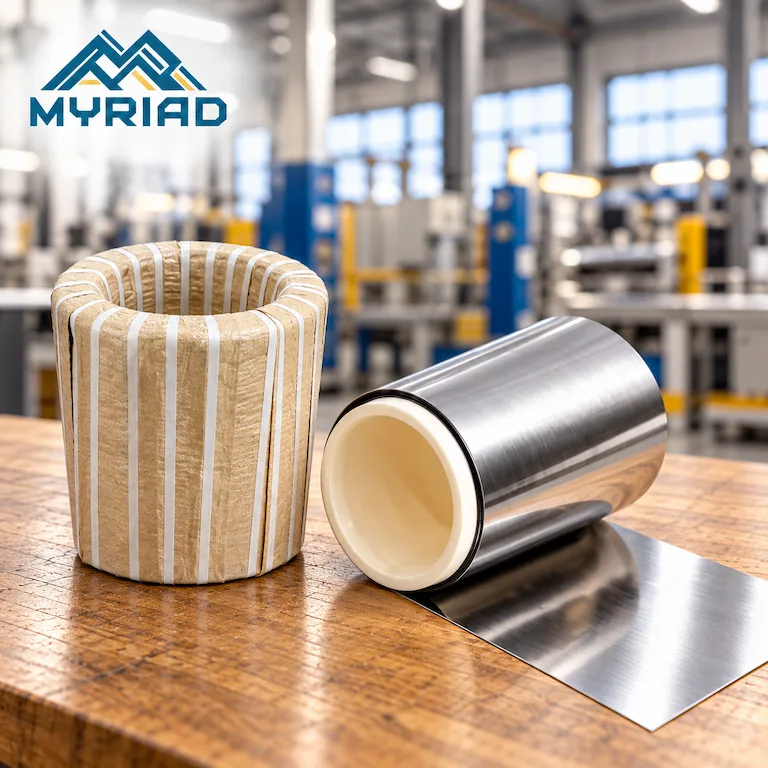
Thickness · width · temper · surface · edge
The requested grade, width and condition are confirmed together.
For 0.01 mm nominal thickness, the minimum width is 4 mm.
Choose the required grade. A combined product heading does not establish dual certification.
Dimensions are controlled in millimeters. Inch values are approximate conversions for reference, not separate acceptance limits.
The ranges below describe Myriad’s overall supply envelope. Each 316 or 316L order is reviewed for its specific dimensions, condition, surface and delivery form.
| Specification | Range or requirement to confirm |
|---|---|
| Grade | Type 316 / UNS S31600 or Type 316L / UNS S31603; include the governing product standard and any additional designation. |
| Thickness | 0.01–0.30 mm overall, approximately 0.000394–0.011811 in. |
| Coil and slit-strip width | 1.5–620 mm overall, approximately 0.059–24.409 in. For 0.01 mm thickness, width starts at 4 mm, approximately 0.157 in. |
| Delivery condition | Specify the condition and any established hardness and/or tensile requirements. Availability depends on the grade–size–condition combination. |
| Finish | BA and 2B are the main options. Mirror finish is reviewed separately against the dimensions and surface requirements. |
| Edge | Slit, deburred, rounded/conditioned or scraped edges, subject to the selected configuration. State the allowable burr and edge profile where relevant. |
| Flat foil / thin sheet | Cut-to-length material in widths of 70–500 mm, approximately 2.756–19.685 in. Length, dimensional tolerances and flatness are agreed for the order. |
“Thin sheet” here means foil supplied flat at an agreed cut length. Thicker conventional sheet requires a separate supply review.
The listed deviations are Myriad-declared supply tolerances, subject to configuration confirmation. Agree the sampling, measurement method and acceptance rule before ordering.
| Nominal thickness t, mm | Declared deviation, mm | Applicable boundary |
|---|---|---|
| 0.010 | +0.002 / 0 | Resulting thickness: 0.010–0.012 mm |
| 0.015 | +0.002 / 0 | Resulting thickness: 0.015–0.017 mm |
| 0.020–0.100 | ±0.002 | Includes both endpoints |
| 0.100 < t ≤ 0.300 | ±0.030 | Excludes 0.100 mm; includes 0.300 mm |
Exactly 0.100 mm uses ±0.002 mm. Other nominal thicknesses between 0.010 and 0.020 mm need a separately agreed tolerance; do not interpolate between the listed sizes.
| Nominal coil / strip width w, mm | Declared width deviation, mm |
|---|---|
| 1.5 ≤ w < 3 | Confirm for the requested specification |
| 3 ≤ w < 50 | ±2 |
| 50 ≤ w ≤ 100 | ±3 |
| w > 100 | ±5 |
These width deviations apply to normally processed coil material. They do not set flat-sheet width or length tolerances, and they do not override the 4 mm minimum width at 0.010 mm thickness. Submit tighter limits for review before they become order requirements.
Use these room-temperature annealed values as technical references, rather than batch results or blanket delivery guarantees. They are retained in Myriad's 316/316L technical-reference material and align with the annealed reference table in ATI's 316/316L technical data, page 8.
| Grade | Reference condition | 0.2% proof strength, MPa (ksi), min. | Tensile strength, MPa (ksi), min. | Elongation reference, min. |
|---|---|---|---|---|
| 316 | Annealed | 205 (30) | 515 (75) | 40% |
| 316L | Annealed | 170 (25) | 485 (70) | 40% |
The elongation reference uses a 2 in gauge length. Confirm specimen geometry, gauge length, test direction and numerical acceptance limits for the actual foil thickness. The table does not describe quarter-hard, half-hard or full-hard material.
Thin foil needs a suitable test setup. ASTM E345 addresses tensile testing of metallic foil; assess its applicability, specimen handling and gripping for the required measurement. A hardness requirement should name the method, force, dwell time and valid specimen/support conditions. A converted hardness value is not a substitute for a required tensile test.
This table presents selected elements from Myriad's historical material-testing compilation. Values are mass percentages; single values are maxima and intervals are ranges. They are neither a complete product-standard composition table nor the analysis of one heat.
| Grade | C max. | Mn max. | S max. | P max. | Si max. | Cr range | Ni range |
|---|---|---|---|---|---|---|---|
| 316 | 0.08 | 2.0 | 0.03 | 0.035 | 1.0 | 16–18 | 10.0–14.0 |
| 316L | 0.03 | 2.0 | 0.03 | 0.035 | 1.0 | 16–18 | 11.0–15.0 |
The 316L nickel interval is Myriad's company reference range, informed by historical information. It does not demonstrate measured coverage of that entire interval or define the limits of a particular standard. Verify the agreed specification and heat-specific analysis for the supplied material; this table alone cannot establish grade conformity.
Make the grade decision against the service environment, then select the delivery condition. Both grades contain molybdenum, which can improve resistance to pitting and crevice corrosion relative to 304. The lower carbon of 316L addresses sensitization concerns in welded service; it does not make every 316L part suitable for every chloride environment.
Consider 316 when a molybdenum-bearing austenitic grade matches the part’s corrosion and fabrication requirements. State the actual medium, temperature and cleaning conditions where they affect material selection. Avoid choosing solely from a “marine grade” description.
Consider 316L when the specification calls for lower carbon, particularly for welded service. Lower carbon reduces sensitization concerns associated with welding. Joint design, fabrication and the operating environment still determine the finished part’s performance.
Specify condition through the properties your process needs. Cold work increases strength and hardness while reducing ductility. Annealed, half-hard and full-hard flat-sheet options require review by grade and dimensions; quarter-hard flat sheets require separate supply confirmation. Welding can reduce strength obtained through cold work, so agree any post-weld requirement separately.
Request dual certification explicitly when both designations are required. A page listing 316 and 316L offers two grade choices. It does not establish that a particular coil meets both specifications; the supplied material and its documentation must satisfy the agreed order requirements.
Agree measurable acceptance requirements before order confirmation. Dimensions, mechanical properties, surface and edge criteria need an appropriate test or inspection basis. For very thin foil, handling tension, contact pressure, preparation and gripping can affect the validity of the measurement.
Close the gaps in the specification before production. Align the selected grade and condition with the dimensional limits, sampling, test methods and required reports. Select any product standard by its actual coverage and agreed edition; a grade designation alone does not establish compliance.
A Myriad report plus a third-party report applies under the qualifying order rule. The order must actually take at least 500 kg of one identical specification—same grade, thickness, width and condition—from the same heat and the same parent coil before slitting. Material from different parent coils cannot be added together, and the original parent-coil weight is not the threshold basis.
Below that threshold, the policy provides a Myriad report without third-party testing under this rule. For qualifying third-party testing, special items are defined by the order; tensile strength alone is the routine default when no special tests are specified.
Shipment is arranged after the customer confirms the material reports. Production and applicable testing come first, followed by report review. Normal delivery also requires settlement of the balance payment; exceptions need separate approval.
Supply information comes from Myriad's confirmed company records. This page uses the current supply-range and tolerance records, the confirmed cut-to-length flat-sheet information, and the order-inspection, reporting and packaging policies. The chemical table follows Myriad's selected historical reference data and is kept separate from standard limits and new-batch analysis.
Material explanations use published technical references. See ATI's 316 and 316L strip information, the ATI technical datasheet, and ASTM E345's scope. These sources support material references and test-method discussion; they do not certify Myriad's supplied material.
Choose the delivery form around how the material will be handled and processed. Coil-fed work and individual flat-sheet handling require different configuration details. Confirm those details together with the grade, dimensions and condition.
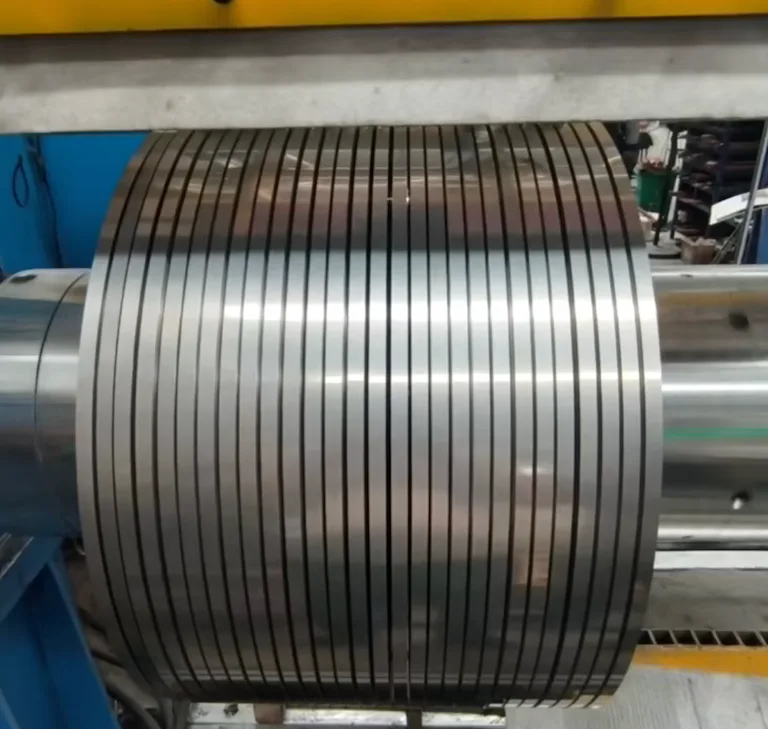
Define the winding configuration for your equipment. Include the core/inside diameter, maximum outside diameter, coil weight, winding arrangement and edge requirements. These are reviewed for the requested 316 or 316L material.
Define the flat-sheet dimensions and acceptance requirements together. Width is within the 70–500 mm overall flat-sheet range; length is set by inquiry. Agree sheet width, cut-length tolerance, flatness and surface protection rather than applying the coil-width table to flat sheets.
Send the flat-sheet dimensions ↗
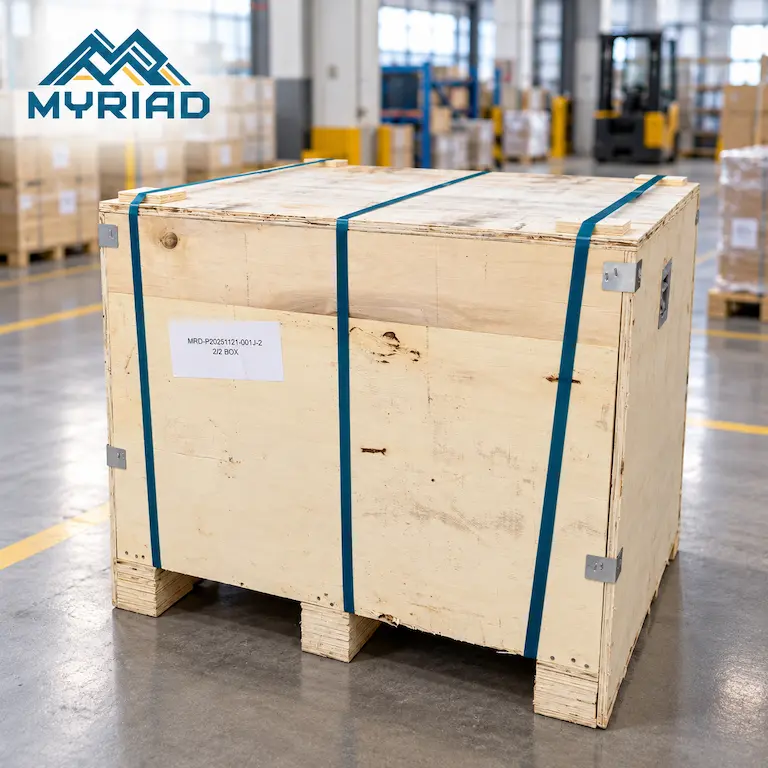
Packing is agreed to suit the shipment. Moisture-protective packing, pallets, wooden cases and customer-specified arrangements are available options, with wooden cases the principal choice. Confirm the packing combination, unit weights and handling requirements with the order.
Send the temper and numerical property requirements for review. Half hard is an established flat-sheet condition option subject to the grade and dimensions; quarter-hard flat sheets need separate confirmation. For 316L, state that grade explicitly. The annealed table does not establish cold-worked properties or available stock.
No; the label alone is not an acceptance basis for seawater service. Chloride level, temperature, crevices, deposits, surface condition and cleaning affect performance. Neither 316 nor 316L is immune to chloride attack or chloride stress corrosion cracking; assess the actual service conditions before selecting the material.
Confirm the substitution against the complete specification. The lower carbon designation does not by itself establish the required strength, delivery condition, dimensional limits or certification. Obtain approval for the grade and any changed acceptance requirements before ordering.
No; the reference does not predict a specific forming result. Actual thickness, condition, test direction, specimen geometry and gauge length affect how a tensile result should be interpreted. Verify the required material properties and assess the intended forming operation; do not transfer a reference value directly into a part-performance guarantee.
Send your established specification directly, or identify the requirement that needs advice. Include grade, thickness, width or sheet length, tolerances, delivery form, condition, known hardness and/or tensile limits, quantity per specification, finish, edge and required documentation.
If a material property is undecided, provide the conditions needed to discuss it. Describe the component function, forming process and relevant service environment. A drawing is useful when it resolves a specific open item; proposed property values require your confirmation before becoming order requirements.
Include the commercial details needed for a quotation. Provide your name, company, email, destination, required schedule and packing requirements. Myriad will review the specification, clarify unresolved items and confirm the available supply options and terms.
Nothing has been sent yet. Review the information below, then confirm your details in the email form and click Send 316 / 316L inquiry.