In precision manufacturing, automotive engineering, and industrial design, selecting the right raw material is often the deciding factor between a product’s success and its premature failure. Among the vast array of alloys available, the 304 Stainless Steel Strip stands out as the ultimate workhorse.
Known for its exceptional balance of formability, corrosion resistance, and cost-effectiveness, this versatile alloy is utilized in everything from deep-drawn electronic components to robust automotive heat shields. However, simply choosing “304” isn’t enough. To optimize your manufacturing efficiency and product longevity, you must understand how to specify the exact dimensions, tempers, and finishes required for your unique application.
This comprehensive guide will walk you through the critical selection criteria, compare 304 against alternative alloys, and help you source high-quality materials for your production line.
What is a 304 Stainless Steel Strip?
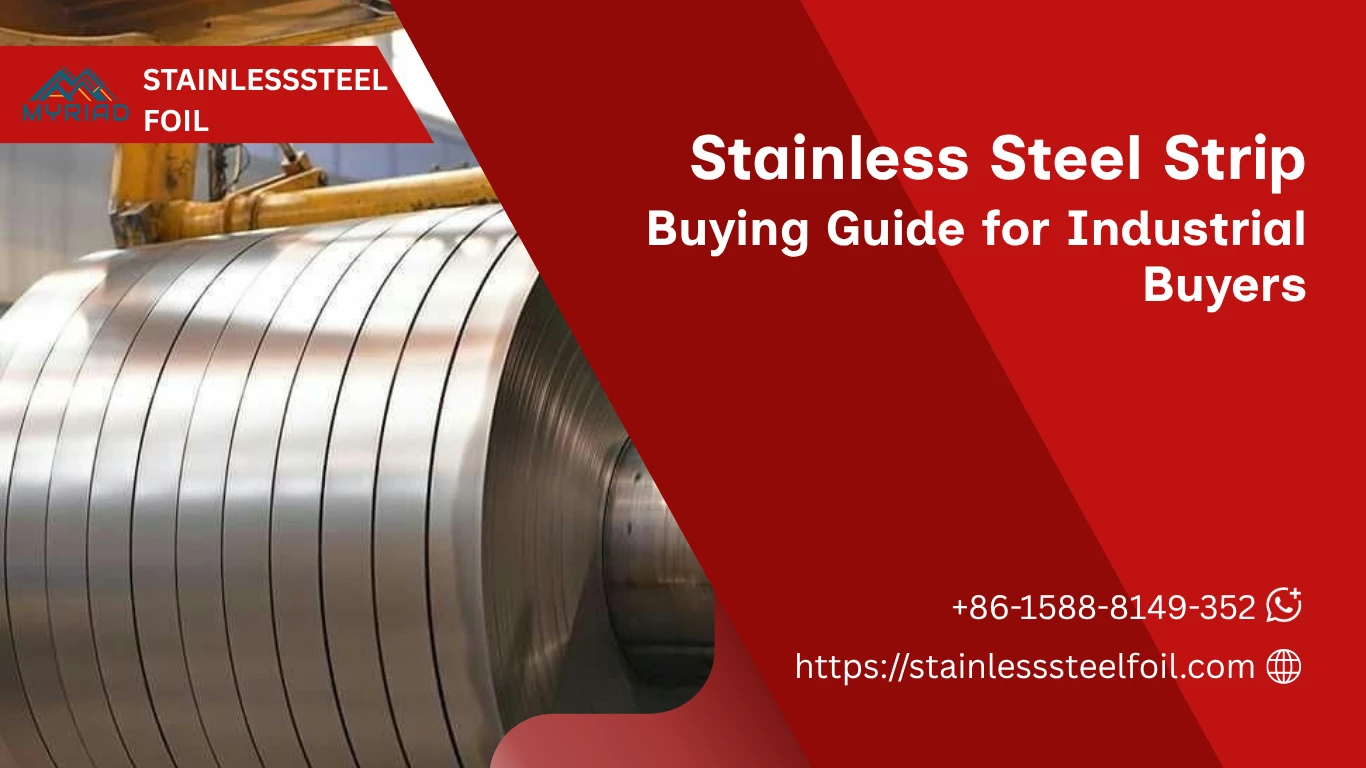
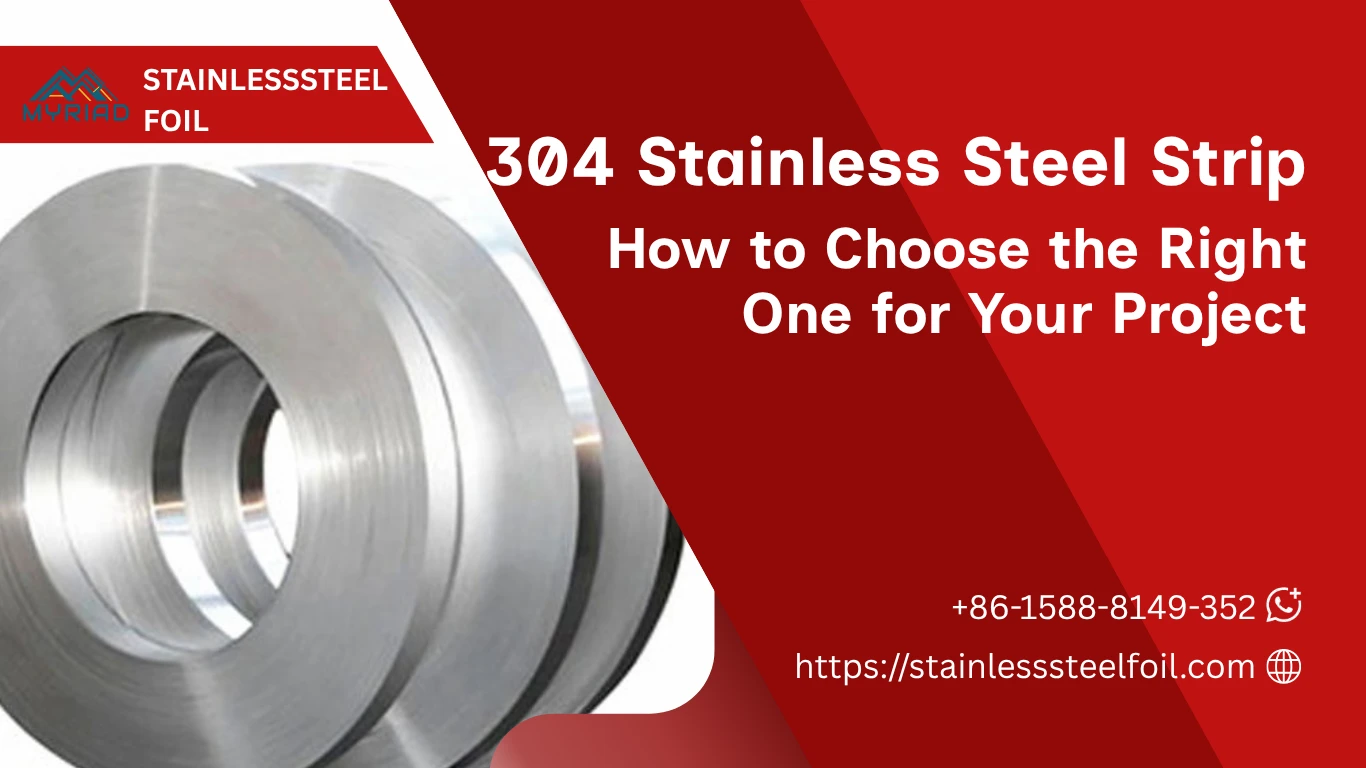
At its core, a 304 Stainless Steel Strip is a cold-rolled, narrow-width product derived from a larger 304 Stainless Steel Coil. As an austenitic stainless steel, it contains high levels of chromium (typically 18%) and nickel (typically 8%). This specific chemical composition creates a passive chromium oxide layer on the material’s surface, providing excellent resistance to atmospheric corrosion and oxidation.

The Role of Stainless Steel Coil Strip in Modern Manufacturing
What is the actual Role of Stainless Steel Coil Strip in industrial supply chains? Essentially, it bridges the gap between raw, bulk steel production and precision manufacturing. Master coils are slit into precise widths to form strips. These strips are fed continuously into high-speed stamping presses, roll-forming machines, and laser cutters. Because it can be delivered in continuous lengths, it minimizes material handling, reduces changeover downtime, and maximizes yield.
Understanding Your Project Requirements Before Choosing 304 Stainless Steel Strip
Before purchasing a 304 Stainless Steel Strip, it is essential to evaluate your project’s specific requirements.
Consider the following questions:
What Environment Will the 304 Stainless Steel Strip Operate In?
The operating environment determines the corrosion resistance requirements. For indoor applications and general industrial environments, 304 Stainless Steel Strip is typically sufficient.
However, if the material will be exposed to:
- Marine environments
- Saltwater
- Chemical processing facilities
- High chloride concentrations
Then a 316L Stainless Steel Strip may be a better option because of its enhanced resistance to corrosion and pitting.
What Mechanical Properties Are Required?
Different applications require different strength levels.
For example:
- Deep drawing applications require excellent ductility.
- Precision stamping requires controlled hardness.
- Structural components may need higher tensile strength.
Understanding the mechanical requirements helps determine the ideal temper and hardness level for your stainless steel strip.
Critical Factors When Choosing a 304 Stainless Steel Strip
Selecting the perfect 304 Stainless Steel Strip requires looking beyond the grade name. You must align the material’s mechanical properties with your specific production environment and final product requirements.
Gauge, Width, and Tolerances
Precision is paramount. When ordering a 304 Stainless Steel Strip, you must specify exact thickness (gauge) and width tolerances.
Slitting Tolerances: Ensure your supplier can meet tight width tolerances to prevent jamming in your automated stamping dies.
Thickness Uniformity: Variations in gauge can cause inconsistent springback during bending or tearing during deep drawing.
Temper and Mechanical Properties
The temper of your 304 Stainless Steel Strip dictates how it behaves under stress. Unlike carbon steel, 304 work-hardens rapidly during cold rolling. Suppliers can deliver it in various tempers:
Annealed (Soft): Maximum ductility; ideal for deep drawing and severe forming.
Quarter-Hard / Half-Hard: A balance of strength and flexibility, often used for brackets and structural clips.
Full-Hard: High tensile strength and spring-like properties; ideal for clips, springs, and wear strips.
Surface Finish Requirements
The surface finish impacts both aesthetic appeal and functional performance. Common options include:
2B (Bright Cold Rolled): A smooth, moderately reflective finish suitable for general applications.
BA (Bright Annealed): A highly reflective, mirror-like finish achieved by annealing in a controlled-atmosphere furnace. Crucial for cosmetic components.
No. 4 (Brushed): A directional polished finish often seen in architectural accents and food processing equipment.
Comparative Analysis: 304 vs. 316L Variations
While the 304 Stainless Steel Strip is the industry standard for general use, certain environments demand higher-tier alternatives. It is essential to know when to stick with 304 and when to upgrade.
| Property / Feature | 304 Stainless Steel Strip | 316L Stainless Steel Strip |
| Chemical Composition | 18% Cr, 8% Ni | 16% Cr, 10% Ni, 2-3% Mo |
| Corrosion Resistance | Excellent in atmospheric conditions | Superior in marine and chloride environments |
| Formability | High ductility, excellent for deep drawing | Good, but work-hardens slightly faster |
| Cost Profile | Highly cost-effective | Premium pricing due to Molybdenum content |
| Common Ultra-Thin Form | Standard foils available | 316L Stainless Steel Foil for high-acid environments |
When to Choose a 316L Stainless Steel Strip Instead
If your project involves prolonged exposure to marine environments, chemical processing agents, or severe chloride solutions (like road salt), upgrading to a 316L Stainless Steel Strip is highly recommended. The “L” stands for low carbon, which prevents carbide precipitation during welding, while the added molybdenum drastically reduces pitting corrosion.
For highly specialized, ultra-thin applications—such as burst discs or flexible electronics shielding in corrosive atmospheres—engineers often turn to ultra-thin 316L Stainless Steel Foil to ensure maximum barrier protection without adding weight.
Step-by-Step Guide: Evaluating a 304 Stainless Steel Strip Supplier
Your final product is only as reliable as the raw material you source. Partnering with the right 304 Stainless Steel Strip Supplier is critical to maintaining production consistency. Use the following checklist when vetting potential vendors:
Material Traceability and Certification
Never accept steel without a Mill Test Certificate (MTC). A reputable 304 Stainless Steel Strip Supplier should provide full traceability, detailing the exact chemical composition (Chromium, Nickel, Carbon levels) and mechanical properties (tensile strength, yield strength, elongation) of the specific heat number delivered.
Advanced Slitting and Edging Capabilities
Raw slit strips often feature razor-sharp burrs. Depending on your application, ask your supplier if they provide custom edging services:
Slit Edge: Standard edge, contains minor burrs from the shearing process.
Deburred Edge: Burrs are mechanically removed for safer handling.
Round Edge: Smooth, rounded edges ideal for exposed consumer applications or components that slide against other metals.
Supply Chain and Packaging Reliability
Because thin steel strips are susceptible to edge damage and moisture oxidation during transit, verify that your supplier utilizes heavy-duty packaging. Coils should be securely strapped, wrapped in vapor-corrosion-inhibitor (VCI) paper, and crated on sturdy pallets.
Final Summary
Choosing the right 304 Stainless Steel Strip is a balancing act among mechanical requirements, manufacturing capabilities, and budget constraints. By understanding the core Role of Stainless Steel Coil Strip in your production line, identifying the correct temper, and partnering with a transparent, certified 304 Stainless Steel Strip Supplier, you eliminate costly manufacturing errors and ensure your components stand the test of time.
FAQs
How do I choose the right thickness of 304 Stainless Steel Strip?
Thickness should be selected based on application requirements, strength needs, fabrication processes, and production specifications.
Why is choosing the right 304 Stainless Steel Strip Supplier important?
A reliable supplier ensures consistent quality, timely delivery, technical support, certification compliance, and long-term supply stability.
What industries commonly use 304 Stainless Steel Coil?
Industries such as automotive, electronics, construction, food processing, medical equipment, and energy sectors frequently use 304 Stainless Steel Coil.
Is 316L Stainless Steel Foil better than 304 Stainless Steel Strip?
Not necessarily. 316L Stainless Steel Foil is better suited for highly corrosive and precision applications, while 304 Stainless Steel Strip is more cost-effective for general industrial use.