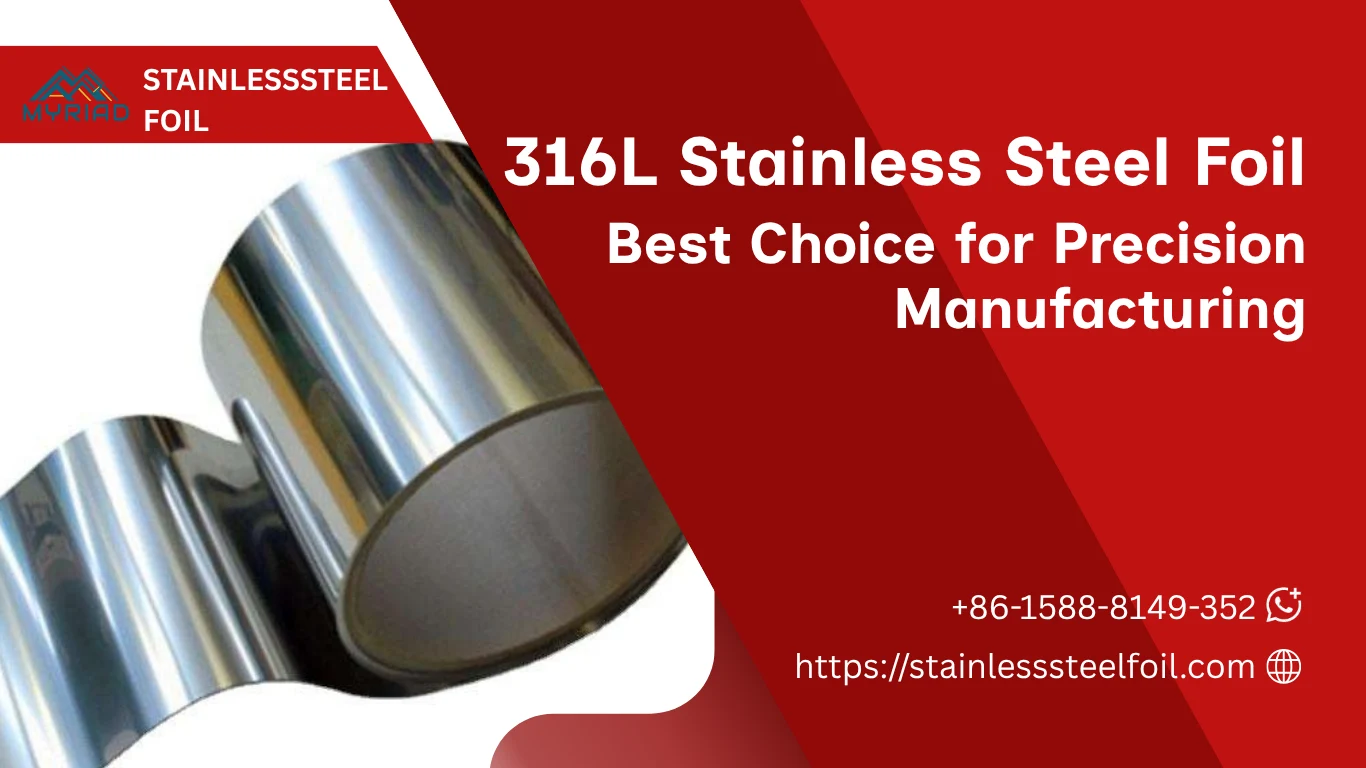
Among the various metal materials available, 316L Stainless Steel Foil has emerged as one of the most trusted solutions for precision manufacturing applications. Its exceptional corrosion resistance, excellent mechanical properties, superior weldability, and low carbon content make it an ideal choice for manufacturers seeking consistent performance and long-term value.
Whether used in ultra-thin components, medical instruments, battery systems, or high-precision industrial equipment, Stainless Steel Foil offers a combination of strength and flexibility that few materials can match. This article explores why 316L stainless steel foil is the preferred choice for precision manufacturing and how businesses can select the right supplier and specifications for their projects.
What Is 316L Stainless Steel Foil?
316L Stainless Steel Foil is a thin-gauge stainless steel material manufactured from Grade 316L stainless steel, an austenitic alloy containing chromium, nickel, and molybdenum. The “L” designation refers to its low carbon content, which helps reduce carbide precipitation during welding and enhances corrosion resistance.
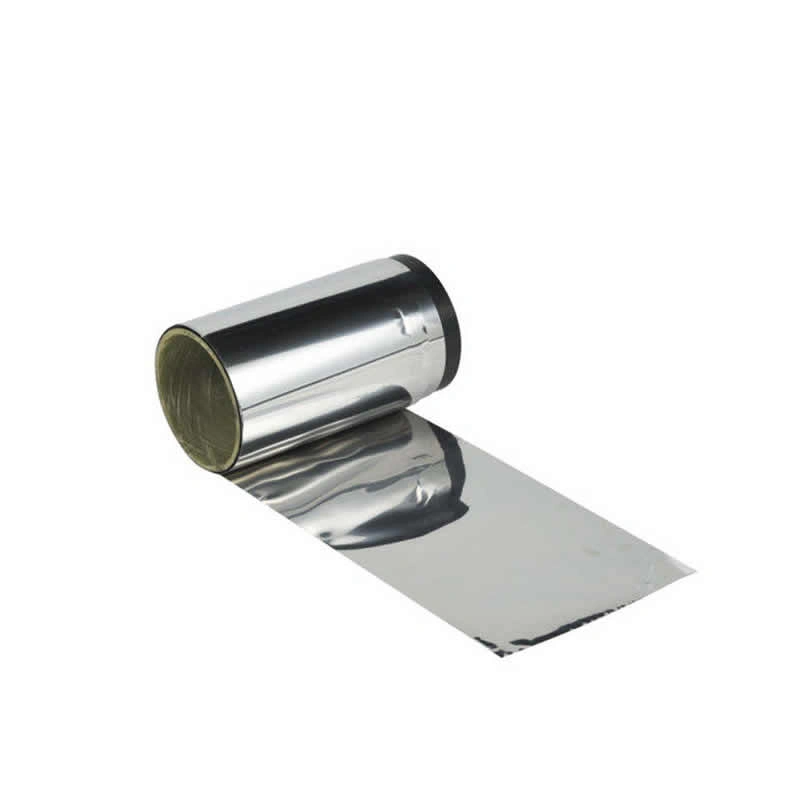
Compared to standard stainless steel materials, 316L foil provides:
- Excellent corrosion resistance
- Superior formability
- High strength-to-weight ratio
- Outstanding weldability
- Resistance to chemicals and chlorides
- Long service life in harsh environments
These characteristics make it a preferred material for precision manufacturing applications that require both durability and dimensional accuracy.
Why Precision Manufacturers Prioritize 316L Stainless Steel Foil
Beyond its chemical characteristics, 316L foil offers distinct operational and economic advantages on the production floor. Precision manufacturing relies on predictable material behavior; variations in gauge, temper, or surface finish can lead to tooling wear, downtime, and expensive scrap rates.
Superb Formability and Deep-Drawing Capacity: Despite its tough nature, 316L foil exhibits exceptional ductility. This allows it to be stamped, bent, and deep-drawn into intricate, complex shapes without tearing or cracking—even when utilizing ultra-thin gauges.
Flawless Chemical Etching Performance: For complex geometries like micro-meshes, filtration screens, and lead frames, photochemical machining (PCM) is used instead of traditional stamping. The clean, homogeneous grain structure of high-grade 316L foil ensures uniform etching rates, razor-sharp edges, and burr-free geometries.
Excellent Surface Finishes: Precision foils can be ordered with custom finishes, such as bright annealed (BA) or cold-rolled (TR) tempers, providing low surface roughness (Ra). This is a critical requirement for precision sealing gaskets and high-vacuum applications.
Ultra-Thin 316L Stainless Steel Foil in Next-Gen Tech
As consumer electronics, medical implants, and green energy systems shrink in size while increasing in power, demand has skyrocketed for ultra-thin 316L stainless steel foil—often specified at thicknesses ranging from 0.05 mm down to less than 0.01 mm (10 microns). Engineering at this scale requires precise control over raw material defects, grain uniformity, and surface roughness.
Applications in Medical Device Manufacturing
In medical manufacturing, biocompatibility and sterilization resilience are non-negotiable. Ultra-thin 316L stainless steel foil is widely utilized to manufacture deep-drawn enclosures for pacemakers, micro-fluidic channels for diagnostic assays, and flexible surgical instruments. The material’s high level of purity prevents the leaching of toxic ions into human tissue, and its resistance to organic acids ensures it remains pristine through repeated autoclave cycles.
Role in Hydrogen Fuel Cells and Next-Gen Batteries
The global shift toward green energy has opened up massive opportunities for precision foils. In hydrogen fuel cells, ultra-thin 316L stainless steel foil serves as the core material for bipolar plates. These plates must be incredibly thin to minimize stack weight and volume, yet strong enough to handle internal pressures and resist the highly corrosive, acidic environment within the cell. 316L provides the perfect balance of electrical conductivity, formability, and chemical resistance required for high-volume automated stamping lines.
Critical Comparison: 316L vs 316 Stainless Steel Foil
For procurement officers and design engineers, distinguishing between 316L vs 316 stainless steel foil is crucial for balancing cost, mechanical longevity, and performance margins. While both alloys contain similar levels of nickel, chromium, and molybdenum, the differences in carbon layout completely change how they handle high-precision manufacturing environments.
| Element / Property | Standard 316 Stainless Steel Foil | 316L Stainless Steel Foil |
| Carbon Content (Max) | 0.08% | 0.03% |
| Intergranular Corrosion Risk | Moderate to High (Post-Welding) | Virtually Eliminated |
| Tensile Strength (MPa) | 515 Min | 485 Min |
| Yield Strength (MPa) | 205 Min | 170 Min |
| Micro-Welding Suitability | Requires post-weld annealing | Excellent in as-welded state |
When selecting between 316L vs 316 stainless steel foil, mechanical strength must be weighed against structural stability. Standard 316 exhibits slightly higher yield and tensile strengths due to its higher carbon content. However, in precision manufacturing—where components are frequently micro-welded, chemically etched, or laser-ablated—the lower carbon profile of 316L is vastly superior. Standard 316 can suffer from sensitization during thermal processing, where chromium bonds with carbon at grain boundaries. This leaves adjacent zones depleted of chromium and highly vulnerable to rapid corrosion. For thin-gauge foils, this microscopic degradation can cause catastrophic component failure within weeks of deployment.
How to Choose 316L Stainless Steel Foil
For purchasing managers and quality assurance teams, knowing how to choose 316L stainless steel foil involves looking beyond standard price-per-kilogram metrics. Precision foils are highly specialized products; subtle variations in processing can completely disrupt your automated production lines. Below is the operational framework recommended for evaluating raw material lots:
Define Exact Dimensional Tolerances and Gauge Consistency
Standard commercial tolerances are often insufficient for high-precision operations. In consistent stamping or micro-rolling operations, a gauge variance of just a few microns can cause uneven springback, fracturing, or premature tooling wear.
Assess Temper, Tensile Profiles, and Hardness States
316L foil can be tailored to specific mechanical states depending on your manufacturing requirements. Annealed foil provides maximum ductility for deep drawing, whereas hard-rolled tempers (such as 1/4 Hard, 1/2 Hard, or Full Hard) offer the springback and structural stiffness required for precision diaphragms, custom springs, and structural shims. Your material specification must outline explicit Vickers hardness (HV) or yield strength boundaries.
Validate Slitting Precision and Edge Condition
The quality of the slitted edge is critical. Poorly executed slitting leaves microscopic burrs, camber, or edge wave defects. For high-speed progressive die stamping or automated winding (such as in lithium-ion batteries), these edge imperfections can jam feeding mechanisms or cause tearing. Work with partners who utilize advanced rotary slitting technology to deliver perfectly burr-free edges.
Partnering with the Right 316L Stainless Steel Foil Supplier
Securing a premium, consistent supply chain is essential for long-term production stability. Identifying a world-class 316L stainless steel foil supplier requires auditing their technical capabilities, quality management infrastructure, and processing equipment.
A reliable 316L stainless steel foil supplier should offer full traceability, verified by comprehensive Mill Test Certificates (MTCs) that conform to international standards such as ASTM A240, EN 10088-2, or JIS G4305. These certificates provide clear transparency into exact chemical compositions, tensile metrics, and grain-size distributions.
Supplier Evaluation Checklist: Does your material partner offer specialized downstream processing? Leading suppliers provide critical value-add services including custom precision slitting, stretch-bending-leveling (to ensure absolute flatness), custom surface coatings, and clean-room protective packaging to prevent oil and dust contamination before the material reaches your line.
For global OEMs, a supplier’s logistics management and stock consistency are just as important as their technical expertise. A top-tier material partner should maintain strong relationships with leading primary mills and offer flexible inventory options like Just-In-Time (JIT) delivery or safety stock buffering. This protects your production schedules from sudden market shifts and raw material shortages.
Final Summary
In precision manufacturing, your final product is only as reliable as the raw materials it is built with. 316L Stainless Steel Foil provides an unmatched combination of low-carbon stability, advanced corrosion protection, exceptional formability, and extreme thinness. By understanding the key metallurgical differences of 316L vs 316 stainless steel foil, setting rigorous technical standards, and partnering with an experienced, quality-certified 316L stainless steel foil supplier, manufacturers can optimize production yields, minimize expensive reworks, and deliver superior product longevity.
As industries demand tighter tolerances and higher reliability, investing in premium 316L foil is a strategic step toward future-proofing your manufacturing operations and securing a strong competitive advantage in the global market.
FAQs
What is 316L Stainless Steel Foil?
316L Stainless Steel Foil is a low-carbon austenitic stainless steel material that offers excellent corrosion resistance, high strength, and superior weldability. Manufacturers widely use it in precision manufacturing, medical devices, aerospace components, battery systems, and chemical processing equipment.
Why is 316L Stainless Steel Foil preferred for precision manufacturing?
316L Stainless Steel Foil is preferred for precision manufacturing because it offers exceptional dimensional stability, corrosion resistance, and formability. Its consistent mechanical properties allow manufacturers to produce highly accurate components while maintaining product reliability and quality.
What is the difference between 316L and 316 stainless steel foil?
When comparing 316L vs 316 stainless steel foil, the primary difference is carbon content. 316L contains a lower carbon percentage, which reduces carbide precipitation during welding and improves corrosion resistance in welded areas. This makes 316L a preferred choice for precision manufacturing and critical applications.