In advanced manufacturing, material failure is not an option. When engineers measure an industrial component in microns, they must account for unique, punishing stresses ranging from the high pressures of aerospace engines to the aggressive chemical washdowns of pharmaceutical cleanrooms.
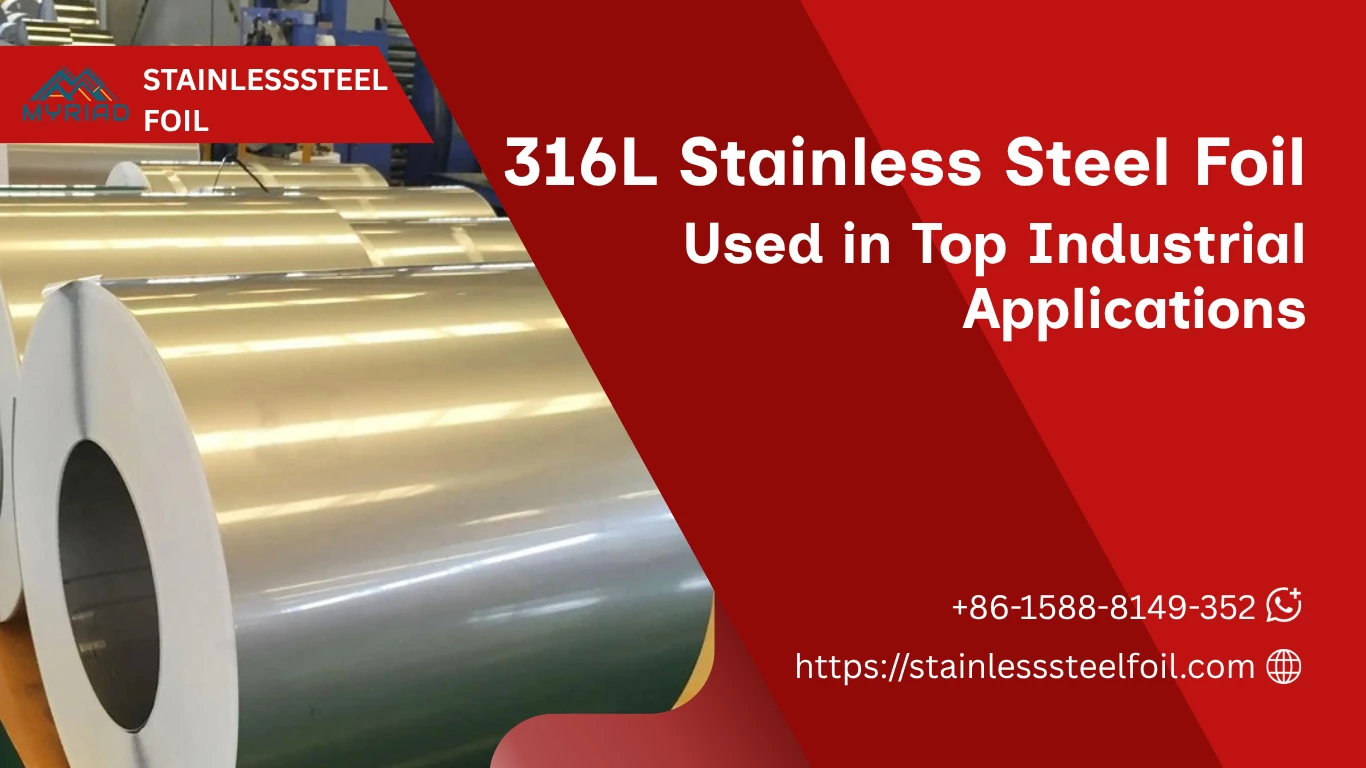
To withstand these conditions, global procurement teams and structural engineers are increasingly moving away from standard alloys and turning to 316L Stainless Steel Foil.
As an ultra-thin, low-carbon, molybdenum-bearing austenitic alloy, this specialized material delivers an elite combination of structural flexibility and extreme environmental resilience. This comprehensive industry analysis explores the top high-stakes business applications of 316L Stainless Steel Foil, demonstrating why it has become a non-negotiable asset across the global industrial supply chain.
What Makes 316L Stainless Steel Foil the Industry Standard?
Before diving into applications, it’s important to understand why 316L stainless steel foil commands such a dominant position in the global materials market.
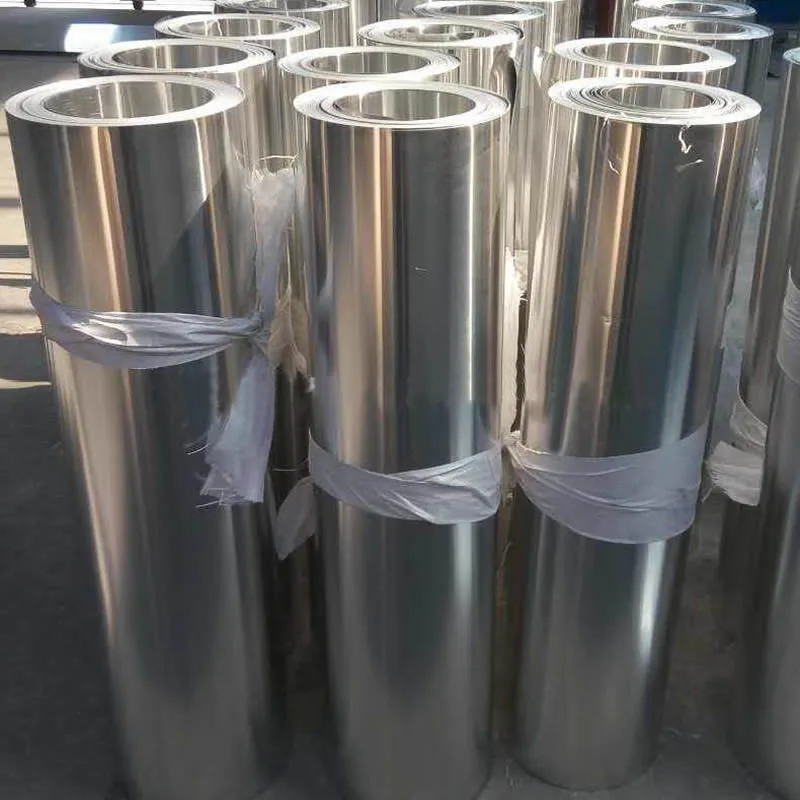
The “L” in 316L denotes low carbon content (≤0.03%), which significantly reduces the risk of carbide precipitation during welding and fabrication, a critical advantage in industries where structural integrity is non-negotiable. In addition, the presence of molybdenum (2–3%) enhances its resistance to chloride-induced pitting and crevice corrosion, making it superior to standard 304-grade stainless steel in harsh environments.
Key material properties that drive demand:
- Exceptional resistance to acidic, saline, and chemical environments
- High tensile strength even at ultra-thin gauges (0.01mm to 0.5mm)
- Non-magnetic properties suitable for electronic and medical applications
- Full compliance with ASTM A240, ASTM A480, and ISO 15510 standards
- FDA-approved for food contact and biocompatible for medical use
These properties make it the go-to choice for industries where quality, durability, and regulatory compliance are non-negotiable.
Pharmaceutical Industry: Where 316L Stainless Steel Foil Meets Regulatory Precision
The pharmaceutical sector operates under some of the world’s most stringent manufacturing standards, and stainless steel has become indispensable in meeting them.
Blister Packaging and Drug Containment
316L SS foil is widely used in blister pack lidding, tablet trays, and moisture-barrier packaging. Its non-reactive surface ensures zero contamination with active pharmaceutical ingredients (APIs), preserving drug efficacy throughout the supply chain. For pharmaceutical manufacturers, this directly translates to reduced product recalls and enhanced brand trust.
Manufacturing Equipment Linings
Reactors, mixing vessels, and conveyor systems in pharma production lines are commonly lined or fabricated with stainless steel foil to prevent cross-contamination and withstand repeated sterilization cycles (autoclaving at 121°C+). Procurement teams in this sector consistently specify 316L over 304 due to its superior resistance to steam, cleaning chemicals, and corrosive solvents.
Aerospace Industry: 316L Stainless Steel Foil Under Extreme Conditions
Aerospace is perhaps the most demanding environment any material can face — extreme temperatures, pressure differentials, vibration, and exposure to aviation fuels and hydraulic fluids. 316L stainless steel foil meets these challenges with impressive reliability.
Thermal Shielding and Insulation Blankets
Manufacturers use ultra-thin 316L stainless steel foil to produce thermal insulation blankets that protect aircraft engines, fuel systems, and electronic bays from heat damage. Its high-temperature oxidation resistance makes it an ideal reflective barrier in multi-layer insulation (MLI) systems used in both commercial aviation and space exploration.
Hydraulic Systems and Sensor Housings
Manufacturers use precision-formed 316L stainless steel foil components in hydraulic line fittings, diaphragm seals, and sensor housings where dimensional accuracy and corrosion resistance are critical. In satellite and spacecraft applications, its non-magnetic property is particularly valuable.
Medical Device Manufacturing
The medical device industry demands materials that are not only mechanically precise but also biologically inert. 316L stainless steel foil — often referred to as surgical-grade stainless steel which is a cornerstone material in this sector.
Surgical Instruments and Implant Components
316L SS foil is used in the production of flexible surgical blades, catheter braiding, endoscopic components, and orthopedic implant surfaces. Its excellent biocompatibility means it does not cause adverse reactions when in contact with human tissue or blood, making it ISO 10993-compliant for implantable devices.
Diagnostic Equipment and Lab Tools
From centrifuge components to petri dish holders and precision diagnostic probes, 316L stainless steel foil provides the sterile, dimensionally stable, and chemically inert surfaces that laboratory environments demand.
Electronics and Semiconductor Industry
The electronics industry demands extreme dimensional consistency, and 316L stainless steel foil, available at gauges as thin as 0.01mm — delivers micron-level precision.
EMI Shielding and Flexible Circuit Substrates
Manufacturers use 316L SS foil in electromagnetic interference (EMI) shielding applications within consumer electronics, telecommunications equipment, and defense electronics. Its combination of non-magnetic properties and electrical conductivity makes it an effective shielding material in compact PCB assemblies.
Semiconductor Fabrication Components
In cleanroom semiconductor fabs, it is used for precision gas delivery components, vacuum chambers, and wafer handling fixtures. Its ultra-low outgassing properties and resistance to aggressive etchants like hydrofluoric acid make it a preferred material at leading chip manufacturers.
Marine and Offshore Industry
Marine environments are among the most corrosive on Earth, and the molybdenum content in 316L stainless steel foil enables it to withstand chloride-rich saltwater exposure.
Offshore Platform Components and Marine Hardware
316L SS foil is used in flexible sealing gaskets, marine-grade cable sheathing, and corrosion-resistant cladding for offshore oil and gas structures. It resists biofouling, galvanic corrosion, and stress corrosion cracking — failure modes that are particularly costly in subsea environments.
Choosing the Right 316L Stainless Steel Foil Supplier
For procurement professionals and sourcing managers, supplier selection is as critical as material specification. When evaluating 316L stainless steel foil suppliers, businesses should assess:
- Mill Certification Compliance: Ensure material comes with EN 10204 3.1 or 3.2 mill test certificates
- Gauge Consistency: Verify tolerance capabilities (typically ±0.005mm for precision foil)
- Surface Finish Options: 2B, BA, or custom finishes depending on end-use application
- MOQ and Lead Time Flexibility: Essential for just-in-time manufacturing environments
- Regulatory Traceability: Full material traceability for FDA, aerospace, and defense applications
Final Summary
Across pharmaceuticals, aerospace, medical devices, food processing, electronics, and marine engineering, 316L stainless steel foil consistently delivers where it matters most: performance under pressure, regulatory compliance, and long-term cost efficiency.
For businesses focused on quality, uptime, and compliance, specifying it is a strategic choice, not just a technical one. As global industries demand tighter tolerances, cleaner processes, and stricter environmental standards, the need for high-purity 316L SS foil will keep growing.
Whether you are sourcing for a first production run or scaling up supply for a major contract, partnering with a certified 316L stainless steel foil manufacturer or distributor ensures your operations are built on materials that won’t let you down.
FAQs
Why is 316L Stainless Steel Foil preferred over 304 stainless steel in marine and pharmaceutical applications?
It contains 2% to 3% Molybdenum, an element entirely absent from 304 stainless steel. Molybdenum fundamentally alters the metal’s atomic resistance to localized chemical attacks. This makes 316L highly resistant to pitting and crevice corrosion from chloride-rich marine environments and aggressive pharmaceutical cleaning chemicals.
What thickness ranges are typically available when sourcing ultra-thin 316L Stainless Steel Foil?
Depending on the capabilities of the precision rolling mill, it can be cold-rolled down to ultra-thin micro-gauges. Standard industrial ranges are typically 0.02–0.1 mm (20–100 microns) for high-precision uses like fuel cell bipolar plates and medical diaphragms. Thicker options extending up to 0.5 mm are generally classified as precision strips or shim stock.