The global energy transition is accelerating. Hydrogen has moved from a niche industrial gas to a central pillar in decarbonization strategies. Governments, manufacturers, and infrastructure developers now invest billions in hydrogen production, storage, and transportation systems.
At the heart of this transformation lies one critical material: stainless steel coils hydrogen systems depend on for strength, corrosion resistance, and long-term reliability.
Selecting the correct stainless steel grade is not just a technical decision. It directly affects safety, lifecycle cost, and operational efficiency. In hydrogen environments—especially under high pressure or extreme temperatures—material performance becomes mission-critical.
In this in-depth guide, we explore:
- Why stainless steel is ideal for hydrogen energy systems
- Which grades perform best
- How hydrogen embrittlement affects material selection
- Where stainless steel coils hydrogen applications are used
- Manufacturing considerations and best practices
If you are designing or sourcing materials for hydrogen infrastructure, this guide will help you make informed decisions.
Why Stainless Steel Is Essential for Hydrogen Energy Systems
Hydrogen is small, light, and highly reactive. Its molecules can penetrate metals, potentially weakening them over time. This phenomenon, known as hydrogen embrittlement, presents serious design challenges.
However, stainless steel offers a powerful combination of properties that make it highly suitable for hydrogen applications.
According to the Wikipedia overview of stainless steel, stainless steel contains at least 10.5% chromium. This chromium forms a protective oxide layer that resists corrosion and surface degradation.
For hydrogen systems, stainless steel provides:
High corrosion resistance in moist or aggressive environments
Excellent mechanical strength under high pressure
Good weldability and formability for complex infrastructure
Temperature stability across cryogenic and elevated conditions
Hydrogen production facilities, pipelines, electrolyzers, compressors, and storage tanks increasingly rely on stainless steel coils hydrogen systems can trust for durability and safety.
To explore material solutions designed specifically for renewable systems, visit our detailed overview of stainless steel coil renewable infrastructure.
Hydrogen Embrittlement and Material Compatibility
Hydrogen embrittlement occurs when hydrogen atoms diffuse into steel and reduce its ductility. The result can be cracking or sudden failure under stress.
Not all stainless steel grades respond the same way.
Austenitic vs Ferritic vs Martensitic Grades
Austenitic stainless steels, particularly 300-series grades, show superior resistance to hydrogen embrittlement. Their face-centered cubic (FCC) structure allows hydrogen to diffuse without causing severe cracking.
Ferritic and martensitic grades, on the other hand, can be more susceptible under high-pressure hydrogen environments.
This is why most stainless steel coils hydrogen energy developers specify are typically austenitic grades such as 304L or 316L.
Most Stainless Steel Grades for Hydrogen Systems
Let’s examine the leading grades used in hydrogen infrastructure.
304L Stainless Steel
304L is one of the most widely used austenitic stainless steels globally.
It offers:
- Good corrosion resistance
- Strong weldability
- Lower carbon content to prevent carbide precipitation
- Cost efficiency compared to higher-alloy grades
304L performs well in moderate hydrogen conditions, especially in pipelines and structural components.
However, in highly corrosive or chloride-rich environments, it may not provide sufficient resistance.
316L Stainless Steel
316L contains molybdenum, which significantly improves resistance to pitting and crevice corrosion.
For hydrogen systems exposed to seawater, coastal environments, or chemical processing conditions, 316L is often preferred.
It is one of the most reliable grades for stainless steel coils hydrogen storage tanks and electrolyzer components require.
321 Stainless Steel
321 includes titanium stabilization. This improves high-temperature performance.
Hydrogen reforming systems or high-heat processing equipment may benefit from 321’s thermal stability.
310 Stainless Steel
310 offers superior high-temperature oxidation resistance.
Although less common in storage applications, it plays a role in hydrogen production processes involving extreme heat.
Comparison Table: Stainless Steel Grades for Hydrogen Applications
| Grade | Corrosion Resistance | High Pressure Hydrogen | Temperature Stability | Cost Level |
|---|---|---|---|---|
| 304L | Good | Moderate | Moderate | $$ |
| 316L | Excellent | High | High | $$$ |
| 321 | Good | Moderate | Excellent | $$$ |
| 310 | Very Good | Moderate | Exceptional | $$$$ |
For most industrial projects, 316L provides the optimal balance of performance and reliability.
If you’re sourcing precision material, explore our full stainless steel coil manufacturing process explained guide.
Applications of Stainless Steel Coils Hydrogen Infrastructure Relies On
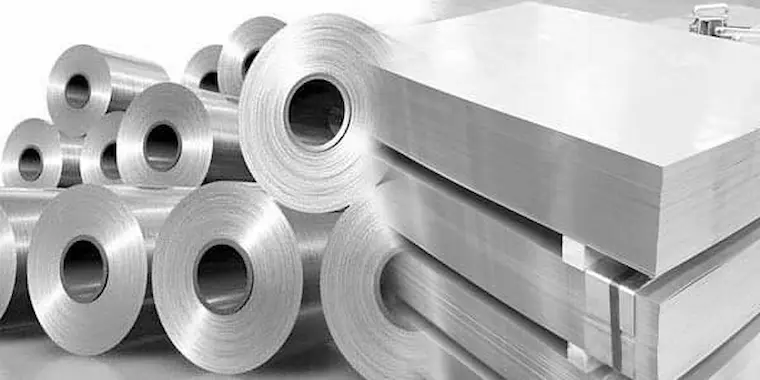
Hydrogen systems require components manufactured from high-quality coils and foil materials.
Hydrogen Production (Electrolyzers)
Electrolyzers split water into hydrogen and oxygen. These systems operate in wet, sometimes alkaline environments.
Stainless steel coils hydrogen electrolyzer manufacturers use must withstand corrosion and maintain structural integrity.
Ultra-thin precision foil is particularly important. Learn how it’s produced from hot rolled material in our detailed process guide: Stainless steel foil made from hot rolled coil to ultra-thin precision.
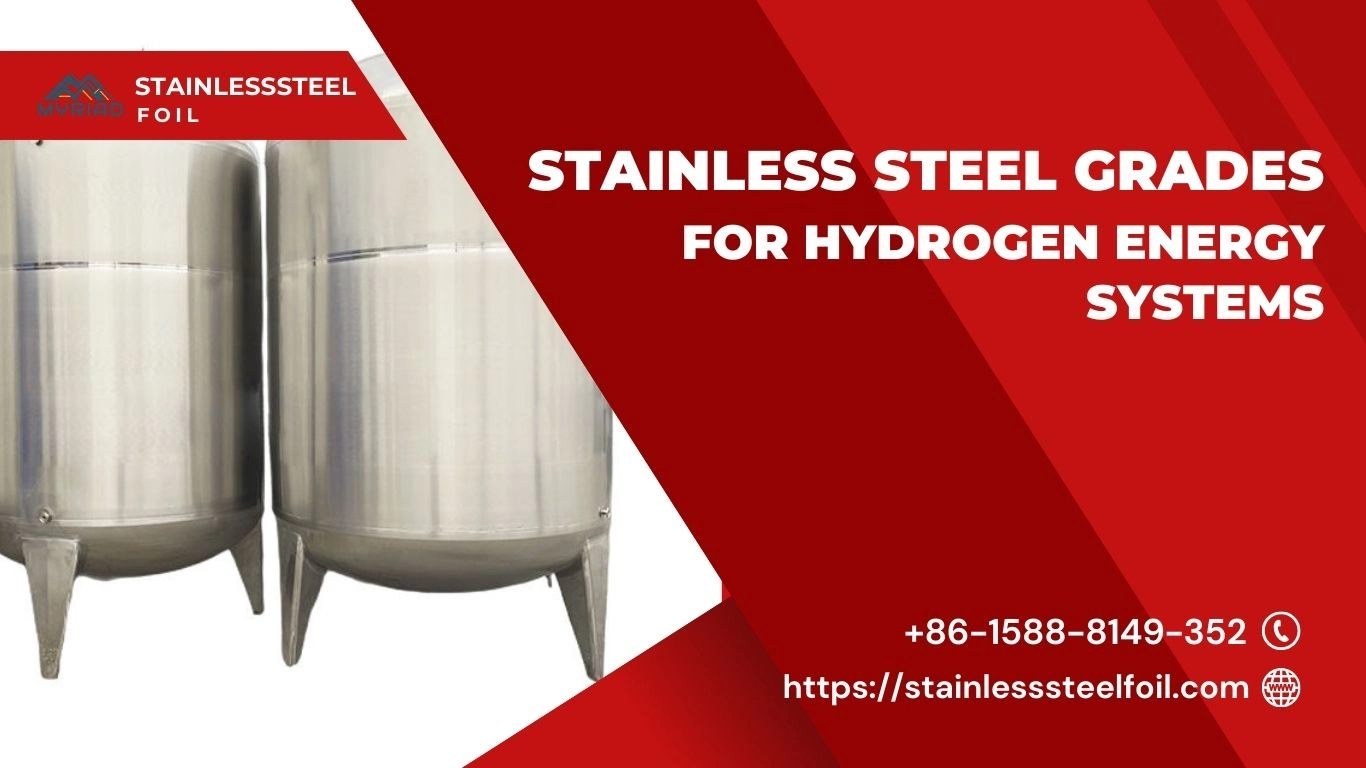
Hydrogen Storage Tanks
Storage tanks operate at pressures up to 700 bar in some applications.
High-pressure vessels demand materials that resist embrittlement and fatigue cracking.
316L coils are widely used for tank liners and structural components.
Hydrogen Pipelines
Transporting hydrogen requires pipeline materials resistant to diffusion and stress cracking.
Research from industry bodies shows that austenitic stainless steels outperform carbon steel in long-term hydrogen service.
Fuel Cell Systems
Fuel cell stacks contain thin bipolar plates often made from stainless steel foil.
These components require:
- Ultra-thin tolerances
- High conductivity
- Corrosion resistance
High-precision stainless steel coils hydrogen fuel cell systems depend on must meet strict dimensional standards.
Explore our available material options on our Products page.
Global Hydrogen Market Growth: Why Material Selection Matters
According to the International Energy Agency (IEA), global hydrogen demand exceeded 95 million tonnes in 2023, with projections indicating rapid expansion through 2030.
The European Union alone plans to install at least 40 gigawatts of renewable hydrogen electrolyzers.
As infrastructure scales, the demand for reliable stainless steel coils hydrogen developers can depend on is increasing sharply.
Poor material selection could lead to:
- Infrastructure failures
- Expensive retrofits
- Safety hazards
- Regulatory non-compliance
Material reliability is no longer optional. It is foundational.
Manufacturing Considerations for Hydrogen-Grade Stainless Steel Coils
Material composition alone does not guarantee performance. Processing quality also matters.
Key manufacturing factors include:
Surface Finish
Smooth surfaces reduce crack initiation points.
Cold Rolling Precision
Hydrogen fuel cells require ultra-thin gauges with tight tolerances.
Annealing Control
Proper heat treatment improves ductility and reduces residual stress.
Cleanliness and Inclusion Control
Non-metallic inclusions can act as crack initiation sites.
At Stainless Steel Foil, manufacturing processes are optimized to meet demanding industrial requirements. You can learn more in our Blog section.
Cryogenic Performance of Stainless Steel in Hydrogen Storage
Hydrogen often requires cryogenic storage at temperatures as low as -253°C in liquid form.
Many metals become brittle at low temperatures. Austenitic stainless steel retains toughness under cryogenic conditions.
This property makes stainless steel coils hydrogen cryogenic tanks rely on significantly safer compared to alternative alloys.
Sustainability and Lifecycle Benefits
Hydrogen aims to reduce carbon emissions. Material selection must align with sustainability goals.
Stainless steel is:
- 100% recyclable
- Durable with long service life
- Low maintenance
- Resistant to corrosion without coatings
These qualities lower total lifecycle costs.
Additionally, stainless steel production increasingly incorporates recycled scrap, reducing environmental impact.
Quality Standards and Testing Requirements
Hydrogen-grade materials often comply with international standards such as:
- ASTM A240
- ASME Boiler and Pressure Vessel Code
- ISO 15156 (for hydrogen environments)
Mechanical testing typically includes:
- Tensile testing
- Hardness testing
- Microstructure analysis
- Hydrogen exposure testing
These procedures ensure stainless steel coils hydrogen systems incorporate meet rigorous safety benchmarks.
Internal Material Innovation and Custom Solutions
Hydrogen infrastructure projects often require customized dimensions.
Thickness ranges can vary from ultra-thin foil below 0.02 mm to heavy-gauge structural coil.
Whether you are developing fuel cells or pipeline systems, precision matters.
If you need tailored solutions, contact our technical team through our Contact Us page.
Summary
The role of stainless steel coils hydrogen applications in energy systems cannot be overstated. From 304L for general use to 316L for pipelines and 904L for offshore storage, each grade offers unique advantages. Choosing the right stainless steel coil ensures safety, durability, and efficiency in hydrogen energy infrastructure. For more insights, visit the Stainless Steel Foil Blog or reach out via Contact Us.
FAQs
Which stainless steel grade is best for hydrogen storage tanks?
For most storage applications, 316L is preferred due to its excellent corrosion resistance and strong performance under pressure. Many stainless steel coils hydrogen tank manufacturers specify use 316L for reliability and safety.
Does hydrogen cause stainless steel to crack?
Hydrogen can cause embrittlement in certain steel types. However, austenitic grades such as 304L and 316L show strong resistance. Properly processed stainless steel coils hydrogen systems use are generally safe and durable.
Is stainless steel suitable for cryogenic hydrogen?
Yes. Austenitic stainless steels maintain toughness at extremely low temperatures. Stainless steel coils hydrogen cryogenic storage tanks use perform well at temperatures approaching -253°C.
Why are stainless steel coils preferred over plates?
Coils offer better manufacturing flexibility, uniform thickness, and cost efficiency. Stainless steel coils hydrogen infrastructure projects depend on allow precise forming and fabrication.
How does manufacturing quality affect hydrogen performance?
Surface finish, cleanliness, and proper annealing are critical. High-quality stainless steel coils hydrogen fuel cells or pipelines require must meet strict production standards to prevent cracking.