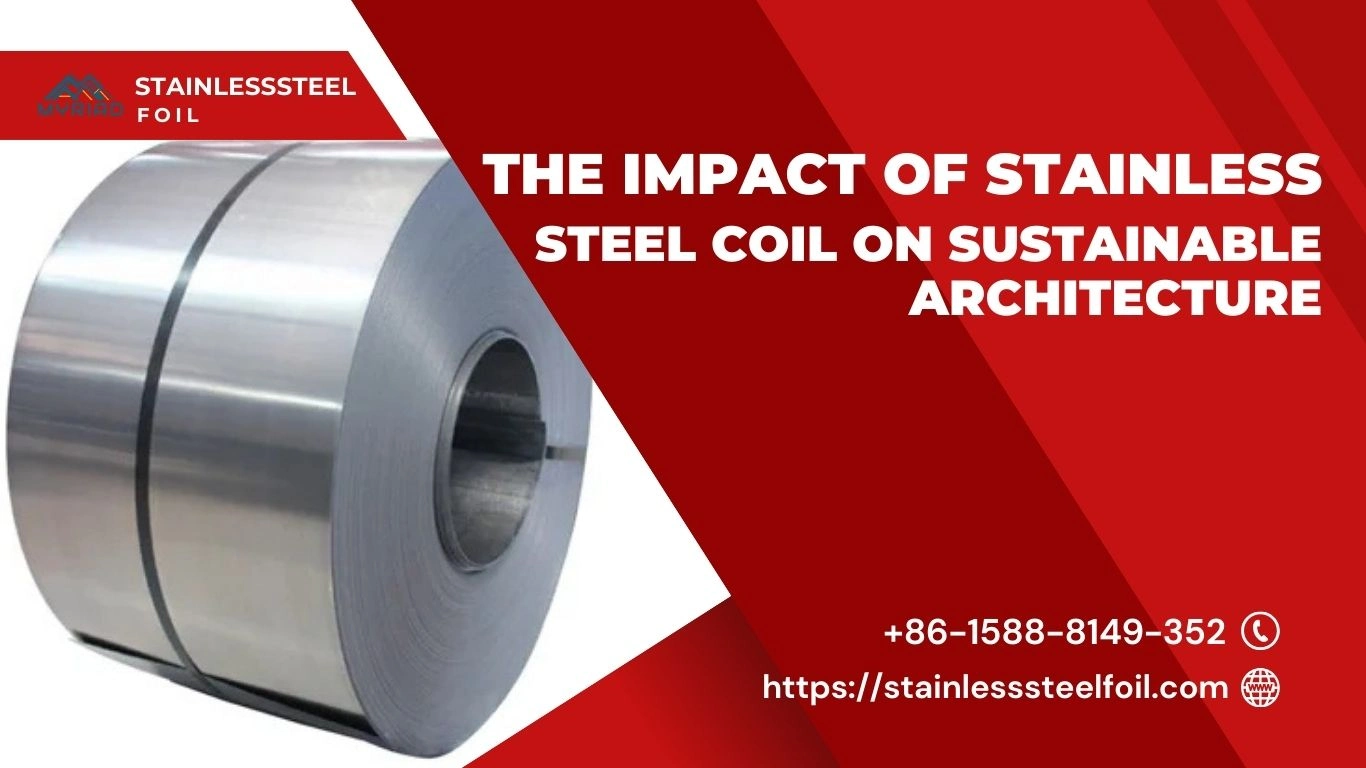
The construction industry stands at a crossroads where environmental responsibility meets material innovation. Among the materials reshaping how we build for the future, stainless steel coil has emerged as a cornerstone of sustainable architecture. This versatile material combines durability, recyclability, and aesthetic appeal, making it an indispensable choice for architects and builders committed to environmental stewardship.
Modern architectural projects demand materials that can withstand decades of use while maintaining their structural integrity and visual appeal. Stainless steel delivers on these requirements while supporting broader sustainability goals. From facade cladding to structural components, the applications of stainless steel coil continue to expand as the industry recognizes its environmental benefits.
The relationship between material choice and building performance has never been more important. As cities grow denser and climate challenges intensify, architects must select materials that contribute to long-term building resilience. Stainless steel coil offers a solution that balances immediate construction needs with future environmental considerations, establishing itself as a material that serves both present and future generations.
Understanding Stainless Steel: Composition and Properties
Stainless steel is an alloy primarily composed of iron, chromium, and other elements like nickel, manganese, and molybdenum. The stainless steel composition percentage varies depending on the grade and type, but chromium typically makes up 10.5% to 30% of the alloy. This chromium content forms a passive layer of chromium oxide on the surface, providing excellent corrosion resistance.
The stainless steel properties that make it ideal for sustainable architecture include:
- Corrosion Resistance: Stainless steel coil resists rust and corrosion, ensuring longevity in various environments.
- Strength and Durability: It offers high tensile strength and can withstand extreme weather conditions and structural loads.
- Aesthetic Appeal: Stainless steel coil has a polished finish, making it visually appealing for architectural designs.
- Recyclability: Stainless steel is 100% recyclable, aligning with the sustainability goals of green building projects.
For more details on stainless steel properties, visit our Stainless Steel Foil Products page.
Economic and Environmental Benefits of Stainless Steel Coil
The use of stainless steel coil in sustainable architecture offers several advantages:
- Sustainability: Stainless steel is recyclable and reduces the environmental impact of construction processes.
- Cost-Effectiveness: Although stainless steel has a higher initial cost, its durability reduces maintenance and replacement expenses.
- Performance: Stainless steel coil performs reliably in various conditions, ensuring the efficiency of sustainable buildings.
To learn more about stainless steel materials, visit our Stainless Steel Foil page.
Successful Sustainable Architecture Projects
Examining real-world applications of stainless steel coil provides concrete examples of how material selection influences building performance and longevity. These projects demonstrate the practical benefits discussed throughout this exploration of sustainability and architectural applications.
High-Performance Commercial Buildings
A commercial office tower in a coastal metropolitan area specified Type 316 stainless steel for exterior cladding after analyzing lifecycle costs against painted aluminum alternatives. The marine environment accelerates corrosion of conventional materials, necessitating maintenance cycles every 7 to 10 years for painted systems. The building’s 50-year design life would require four to six maintenance interventions for aluminum cladding, with costs and disruption compounding over time.
The stainless steel facade eliminated these maintenance cycles while providing thermal performance through integration with high-efficiency insulation. Ten years after completion, the building shows no signs of corrosion or finish degradation despite constant salt air exposure. Annual inspections require only visual assessment and periodic washing, reducing maintenance labor by 85% compared to similar buildings with conventional cladding systems.
Energy modeling demonstrated a 12% reduction in cooling loads compared to darker cladding options, attributable to the reflective properties of the brushed stainless finish. This energy savings recovers the material premium through reduced utility costs, with payback projected at 18 years—well within the building’s economic life expectancy.
Educational Institutions and Public Buildings
A university constructed a science facility incorporating stainless steel in multiple applications, from facade panels to laboratory casework. The material selection supported the institution’s sustainability commitments while providing object lessons for students studying material science and environmental engineering. The building achieved LEED Platinum certification, with stainless steel contributing to multiple credit categories.
Interior applications of stainless steel demonstrate its hygienic properties in laboratory environments where chemical resistance and ease of cleaning proved essential. Countertops, fume hood interiors, and equipment surfaces maintain sanitary conditions without chemical treatments that might interfere with sensitive experimental work. Twenty-year service life projections for these interior installations compare favorably against polymer-based alternatives requiring replacement every 8 to 12 years.
The building envelope incorporates perforated stainless steel screens that provide solar shading while maintaining views. These screens reduce solar heat gain by 60% on south-facing facades, decreasing mechanical cooling requirements during peak summer months. The screens require no maintenance beyond periodic hosing to remove accumulated dust—a task accomplished during routine window cleaning operations.
Residential Applications and Housing Developments
A multi-family residential development in an urban infill location used stainless steel roofing to maximize longevity while minimizing building height. The thin profile of standing seam stainless panels added less than 40mm to building height compared to conventional systems, helping the project meet zoning restrictions while providing superior weather protection.
Residents benefit from reduced noise transmission compared to lighter roofing materials, an advantage in the dense urban environment. The thermal mass of the stainless steel deck moderates temperature swings in top-floor units, improving comfort and reducing energy consumption. Fifty-year warranty coverage on the roofing system provided by the manufacturer gives building owners certainty about long-term performance.
Balcony railings fabricated from stainless steel coil demonstrate the material’s suitability for residential-scale applications requiring durability and low maintenance. The railings maintain appearance without painting or special treatments, while meeting all life-safety requirements for strength and geometry. Insurance costs for the development reflect the superior fire resistance and durability of stainless components compared to combustible alternatives.
Future Trends and Emerging Technologies
The evolution of stainless steel material continues through research addressing sustainability, performance, and cost effectiveness. Emerging developments promise to expand the material’s role in sustainable architecture while addressing current limitations.
Advanced Alloy Development
Metallurgists work to develop stainless steel grades that reduce dependence on nickel while maintaining corrosion resistance and formability. Manganese and nitrogen additions partially replace nickel in experimental alloys, potentially stabilizing costs while maintaining performance. These lean-nickel grades may make stainless steel more economically accessible for projects where budget constraints currently favor less durable alternatives.
High-strength stainless steels enable lighter structural elements that reduce material consumption and foundation loads. Duplex and lean duplex grades continue evolving, with yield strengths approaching 800 MPa in recently developed alloys. These materials allow architects to specify thinner sections that achieve required structural performance, improving material efficiency and reducing embodied carbon per unit of load-bearing capacity.
Surface treatments including superhydrophobic coatings promise self-cleaning properties that further reduce maintenance requirements. These nano-engineered surfaces cause water to bead and run off, carrying dirt particles away without manual cleaning. While still emerging from research laboratories, such treatments could eliminate the periodic washing currently required to maintain appearance in urban environments.
Digital Fabrication and Customization
Parametric design software enables architects to create complex geometries that optimize material use while achieving aesthetic objectives. Direct integration between design software and fabrication equipment eliminates translation errors while enabling mass customization. Each panel in a facade system can vary in dimension, perforation pattern, or curvature without increasing fabrication costs significantly beyond standard production.
Additive manufacturing technologies including metal 3D printing enable stainless steel components with geometries impossible through conventional forming. While currently limited to smaller components, the technology evolves rapidly toward architectural-scale applications. The ability to optimize material distribution through topology optimization and manufacture components without tooling costs could revolutionize how stainless steel integrates into buildings.
Robotic fabrication systems improve precision while reducing labor costs for complex assemblies. Multi-axis robots equipped with welding, forming, and handling capabilities produce stainless steel assemblies with consistency and quality difficult to achieve through manual fabrication. As these systems become more accessible, smaller fabricators gain capability to produce sophisticated components currently available only from specialized manufacturers.
Circular Economy Integration
Building disassembly designed for material recovery represents an emerging priority in sustainable design. Stainless steel’s recyclability gains full value only when buildings enable non-destructive disassembly at end-of-life. Design for disassembly principles inform connection details that allow component removal without damage, preserving material value for subsequent recycling cycles.
Material passports documenting the grade, quantity, and location of stainless steel in buildings facilitate future recycling. Digital documentation accompanies buildings through their service lives, providing information that streamlines disassembly operations decades after original construction. These systems increase recycling rates by reducing uncertainty about material composition and value.
Regional recycling infrastructure development improves the economics of stainless steel recovery. Establishing collection, sorting, and processing facilities near major metropolitan areas reduces transportation impacts while creating local employment. These facilities particularly benefit smaller demolition projects where material quantities might not justify long-distance transportation to regional smelters.
Maintenance and Long-Term Performance
The reputation of stainless steel foil products for low maintenance requires understanding what care measures do apply and how environmental conditions affect performance. While the material resists corrosion through passive protective mechanisms, some basic attention ensures optimal appearance and function throughout service life.
Cleaning Protocols and Frequency
Atmospheric contamination accumulates on stainless steel surfaces, creating cosmetic issues even when corrosion protection remains intact. Industrial areas deposit particles that may etch surfaces if left indefinitely, while coastal zones accumulate salt that creates a hazy appearance. Periodic washing with fresh water removes these contaminants before they affect appearance or performance.
Cleaning frequency depends on environmental exposure, with quarterly washing appropriate for most exterior applications in moderate climates. Harsh environments including industrial zones with chemical exposure or marine locations with salt spray may benefit from monthly cleaning. Interior applications rarely require more than annual cleaning except in food service or healthcare settings where sanitary requirements dictate more frequent attention.
Cleaning agents should be pH-neutral and free of chlorides that could damage the passive layer. Mild detergents diluted in warm water suffice for most applications, applied with soft cloths or non-abrasive sponges. High-pressure water cleaning proves effective for large facades, though pressure should remain below 2000 psi to avoid surface damage. Cleaners containing bleach, hydrochloric acid, or abrasive particles must be avoided entirely, as these can permanently damage stainless surfaces.
Passivation treatments restore corrosion resistance if surface contamination damages the protective oxide layer. Citric or nitric acid solutions dissolve embedded iron particles and promote rapid reformation of the passive layer. Professional contractors perform passivation as needed, typically after construction when weld splatter or tool marks compromise surfaces, or after years of exposure in corrosive environments.
Inspection and Assessment
Annual visual inspection identifies potential issues before they develop into performance problems. Trained inspectors examine fasteners, sealant joints, and surface condition, documenting any areas requiring attention. Binoculars or drones enable facade inspection without expensive scaffolding or lift equipment, reducing inspection costs while maintaining thoroughness.
Corrosion indicators including surface staining, pitting, or crevice corrosion receive immediate attention when discovered. While rare in properly specified stainless steel strip, these conditions can develop where design details trap moisture or incompatible materials create galvanic couples. Early intervention prevents minor issues from expanding into structural concerns requiring extensive remediation.
Fastener assessment checks for loosening that could allow water infiltration or panel movement. Stainless steel’s low friction coefficient means mechanical fasteners may require periodic tightening to maintain design clamp load. This inspection task takes minutes per accessible location but prevents water damage and structural issues that could cost thousands to remediate.
Conclusion: Stainless Steel’s Essential Role in Sustainable Building
The evidence supporting stainless steel coil as a sustainable building material spans environmental impact, economic value, and architectural expression. This material delivers measurable benefits across the entire building lifecycle, from initial construction through decades of service to eventual recycling. The durability that defines stainless steel translates directly into resource conservation—buildings that last longer consume fewer materials over time.
The versatility demonstrated through diverse applications shows how a single material family serves multiple building functions without compromising performance. Facade systems, roofing installations, interior finishes, and structural applications all benefit from stainless steel’s combination of strength, corrosion resistance, and aesthetic flexibility. This functional breadth simplifies material coordination while ensuring compatibility across building systems.
Economic analysis reveals that initial cost premiums for stainless steel material diminish when evaluated against lifecycle expenses. The elimination of recurring maintenance costs and replacement cycles creates value that accumulates over decades, ultimately delivering lower total cost than alternatives requiring repeated intervention. Building owners who understand this lifecycle perspective increasingly specify stainless steel despite higher initial investment.
The environmental benefits extend beyond the material itself to influence broader building performance. Energy efficiency improvements, water conservation, and pollution prevention all flow from design decisions that prioritize durable, inert materials.
Summary
Stainless steel coil plays a vital role in sustainable architecture, offering unmatched durability, corrosion resistance, and sustainability. From building facades to structural components, its applications are diverse and essential for modern construction. Understanding the composition, properties, and types of stainless steel helps in selecting the right material for specific applications.
For more information on stainless steel products, visit Stainless Steel Foil.
FAQs
1. What is stainless steel used for?
Stainless steel is used in various industries, including construction, automotive, medical, and sustainable architecture. Its corrosion resistance and durability make it suitable for demanding applications.
2. What are the 4 types of stainless steel?
The four types are austenitic, ferritic, martensitic, and duplex stainless steel. Each type has unique properties and applications.
3. What is the composition of stainless steel?
Stainless steel is primarily composed of iron, chromium, and nickel. The exact composition varies depending on the grade and type.
4. Why is stainless steel used in sustainable architecture?
Stainless steel is used for its corrosion resistance, strength, and sustainability, making it ideal for green building projects.
For further inquiries, feel free to Contact Us.