When choosing the right stainless steel format for your project, Stainless Steel Strip vs Coil is a critical decision that impacts performance, cost, and production efficiency. Whether you’re sourcing materials for industrial machinery, electronics, or consumer goods, selecting between strip and coil affects every stage of manufacturing.
This article dives deep into the difference between stainless steel strip and coil. We’ll explore their physical characteristics, production processes, and real‑world applications. Along the way, you’ll learn how each format performs in bending, welding, surface finish, and corrosion resistance — so you can make the best choice for your specific needs.
Stainless Steel: The Foundation of Performance
Before comparing Stainless Steel Strip vs Coil, it is essential to understand what stainless steel is and why it is widely used.
Stainless steel is an alloy primarily composed of iron, chromium, and other elements that enhance its corrosion resistance and mechanical strength. These properties make stainless steel a versatile material suitable for various applications across industries.
The chromium content — typically above 10.5% — creates a passive oxide layer that protects metal surfaces from rust and degradation. This characteristic makes stainless steel invaluable across industries from construction to medical equipment.
Because stainless steel comes in many grades — such as 304, 316, and 316L — performance can vary based on alloy composition and production. If you want more context on grades, check out our guide on 316 vs 316L stainless steel strip.
What Is Stainless Steel Strip and Coil?
What Is Stainless Steel Strip?
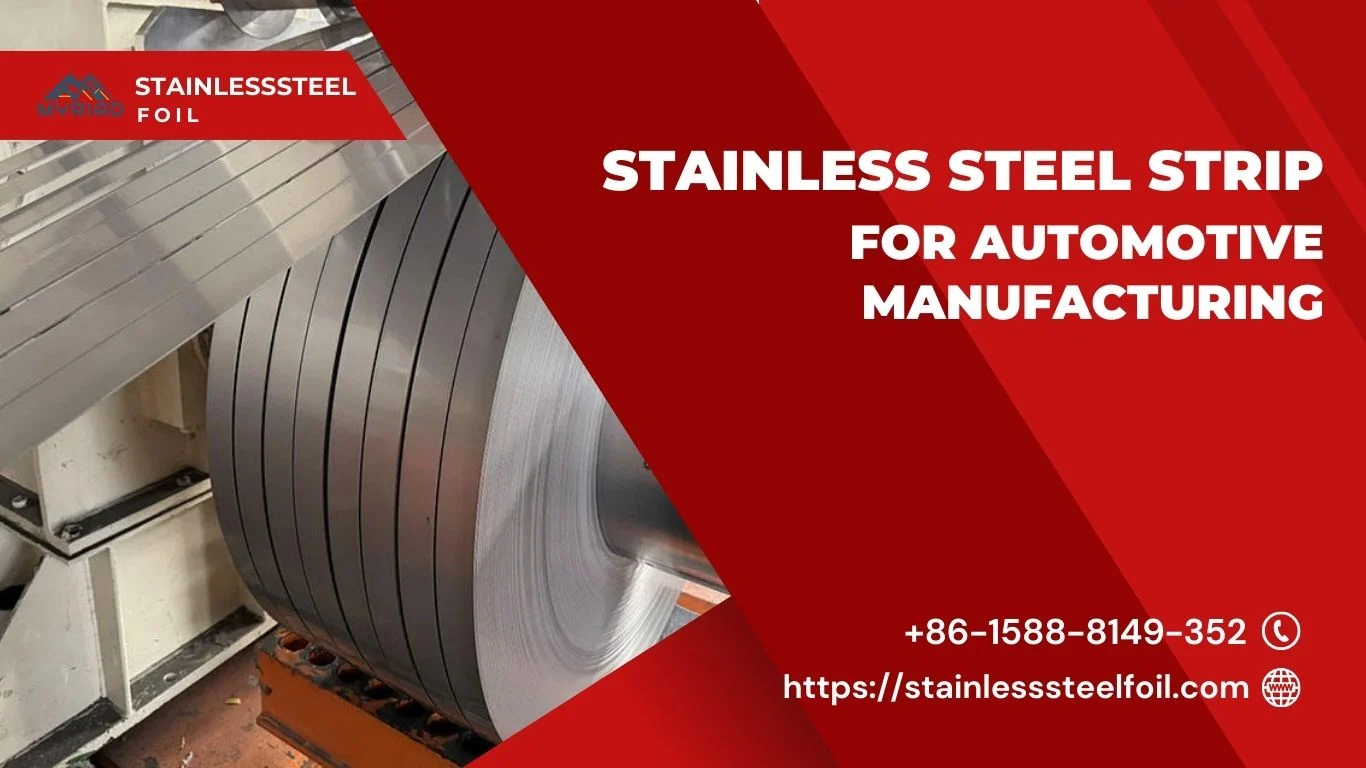
A stainless steel strip is a flat, narrow length of stainless steel usually produced to a specific width and thickness. It is used when precision and uniformity are critical. These strips are often used in spring manufacturing, electrical components, and decorative trim.
Because strip material is typically processed from coil stock, it retains many of the mechanical benefits of coil but is sized for specific use cases.
Learn more about strip production on our what is stainless steel foil page.
What Is Stainless Steel Coil?
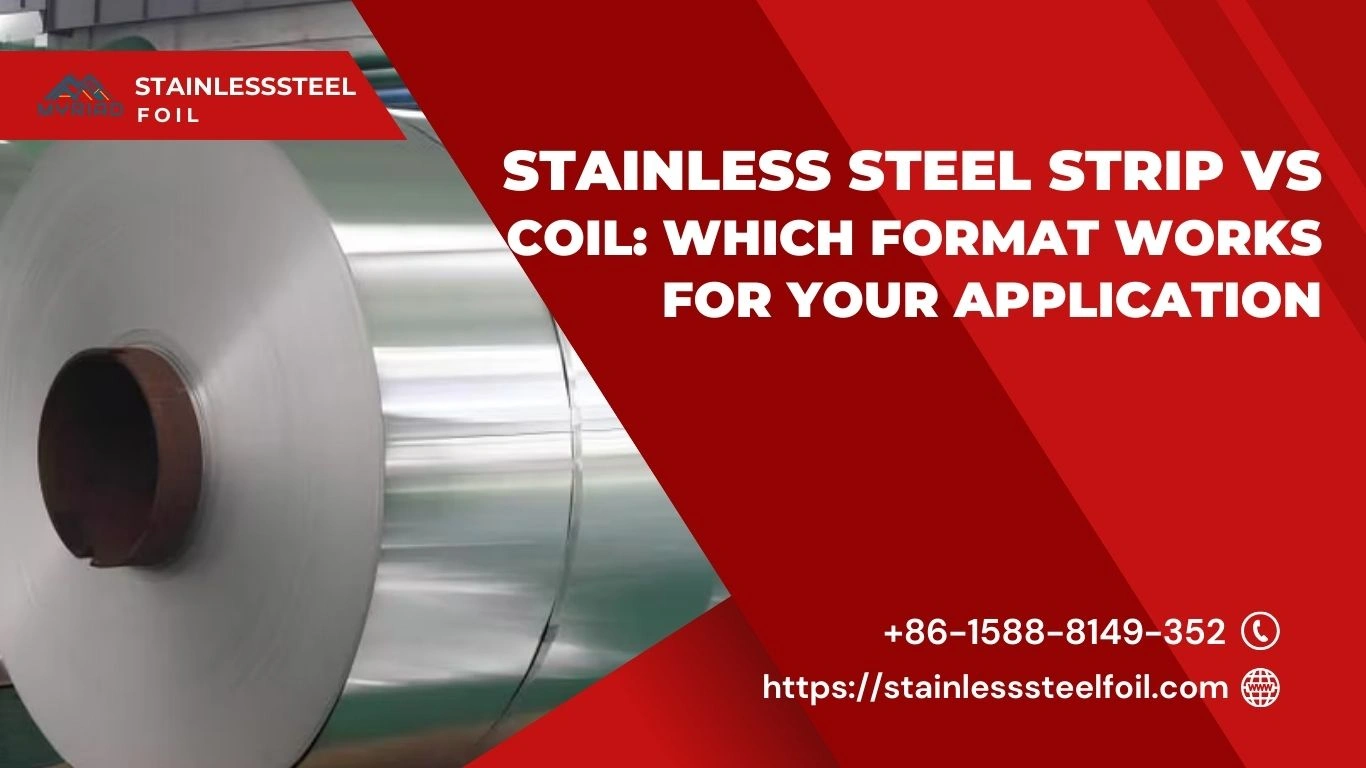
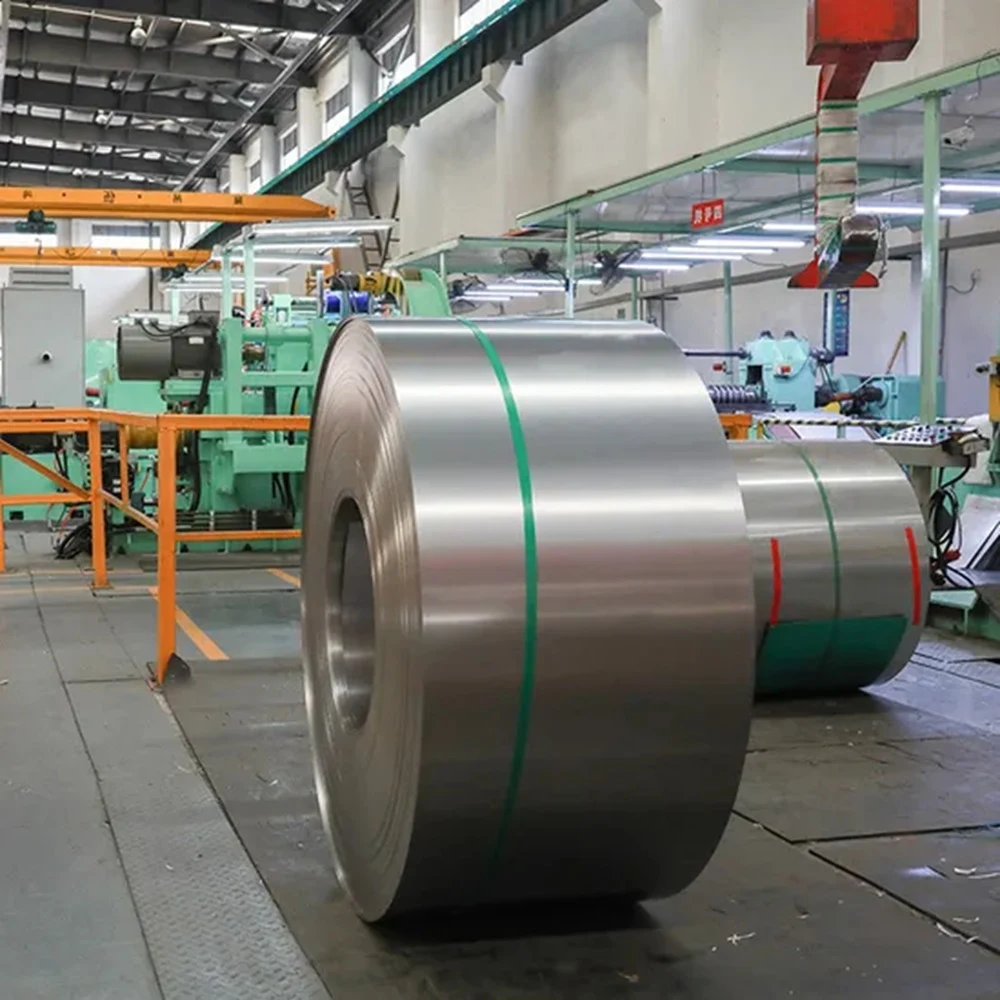
A stainless steel coil consists of an extended length of stainless steel wound into a roll. Manufacturers use coil stock for high-volume production because it allows for a continuous feed into machinery, ensuring efficiency and consistency in processes.
Coil formats allow manufacturers to process large runs with minimal material handling, reduce waste, and improve line speeds. Coil stock can be slit into narrower widths or cut to length based on requirements.
See our detailed stainless steel coil production process guide for a visual step‑by‑step.
Stainless Steel Strip vs Coil: Key Differences Explained
At first glance, stainless steel strip and coil may appear similar — both are flat forms of stainless steel. But there are important differences that determine which format is best for your application.
Shape and Physical Form
Stainless Steel Strip
Strips are cut from coils to precise widths. They are shorter, narrower, and designed to feed directly into stamping or forming equipment.
Stainless Steel Coil
Coils are long rolls of material. They provide bulk material that can be slit or cut later in the production process.
In essence, coil is the “parent” form, and strip is often a processed version of that coil.
Production Efficiency and Waste Reduction
Coil Advantages
- Large production runs with minimal stoppages
- Less material handling between machining steps
- Reduced waste due to continuous feeding
Strip Advantages
- Less processing required before use
- Perfect weights and dimensions for specific parts
- Reduced inventory complexity for finished parts
In high‑volume automated manufacturing, coils can significantly improve efficiency by feeding directly into roll formers, cutters, and stamping presses.
Flexibility and Customization
Strips provide a higher degree of precision out of the box. Coil stock gives manufacturers the ability to tailor lengths and widths for various parts.
For custom specifications — especially narrow widths under 10 mm — strips are often preferred. If your production requires flexibility in length but consistent width, coil is an economical choice.
Surface Finish and Mechanical Properties
Manufacturers can produce both strips and coils with excellent surface finishes—such as 2B, BA, or mirror polish—to meet production requirements. However, they often apply additional finishing processes to strips that coils do not require, depending on their intended end-use.
Mechanical properties such as yield strength and tensile strength are largely determined by stainless steel grade and heat treatment — not format. The nuances of heat treatment and tempering are covered in our article on 316 stainless steel strip heat treatment.
Use Cases: When to Choose Strip vs Coil
The choice between strip and coil becomes clearer when considering how each material is applied in real-world manufacturing scenarios.

A. High‑Volume Automated Production
Businesses that use automated machinery — such as coil-fed stamping presses — benefit from the consistent supply of material that coil stock provides. Coil feed systems reduce downtime and improve throughput.
For example, the automotive industry often uses coil stock for structural components, brackets, and fasteners because machines can continuously pull material without manual intervention.
B. Precision Small Parts
If your application involves small parts with exact width requirements — such as springs, clips, or tiny metal assemblies — stainless steel strips typically offer better upfront dimensions and less secondary processing.
Visit our products page to explore specific strips tailored for precision applications.
C. Consumer Products with Surface Quality Needs
Consumer goods — from kitchen appliances to electronics — often require stainless steel components with high surface quality and precise dimensions. Depending on the final assembly method, manufacturers may start with either strip or coil, but strips often save time where precision is critical.
Our article on the use of stainless steel coil in consumer goods production provides numerous industry examples.
Comparing Strip and Coil: A Data‑Driven Look
| Feature | Stainless Steel Strip | Stainless Steel Coil |
|---|---|---|
| Typical Use | Precision parts, finished goods | Bulk fabrication, continuous production |
| Width Flexibility | Narrow custom sizes | Wide range, slitted to size |
| Production Efficiency | Good for smaller runs | Excellent for high‑volume runs |
| Material Handling | Easier to store | Requires more space |
| Cost Per Meter | Slightly higher | Lower due to bulk savings |
| Surface Finish Options | Wide range | Dependent on coil condition |
This comparison highlights that while a strip can add value through precision, a coil offers benefits in volume and cost—especially in automated operations.
Processing Techniques That Influence Performance
The way stainless steel is processed impacts performance in your final product, regardless of whether it’s coil or strip. Understanding heat treatment and tempering helps ensure optimal mechanical properties.
For more insight, read about heat treating stainless steel on Wikipedia.
Processing steps — such as annealing and cold rolling — improve ductility and strength. These techniques refine grain structure and help achieve specific mechanical targets essential for your application.
Industry Applications of Stainless Steel Strip vs Coil
Medical Devices
High precision is paramount in medical components. Stainless steel strip is often preferred for surgical instruments, implant components, and precision fasteners due to tight tolerance control.
Automotive Parts
Automotive manufacturing favors coil stock for components like exhaust systems, structural reinforcements, and frames. Coil feed automation reduces downtime and supports just‑in‑time production.
Home Appliances
From refrigerator trim to decorative panels, stainless steel strips often provide a finished look and exact dimensions.
Explore how strips enhance appliances on our stainless steel strips in the home appliances page.
Cost Factors: Budgeting for Strip vs Coil
Cost is a practical consideration when choosing between stainless steel formats. This format is particularly advantageous for large-scale manufacturing processes where continuous material supply is essential. Manufacturers benefit from scale when buying coil.
On the other hand, strip stock may cost more per unit but can save money downstream by reducing machining time and waste when parts require exact dimensions.
Understanding your production needs — volume, tolerance, and surface finish — will help you balance material cost and manufacturing efficiency.
Choosing the Right Format: Questions to Ask
To decide between strip and coil, consider these key questions:
- What is the production volume? Small batches might warrant prefabricated strips, whereas large runs favor coil stock.
- Are precision tolerances critical? If so, a strip may save time and money.
- Does your line support coil feed automation? If yes, coils significantly improve throughput.
- What surface finish do you need? High aesthetic standards may justify additional strip finishing.
Answering these questions will narrow your options and improve production outcomes.
Summary: Stainless Steel Strip vs Coil
Choosing the right stainless steel format for your project is crucial. The decision between Stainless Steel Strip vs Coil depends on your production needs, precision requirements, and cost considerations.
-
Coil: Ideal for high-volume production. Coils allow continuous feeding, reduce material handling, and are cost-effective for large-scale manufacturing. Learn more about the process on our Stainless Steel Coil Production Process Guide.
-
Strip: Perfect for precision and ready-to-use applications. Stainless steel strips are ideal for small, exact parts like springs, clips, or electrical components. Explore more on our Stainless Steel Strip Products page.
Conclusion: Choose strip or coil based on your production type, surface finish requirements, and order volume. For quotes or advice on custom strips or coils, visit our Contact Us page.
FAQs
What does a stainless steel strip mean compared to a coil?
- Stainless Steel Strip: Workers cut stainless steel into specific widths and lengths to create strips. Manufacturers and construction professionals use these strips in applications that demand precise dimensions.
- Stainless Steel Coil: This is a continuous roll of stainless steel, often used in processes that require long runs of material, such as in the production of pipes, tubes, or other extended applications.
Is a strip better than a coil for precision manufacturing?
Yes. Stainless steel strip vs coil suggests that strip stock often provides better precision for small parts, reducing machining time and waste.
Can coil be converted to a strip?
Absolutely. Manufacturers often slit stainless steel coils to create strips with custom widths for specialized applications such as springs or electronic parts.
Does the format affect corrosion resistance?
No. Corrosion resistance depends on grade and surface finish, not whether the material is strip or coil. Proper processing ensures both formats retain stainless steel’s protective oxide layer.
Which format costs less?
Typically, stainless steel coil costs less per meter due to bulk production efficiencies, but strip can reduce downstream processing costs.
How does heat treatment affect stainless steel formats?
Heat treatment — whether applied to strip or coil — changes mechanical properties like strength and ductility.