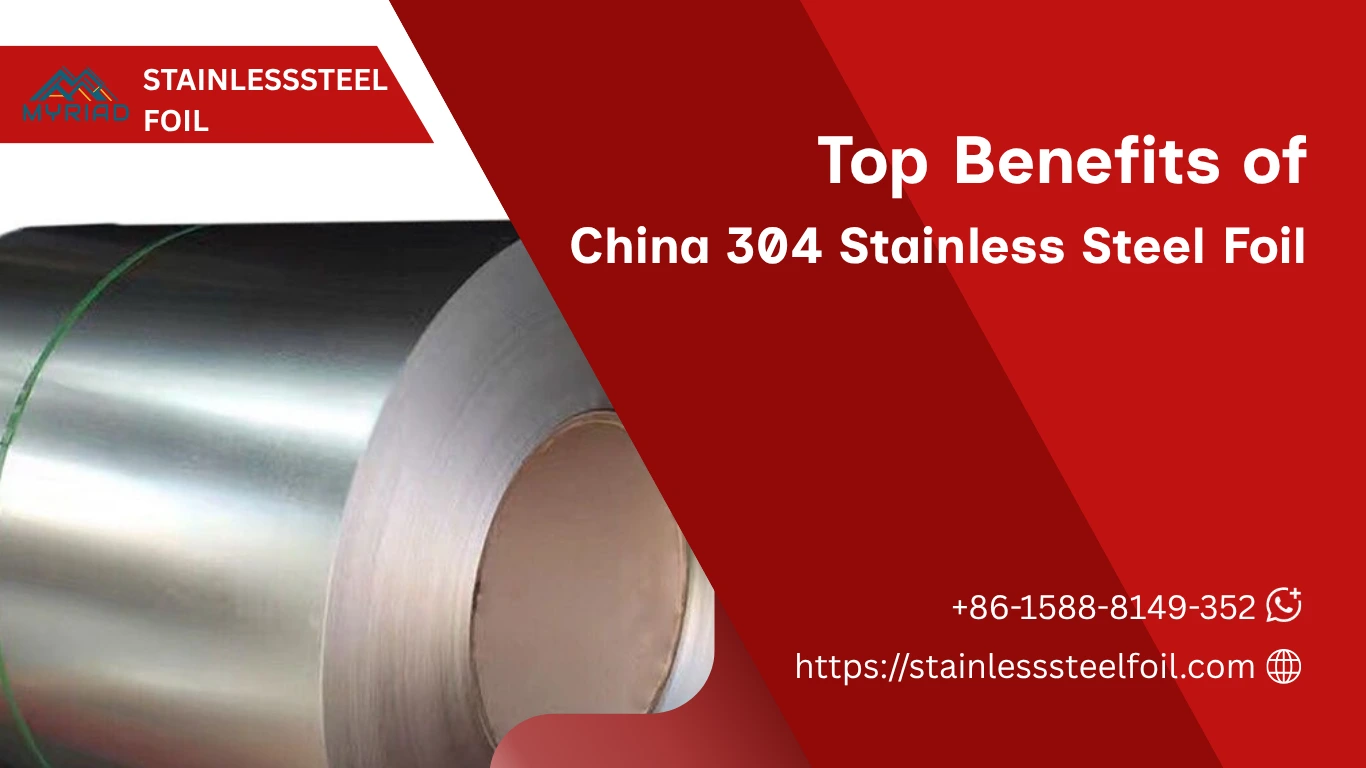
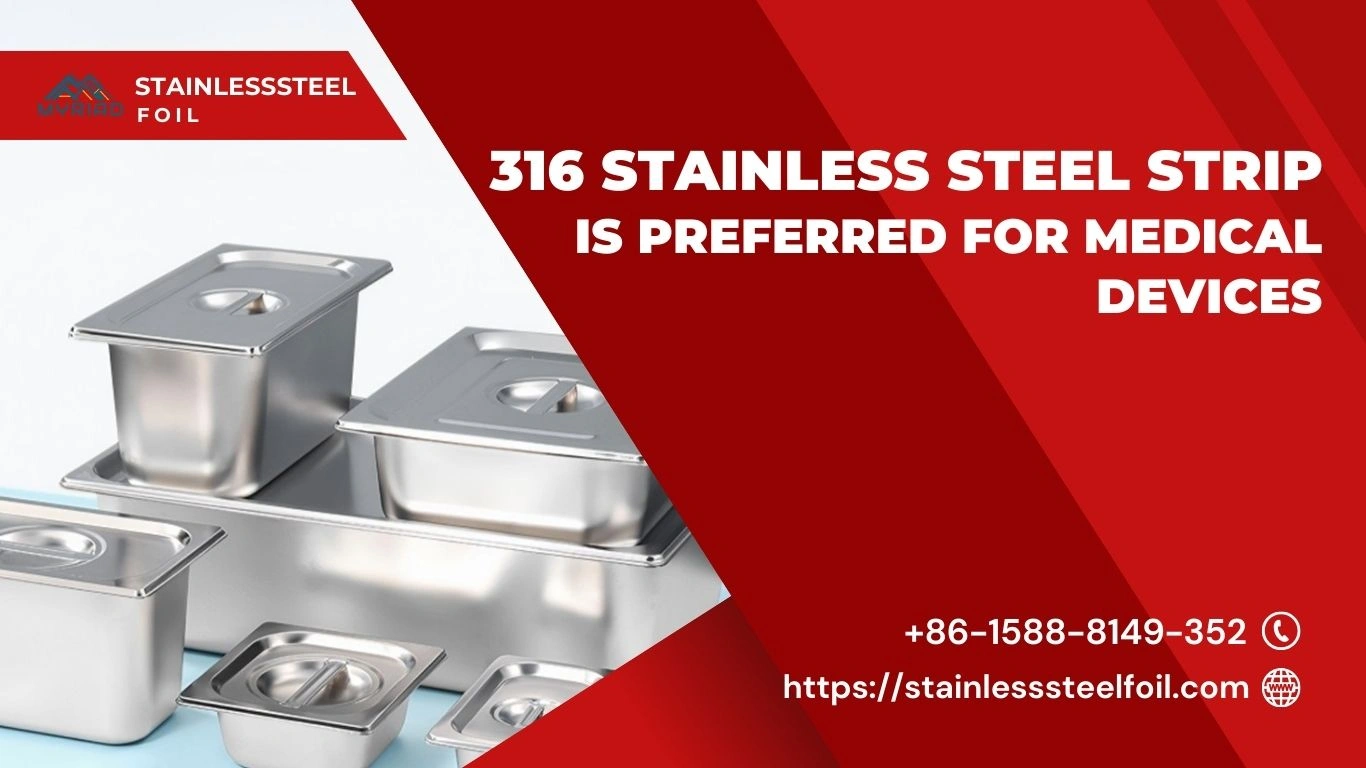
In the medical industry, material choice is never casual. Every component, no matter how small, plays a critical role in patient safety, device performance, and long-term reliability. Among the many materials used in healthcare manufacturing, 316 Stainless Steel Strip has earned a reputation as one of the most trusted and widely adopted options.
From surgical instruments to implantable devices, manufacturers consistently rely on this specific grade of stainless steel. But what makes it stand out in such a demanding environment? Why do medical engineers prefer it over other alloys or even other stainless steel grades?
This article takes a deep dive into the real-world reasons behind that preference. We will explore the chemical composition, mechanical properties, corrosion resistance, regulatory compliance, and manufacturing advantages that make it is ideal for medical applications. Along the way, we will also reference industry data, real comparisons, and practical manufacturing insights to help you understand why this material continues to dominate the medical sector.
Stainless Steel in Medical Manufacturing
Before focusing on a specific grade, it helps to understand why stainless steel itself is so important to healthcare.
Stainless steel is valued in medical manufacturing because it combines strength, cleanliness, corrosion resistance, and longevity. According to the general overview provided by Wikipedia’s stainless steel resource, stainless steel contains chromium, which forms a passive oxide layer that protects the surface from corrosion and contamination.
Medical environments amplify these demands. Instruments are sterilized repeatedly. Devices are exposed to bodily fluids, chemicals, and temperature fluctuations. Materials must remain stable, non-reactive, and easy to clean.
That is where 316 Stainless Steel Strip distinguishes itself.
What Is 316 Stainless Steel Strip?
At its core, it is an austenitic stainless steel alloy that contains chromium, nickel, and a crucial addition: molybdenum. This molybdenum content significantly enhances corrosion resistance, especially against chlorides and harsh chemicals.
Unlike thicker plates or bars, stainless steel strip is produced in thin, precision-controlled widths and thicknesses. This makes it ideal for manufacturing intricate medical components that require tight tolerances.
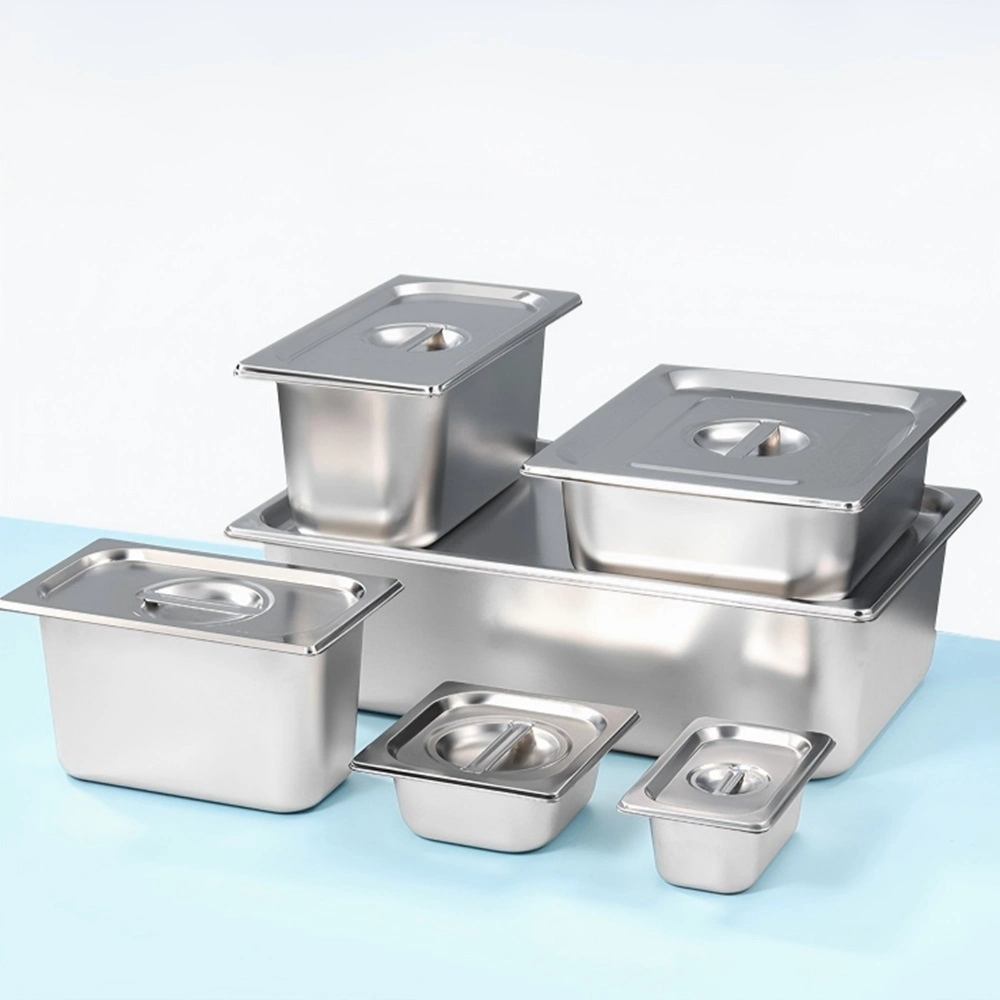
You can explore a wide range of precision stainless products directly through the products section of stainlesssteelfoil.com, where medical-grade materials are specifically engineered for demanding applications.
Chemical Composition and Its Medical Significance
The chemistry of 316 Stainless Steel Strip is one of the primary reasons it performs so well in healthcare environments.
Chromium forms a protective oxide layer that resists rust. Nickel stabilizes the austenitic structure, improving toughness and flexibility. Molybdenum enhances resistance to pitting and crevice corrosion, especially in saline environments.
In medical terms, this matters because bodily fluids contain chlorides. Surgical tools encounter blood, saline solutions, and cleaning agents. Lower-grade stainless steels can degrade over time under these conditions. 316 Stainless Steel Strip resists that degradation, maintaining surface integrity even after years of use.
This chemical stability directly contributes to biocompatibility, a non-negotiable requirement for medical devices.
Superior Corrosion Resistance in Clinical Environments
Corrosion is not just a cosmetic issue in medical devices. It can compromise performance, introduce contamination, and shorten product life.
Studies comparing stainless steel grades consistently show that 316 Stainless Steel Strip outperforms 304 stainless steel in chloride-rich environments. That difference is largely due to the molybdenum content.
Hospitals frequently use aggressive disinfectants. Autoclaving subjects instruments to high heat and moisture. Over time, inferior materials can pit, discolor, or weaken. By contrast, 316 Stainless Steel Strip maintains a smooth, cleanable surface, reducing the risk of bacterial adhesion.
This is one reason it is widely used in surgical tools, orthopedic implants, and diagnostic equipment.
Mechanical Strength Meets Precision Engineering
Medical devices demand a balance between strength and formability. Components must be strong enough to withstand use while remaining flexible enough to be shaped into complex designs.
316 Stainless Steel Strip offers excellent tensile strength and yield strength while still allowing cold working and precision forming. This makes it ideal for manufacturing springs, clips, clamps, and micro-components used in advanced medical devices.
Manufacturers often pair this material with specialized thermal processes. Detailed guidance on this can be found in the resource on 316 stainless steel strip heat treatment, which explains how controlled heating improves performance without compromising corrosion resistance.
Biocompatibility and Patient Safety
Patient safety is the ultimate benchmark for any medical material. 316 Stainless Steel Strip meets this standard through its proven biocompatibility.
Medical-grade it does not react with human tissue. It resists ion release and minimizes inflammatory responses. That is why it is commonly used in temporary implants, surgical screws, and medical housings.
Regulatory bodies recognize this reliability. Many medical device standards explicitly reference 316 stainless steel as an approved material when properly processed and finished.
Sterilization Resistance and Long-Term Durability
Sterilization is unavoidable in healthcare. Devices may undergo hundreds or even thousands of sterilization cycles during their service life.
Autoclaving, chemical sterilants, and radiation can all stress materials. 316 Stainless Steel Strip retains its structural integrity and surface finish under these conditions. It does not crack, flake, or degrade when exposed to repeated sterilization.
This durability reduces replacement costs and enhances operational reliability, which is critical for hospitals and manufacturers alike.
Comparison: 316 vs 304 Stainless Steel in Medical Devices
To understand preference, it helps to compare.
304 stainless steel lacks molybdenum. While it performs well in many industrial applications, it is more vulnerable to chloride corrosion. In medical settings, that vulnerability matters.
316 Stainless Steel Strip offers better resistance to pitting, longer lifespan, and improved safety margins. Although it costs slightly more upfront, the total lifecycle cost is often lower due to reduced failure and replacement rates.
That balance of cost and performance explains why 316 has become the industry standard for medical-grade stainless steel components.
Precision Manufacturing and Consistency
Medical device manufacturers demand consistency. Variations in thickness or surface finish can lead to device failure or regulatory rejection.
High-quality this is produced with tight dimensional tolerances and controlled surface finishes. Manufacturers rely on advanced rolling and inspection processes, which are explained in detail in the stainless steel coil production process guide.
This consistency allows engineers to design with confidence and scale production without compromising quality.
Role of Stainless Steel Strip in Modern Medical Devices
Today’s medical devices are smaller, smarter, and more complex than ever. Stainless steel strip plays a quiet but essential role in this evolution.
From minimally invasive surgical tools to wearable diagnostic devices, 316 Stainless Steel Strip provides the structural backbone that supports innovation. Its thin profile enables compact designs, while its strength ensures reliability.
You can see how stainless steel coils and strips are used across industries, including healthcare, in this overview of how stainless steel coil is used in the production of consumer goods.
Sustainability and Long-Term Value
Sustainability is becoming increasingly important in healthcare manufacturing. Stainless steel is 100 percent recyclable. 316 Stainless Steel Strip maintains its properties even after recycling, making it an environmentally responsible choice.
Its long service life also reduces waste. Fewer replacements mean fewer resources consumed over time. For manufacturers and healthcare providers alike, this contributes to both environmental and economic sustainability.
Why Medical Manufacturers Choose Trusted Suppliers
Material quality depends heavily on sourcing. Reliable suppliers ensure chemical consistency, surface quality, and compliance with medical standards.
Companies seeking high-quality materials often explore dedicated suppliers like stainless steel foil, which focuses on precision stainless steel products engineered for demanding applications.
For specific product needs, manufacturers can review options such as the 316 stainless steel coil, which can be processed into precision strips for medical use.
Compliance With Medical Standards and Regulations
Medical devices must comply with strict international standards. it aligns well with ASTM, ISO, and other regulatory frameworks when produced and processed correctly.
This compliance simplifies certification and reduces regulatory risk. Manufacturers can focus on innovation instead of troubleshooting material failures during approval processes.
Why 316 Stainless Steel Strip Will Remain Dominant
While new materials continue to emerge, few match the proven reliability of 316 Stainless Steel Strip. Its performance record, regulatory acceptance, and adaptability ensure its continued use in medical devices.
As medical technology advances, materials that combine safety, strength, and precision will remain in demand. 316 stainless steel meets those expectations today and will continue to do so in the future.
Summary
In the world of medical device manufacturing, reliability is non-negotiable. 316 Stainless Steel Strip delivers exceptional corrosion resistance, mechanical strength, biocompatibility, and long-term durability. These qualities make it the preferred material for surgical instruments, implants, and advanced medical components.
By choosing 316 Stainless Steel Strip, manufacturers invest in safety, performance, and consistency. That is why it continues to set the standard in medical applications worldwide and for more information visit Stainless Steel foil.
FAQs
Why is 316 Stainless Steel Strip better than other stainless steels for medical devices?
This offers superior corrosion resistance, biocompatibility, and durability, making it safer and more reliable for medical applications.
Is 316 Stainless Steel Strip safe for use inside the human body?
Yes, it is widely recognized for its biocompatibility and is commonly used in temporary implants and surgical instruments.
How does sterilization affect 316 Stainless Steel Strip?
this withstands repeated sterilization cycles without degrading, ensuring long-term performance in medical environments.
Can 316 Stainless Steel Strip be custom processed for medical devices?
Absolutely. it can be precision rolled, heat-treated, and finished to meet specific medical manufacturing requirements.
Does 316 Stainless Steel Strip comply with medical regulations?
When properly manufactured, it meets international medical and industrial standards, simplifying regulatory approval.