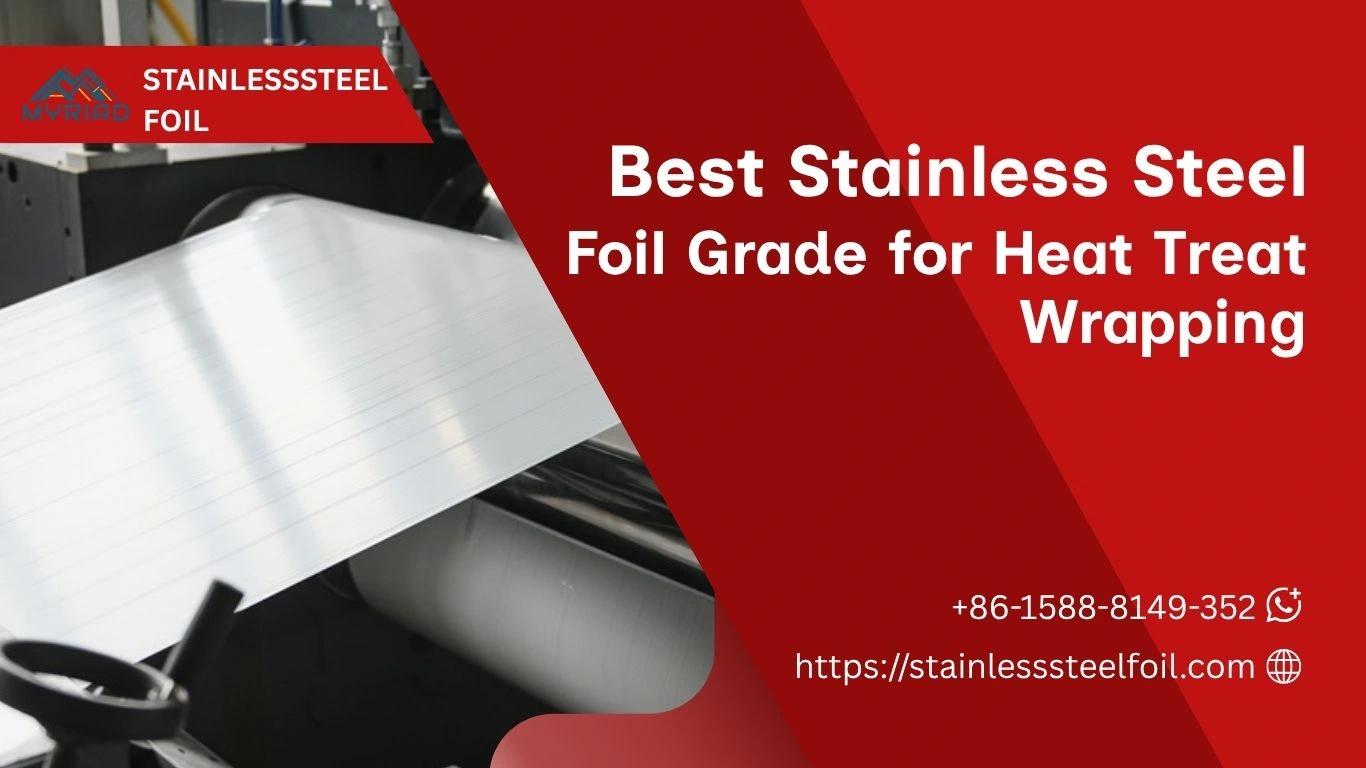
Industrial and metallurgical processes, choosing the best stainless steel foil grade for heat treatment applications is crucial. Heat treatment involves exposing metals to precise temperatures to alter their physical and mechanical properties, enhancing hardness, strength, or corrosion resistance. A high-quality stainless steel foil acts as a protective barrier, preventing oxidation, contamination, and scaling during heating.
Selecting the right foil ensures both effective heat retention and material protection, while maintaining structural integrity during the process. In this comprehensive guide, we’ll explore the top stainless steel foil grades for heat treatment, their advantages, practical applications, and best practices.
If you’re exploring options, check our Stainless Steel Foil for Heat Treatment collection for premium solutions.
Why Stainless Steel Foil is Essential for Heat Treatment
Heat treating metals like steel, aluminum, or alloys involves temperatures exceeding 800°C. During this process, exposure to oxygen or contaminants can cause oxidation, scale formation, and uneven heating. This is where stainless steel foils play a vital role.

Stainless steel foil provides:
- Oxidation protection: Prevents surface scaling during high-temperature exposure.
- Even heat distribution: Ensures uniform metallurgical changes across the metal.
- Material isolation: Shields metals from contaminants and fluxes.
Understanding the foil grade is critical because it directly impacts the temperature tolerance, corrosion resistance, and durability during heat treatments. Learn more about foil basics in What is Stainless Steel Foil?.
Top Stainless Steel Foil Grades for Heat Treatment
When selecting the best stainless steel foil grade for heat, manufacturers usually consider the 300 series alloys due to their superior high-temperature performance. Let’s compare the most commonly used grades:
301 Stainless Steel Foil
301 stainless steel foil is an austenitic alloy with excellent tensile strength and corrosion resistance.
Key Features:
- Maximum temperature tolerance up to 870°C (1600°F)
- High ductility, allowing wrapping of irregularly shaped parts
- Resistant to oxidation and scaling
Applications include aerospace components, automotive parts, and precision metalworking. For a detailed breakdown, check What is 301 Stainless Steel Foil?.
304 Stainless Steel Foil
304 stainless steel foil is the most widely used austenitic stainless steel with excellent corrosion resistance and heat tolerance.
Key Features:
- Heat resistance up to 870°C (1600°F) in continuous use
- High corrosion resistance in atmospheric and chemical environments
- Excellent surface finish suitable for precision wrapping
Ideal for heat treatment of stainless steel parts, industrial tools, and high-end consumer components. Learn more at What is 304 Stainless Steel Foil?.
430 Stainless Steel Foil
430 stainless steel foil is a ferritic grade commonly used when moderate heat resistance is sufficient.
Key Features:
- Heat resistance up to 815°C (1500°F)
- Good corrosion resistance in mild atmospheres
- Cost-effective alternative for certain industrial applications
Though not as ductile as austenitic grades, 430 is suitable for specific heat treatment applications where budget is a concern.
321 Stainless Steel Foil
321 stainless steel foil contains titanium, which stabilizes the alloy at higher temperatures, making it suitable for repeated heat treatments.
Key Features:
- Heat tolerance up to 900°C (1650°F)
- Resistant to intergranular corrosion during high-heat exposure
- Ideal for aerospace and chemical industry applications
This grade is particularly beneficial for long-term high-temperature processes.
Factors to Consider When Selecting Stainless Steel Foil for Heat Treatment
Choosing the right foil is more than just picking a high-temperature grade. Consider the following:
- Maximum Heat Tolerance: Ensure the foil grade withstands peak process temperatures.
- Ductility: High ductility allows wrapping of irregular shapes without tearing.
- Corrosion Resistance: Prevents oxidation or contamination during heat treatment.
- Thickness: Foil thickness affects heat retention and flexibility. Common thicknesses range from 0.01 mm to 0.1 mm.
- Surface Finish: Smooth foils reduce adhesion of oxide layers.
Explore the options in Stainless Steel Foil Heat Treatment Guide for detailed comparisons.
Applications of Stainless Steel Foil in Heat Treatment
Stainless steel foil finds application in multiple industries:
Aerospace Industry
Used for wrapping high-precision aerospace components to ensure oxidation-free heat treatment.
Automotive Manufacturing
Protects gears, shafts, and engine parts during hardening and tempering processes.
Toolmaking and Metalworking
Covers dies, molds, and metal sheets to prevent scaling and maintain surface quality.
Industrial Furnaces
Foils act as a barrier in furnace applications, preventing cross-contamination and ensuring even heat transfer.
For more details on product options, check Stainless Steel Foil for Heat Treatments.
Heat Treatment Techniques Using Stainless Steel Foil
Encapsulation Method
Wrap the metal part completely in foil to prevent direct exposure to furnace gases.
Blanket Method
Lay foil sheets over multiple parts in a batch to protect surfaces from oxidation.
Bagging Method
Form foil into a pouch for small or irregular components, creating an airtight enclosure.
More practical tips are available in Heat Treatment with Stainless Steel Foil.
Thickness and Durability Considerations
Foil thickness impacts both flexibility and protection:
| Thickness (mm) | Use Case | Advantages |
|---|---|---|
| 0.01 – 0.03 | Small, intricate components | Maximum flexibility |
| 0.04 – 0.06 | Medium parts | Balance of flexibility and strength |
| 0.07 – 0.10 | Heavy-duty industrial parts | Maximum durability, less prone to tearing |
Selecting the right thickness ensures proper heat transfer while protecting the component.
Advantages of Using High-Grade Stainless Steel Foil
- High Heat Resistance: Prevents burning or degradation during heat treatment.
- Oxidation Protection: Maintains clean, scalable-free surfaces.
- Durability and Reusability: Premium foils can be reused for multiple heat cycles.
- Versatility: Suitable for aerospace, automotive, and industrial applications.
You can browse the complete selection in Products Section.
Cost vs. Performance: Making the Right Choice
While high-grade foils like 304 and 321 may cost more than 301 or 430, the benefits include:
- Extended material lifespan
- Fewer defects from oxidation or scaling
- Better surface finish and product quality
Investing in the right grade ensures long-term efficiency and reduced waste.
Summary
Selecting the best stainless steel foil grade for heat treatment is critical for efficient, high-quality industrial processes. Grades like 304 and 321 offer excellent heat resistance, corrosion protection, and durability. Factors such as thickness, ductility, and surface finish also influence performance. By choosing the right foil and applying proper heat treatment techniques, industries can reduce defects, maintain surface integrity, and improve overall efficiency.
For premium foil solutions, explore Stainless Steel Foil for Heat Treatments and contact experts at Contact Us.
FAQs
Q. What is the best stainless steel foil grade for heat treatment?
A. The best stainless steel foil grade for heat treatment depends on temperature and corrosion resistance needs, but 304 and 321 foils are often recommended for high-heat applications.
Q. Can 301 stainless steel foil withstand repeated heat treatments?
A. Yes, 301 stainless steel foil is durable and maintains integrity in repeated heating cycles, though 321 is preferred for extreme high temperatures.
Q. How thick should stainless steel foil be for heat wrapping?
A. Foil thickness typically ranges from 0.01 mm to 0.1 mm. Thicker foils provide durability, while thinner foils offer flexibility for intricate parts.
Q. Is stainless steel foil reusable in heat treatment?
A. High-quality stainless steel foils like 304 and 321 can be reused multiple times if not torn or contaminated.
Q. Can stainless steel foil prevent oxidation entirely?
A. When used correctly, high-grade foil significantly reduces oxidation and scaling but proper furnace conditions are also necessary.
Q. Where can I purchase industrial-grade stainless steel foil for heat treatment?
A. You can explore premium options at Stainless Steel Foil Products.