When sourcing Cold Rolled vs Hot Rolled for industrial or commercial applications, buyers often face a critical question: should you choose cold rolled or hot rolled material? At first glance, both may appear similar. However, the differences in manufacturing, surface finish, dimensional tolerance, mechanical properties, and end-use performance can significantly affect your project.
Understanding these distinctions is not just a technical detail. It directly influences product durability, fabrication efficiency, and long-term cost performance. According to the detailed overview of stainless steel, the alloy’s corrosion resistance and mechanical properties depend heavily on processing methods. That processing begins at the rolling stage.
In this in-depth guide, we will explore how Cold Rolled vs Hot Rolled is produced, compare cold rolled and hot rolled grades, examine market trends, and help you determine the best option for your specific industry needs.
What Is Stainless Steel Coil?
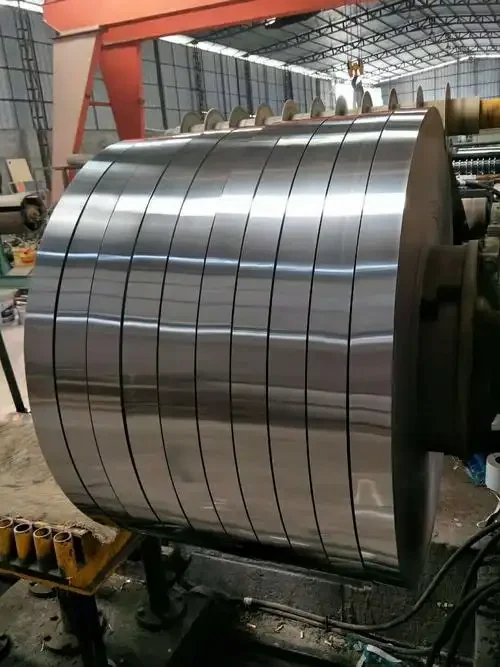
A Stainless Steel Coil is a continuous strip of stainless steel wound into roll form after hot or cold rolling processes. Manufacturers produce it in varying thicknesses, widths, finishes, and grades such as 304, 316, 430, and more.
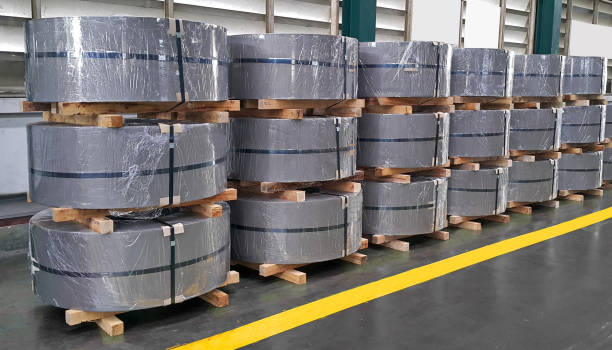
Unlike flat sheets or plates, coil form allows for efficient transportation, automated processing, and mass fabrication. Industries such as construction, automotive, renewable energy, consumer goods, and heavy equipment rely heavily on coil supply.
You can explore a wide range of industrial-grade materials directly from the official Stainless Steel Coil product catalog.
The Stainless Steel Coil Manufacturing Process
Before comparing cold rolled and hot rolled products, it is essential to understand how Stainless Steel Coil is manufactured.
The production process begins with melting raw materials in electric arc furnaces. After refining and casting into slabs, manufacturers roll the material into thinner forms.
For a detailed technical breakdown, refer to the comprehensive guide on the Stainless Steel Coil manufacturing process explained.
Hot Rolling Stage
Hot rolling occurs at temperatures above 1,700°F (927°C). At this temperature, stainless steel becomes malleable. The slabs pass through rolling mills and reduce in thickness.
Because the material cools naturally after rolling, dimensional tolerances remain less precise compared to cold rolled material.
Cold Rolling Stage
Cold rolling begins after the hot rolled coil cools. The material undergoes further rolling at room temperature. This additional compression improves strength, surface finish, and dimensional accuracy.
The Stainless Steel Coil production process guide explains how annealing and pickling follow cold rolling to enhance corrosion resistance.
Cold Rolled Stainless Steel Coil
Cold rolled Stainless Steel Coil undergoes further processing after hot rolling. Manufacturers pass it through rollers at room temperature to achieve tighter thickness control.
Surface Finish and Appearance
Cold rolled coils feature a smooth, polished surface. Common finishes include 2B, BA, and mirror finishes. These finishes make cold rolled material ideal for visible applications.
Industries such as consumer goods rely on smooth finishes. You can see examples in Stainless Steel Coil used in consumer goods.
Dimensional Precision
Cold rolling improves thickness tolerance significantly. For example:
| Property | Hot Rolled | Cold Rolled |
|---|---|---|
| Thickness Tolerance | ±0.05–0.10 mm | ±0.01–0.03 mm |
| Surface Finish | Scaled | Smooth |
| Strength | Moderate | Higher |
| Cost | Lower | Slightly Higher |
Because of its accuracy, cold rolled Stainless Steel Coil suits precision engineering and laser cutting applications.
Strength and Hardness
Cold rolling increases tensile strength through strain hardening. As a result, the material becomes stronger but slightly less ductile.
Market Trends
Recent industry reports, including analysis from China’s cold rolled stainless steel plant production drop, indicate supply fluctuations due to energy policies and raw material costs. These factors influence pricing worldwide.
Similarly, regional price movements such as the 304 cold rolled coil price adjustment reflect demand shifts in Asian markets.
Hot Rolled Stainless Steel Coil
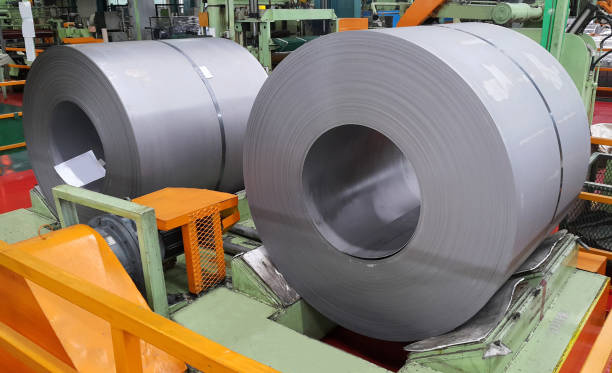
Hot rolled Stainless Steel Coil forms at high temperatures directly from cast slabs. It requires less processing, which reduces production costs.
Surface Characteristics
Hot rolled coils typically have a rougher, scaled surface. Manufacturers often descale or pickle the surface before shipping Cold Rolled vs Hot Rolled.
Because of this finish, hot rolled material works well for structural components where aesthetics are not critical.
Cost Efficiency
Since hot rolling involves fewer processing steps, it costs less per metric ton. Large construction projects often prefer hot rolled Stainless Steel Coil for budget efficiency.
Mechanical Properties
Hot rolled stainless steel retains good ductility. It bends and welds easily, which benefits heavy fabrication industries.
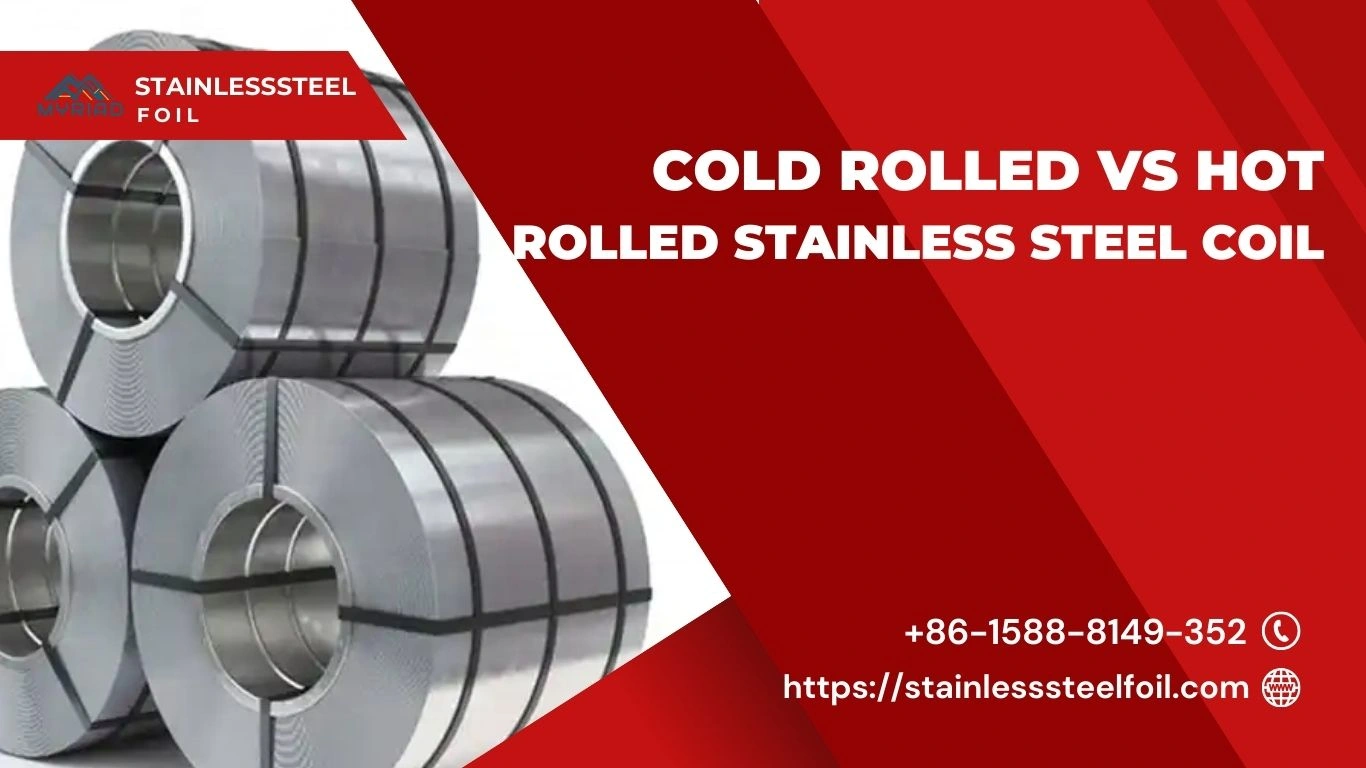
Cold Rolled vs Hot Rolled Stainless Steel Coil: Direct Comparison
Choosing between these two types depends on application requirements.
Cold rolled Stainless Steel Coil provides superior surface finish and tighter tolerances. It performs well in precision applications such as medical devices, electronics, and decorative panels.
Hot rolled Stainless Steel Coil, however, offers cost advantages and better formability for structural use.
For renewable energy applications such as wind towers and solar mounting systems, you can explore how Stainless Steel Coil supports renewable infrastructure.
Grades Matter: 304 vs 316 Stainless Steel Coil
Rolling method is not the only consideration. Grade selection also impacts performance.
Grade 304 remains the most widely used stainless steel. It offers excellent corrosion resistance and affordability.
Grade 316 contains molybdenum, improving resistance to chlorides and marine environments. Learn more about high-performance material options such as 316 Stainless Steel Coil.
When combined with cold rolling, 316 grade delivers exceptional precision and corrosion protection for chemical processing industries.
Environmental Impact and Sustainability
Sustainability now drives procurement decisions worldwide. Stainless steel is 100% recyclable. In fact, global stainless steel production uses over 60% recycled material.
The environmental advantages of Stainless Steel Coil extend to durability and lifecycle savings. Instead of replacing corroded materials frequently, stainless steel structures last decades.
For deeper insights, review the detailed discussion on Environmental benefits of Stainless Steel Coil.
Industry Applications of Stainless Steel Coil
Different industries prioritize different properties.
Construction companies value hot rolled material for beams and reinforcements. Automotive manufacturers often choose cold rolled coils for body panels due to surface quality.
The appliance sector demands polished cold rolled Stainless Steel Coil for refrigerators and kitchen equipment.
Heavy industrial plants use thicker hot rolled coils for tanks and pressure vessels.
For a broader perspective on industrial uses, visit the official Stainless Steel Coil blog section.
How to Choose the Right Stainless Steel Coil
Selecting the correct Stainless Steel Coil involves evaluating four factors.
First, consider surface finish requirements. If appearance matters, choose cold rolled.
Second, evaluate dimensional tolerance. Tight tolerances demand cold rolled precision.
Third, analyze budget constraints. Hot rolled offers cost savings.
Fourth, assess environmental exposure. For marine or chemical environments, consider 316 grade.
Professional suppliers can help you match specifications to your application. If you need expert consultation, reach out via the official contact page.
Global Market Insights
The global stainless steel market exceeded 56 million metric tons annually in recent years. Asia leads production, with China contributing over 50% of output.
Demand for Stainless Steel Coil continues to rise in renewable energy, electric vehicles, and infrastructure projects.
Supply chain volatility, energy costs, and nickel pricing significantly affect coil prices. Therefore, buyers should monitor market reports and work closely with reliable manufacturers such as those featured at stainless steel foil.
Summary
Choosing between cold rolled and hot rolled Stainless Steel Coil depends on application, budget, finish requirements, and environmental exposure. Cold rolled coils deliver precision, aesthetics, and strength. Hot rolled coils provide cost efficiency and structural reliability. Understanding the manufacturing process, grade differences, and market trends helps you make an informed investment. Whether you require 304 for general fabrication or 316 for corrosive environments, selecting the right Stainless Steel Coil ensures long-term performance and value. For premium materials and expert guidance, explore the full range at stainless steel foil.
FAQs
What is the main difference between cold rolled and hot rolled Stainless Steel Coil?
Cold rolled Stainless Steel Coil offers better surface finish and tighter dimensional tolerance, while hot rolled Stainless Steel Coil is more cost-effective and suitable for structural applications.
Which Stainless Steel Coil is better for outdoor use?
For outdoor or marine environments, choose Stainless Steel Coil in grade 316, preferably cold rolled if appearance matters.
Is cold rolled Stainless Steel Coil stronger?
Yes, cold rolled Stainless Steel Coil has higher tensile strength due to strain hardening during processing.
Is hot rolled Stainless Steel Coil cheaper?
Generally, Cold Rolled vs Hot Rolled Coil costs less because it requires fewer processing steps.
Can Stainless Steel Coil be recycled?
Yes. Cold Rolled vs Hot Rolled is fully recyclable and supports sustainable manufacturing practices.