The modern world often relies on materials that push the boundaries of physics and engineering. While most people associate steel with massive structural beams or automotive frames, a delicate and highly sophisticated version exists in the form of stainless steel foil. This material combines the legendary durability of traditional alloys with a level of precision that makes it nearly invisible to the naked eye. In many high-tech laboratories and factories, the question remains: how thin can we actually go?
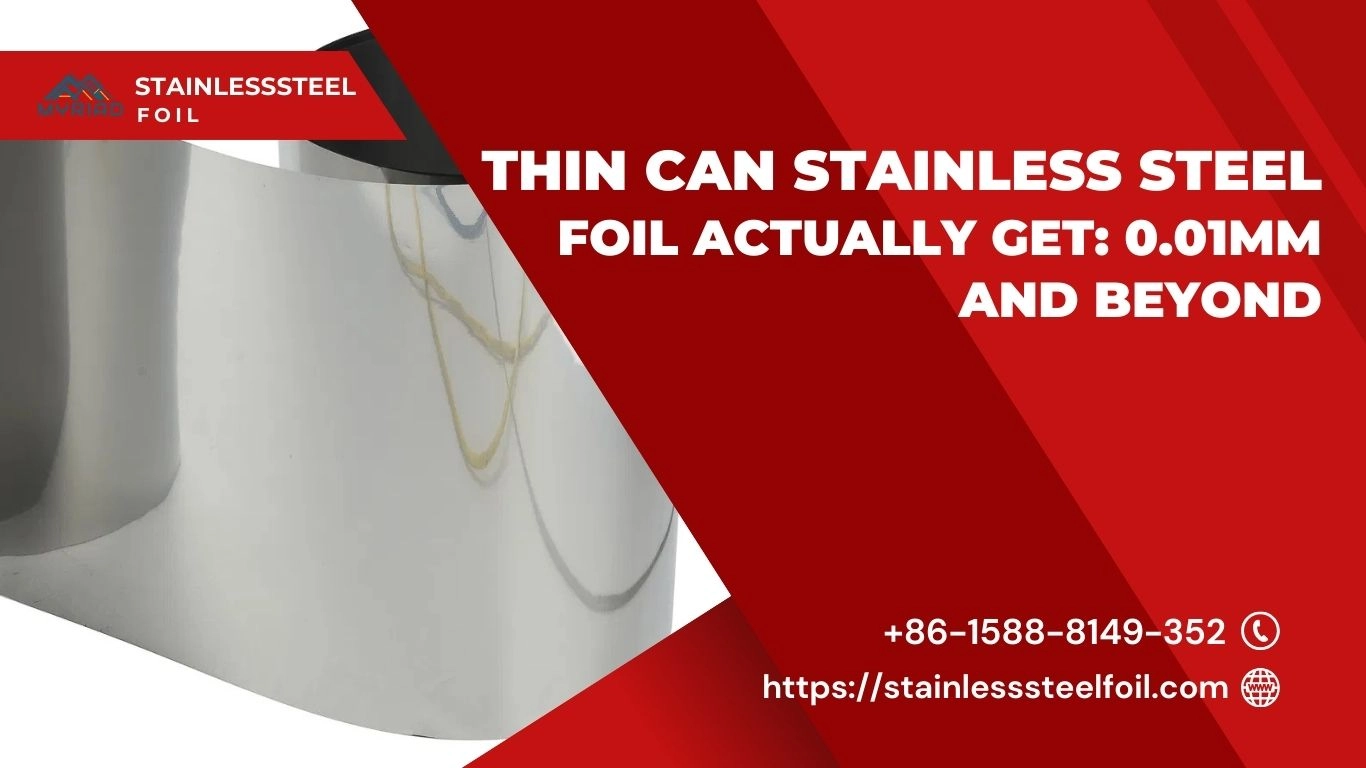
Today, manufacturers successfully produce stainless steel foil at a staggering thickness of 0.01mm. This dimension rivals the diameter of a single strand of high-quality silk or a fine human hair. However, reaching 0.01mm is merely a milestone, not the finish line. Specialized applications in the aerospace and medical sectors now demand foils that go even thinner, entering the realm of microns. Understanding the limits of this material allows designers to create smaller, more efficient, and more durable products than ever before.
What is Stainless Steel Foil?
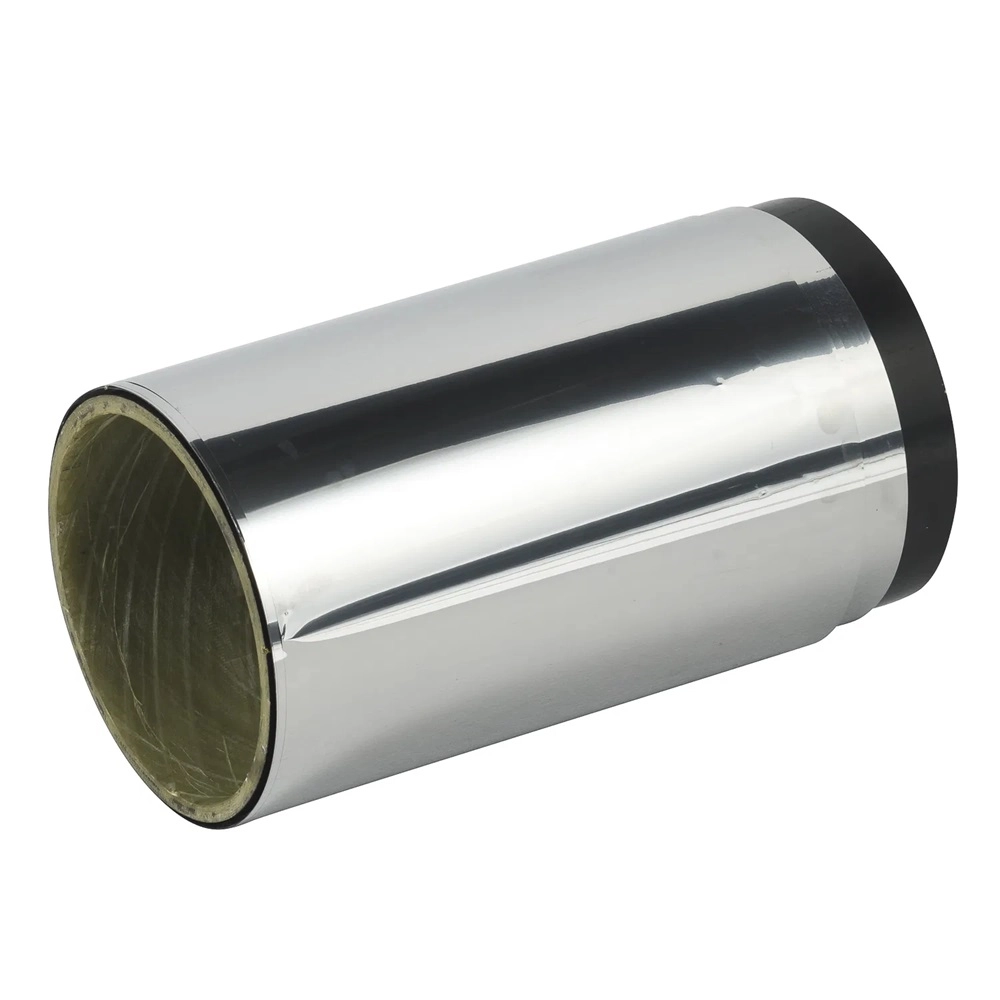
Essentially, stainless steel foil is a very thin sheet of steel that typically measures less than 0.2mm in thickness. Unlike standard sheet metal, foil possesses a level of flexibility that allows it to wrap around complex shapes or vibrate in response to acoustic signals. Despite its thin profile, it retains the high corrosion resistance and tensile strength associated with bulk stainless steel.
This material belongs to a specific category of metal products that undergo extensive processing to achieve their final form. You can find out more about the basic definitions by visiting what is stainless steel foil is. It is distinct from shim stock or precision strips due to its extreme gauge and specific mechanical properties. Because it handles high temperatures and harsh chemicals effectively, it serves as a primary choice for engineers who cannot use aluminum or copper.
Variations and Grades
Engineers categorize these materials based on their chemical composition. Common grades include 304, 316L, and various 400-series alloys. Each grade offers a different set of advantages, such as enhanced magnetism or superior acid resistance. For a detailed look at the types available, you can check what is stainless steel foils to see how different alloys behave at micro-thicknesses.
How Thin Can Stainless Steel Foil Really Get?
The current industry standard for ultra-thin production sits at 0.01mm. To put this into perspective, a standard piece of printer paper measures roughly 0.1mm. This means the thinnest stainless steel foil is ten times thinner than the paper in your office. However, the limits of physics allow for even more extreme reductions.
In highly controlled research environments, some facilities have successfully produced foils as thin as 0.002mm (2 microns). At this level, the material behaves more like a semi-transparent membrane than a piece of metal. Achieving such thinness requires a perfect balance of metallurgy, rolling technology, and environmental control.
| Material Grade | Standard Minimum (mm) | Ultra-Thin Capability (mm) |
| 304 Stainless Steel | 0.02mm | 0.005mm |
| 316L Stainless Steel | 0.03mm | 0.01mm |
| Titanium Foil | 0.01mm | 0.002mm |
| Precision Shim Stock | 0.05mm | 0.02mm |
While 0.01mm is commercially available for high-volume orders, anything thinner usually falls into the category of custom or experimental production. The structural integrity of the metal begins to change at these scales, as the number of grains across the thickness of the foil decreases significantly.
The Manufacturing Process of Ultra-Thin Stainless Steel Foil
You cannot simply squeeze a block of steel into a 0.01mm foil in one pass. The process is a long, iterative journey that involves multiple stages of reduction and thermal treatment. It requires a specific type of equipment known as a Sendzimir mill, or “Z-mill,” which uses a cluster of small rollers to apply massive, even pressure to the metal strip.
The process begins with a hot-rolled coil. This material goes through a series of cold-rolling stages where the thickness is reduced by a certain percentage during each pass. If you want to see the step-by-step breakdown, you can read how stainless steel foil is made from hot rolled coil to ultra-thin precision. This transformation is one of the most complex tasks in modern metallurgy.
The Importance of Heat Treatment
As the rollers compress the metal, the crystal structure of the steel becomes “work-hardened.” This makes the metal brittle and prone to cracking. To continue the thinning process, the manufacturer must apply heat treating to “relax” the internal stresses. This annealing process restores ductility to the stainless steel foil, allowing the rollers to push it even thinner in the next cycle. Without careful temperature control, the foil would disintegrate before reaching its target gauge.
Key Factors Affecting Stainless Steel Foil Thickness
Several variables determine the final thickness a manufacturer can achieve. It is not just about the power of the machinery; the physics of the metal itself plays a major role. Understanding these factors helps engineers choose the right material for their specific needs.
-
Alloy Composition: Harder alloys are more difficult to roll into ultra-thin gauges. 304 stainless steel is generally easier to thin than high-carbon variants.
-
Roller Diameter: Smaller rollers apply more concentrated force, which is necessary for reaching 0.01mm and below.
-
Tension Control: The mill must pull the foil with precise tension. If the tension is too high, the foil snaps; if it is too low, the thickness becomes uneven.
-
Lubrication: High-pressure rolling generates immense heat. Specialized oils cool the rollers and reduce friction, preventing surface defects on the stainless steel foil.
-
Environmental Stability: At 0.01mm, even a 1°C change in room temperature can cause the machinery to expand or contract, altering the thickness by several microns.
Applications of Ultra-Thin Stainless Steel Foil
Why would anyone need metal this thin? As it turns out, stainless steel foil is a quiet hero in many modern technologies. Its unique combination of thinness and strength makes it irreplaceable in several high-stakes industries.
Hydrogen Fuel Cells and Energy Storage
In the push for sustainable energy, hydrogen fuel cells rely on ultra-thin bipolar plates to keep the energy stack compact. Using 0.01mm stainless steel foil ensures the stack remains lightweight while providing the necessary conductivity and corrosion resistance to survive the electrochemical environment.
High-Frequency Electronics and Shielding
Modern 5G and 6G devices require advanced EMI (Electromagnetic Interference) shielding. Because space inside a smartphone is extremely limited, designers use stainless steel foil to block signals without adding bulk. This application is a perfect example of how stainless steel coil is used in the production of consumer goods to improve daily technology.
Medical Implants and Sensors
Surgeons often use tiny sensors or implants that require a biocompatible outer layer. Stainless steel foil provides a sterile, non-reactive barrier that can protect sensitive electronics inside the human body. Its ability to flex allows these devices to move with the patient’s tissues.
How Ultra-Thin Foils Compare to Regular Foils
When comparing 0.01mm foil to a “regular” foil (like 0.1mm), the differences go beyond just measurement. The mechanical behavior changes as you approach the micro-scale.
| Feature | Regular Foil (0.1mm) | Ultra-Thin Foil (0.01mm) |
| Flexibility | Moderate; retains some “spring” | Extreme; behaves like fabric |
| Opacity | Fully Opaque | Mostly Opaque (slightly translucent to high-energy light) |
| Handling | Can be handled by hand | Requires specialized vacuum tools |
| Cost | Standard market rates | Premium due to high processing time |
| Surface Finish | Bright/Matte | Mirror-like or Super-Bright |
In some cases, the extreme thinness of the foil allows it to be used in ways that stainless steel strips in home appliances never could. While appliance strips provide structural beauty, 0.01mm stainless steel foil provides functional precision.
Measuring Stainless Steel Foil Thickness
At the 0.01mm level, traditional mechanical calipers are essentially useless. The mere pressure of the measurement tool can compress the foil, leading to an inaccurate reading. Instead, manufacturers use non-contact methods to ensure the stainless steel foil meets the client’s specifications.
Laser Interferometry
This method uses the interference patterns of laser light to calculate the distance between the top and bottom surfaces of the foil. It is incredibly accurate and provides real-time data as the foil moves through the production line. This ensures a consistent gauge across the entire length of the roll.
Ultrasonic and X-Ray Gauging
In some industrial settings, ultrasonic waves or X-ray absorption rates determine the thickness. These methods are particularly useful for detecting internal inconsistencies or “pinholes” that might not be visible on the surface. Maintaining this level of quality is a standard part of the stainless steel coil production process guide.
Challenges in Producing Ultra-Thin Stainless Steel Foil
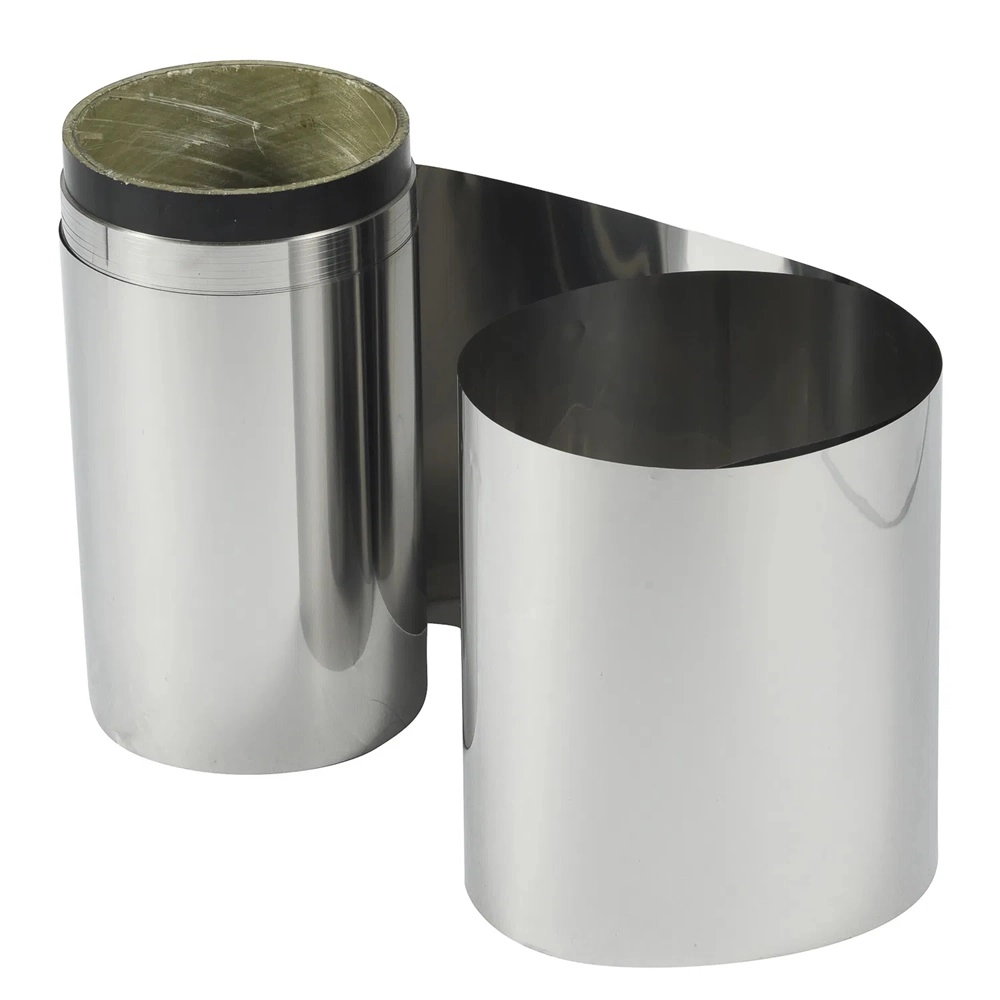
Manufacturing stainless steel foil at these extreme gauges is a high-wire act for engineers. The margin for error is nonexistent. One minor mistake can ruin an entire production run, leading to significant financial loss.
-
The Grain Size Problem: As the foil gets thinner, the individual grains of metal become a significant percentage of the total thickness. If a grain is too large, it can create a weak point or even a hole in the stainless steel foil.
-
Work Hardening: Managing the hardness of the metal requires constant monitoring. If the foil becomes too hard during a pass, it will shatter into pieces under the rollers.
-
Surface Contamination: A single speck of dust on the rollers can create a repeating dent or a “pinhole” in the foil. Factories must operate in high-level clean rooms to produce the best 0.01mm products.
-
Elastic Recovery: When the pressure of the rollers is released, the metal “springs back” slightly. Predicting this recovery is essential for achieving an exact 0.01mm final thickness.
Future of Stainless Steel Foil
As we move further into the decade, the demand for even thinner materials will only grow. We are already seeing research into “nanometals,” where the properties of the steel are manipulated at the atomic level. The future of stainless steel foil likely lies in the integration of specialized coatings and multi-layer composites.
We expect to see 0.005mm foils become more common in mass production as rolling technology improves and automation reduces the human error factor. This will open new doors for wearable technology, flexible solar panels, and advanced aerospace insulation. You can stay updated on these trends by following our blog for the latest industry news.
Summary
In conclusion, stainless steel foil is a remarkable material that bridges the gap between heavy industry and micro-technology. While 0.01mm is the current standard for ultra-thin production, the industry continues to push toward even smaller dimensions. From hydrogen fuel cells to the smartphone in your pocket, this material provides the strength, flexibility, and durability required for the world’s most demanding applications.
By understanding the manufacturing process and the factors that influence thickness, engineers can make informed decisions about their material needs. Whether you require standard gauges or custom ultra-thin solutions, the precision of stainless steel foil remains an essential part of modern innovation. If you are ready to start your next project or need more technical information, feel free to contact us or explore our full range of products.
FAQs
Can you manufacture stainless steel foil thinner than 0.01mm?
Yes, while 0.01mm is the common industrial limit, specialized mills can produce stainless steel foil as thin as 0.002mm for specific research and aerospace applications. This requires advanced Sendzimir mills and multiple annealing stages to ensure the metal remains flexible and free of defects.
Is 0.01mm stainless steel foil strong enough for industrial use?
Absolutely. Despite its thin profile, stainless steel foil retains a high tensile strength. It is frequently used in high-pressure environments, such as burst discs for chemical tanks, where it must withstand significant stress before failing at a precise, pre-calculated point.
Does the thickness of the foil affect its corrosion resistance?
The chemical composition of the alloy primarily determines its corrosion resistance, not the thickness. However, a thinner stainless steel foil is more vulnerable to physical perforation if corrosion does occur. This is why engineers often choose higher grades like 316L for ultra-thin applications in harsh environments.
How is ultra-thin stainless steel foil stored and shipped?
Because 0.01mm stainless steel foil is extremely delicate, it is usually shipped on reinforced plastic or metal cores. To prevent crinkling or oxidation, manufacturers often wrap the rolls in moisture-proof packaging and secure them in custom-fitted crates to ensure the material arrives in perfect condition.
Why is ultra-thin foil more expensive than standard sheet metal?
The price of stainless steel foil reflects the intense processing required to reach such small gauges. Every reduction pass through the mill and every annealing cycle add to the production cost. Additionally, the high level of quality control and the risk of material loss during rolling contribute to the premium pricing of ultra-thin foils.
Can I get a custom thickness for my project?
Yes, many precision manufacturers offer custom rolling services. If your design requires a specific gauge, such as 0.015mm or 0.008mm, you can request a custom production run. You can check the availability of specific sizes on our products page to find the best fit for your needs.