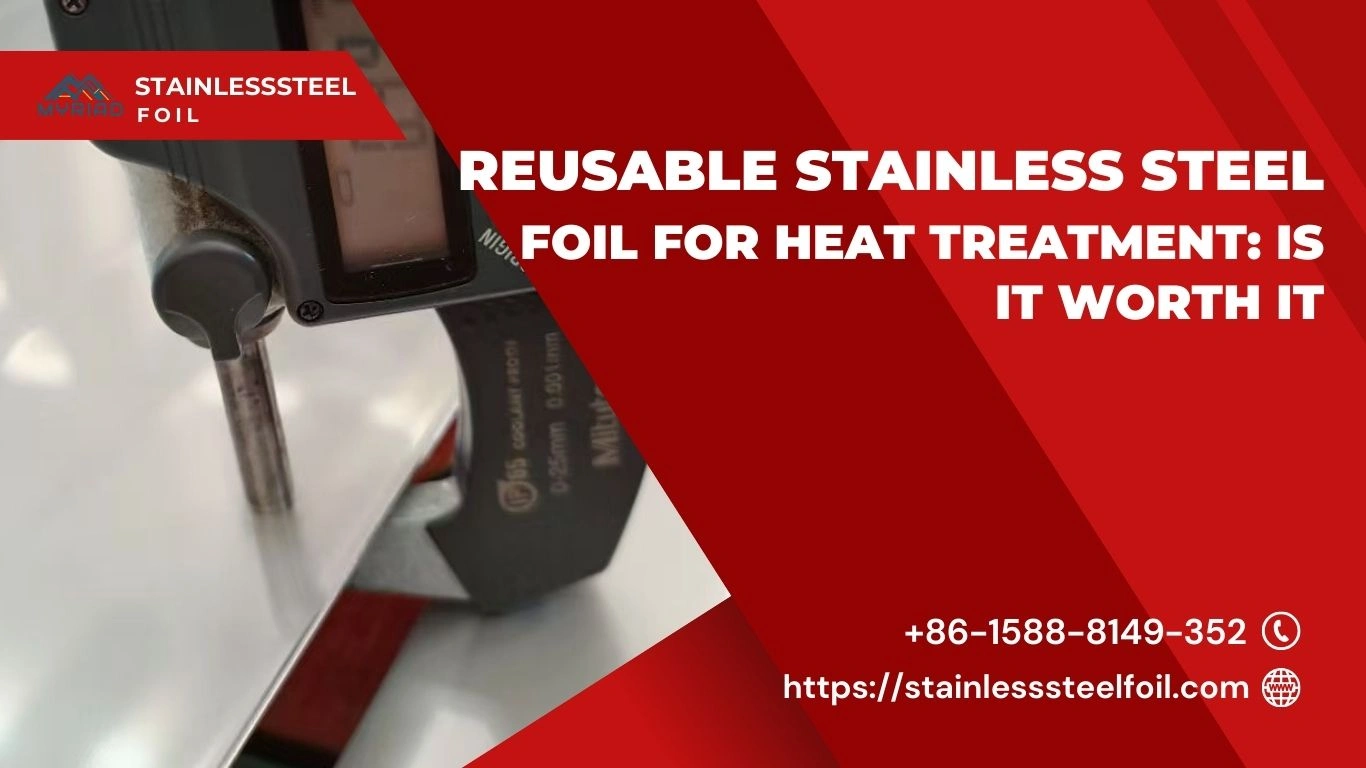
Heat treatment has always been a balancing act between precision, protection, and cost. Whether you are running a commercial heat-treating furnace or handling small-batch metallurgical processes, the materials you choose can make or break both results and budgets. In recent years, stainless steel foil for heat treatment has emerged as a reusable alternative to traditional wraps and disposable barriers.
But does it truly deliver value over time, or is it just another industrial trend?
This article takes a deep, practical look at reusable this for heat treatment. We will explore how it works, why industries rely on it, how it compares to disposable materials, and whether the long-term return justifies the upfront investment. If you are serious about improving oxidation control, consistency, and cost efficiency, this guide will help you decide with confidence.
Stainless Steel Foil for Heat Treatment
At its core, stainless steel foil for heat treatment is an ultra-thin, high-performance metal sheet engineered to withstand extreme furnace temperatures. Unlike aluminum or ceramic wraps, stainless steel foil maintains structural integrity while resisting oxidation, carburization, and contamination during heating cycles.

Stainless steel itself is an iron-based alloy containing chromium, which forms a passive oxide layer when exposed to oxygen. This protective layer is the reason stainless steel resists corrosion so effectively, even at elevated temperatures. According to Wikipedia’s stainless steel overview, this chromium oxide layer self-repairs when damaged, making stainless steel uniquely suited for repeated thermal exposure.
When produced in foil form, stainless steel becomes flexible enough to wrap parts tightly while still offering the durability of a solid metal barrier.
Why Heat Treatment Demands Specialized Wrapping Materials
Heat treatment is not simply about heating metal. It is about controlling the environment around the metal while temperatures climb, soak, and cool. Exposure to oxygen during these stages can cause scaling, decarburization, or surface defects that compromise mechanical performance.
This is where this heat treatment stands apart. By sealing components within a controlled envelope, the foil limits oxygen contact and stabilizes surface chemistry. As a result, parts emerge cleaner, stronger, and closer to specification.
Traditional disposable wraps may offer some protection, but they degrade quickly and often fail under prolonged exposure. Reusable stainless steel foil, on the other hand, provides consistent performance across multiple cycles.
How Reusable Stainless Steel Foil Performs in High-Temperature Environments
One of the strongest arguments in favor of reusable stainless steel foil is its thermal stability. Grades such as 309, 310, 321, and especially 316L are widely used due to their resistance to oxidation and creep at high temperatures.
If you want a deeper technical breakdown, this guide on the heat tolerance of 316 stainless steel explains how certain alloys remain stable beyond 1000°C under controlled conditions.
Because stainless steel foil does not melt, burn, or fragment like disposable wraps, it maintains a reliable seal throughout the heat cycle. That reliability directly translates into better metallurgical outcomes and fewer rejected parts.
Comparing Reusable vs. Single-Use Stainless Steel Foil
| Feature | Single-Use Foil | Reusable Foil |
|---|---|---|
| Cost per Cycle | Higher | Lower |
| Durability | One-time use | Multiple cycles |
| Risk of Contamination | Minimal | Higher |
| Environmental Impact | More waste | Reduced waste |
| Surface Finish Quality | Consistent | May vary |
Environmental Impact and Sustainability Benefits
Sustainability is no longer optional in industrial manufacturing. Reusable stainless steel foil aligns naturally with environmental responsibility.
By reducing waste volume and lowering material turnover, stainless steel foil helps manufacturers minimize their environmental footprint. it is also fully recyclable at the end of its service life, unlike many composite disposable wraps.
This sustainability advantage makes reusable foil especially attractive to companies pursuing ISO certifications or green manufacturing initiatives.
Industrial Applications of Stainless Steel Foil for Heat Treatment
Across industries, stainless steel foil plays a critical role wherever precision heat treatment is required. Tool and die manufacturing relies on foil wrapping to preserve sharp edges and surface finishes. Aerospace components depend on controlled atmospheres to meet strict metallurgical standards. Automotive and medical manufacturers use stainless steel foil to ensure repeatable, contamination-free results.
You can explore broader applications in this detailed overview of the use of stainless steel foils, which highlights how foil thickness and alloy choice vary by industry.
The Importance of Ultrathin Stainless Steel Foil in Heat Treating
Thickness matters more than many operators realize. Ultrathin foil offers better conformity, tighter seals, and improved heat transfer without sacrificing strength.
Manufacturing such thin material requires precise rolling and annealing processes. This article on how manufacturers produce ultrathin 316L stainless steel foil for heat treating explains why quality control at this stage directly affects furnace performance later.
A well-made foil reduces oxygen ingress, improves consistency, and lowers the risk of foil failure mid-cycle.
Is Stainless Steel Foil for Heat Treatment Easy to Use?
Despite its industrial strength, stainless steel foil is surprisingly user-friendly. It cuts cleanly, folds without cracking, and conforms tightly around complex geometries. With basic training, operators can wrap parts efficiently and reuse the same foil across multiple cycles.
Proper handling does matter. Avoid sharp creases, excessive tension, and contamination between uses. When treated with care, stainless steel foil becomes a reliable tool rather than a consumable headache.
For a practical walkthrough, this stainless steel foil heat treatment guide covers best practices from preparation to post-cycle inspection.
How to Choose the Right Stainless Steel Foil
Not all foils are created equal. Alloy composition, thickness, and surface finish all influence performance. For high-temperature vacuum or inert atmosphere heat treatment, 316L stainless steel foil is often preferred due to its corrosion resistance and stability.
If you are evaluating options, browsing a specialized supplier’s product catalog can help you compare specifications and match foil grades to your process requirements.
Internal Process Efficiency and Quality Control Improvements
Reusable stainless steel foil for heat treatment also improves internal workflow. Fewer material changes mean fewer interruptions. Consistent wrapping quality leads to predictable results. Over time, operators develop repeatable techniques that reduce error rates.
This consistency directly impacts quality control metrics. Parts show fewer surface defects, reduced post-processing requirements, and tighter adherence to hardness or microstructure targets.
Is the Investment Worth It? A Practical Verdict
For operations running occasional heat treatment cycles, disposable wraps may seem sufficient. However, for any facility handling regular or high-value heat treatment, reusable stainless steel foil quickly proves its worth.
Lower long-term costs, reduced waste, improved part quality, and operational consistency all point to a clear conclusion. Stainless steel foil for heat treatment is not just worth it—it is often the smarter, more professional choice.
If you are considering upgrading your process, the team behind stainless steel foil offers resources, technical insights, and material options designed specifically for heat-treating professionals.
Summary
In the high-stakes world of thermal processing, Stainless Steel Foil for Heat Treatment stands as an essential safeguard for your valuable metalwork. While the dream of a truly reusable foil remains elusive due to the physical changes the metal undergoes at high temperatures, the value of using a fresh, high-quality wrap cannot be overstated. By preventing scaling, protecting against carbon loss, and mimicking a vacuum environment, this foil ensures that your tools and parts meet the highest standards of quality. Are you ready to elevate your heat-treating process with precision-engineered materials? Explore our full blog for more technical insights, or contact us today to find the perfect foil solution for your next project.
FAQs
Can stainless steel foil for heat treatment be reused multiple times?
Yes, it’s heat treatment is designed for repeated use when handled and stored properly between cycles.
What temperature limits apply to stainless steel foil for heat treatment?
The temperature limit depends on the alloy, but this for heat treatment commonly performs reliably above 1000°C in controlled environments.
Does stainless steel foil for heat treatment prevent oxidation completely?
While no barrier is absolute, it’s for heat treatment significantly reduces oxidation by limiting oxygen exposure during heating.
Is stainless steel foil for heat treatment suitable for vacuum furnaces?
Yes, it’s for heat treatment is widely used in vacuum and inert gas furnaces due to its stability and low outgassing.
How thick should stainless steel foil for heat treatment be?
Thickness depends on part size and temperature, but this for heat treatment typically ranges from ultrathin to medium gauge for optimal sealing.