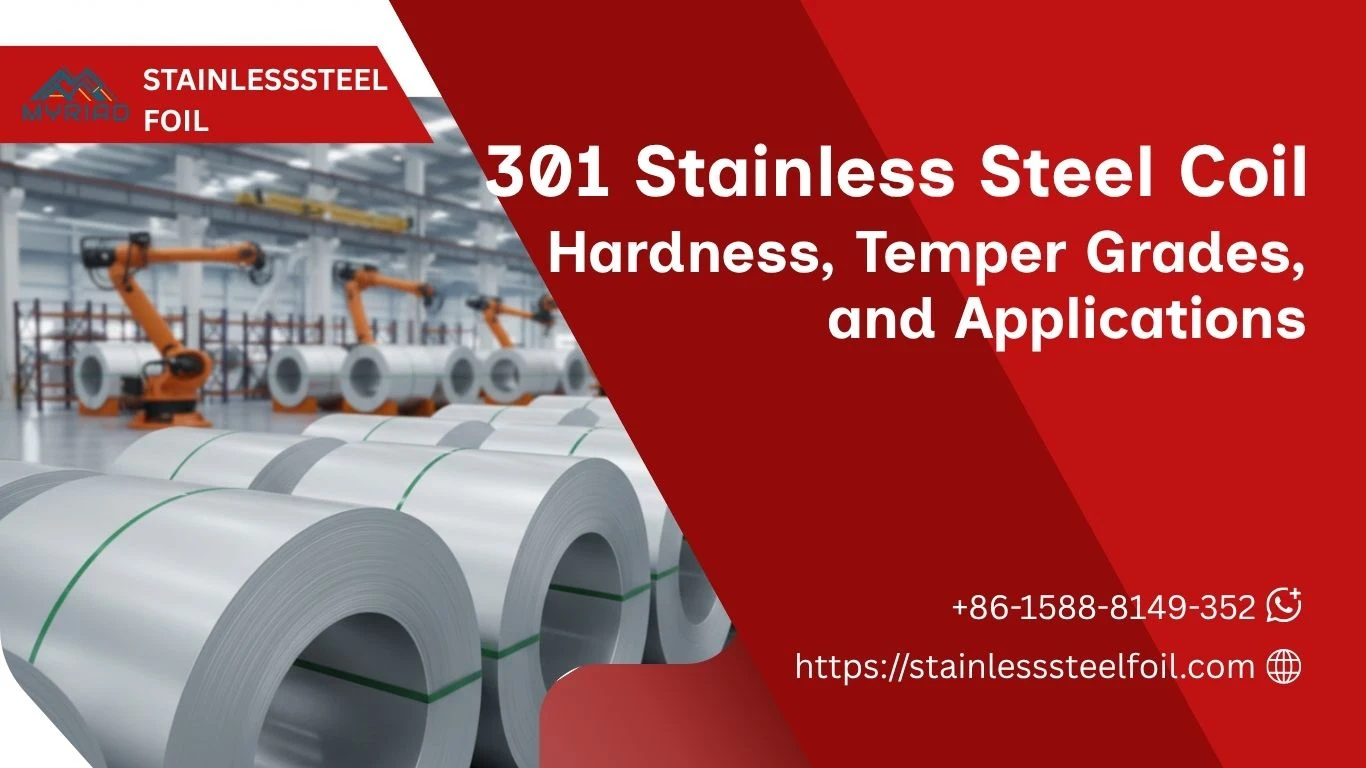
Today’s fast-moving manufacturing industry, material performance matters more than ever. Engineers and manufacturers constantly look for metals that combine strength, flexibility, corrosion resistance, and long-term durability. That is why 301 stainless steel coil remains one of the most widely used materials across automotive, aerospace, electronics, industrial equipment, and consumer goods industries.
Known for its exceptional work-hardening capability, 301 stainless steel delivers high tensile strength while maintaining good corrosion resistance. Manufacturers frequently use it for springs, clips, brackets, fasteners, and structural components that require repeated flexing without failure.
Compared with standard stainless grades, 301 stainless steel offers a unique balance between mechanical strength and formability. It can also be processed into different temper grades, allowing manufacturers to choose precise hardness levels for specific applications.
According to Wikipedia’s Stainless Steel Overview, stainless steel alloys continue to dominate modern manufacturing because of their recyclability, strength, and resistance to oxidation. Among these alloys, 301 stainless steel stands out for applications requiring high fatigue resistance and spring properties.
This guide explains everything you need to know about stainless-steel coil, including levels, temper grades, mechanical properties, industrial applications, manufacturing processes, and how to choose the right material for your project.
What Is 301 Stainless Steel Coil?
301 stainless steel coil is an austenitic chromium-nickel stainless steel alloy known for excellent mechanical strength and superior cold-working characteristics.
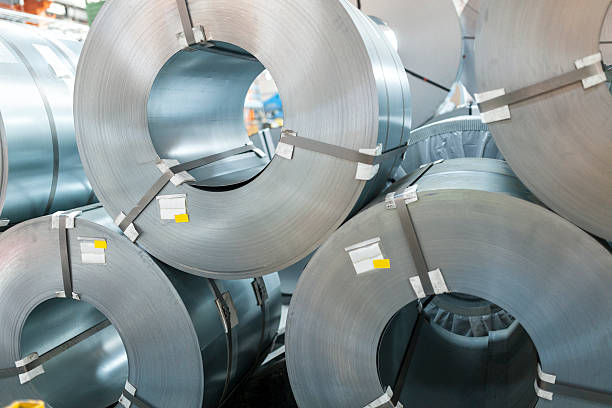
Unlike some stainless steel grades that prioritize corrosion resistance alone, 301 stainless steel is specifically designed to increase hardness and tensile strength during cold rolling.
This alloy typically contains:
| Element | Typical Composition |
|---|---|
| Chromium | 16–18% |
| Nickel | 6–8% |
| Carbon | Maximum 0.15% |
| Manganese | Maximum 2% |
The lower nickel content compared with 304 stainless steel makes 301 more economical while still offering good corrosion resistance and exceptional strength.
Manufacturers commonly process 301 stainless steel into:
- Coil
- Strip
- Foil
- Precision spring material
- Thin sheet products
You can explore additional stainless steel products at Stainless Steel Foil Products.
Why 301 Stainless Steel Coil Is Popular
Several properties make 301 stainless steel coil highly attractive for industrial applications.
Excellent Work Hardening Capability
301 stainless steel hardens rapidly during cold working. This allows manufacturers to produce very high-strength materials without heat treatment.
As the material undergoes rolling or forming, its hardness and tensile strength increase significantly.
High Fatigue Resistance
Industries that manufacture springs and flexible components often choose 301 because it withstands repeated stress cycles effectively.
This makes it ideal for:
- Precision springs
- Clamps
- Retaining rings
- Connector terminals
Good Corrosion Resistance
Although 301 stainless steel offers slightly lower corrosion resistance than 304, it still performs well in many industrial and indoor environments.
Superior Formability
In annealed condition, the material maintains excellent ductility, allowing manufacturers to form complex shapes before hardening.
301-Stainless Steel Coil Hardness
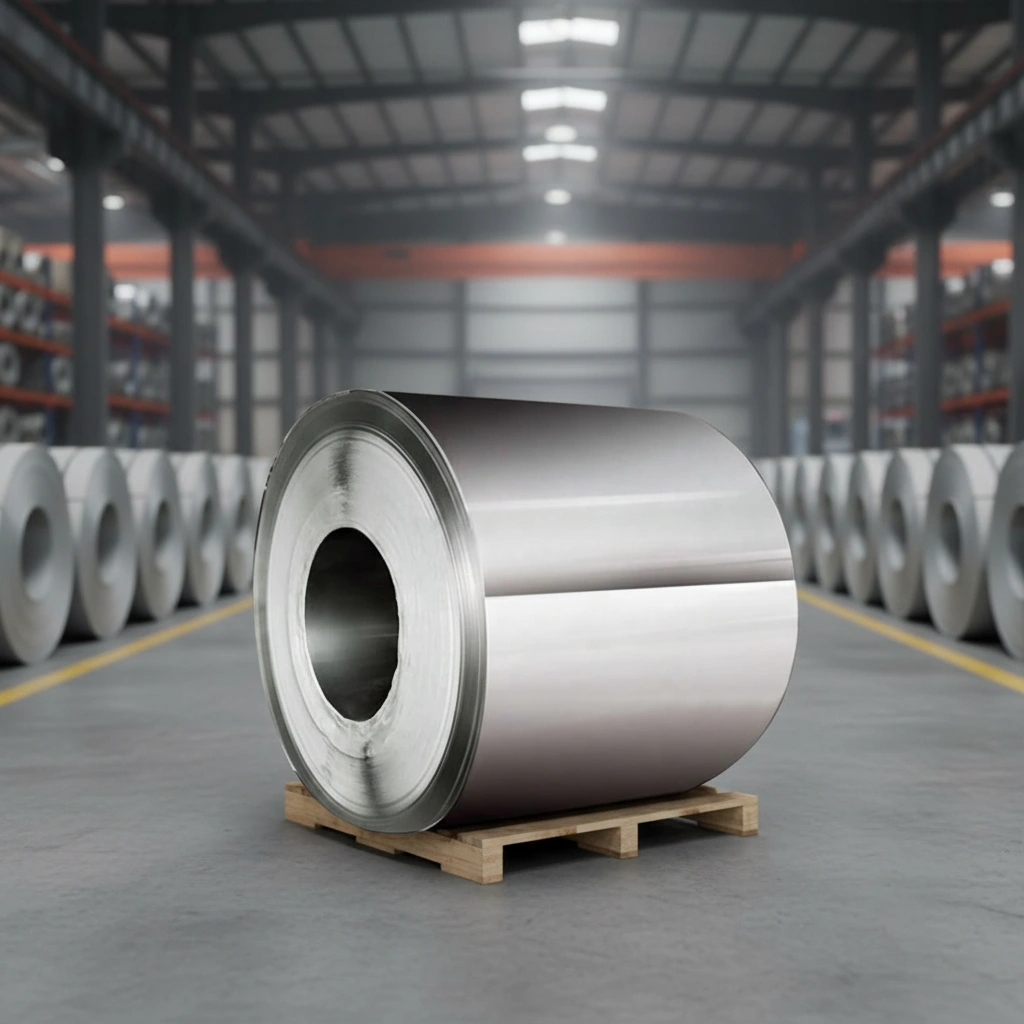
Hardness is one of the most important characteristics of stainless steel coil. Different applications require different hardness levels depending on flexibility and strength requirements.
Annealed Condition
Annealed 301 stainless steel remains soft and highly formable.
Typical hardness:
- Around 180 HV
Applications:
- Deep drawing
- Complex forming
- Structural fabrication
Quarter Hard Temper
Quarter hard temper provides moderate strength while maintaining reasonable flexibility.
Typical hardness:
- Around 250 HV
Applications:
- Light spring components
- Flexible brackets
Half Hard Temper
Half hard material balances formability and mechanical strength.
Typical hardness:
- Around 310 HV
Applications:
- Automotive components
- Industrial springs
Full Hard Temper
Full hard 301 stainless steel delivers extremely high tensile strength.
Typical hardness:
- Around 380 HV
Applications:
- Spring clips
- Fasteners
- Precision mechanical parts
Extra Full Hard Temper
Extra full hard tempers maximize strength and spring performance.
Applications:
- High-load spring systems
- Aerospace components
- Electronic connectors
Temper Grades of 301 Stainless Steel Coil
Manufacturers can produce 301 stainless steel coil in several temper grades to meet specific mechanical requirements.
| Temper Grade | Tensile Strength | Common Use |
|---|---|---|
| Annealed | Low | Forming operations |
| 1/4 Hard | Medium | Light springs |
| 1/2 Hard | High | Automotive parts |
| 3/4 Hard | Higher | Precision components |
| Full Hard | Very High | Heavy-duty springs |
| Extra Full Hard | Maximum | Aerospace applications |
Choosing the right temper grade is essential because excessive hardness may reduce formability, while insufficient hardness may lead to premature failure.
Mechanical Properties of 301 Stainless Steel Coil
The mechanical performance of 301 stainless steel coil changes depending on cold rolling and temper processing.
Tensile Strength
Cold-worked 301 stainless steel can achieve tensile strengths exceeding 1800 MPa in extra full hard conditions.
Yield Strength
Higher temper grades provide improved yield strength, allowing components to resist permanent deformation.
Elongation
Annealed material offers high elongation for forming operations, while harder tempers reduce elongation to increase rigidity.
Fatigue Resistance
301 stainless steel performs exceptionally well under repeated loading conditions, making it suitable for spring applications.
Difference Between 301 and 304 Stainless Steel
Many buyers compare 301 stainless steel with 304 because both are austenitic stainless steel grades.
| Feature | 301 Stainless Steel | 304 Stainless Steel |
|---|---|---|
| Strength | Higher after cold work | Moderate |
| Corrosion Resistance | Good | Excellent |
| Cost | Lower | Slightly higher |
| Work Hardening | Excellent | Moderate |
| Spring Applications | Ideal | Less suitable |
For applications requiring spring performance and high strength, 301 stainless steel coil often becomes the preferred choice.
301 Stainless Steel Strip for Spring Applications
Why Spring Manufacturers Prefer 301
Manufacturers producing precision springs frequently use 301 stainless steel strip because of its excellent elasticity and fatigue resistance.
The material maintains spring tension even after repeated movement cycles.
Applications of Stainless Spring Steel Strip
Common uses include:
- Clock springs
- Electronic contacts
- Flat springs
- Industrial clips
- Automotive spring components
The term stainless spring steel strip usually refers to hardened stainless materials specifically designed for elastic applications.
Spring Temper Stainless Steel Explained
What Is Spring Temper Stainless Steel?
Spring temper stainless steel refers to stainless steel that has been cold worked to achieve high strength and elastic recovery.
Spring temper processing improves:
- Tensile strength
- Fatigue resistance
- Shape retention
- Flexibility
301 stainless steel is one of the most commonly used alloys for spring temper applications.
Manufacturing Process of 301 Stainless Steel Coil
The manufacturing process directly affects the final properties of 301 stainless steel coil.
Melting and Casting
Manufacturers first melt raw stainless steel alloys in electric arc furnaces.
Hot Rolling
Large slabs are rolled into thinner coils under high temperatures.
Cold Rolling
Cold rolling improves surface finish, dimensional accuracy, and mechanical strength.
Annealing
Annealing restores ductility and relieves internal stress.
Temper Rolling
Additional rolling processes create various temper grades.
Learn more about production methods at Stainless Steel Coil Manufacturing Process Explained
You can also explore Stainless Steel Coil Production Process Guide
Surface Finishes Available for 301 Stainless Steel Coil
Surface finish selection affects both appearance and functionality.
Bright Annealed Finish
Bright annealed surfaces provide smooth reflective finishes ideal for decorative and precision applications.
2B Finish
2B finish offers a smooth industrial surface suitable for general manufacturing.
Matte Finish
Matte finishes reduce glare and fingerprints.
Industrial Applications of 301 Stainless Steel Coil
Automotive Industry
The automotive sector uses 301 stainless steel coil for:
- Exhaust brackets
- Spring clips
- Structural reinforcements
- Hose clamps
High fatigue resistance improves durability under vibration and thermal cycling.
Electronics Industry
Electronic manufacturers use 301 stainless steel for:
- Connector springs
- Shielding components
- Battery contacts
- Precision terminals
Thin stainless spring steel strip materials support miniaturized electronic designs.
Aerospace Industry
Aerospace applications demand lightweight, high-strength materials.
301 stainless steel provides:
- Excellent strength-to-weight ratio
- Reliable fatigue performance
- Good temperature resistance
Consumer Goods Manufacturing
Consumer products often require durable and corrosion-resistant materials.
Examples include:
- Appliance components
- Kitchen equipment
- Hardware accessories
- Wear-resistant mechanical parts
Read more about stainless steel coil usage here Stainless Steel Coil Consumer Goods Types and Uses
Environmental Benefits of 301 Stainless Steel Coil
Sustainability has become increasingly important in modern manufacturing.
100% Recyclability
Stainless steel remains one of the world’s most recyclable industrial materials.
Long Product Life
The durability of 301 stainless steel coil reduces replacement frequency and material waste.
Reduced Maintenance
Corrosion resistance lowers maintenance requirements and lifecycle costs.
Learn more here:Environmental Benefits of Stainless Steel Coil
Factors Affecting 301 Stainless Steel Coil Pricing
Several factors influence material costs.
Temper Grade
Harder tempers require additional processing, increasing pricing.
Thickness and Width
Wider and thicker coils consume more raw material.
Surface Finish
Polished and precision finishes increase production complexity.
Market Nickel Prices
Nickel market fluctuations directly affect stainless steel pricing globally.
How to Choose the Right 301 Stainless Steel Coil Supplier
Selecting a reliable supplier helps maintain product quality and production efficiency.
Evaluate Production Capabilities
A professional supplier should offer:
- Precision rolling
- Tight tolerances
- Multiple temper grades
- Consistent surface quality
Request Material Certifications
Always verify material chemistry and mechanical properties through mill certificates.
Confirm Customization Options
Experienced suppliers provide tailored widths, hardness levels, and surface finishes.
For inquiries and quotations, visit Contact Stainless Steel Foil
Summary
Choosing the right 301 stainless steel coil is essential for achieving reliable mechanical performance, long-term durability, and efficient manufacturing. Its exceptional work-hardening capability, wide range of temper grades, and strong fatigue resistance make it one of the most versatile stainless steel materials available today.
From automotive springs to electronic connectors and aerospace components, 301 stainless steel continues to support industries that require precision, strength, and corrosion resistance. By selecting the correct hardness level and working with an experienced supplier, manufacturers can optimize performance while controlling production costs.
Explore more stainless steel solutions at Stainless Steel Foil Official Website.
FAQs
What is 301 stainless steel coil used for?
301 stainless steel coil is commonly used in springs, automotive parts, electronic connectors, aerospace components, and industrial hardware because of its high strength and fatigue resistance.
Is 301 stainless steel good for springs?
Yes. 301 stainless steel coil is one of the best materials for spring manufacturing due to its excellent elasticity and work-hardening capability.
What is the difference between 301 and 304 stainless steel?
The primary difference is strength. 301 stainless steel coil hardens more effectively during cold rolling, making it better suited for spring applications.
What are the available temper grades for 301 stainless steel?
Common temper grades for 301 stainless steel coil include annealed, quarter hard, half hard, three-quarter hard, full hard, and extra full hard.
Can 301 stainless steel resist corrosion?
Yes. 301 stainless steel coil provides good corrosion resistance in many industrial environments, although 304 stainless steel offers slightly better protection.
Why is 301 stainless steel popular in electronics?
Manufacturers prefer 301 stainless steel coil for electronics because it combines strength, flexibility, and precision performance in thin materials.