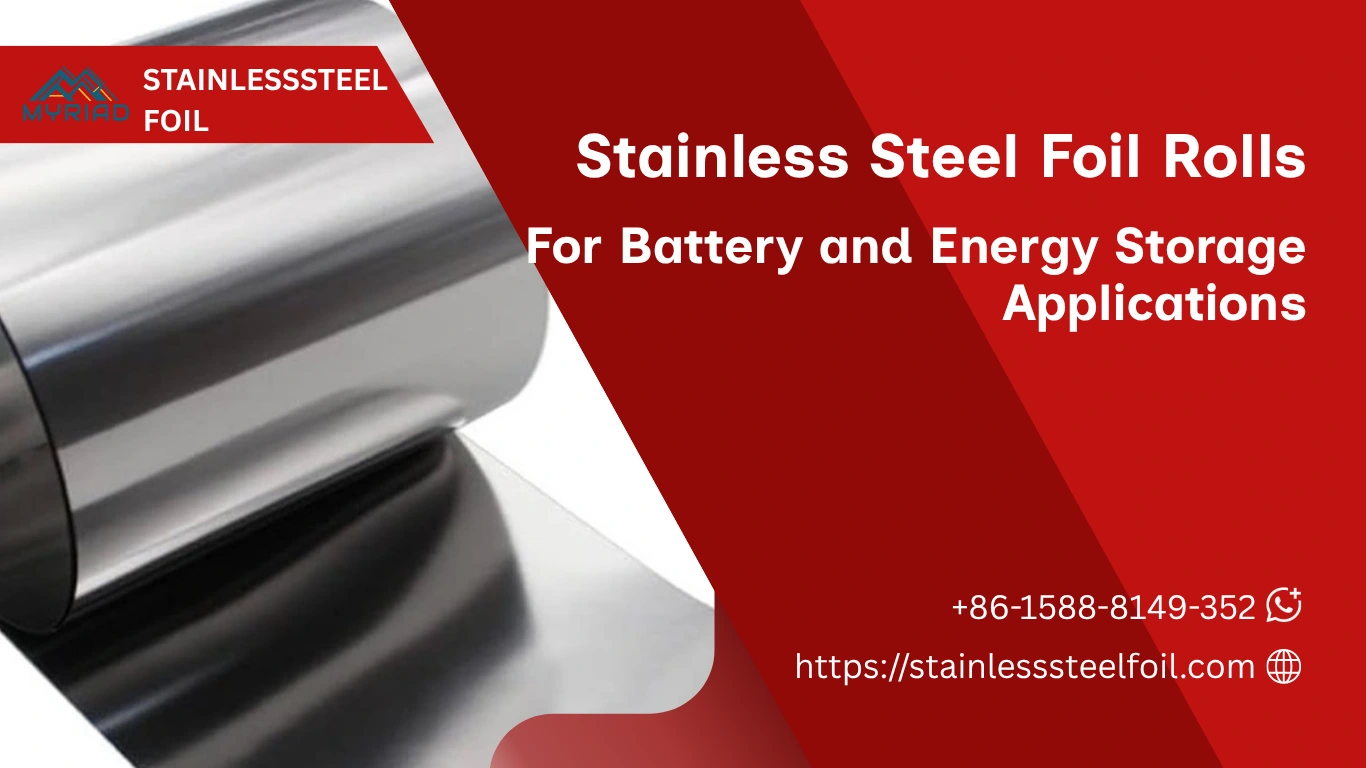
The global push toward electrification of electric vehicles, grid-scale storage, consumer electronics, and renewable energy systems has put unprecedented pressure on component manufacturers to find materials that are thinner, stronger, and more corrosion-resistant than ever before. At the center of this shift sits a material that rarely gets the spotlight but plays a critical structural role: stainless steel foil rolls.
From current collectors in battery cells to protective casings and thermal management components, stainless steel foil rolls are quietly enabling the next generation of energy storage technology. If you’re an engineer, procurement manager, or OEM sourcing materials for battery production, understanding why this material matters and how to choose the right stainless steel foil supplier can directly impact your product’s performance, safety, and cost efficiency.
Why Stainless Steel Foil Rolls Matter in Battery Manufacturing
Battery and energy storage systems demand materials that can survive repeated charge-discharge cycles, resist chemical degradation from electrolytes, and maintain structural integrity across a wide temperature range. Stainless steel foil rolls check every one of these boxes.
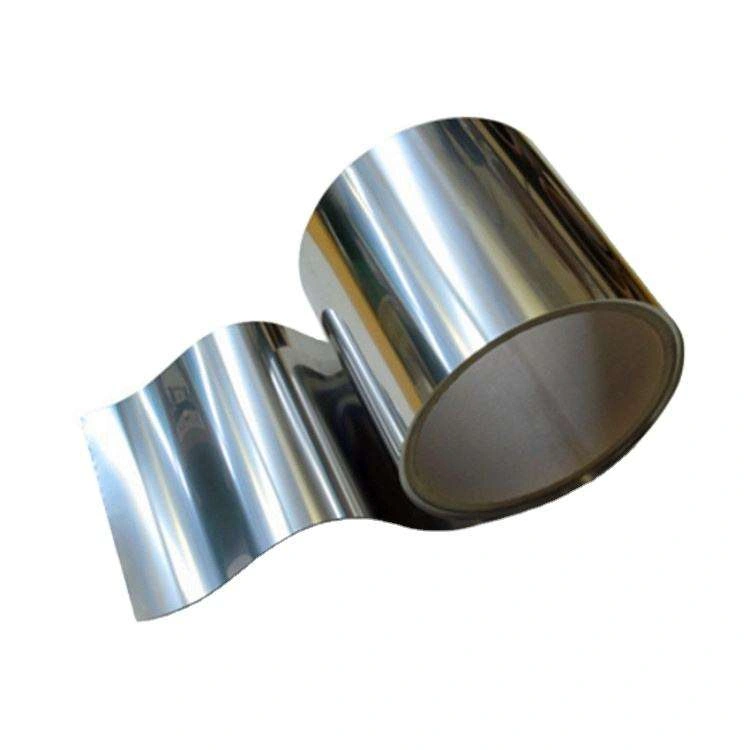
Unlike aluminum or copper foils, which are common in lithium-ion battery electrodes but come with their own limitations, stainless steel foil offers a unique combination of mechanical strength and chemical resistance. This makes it especially valuable in applications where the foil isn’t just a conductor but also a structural or protective element such as battery casings, current collectors in certain cell chemistries, bipolar plates, and enclosures for energy storage modules.
Manufacturers use stainless steel foil rolls in thicknesses ranging from 0.01mm to 0.1mm to fine-tune the balance between weight, flexibility, and mechanical durability for specific battery formats, including cylindrical, prismatic, and pouch cells.
Key Properties That Make Stainless Steel Foil Rolls Ideal for Energy Storage
- Corrosion Resistance – Battery environments are chemically aggressive. Electrolytes, humidity, and thermal cycling can degrade weaker materials over time. Stainless steel’s passive chromium oxide layer provides long-term protection against pitting and corrosion.
- High Strength-to-Weight Ratio – Even at micron-level thickness, stainless steel foil retains impressive tensile strength, which is critical for maintaining cell integrity under mechanical stress or during thermal expansion.
- Heat Resistance – Battery cells generate heat during operation, and thermal runaway is a major safety concern. Stainless steel foil’s high melting point and thermal stability make it a safer material choice for casings and shielding components.
- Excellent Formability – Battery manufacturing involves complex stamping, deep-drawing, and precision cutting processes. High-quality stainless steel foil rolls can be formed into intricate shapes without cracking or thinning unevenly.
- Electrical Shielding – Beyond structural roles, stainless steel foil is also used for EMI/RFI shielding in battery management systems (BMS) and power electronics housings.
316L Stainless Steel Foil for Energy Applications
Among the various stainless steel grades available, 316L stainless steel foil has emerged as a top choice for battery and energy storage manufacturers — and for good reason.
316L is a low-carbon variant of 316 stainless steel, specifically engineered to minimize carbide precipitation during welding. This matters enormously in battery production, where laser and ultrasonic welding are standard methods for joining cell components, tabs, and casings. Standard 316 or 304 grades can become brittle or lose corrosion resistance near weld seams due to carbide formation — a problem 316L largely eliminates.
Beyond weldability, 316L stainless steel foil brings:
- Superior corrosion resistance, including resistance to chloride-induced pitting, which is particularly valuable in battery packs exposed to humid or coastal environments (common in EV and marine energy applications).
- Excellent performance in high-temperature environments, supporting battery safety systems that must perform reliably even under thermal stress.
- Compatibility with electrolyte chemistries used in lithium-ion and emerging solid-state battery designs, reducing the risk of material breakdown over the battery’s operational lifespan.
For manufacturers of battery casings, current collector substrates, module enclosures, or thermal barriers, specifying 316L stainless steel foil often makes the difference between a component that lasts the full warranty period and one that requires costly early replacement.
Choosing the Right Stainless Steel Foil Supplier for Battery Applications
Not all foil is created equal, and battery manufacturing tolerances leave very little room for error. Selecting a reliable stainless steel foil supplier is one of the most consequential sourcing decisions an energy storage manufacturer will make. Here’s what to evaluate:
1. Precision Thickness Control
Battery components often require tolerances within microns. A supplier with CNC-controlled rolling systems and ±0.005mm thickness tolerances ensures consistent quality across high-volume battery production.
2. Material Traceability and Testing
A reputable stainless steel foil supplier provides material test reports (MTRs) verifying chemical composition and mechanical properties. For battery applications, where failure can mean safety incidents, this documentation isn’t optional — it’s essential due diligence.
3. Customization Capability
Energy storage OEMs often need non-standard widths, custom coil weights, or specific surface finishes. Suppliers that customize stainless steel foil rolls to project specifications offer greater value to battery manufacturers than standard off-the-shelf options.
4. Consistent Elongation Rates
High elongation is important for foils that undergo stamping or deep-drawing during battery casing production. Foils with elongation rates above 10% reduce the risk of cracking during high-speed manufacturing processes, minimizing scrap rates and downtime.
5. Supply Chain Stability
Battery production runs on tight schedules, and a single material delay can stall an entire production line. Partnering with a stainless steel foil supplier that maintains strong relationships with hot-rolled coil producers and has reliable inventory management reduces the risk of supply disruptions.
Applications of SS Foil Rolls Across the Energy Storage Value Chain
The versatility of SS foil rolls means they show up across multiple stages of battery and energy system production:
- Battery Cell Casings – Prismatic and pouch cell enclosures benefit from stainless steel’s strength and puncture resistance, protecting internal components from mechanical damage.
- Current Collector Substrates – In certain battery chemistries and supercapacitor designs, stainless steel foil serves as a substrate layer supporting active materials.
- Thermal Management Components – Foil layers are used in heat spreaders and thermal barriers within battery packs to manage heat distribution and reduce thermal runaway risk.
- EMI Shielding in Battery Management Systems – Thin stainless steel foil provides effective electromagnetic shielding for sensitive electronics inside BMS units.
- Grid-Scale Storage Enclosures – Large-format energy storage systems use stainless steel foil-based components for weatherproofing and structural support in outdoor installations.
As renewable energy providers accelerate adoption and developers expand grid-scale storage projects worldwide, businesses are increasing their demand for reliable, high-performance Stainless Steel Foil Rolls.
Stainless Steel Foil Rolls for Food Contact Applications
Although energy storage remains a major growth sector, Stainless Steel Foil for Food Contact applications also continues to see strong demand.
The same properties that make stainless steel foil valuable in batteries corrosion resistance, cleanliness, and durability also make it suitable for food processing and packaging applications.
Manufacturers serving multiple industries benefit from suppliers that support both battery-grade materials and Stainless Steel Foil for Food Contact applications.
This versatility allows businesses to streamline procurement and maintain consistent material quality across various product lines.
Why Sourcing Quality Matters
The battery and energy storage industry is scaling faster than most supply chains can comfortably support. This has led some manufacturers to cut corners on sourcing, risking battery safety and lifespan.
Partnering with an experienced stainless steel foil supplier with strong quality control and custom capabilities gives battery manufacturers a competitive advantage. Beyond supplying foil, the right partner understands the demands of energy storage applications and consistently delivers high-performance materials at scale.
Final Summary
The future of battery technology and energy storage depends on materials that deliver durability, efficiency, safety, and sustainability. Stainless Steel Foil Rolls meet these requirements by offering exceptional corrosion resistance, mechanical strength, thermal stability, and manufacturing versatility.
Stainless steel foil plays a vital role in lithium-ion batteries, fuel cells, renewable energy storage, and other advanced industrial applications.
Working with a reliable Stainless Steel Foil Supplier and selecting high-quality 316L Stainless Steel Foil helps manufacturers improve performance and reliability.
FAQs
What are Stainless Steel Foil Rolls used for in battery and energy storage applications?
Stainless Steel Foil Rolls help improve battery durability, safety, and efficiency in energy storage systems, fuel cells, and battery components. Their corrosion resistance, strength, and thermal stability make them ideal for demanding energy applications.
Why are Stainless Steel Foil Rolls preferred for lithium-ion battery manufacturing?
Stainless Steel Foil Rolls offer excellent corrosion resistance, dimensional stability, and mechanical strength. However, these properties help improve battery safety, durability, and overall performance while supporting high-precision manufacturing processes.
Which stainless steel grade is commonly used for battery applications?
316L Stainless Steel Foil is widely used in batteries and energy storage systems for its excellent corrosion resistance and long service life.
How do Stainless Steel Foil Rolls improve battery lifespan?
Stainless Steel Foil Rolls protect battery components from corrosion and environmental damage. This contributes to longer battery life, improved reliability, and reduced maintenance requirements.
Are Stainless Steel Foil Rolls suitable for renewable energy storage systems?
Yes. Renewable energy storage manufacturers use Stainless Steel Foil Rolls extensively in solar and wind energy batteries. Their durability and resistance to temperature fluctuations make them suitable for long-term energy storage applications.