When designing structures for high-stakes environments—whether it’s a coastal architectural marvel, a chemical processing plant, or a heavy-duty marine platform—material selection isn’t just a line item on a budget. It is the defining factor between long-term structural integrity and catastrophic, costly failure.
Among the various structural shapes available to engineers and builders, the 316 Stainless Steel Angle stands out as a premier choice for demanding applications. While standard carbon steel or lower grades of stainless steel might suffice for basic construction, severe environments require the superior mechanical and chemical properties of grade 316.
This comprehensive guide explores how incorporating a 316 Stainless Steel Angle into your projects drastically improves structural performance, reduces lifecycle costs, and ensures uncompromising safety.
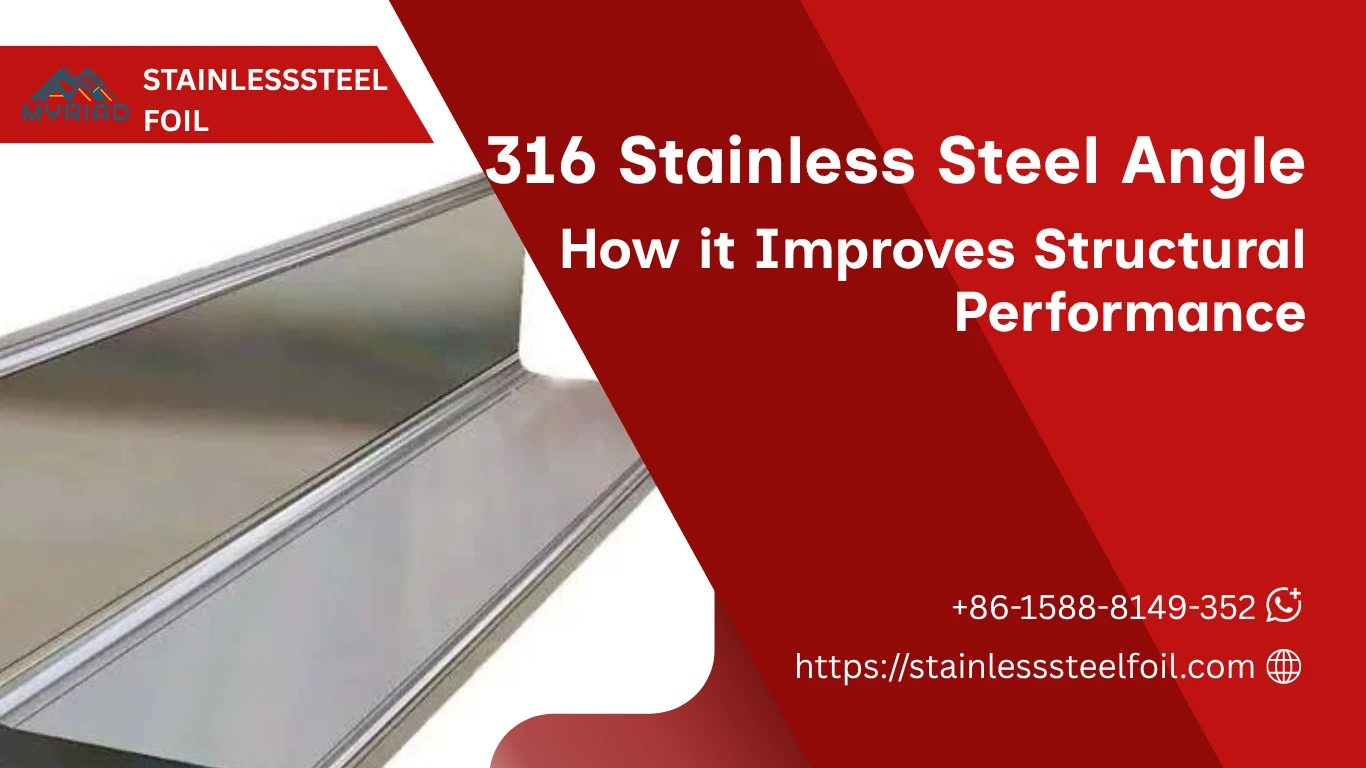
What Is 316 Stainless Steel Angle?
316 stainless steel angle is an L-shaped structural profile manufactured from austenitic stainless steel containing molybdenum, typically in the range of 2–3%. This molybdenum addition is what separates 316 from the more common 304 grade, giving it significantly improved resistance to pitting and crevice corrosion, especially in chloride-rich environments like seawater, industrial chemicals, and de-icing salts.
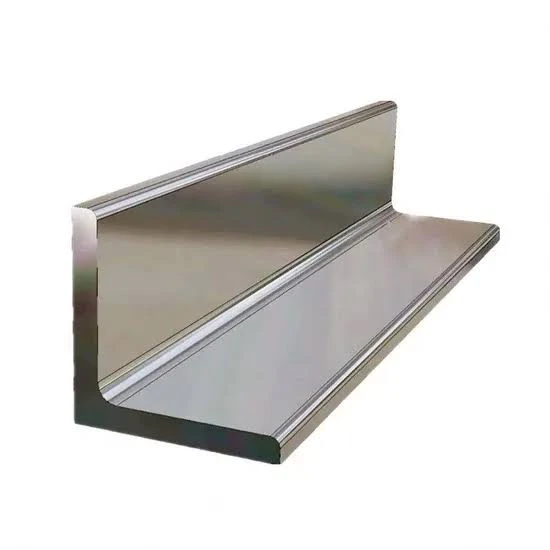
Available in various leg lengths, thicknesses, and finishes, a 316 stainless steel angle bar can be used as a standalone structural member or combined with other stainless products—such as stainless steel coil, stainless steel foil, plate, and tube—to build complete corrosion-resistant systems. Its versatility makes it a preferred choice across construction, marine engineering, food processing, and heavy industrial sectors.
Benefits of a 316 Stainless Steel Angle in Structural Designs
Exceptional Corrosion and Pitting Resistance
Corrosion is the ultimate enemy of structural longevity. When traditional steel rusts, it expands, causing concrete spalling, structural degradation, and eventual failure.
Using a 316 stainless steel angle bar mitigates this risk entirely. The molybdenum content forms a passive, self-healing chromium oxide layer that shields the underlying metal. This makes it highly resistant to:
Marine Environments: Salt spray, brackish water, and tidal zones.
Industrial Chemicals: Sulfuric, acetic, formic, and tartaric acids.
Atmospheric Pollution: Urban environments plagued by smog and acid rain.
High Load-Bearing Strength and Stability
Structural integrity depends on a material’s ability to withstand localized stress without deforming. The geometric design of a structural stainless steel angle provides incredible rigidity. When you combine this geometric stiffness with the high tensile and yield strength of grade 316, you get a component capable of supporting massive loads under extreme tension and compression.
Thermal Resilience and Cryogenic Stability
Many structural materials falter when temperatures fluctuate. Carbon steel becomes brittle in sub-zero temperatures, while aluminum loses structural integrity under high heat.
A 316 Stainless Steel Angle excels at both ends of the spectrum. It maintains excellent toughness and mechanical properties at cryogenic temperatures, making it indispensable for liquefied natural gas (LNG) facilities. Simultaneously, it offers better creep resistance at elevated temperatures than grade 304.
Cross-Industry Applications of 316 Stainless Steel Angle
The versatility of the 316 Stainless Steel Angle makes it a staple across numerous high-performance sectors.
Marine and Offshore Architecture
From offshore oil rigs and cruise ship frameworks to piers and seawall reinforcements, marine environments demand the best. Standard steels degrade within years, requiring constant maintenance. A 316 stainless steel angle bar provides decades of maintenance-free service, defying the corrosive nature of seawater.
Chemical, Pharmaceutical, and Food Processing
Hygiene and chemical inertness are non-negotiable in these sectors. Structural supports, mixing vats, and conveyor frameworks rely heavily on grade 316. It withstands harsh chemical washdowns and sanitization cycles without leaching metals or degrading structurally.
Modern Architectural Facades
Architects frequently leverage structural stainless steel angle profiles to support heavy glass facades and stone cladding. The aesthetic appeal of its clean, polished, or brushed finish eliminates the need for unsightly protective paints or coatings, blending structural duty with architectural beauty.
Maximizing Project ROI: The Lifecycle Cost Advantage
A common hurdle for project managers is the initial material cost. Yes, a 316 Stainless Steel Angle commands a premium upfront compared to carbon steel or grade 304. However, focusing solely on initial capital expenditure (CAPEX) is a costly oversight.
When evaluating the True Total Cost of Ownership (TCO), grade 316 consistently outperforms cheaper alternatives:
| Cost Factor | Carbon Steel | 304 Stainless Steel | 316 Stainless Steel Angle |
| Initial Cost | Low | Medium | Premium |
| Painting/Coating Needed | Yes (Frequent) | No | No |
| Maintenance Frequency | High | Medium | Extremely Low |
| Expected Lifespan | Short-Medium | Medium-Long | Ultra-Long (Decades) |
| Replacement Disruption | High Risk | Moderate Risk | Rare |
Precision Manufacturing and Customization Options
No two structural projects are identical. Depending on your load calculations and environmental constraints, your 316 Stainless Steel Angle can be tailored to exact specifications:
Equal vs. Unequal Angles: Choose legs of equal length for uniform bilateral strength, or unequal legs (e.g., $100\text{mm} \times 50\text{mm}$) to handle specific directional bending moments.
Finishes: Options range from hot-rolled and pickled (ideal for industrial structural frames) to bright annealed or satin polished (ideal for exposed architectural designs).
Laser-Fused vs. Hot-Rolled: Laser fusion allows for razor-sharp corners and customized thickness configurations, offering unparalleled geometric precision for specialized engineering tasks.
Choosing the Right 316 Stainless Steel Angle Supplier
The structural integrity of your project is only as reliable as the documentation behind your materials. Substandard alloys disguised as grade 316 can lead to premature structural failures and severe legal liabilities.
When vetting a 316 stainless steel angle supplier, ensure they meet the following corporate benchmarks:
Supplier Checklist for Structural Compliance
Mill Test Certificates (MTCs): Complete traceability showing exact chemical composition (verifying the crucial 2-3% Molybdenum content) and mechanical test results.
Global Standards Compliance: Adherence to strict international standards such as ASTM A276, ASTM A479, or EN 10088-3.
Comprehensive Inventory: The capability to provide not just angles, but complementary components like stainless steel coil, sheets, and flat bars to streamline your supply chain.
Processing Capabilities: On-site precision cutting, drilling, and finishing to reduce your lead times and on-site labor costs.
Final Summary
316 stainless steel angle stands out as one of the most reliable materials for structural applications where corrosion resistance, strength, and long-term durability are non-negotiable. From marine platforms to chemical processing plants, its ability to resist pitting, maintain mechanical integrity across temperature extremes, and reduce long-term maintenance costs makes it a smart investment for any structurally demanding project.
If your business is planning a project that requires dependable structural stainless steel angle, choosing the right 316 stainless steel angle supplier is just as important as choosing the right grade. Reach out to our team today to discuss your specifications, request a quote, or learn more about our full range of stainless steel products—including angle bar, coil, foil, and beyond. Let us help you build structures that perform reliably for decades to come.
FAQs
What is a 316 Stainless Steel Angle?
A 316 Stainless Steel Angle is an L-shaped structural metal profile made from grade 316 stainless steel. It is widely used in construction, marine, chemical processing, and industrial applications because of its excellent corrosion resistance, high strength, and long service life.
Why is 316 Stainless Steel Angle better than 304 stainless steel angle?
The main advantage of 316 Stainless Steel Angle over 304 grade is its higher molybdenum content, which provides superior resistance to chlorides, saltwater, and harsh chemicals. This makes it the preferred choice for marine, coastal, and chemical environments.
How does 316 Stainless Steel Angle improve structural performance?
A 316 Stainless Steel Angle improves structural performance by offering excellent load-bearing strength, corrosion resistance, and durability. It maintains its structural integrity even in challenging environments, reducing maintenance costs and extending the structure’s lifespan.