When manufacturers, engineers, and fabricators search for a reliable metal solution, 304 Stainless Steel Foil consistently rises to the top. Across industries—from food processing and electronics to construction and chemical handling—this material has earned its reputation through performance, durability, and unmatched versatility.
In today’s competitive industrial environment, material choice is no longer optional. It directly affects product quality, safety compliance, and long-term cost efficiency. That is precisely why understanding 304 Stainless Steel Foil is essential before making a purchasing decision.
This in-depth guide explores what makes this alloy so widely used, how it compares to alternatives, where it performs best, and why it continues to dominate global markets.
What Is 304 Stainless Steel Foil?
304 Stainless Steel Foil is a thin, flat-rolled product made from austenitic it alloy containing approximately 18% chromium and 8% nickel. This precise chemical balance gives the foil its exceptional corrosion resistance, formability, and strength.
Unlike thicker this sheets or plates, foil is manufactured in extremely thin gauges while maintaining structural integrity. This makes it ideal for applications where flexibility, precision, and surface quality matter most.
According to the Wikipedia stainless steel overview, this is the most widely used stainless grade worldwide. Its foil form extends those same advantages into lightweight and space-efficient applications.
To understand the broader category, this guide on what stainless steel foils are explains how foil differs from sheet and strip products.
Chemical Composition and Structure of 304 Stainless Steel Foil
The popularity of 304 Stainless Steel Foil starts at the molecular level. Chromium forms a passive oxide layer that protects against rust, while nickel stabilizes the austenitic structure, allowing excellent ductility.
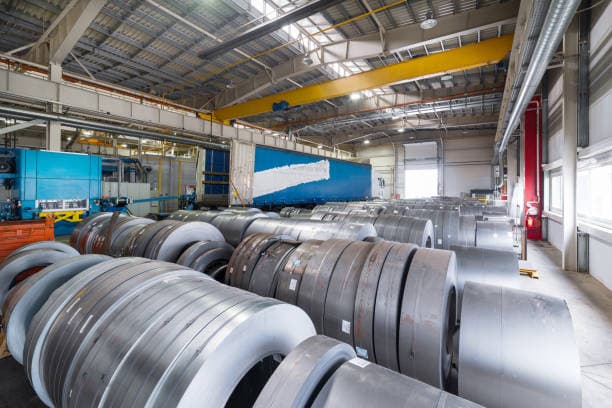
This structure ensures the foil remains non-magnetic in annealed condition, easy to weld, and resistant to cracking during forming. As a result, manufacturers can bend, stamp, or laminate it without sacrificing performance.
Because of this balance, this performs consistently across temperature fluctuations and chemically aggressive environments.
Properties of 304 Stainless Steel Foil
Several key properties explain why this material remains an industry favorite.
Corrosion Resistance
itl resists oxidation, moisture, and many acids. Even in humid or mildly chemical environments, it maintains surface integrity for years.
Mechanical Strength
Despite its thin profile, the foil offers impressive tensile strength. This combination of strength and flexibility allows it to perform in demanding mechanical applications.
Thermal Resistance
The foil handles both high and low temperatures without warping. This makes it suitable for insulation layers, heat shields, and food processing equipment.
Surface Finish
Manufacturers value the smooth, hygienic surface of it, especially in food and medical industries where cleanliness matters.
For real-world examples, the use of stainless steel foils page explains how these properties translate into daily industrial use.
Comparing 304 Stainless Steel Foil with Other Grades
To appreciate why it is the most popular choice, it helps to compare it with other common grades such as 301, 201, 316, and 430.
| Grade | Composition | Corrosion Resistance | Strength | Cost | Common Uses |
|---|---|---|---|---|---|
| 304 | 18% Cr, 8% Ni | Excellent | High | Moderate | Food industry, medical, aerospace |
| 301 | Lower Ni | Good | Higher strength | Moderate | Springs, automotive |
| 201 | Lower Ni, higher Mn | Moderate | Good | Lower | Appliances, utensils |
| 316 | 16% Cr, 10% Ni, 2% Mo | Superior (marine-grade) | High | Higher | Marine, chemical processing |
| 430 | Ferritic, no Ni | Fair | Moderate | Low | Decorative, automotive trim |
Applications of 304 Stainless Steel Foil Across Industries
The versatility of 304 Stainless Steel Foil allows it to serve a wide range of industries.
Food Processing and Packaging
Hygiene is non-negotiable in food environments. The foil resists contamination, withstands cleaning chemicals, and complies with food safety standards. Many food manufacturers rely on 304 stainless steel foil for food applications such as liners, covers, and insulation layers.
Electronics and Electrical Components
Because it provides electromagnetic shielding and thermal control, the foil plays a critical role in circuit protection and component wrapping.
Construction and Architecture
Architects use 304 Stainless Steel Foil as vapor barriers, insulation layers, and decorative laminates due to its longevity and clean finish.
Medical and Pharmaceutical Equipment
Sterile environments demand corrosion-free surfaces. The foil meets strict hygiene requirements while remaining easy to fabricate.
Adhesive and Tape Solutions
Self-adhesive products benefit from the strength and stability of 304 foil, particularly in sealing and insulation. The self-adhesive stainless steel foil tape page highlights these uses.
Benefits of Using 304 Stainless Steel Foil
The benefits extend beyond performance alone.
First, 304 Stainless Steel Foil offers long service life, reducing replacement frequency. Consequently, operational costs drop over time.
Second, the material remains recyclable, supporting sustainable manufacturing goals. Many industries now prioritize materials that balance performance with environmental responsibility.
Finally, the foil’s availability ensures stable supply chains. Since 304 is globally produced, lead times remain predictable.
These advantages explain why engineers consistently return to this grade.
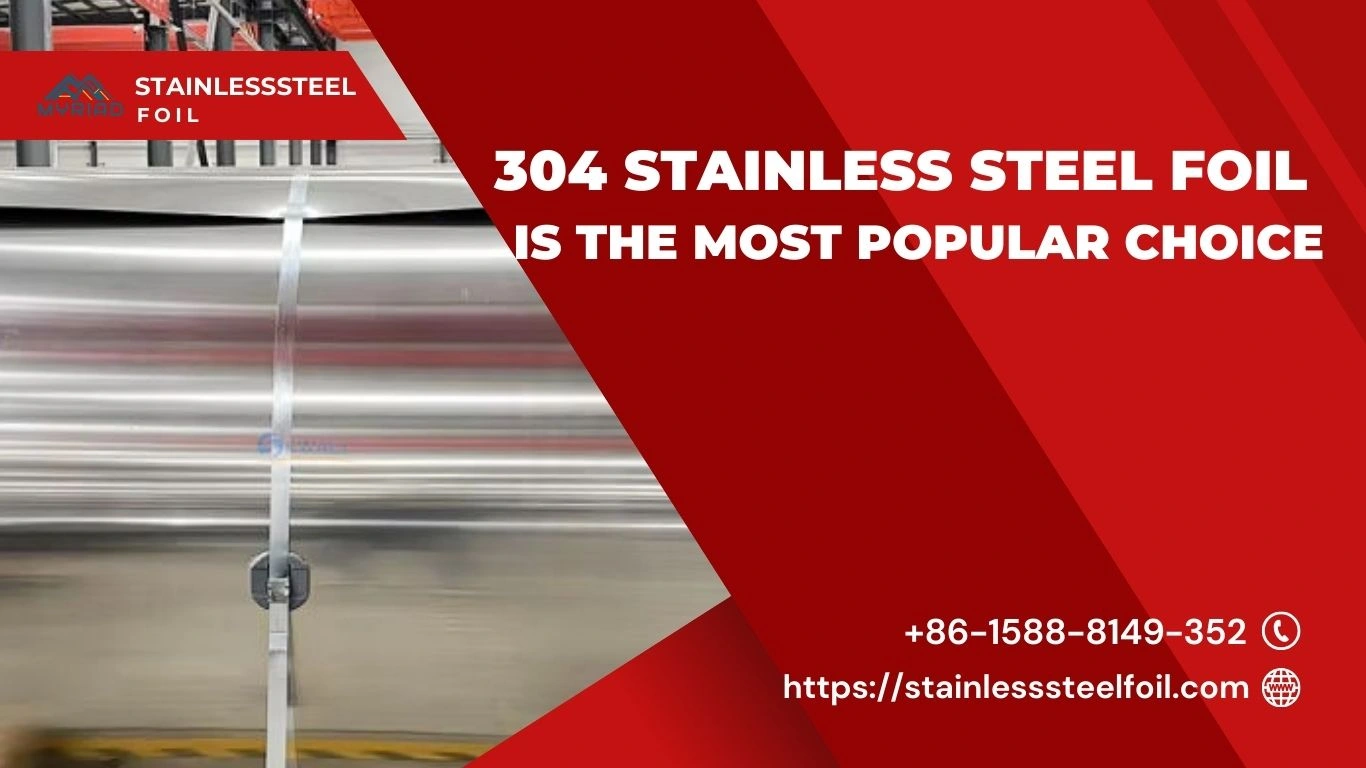
Why 304 Stainless Steel Foil Is the Most Popular Choice
Popularity rarely happens by accident. it dominates the market because it meets the widest range of needs with minimal compromise.
It resists corrosion better than low-nickel grades. It costs less than premium alloys. It forms easily, welds cleanly, and performs reliably. As a result, it becomes the safest choice for projects where failure is not an option.
Moreover, industries trust materials with long performance histories. Decades of successful use have proven that it’s delivers consistent results across climates and applications.
For buyers exploring detailed specifications, this guide on what is 304 stainless steel foil provides additional insights.
Sourcing Quality 304 Stainless Steel Foil
Quality depends on manufacturing precision. Thickness tolerance, surface finish, and chemical composition must meet international standards.
Reputable suppliers, such as those featured on stainless steel foil, ensure compliance with ASTM and ISO requirements. Browsing the blog section also helps buyers stay informed about trends and material innovations.
For custom requirements or bulk orders, contacting experts through the contact us page ensures tailored solutions.
Summary
304 Stainless Steel Foil combines corrosion resistance, strength, hygiene, and affordability in one versatile material. Its widespread adoption across industries confirms its reliability and long-term value.Whether used in food processing, electronics, construction, or medical equipment, this foil continues to outperform alternatives. That enduring performance explains why it remains the most popular stainless steel foil choice worldwide.
FAQs
What makes 304 Stainless Steel_Foil different from other foils?
this offers superior corrosion resistance and formability compared to many other stainless and non-stainless foils.
Is 304 Stainless Steel_Foil safe for food contact?
Yes, it meets food safety standards and is widely used in food processing environments.
Can 304 Stainless Steel Foil withstand high temperatures?
it maintains stability under high heat, making it suitable for thermal applications.
Is 304 Stainless Steel_Foil magnetic?
In its annealed state, this is generally non-magnetic.
How long does 304 Stainless Steel_Foil last?
With proper use, it can last decades due to its corrosion resistance.