
Lorem ipsum dolor sit amet, consectetur adipiscing elit. Ut elit tellus, luctus nec ullamcorper mattis, pulvinar dapibus leo.
Besides the 0.05mm stainless steel foil, you may need to purchase other 304 stainless steel products from China, please contact us if you have any questions.

Lorem ipsum dolor sit amet, consectetur adipiscing elit. Ut elit tellus, luctus nec ullamcorper mattis, pulvinar dapibus leo.
Lorem ipsum dolor sit amet, consectetur adipiscing elit. Ut elit tellus, luctus nec ullamcorper mattis, pulvinar dapibus leo.
Lorem ipsum dolor sit amet, consectetur adipiscing elit. Ut elit tellus, luctus nec ullamcorper mattis, pulvinar dapibus leo.
Lorem ipsum dolor sit amet, consectetur adipiscing elit. Ut elit tellus, luctus nec ullamcorper mattis, pulvinar dapibus leo.
Lorem ipsum dolor sit amet, consectetur adipiscing elit. Ut elit tellus, luctus nec ullamcorper mattis, pulvinar dapibus leo.
Lorem ipsum dolor sit amet, consectetur adipiscing elit. Ut elit tellus, luctus nec ullamcorper mattis, pulvinar dapibus leo.
Lorem ipsum dolor sit amet, consectetur adipiscing elit. Ut elit tellus, luctus nec ullamcorper mattis, pulvinar dapibus leo.
Lorem ipsum dolor sit amet, consectetur adipiscing elit. Ut elit tellus, luctus nec ullamcorper mattis, pulvinar dapibus leo.
Lorem ipsum dolor sit amet, consectetur adipiscing elit. Ut elit tellus, luctus nec ullamcorper mattis, pulvinar dapibus leo.
Lorem ipsum dolor sit amet, consectetur adipiscing elit. Ut elit tellus, luctus nec ullamcorper mattis, pulvinar dapibus leo.
Lorem ipsum dolor sit amet, consectetur adipiscing elit. Ut elit tellus, luctus nec ullamcorper mattis, pulvinar dapibus leo.
Stainless steel foil is very thin, flat-rolled stainless steel supplied in coils or cut-to-length sheets. It combines a thin metal section with the corrosion resistance and mechanical properties of the selected stainless grade. For purchasing, the important distinction is that the grade identifies the alloy, while thickness, material condition and inspection requirements define the product you actually need.
This guide explains how to compare 301, 304, 304L, 316, 316L and 321, understand foil production and inspection, and prepare a specification for Myriad. If your requirements are already defined, you can submit your specifications. If you need help selecting a grade or mechanical properties, you can request selection advice by email.
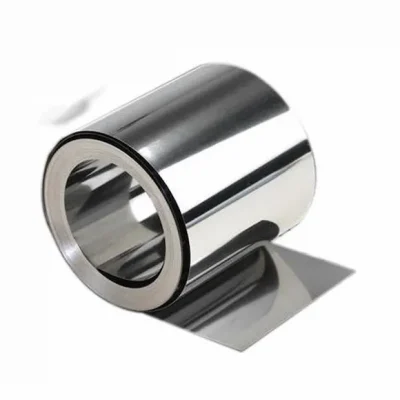
Stainless steel foil is a thin metal product, rather than a particular stainless steel grade. “Stainless steel” describes the alloy family; “foil” describes its very thin, flat form. Rolls and coils describe how continuous material is wound, while cut sheets describe material supplied in separate lengths. A narrow strip can also be supplied at foil thickness, so these terms can overlap.
Chromium gives stainless steel its characteristic corrosion resistance. Stainless steels contain at least 10.5% chromium by weight; a chromium-rich passive film protects the surface under suitable conditions. This protection can break down in an unsuitable environment, so “stainless” does not mean immune to corrosion. BSSA explains the passive film and its limitations.
Actual dimensions are more useful than a universal foil thickness cutoff. Suppliers use different boundaries between foil, thin strip and sheet. The following examples show the scale of thin material; they are unit conversions, not a list of guaranteed stock sizes or an industry definition.
| Thickness, mm | Thickness, µm | Approximate thickness, in |
|---|---|---|
| 0.010 | 10 | 0.000394 |
| 0.025 | 25 | 0.000984 |
| 0.050 | 50 | 0.001969 |
| 0.100 | 100 | 0.003937 |
Thin foil is not necessarily soft foil. A cold-worked foil can be thin yet difficult to form, while an annealed foil can be more accommodating to deformation. Specify the grade, dimensions and required condition together instead of treating flexibility as a guaranteed property of every foil.
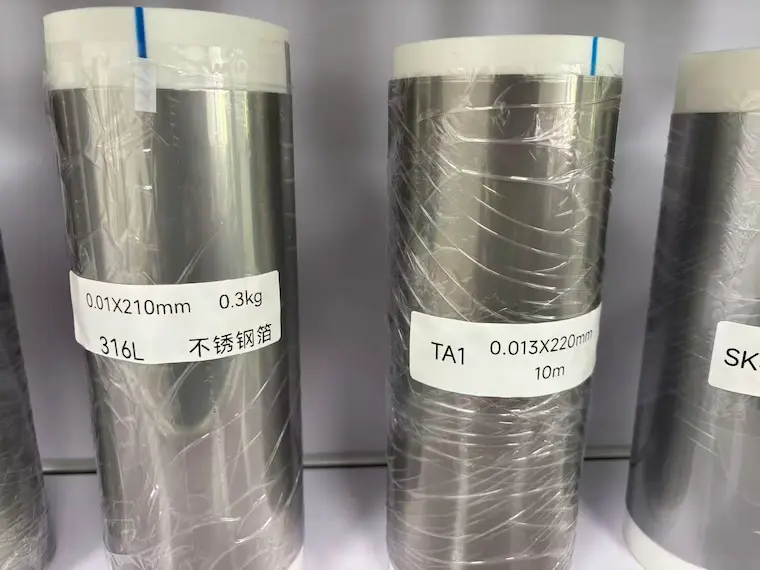
These six grades are austenitic stainless steels, but they solve different material-selection problems. Start with any grade already required by the drawing or purchase specification. Where the grade is open, compare the service environment, forming operation, welding history and mechanical requirements before selecting an alternative.
301 is worth considering when strength developed through cold working is important. It responds strongly to cold reduction and is used for spring and other mechanically demanding strip components. That strength comes with a formability tradeoff: a hard foil should not be ordered as though it will behave like soft forming stock. Define the required strength or hardness and any relevant forming acceptance criteria. ATI 301 technical data.
304 is a starting point for many general-purpose forming and corrosion-resistance requirements. It offers a useful combination of fabrication characteristics and resistance in suitable environments. Its grade designation does not establish the final temper, tensile strength, surface condition or suitability for a particular chemical exposure. Confirm those requirements separately. ATI 304 and related alloys.
304L addresses low-carbon requirements, especially where welding-related sensitization is a concern. The “L” identifies a low-carbon version, not a higher-hardness grade. If the specification requires 304L, verify the applicable chemistry requirement and supporting material documentation rather than accepting “304 family” as equivalent. Hamilton Precision Metals’ stainless strip and foil chemistry table distinguishes the carbon limits.
316 adds molybdenum to improve resistance to certain localized corrosion conditions compared with 304. It can be a candidate where the exposure requires that improvement, but chloride concentration, temperature, crevices and other service conditions still matter. Calling it “marine grade” is not enough to establish suitability for a specific seawater application. ATI 316-family technical data.
316L combines the molybdenum-bearing alloy system with a low-carbon requirement. It can be considered for corrosion-sensitive formed or welded components, including diaphragm applications described in published supplier literature. That is a material-selection lead, not approval of a finished device or a guarantee against leakage, fatigue or corrosion. Hamilton Precision Metals’ 316L data sheet.
321 uses titanium stabilization where resistance to sensitization after thermal exposure is important. Its selection should consider the actual temperature cycle, duration, environment and fabrication route. A single advertised temperature rating cannot define every foil application. This guide includes 321 for technical comparison; availability from Myriad needs separate confirmation. ATI 321 technical data.
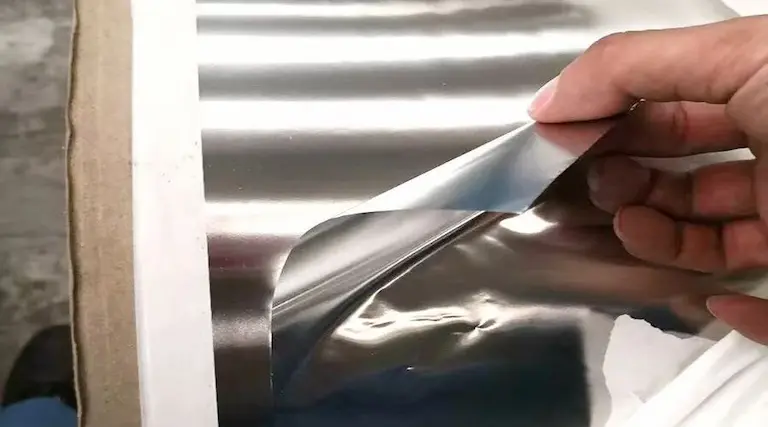
Tensile strength and hardness describe different aspects of the material, and neither should be hidden behind a temper name. Tensile strength describes the maximum engineering stress reached during a tensile test. Hardness measures resistance to indentation under a specified test method. “Annealed,” “half hard” and “full hard” describe material conditions, but they do not create one universal strength or hardness value across all grades and thicknesses.
Published sheet and strip data provide useful comparison points, but they are not an acceptance specification for an unidentified foil order. The table reproduces manufacturer-published reference minima and maxima. The 304/304L, 316/316L and 321 tables come from ATI data sheets dated 2014; the 301 values are shown on ATI’s product page. These sources do not establish the current standard edition, permitted exceptions or performance of a particular ultra-thin gauge.
| Grade | Tensile strength, minimum reference | 0.2% offset yield strength, minimum reference | Hardness, maximum reference | Source |
|---|---|---|---|---|
| 301 | 75 ksi / 515 MPa | 30 ksi / 205 MPa | 95 HRB | ATI 301, sheet/strip |
| 304 | 75 ksi / 515 MPa | 30 ksi / 205 MPa | 92 HRB | ATI data sheet, p. 4 |
| 304L | 70 ksi / 485 MPa | 25 ksi / 170 MPa | 92 HRB | ATI data sheet, p. 4 |
| 316 | 75 ksi / 515 MPa | 30 ksi / 205 MPa | 95 HRB | ATI data sheet, p. 8 |
| 316L | 70 ksi / 485 MPa | 25 ksi / 170 MPa | 95 HRB | ATI data sheet, p. 8 |
| 321 | 75 ksi / 515 MPa | 30 ksi / 205 MPa | 95 HRB, sheet/strip | ATI data sheet, p. 6 |
The paired ksi/MPa values retain the sources’ rounding. A listed minimum is not a measured batch result, and a listed maximum hardness does not mean a conventional HRB test is valid on every foil thickness. Do not convert this comparison table directly into a Myriad purchase specification.
Cold working can raise 301 strength substantially above the annealed reference. For example, Ulbrich’s 2017 301 data sheet lists the following tensile minima by condition. Its disclaimer treats the data as reference information, so they illustrate the importance of condition rather than establish a Myriad supply guarantee.
| 301 condition | Published tensile reference, minimum |
|---|---|
| Quarter hard | 125 ksi / 860 MPa |
| Half hard | 150 ksi / 1,035 MPa |
| Three-quarter hard | 175 ksi / 1,205 MPa |
| Full hard | 185 ksi / 1,275 MPa |
Source: Ulbrich 301 data sheet, revised June 20, 2017, p. 2. Confirm the applicable grade, gauge, condition, standard edition and test requirements before using any value for acceptance.
A usable hardness requirement includes the scale and a method suitable for the foil thickness. For a Vickers requirement, agree on the test force, specimen preparation, measurement location and acceptance limits. The indentation must be appropriate for the available material thickness; a backing material or unsuitable preparation can undermine the result. Struers’ Vickers guidance explains the roles of load, specimen thickness and preparation.
Hardness conversions are estimates rather than substitutes for a required tensile test. If the order specifies tensile strength, a hardness result alone does not establish tensile compliance. Likewise, two reports cannot be treated as equivalent merely because both say “HV” when the test conditions are different. Buehler’s hardness-method discussion describes method and conversion limitations.
Related reading: A complete guide to AISI 304L stainless steel.
Stainless steel foil is generally produced by reducing suitable stainless feedstock to a thin gauge and controlling its final condition and finish. The route below describes an industry process, not a claim that Myriad owns or operates each production stage. The exact sequence depends on the alloy, starting material and required product.
The buyer’s practical task is to specify the result, then confirm how it will be demonstrated. Ask for the required dimensions, mechanical condition, surface and edge criteria, together with suitable inspection evidence. Detailed manufacturing settings are necessary only where the application or contract actually requires them.
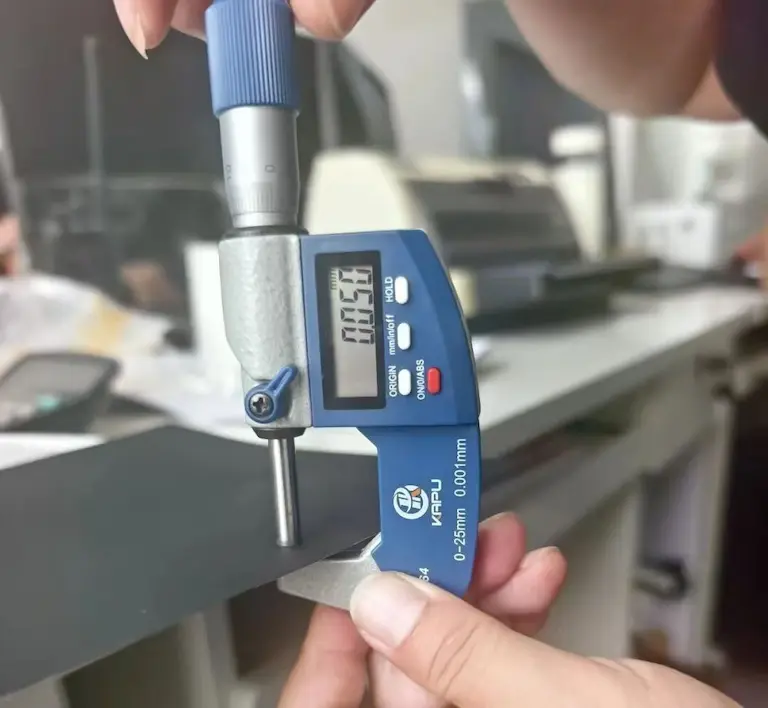
Foil inspection should check identity, dimensions, mechanical properties and the features that matter to the intended part. Agree on acceptance limits, test methods, sampling and report requirements before the order is finalized. The checklist below is a purchasing framework, not a statement that Myriad performs every listed test on every order.
| Inspection item | Practical verification approach | What to define or request |
|---|---|---|
| Grade and chemistry | Review traceable material chemistry; arrange appropriate analysis where required | Grade/standard, required elements, material identity and whether the method can measure them |
| Thickness | Use a method and instrument suitable for the gauge; agree on measurement positions | Nominal value, upper/lower limits, measurement conditions and sampling along/across the material |
| Width and sheet length | Measure finished dimensions using an agreed method | Width/length tolerances, sheet squareness where relevant, and measurement basis |
| Tensile strength | Test prepared foil specimens using a suitable tensile method | Required value or range, direction, specimen dimensions, thickness measurement and test basis |
| Hardness | Use a validated indentation method for the thickness | Scale, test force, preparation, location, acceptance limits and reported results |
| Yield strength and elongation, when required | Include them in the agreed tensile test and report | Proof-strain definition, gauge length, direction and acceptance criteria as applicable |
| Surface and edges | Inspect with agreed visual or optical conditions | Scratches, dents, contamination, edge condition and burr limits relevant to further processing |
| Flatness and camber | Measure using agreed support, length and tension conditions | Permitted deviation and method; clarify whether the requirement applies to free sheets or fed strip |
| Pinholes or barrier integrity, when critical | Agree on an inspection or leak-assessment method suitable for the application | Detectable defect/acceptance criteria, inspected area, sampling and any finished-part validation |
| Identification and reports | Match labels and documentation to the supplied units | Heat/coil or other agreed identifiers, applicable results, test scope and disposition of nonconforming material |
A foil tensile result is only useful if specimen preparation and measurement suit the material. Damage at the edges, poor alignment, unsuitable gripping or an inaccurate cross-sectional area can affect the result. Agree with the testing party on an appropriate method, such as ASTM E345 where applicable, instead of assuming a test setup used for thicker material is adequate. ZwickRoell explains metallic-foil tensile testing.
A routine handheld XRF check cannot establish the low-carbon distinction between 304 and 304L or between 316 and 316L. Review carbon-capable chemistry evidence when an L grade is required. If direct analysis of very thin foil is proposed, confirm that the method and specimen arrangement are suitable rather than assuming a bulk-metal procedure applies. Jindal Stainless explains the carbon limitation of XRF.
Applications should be matched to a component’s required behavior, not just to an industry name. Published examples establish possible uses of stainless foil; they do not approve an untested design or show that a particular Myriad grade/gauge combination is available.
| Component or task | Why stainless foil may be considered | Practical selection and acceptance focus |
|---|---|---|
| Spring elements and precision elastic parts | Cold-worked material can provide useful strength in a thin section | Grade, strength/condition, dimensions and validation of the finished part’s force, forming and fatigue behavior |
| Shims, spacing layers and thin gaskets | Thin flat metal can provide a controlled layer or gap adjustment | Thickness and tolerance, flatness, edge quality and the actual assembly or sealing requirement |
| Diaphragms and precision-formed parts | Thin material can combine formability with a selected alloy’s corrosion behavior | Forming consistency, thickness, surface defects, service compatibility and finished-part integrity |
| Heat-protection layers and liners | Selected stainless alloys can serve in thermally demanding components | Alloy, atmosphere, temperature/time, attachment and thermal cycling; a metal layer alone is not a complete insulation system |
Diaphragms illustrate why dimensions and properties must be considered together. Hamilton Precision Metals identifies stainless foil in sensor diaphragm applications, where material consistency is relevant to the finished component. Use such examples to identify what needs validation, rather than to substitute a supplier’s material description for a part qualification. HPM’s diaphragm application overview.
Choose the delivery format around the next operation. Continuous coil can suit a feeding operation, while separate sheets can suit a process organized around individual blanks. Confirm that the selected format meets the actual handling and dimensional requirements; neither format is automatically the better choice.
| Format | Requirements to confirm |
|---|---|
| Roll or coil | Width, quantity, coil ID/OD or unit-weight requirements where relevant, winding/handling needs, surface protection and edge condition |
| Cut-to-length sheet | Width, length, tolerances, squareness/flatness where required, condition, quantity and protection against handling damage |
Myriad can supply cut-to-length stainless steel foil sheets 70–500 mm wide, approximately 2.756–19.685 in. Length is specified to customer requirements and confirmed for the actual order. Annealed, half-hard and full-hard options are available subject to the grade and specification; their names do not replace agreed mechanical values. The sheet width range is separate from the overall coil range, and sheet tolerances require confirmation. Millimeters are the controlling sheet-width units; the inch values are rounded.
A useful purchase specification states what must be supplied and how acceptance will be decided. Make the grade, dimensional limits and any required mechanical values explicit. Include the surface, edges, format and documentation that matter to the next operation, without turning every possible test into a mandatory requirement.
| Requirement | Information to provide |
|---|---|
| Material | Grade and applicable specification/edition, if prescribed |
| Dimensions | Thickness × width; sheet length where applicable; controlling units and tolerances |
| Mechanical requirements | Required tensile strength and/or hardness; include method, scale or other applicable test conditions |
| Other mechanical criteria | Yield strength, elongation or forming requirements only when needed |
| Surface and edges | Finish, defect criteria, cleanliness and edge/burr requirements |
| Delivery | Coil or sheets, quantity and relevant handling/packaging requirements |
| Inspection | Required tests, sampling/acceptance basis, traceability and documents |
| Open questions | Identify requirements that need discussion rather than inserting assumed values |
Submit your specification directly when the required hardness and/or tensile strength and the remaining acceptance requirements are known. Myriad can review the stated requirements for a quotation. Application details or drawings are needed only if they resolve a real gap in the specification; they are not a universal prerequisite to an inquiry.
Describe the intended operation and relevant service conditions when the mechanical requirements remain open. Explain what is already fixed and what needs a recommendation. Provide necessary drawing details only where they help resolve those questions. Any proposed grade or mechanical-property requirement must be confirmed by the buyer before it becomes an order specification. You can email the open requirements to info@myriadsteel.com to begin that discussion.
The following inquiry worksheet keeps confirmed requirements separate from open questions. Fill only the applicable fields; a blank mechanical field means it needs discussion, not that both hardness and tensile strength must always be specified.
Stainless steel foil inquiry
Grade / specified standard and edition:
Thickness and tolerance:
Width and tolerance:
Delivery format: coil or cut-to-length sheets
Sheet length and tolerance, if applicable:
Quantity:
Required tensile strength and test basis, if specified:
Required hardness, scale and test conditions, if specified:
Other required mechanical or forming criteria:
Surface and edge requirements:
Inspection, traceability and document requirements:
Packaging / handling requirements:
Open selection questions, if any:
Application / service conditions or relevant drawing details,
only where needed to resolve the open requirements:
Magnetic attraction alone does not establish that an austenitic foil has the wrong grade. Cold working can increase magnetic response in grades such as 301 and 304. Check the specified chemistry, material condition and traceable documentation; if low magnetic permeability is a functional requirement, specify how it will be measured. See ATI’s magnetic-permeability discussions for 301 and 304/304L.
Bare stainless steel foil is electrically conductive and should not be treated as an electrical-insulation film. A coated or laminated assembly requires its own electrical design and verification; the presence of stainless steel does not prove the assembly is insulating. Published stainless-foil data list electrical resistivity as a material property. HPM stainless strip and foil data.
Meeting a thickness tolerance does not by itself demonstrate a pinhole-free or leak-tight barrier. Where the foil forms part of a barrier or diaphragm, specify the relevant defect or integrity requirement separately. Agree on the method and inspected area or sampling basis, and validate the finished assembly where its sealing performance matters.
Myriad supplies stainless steel foil and precision strip against confirmed order requirements. The confirmed quotation range includes 301, 304, 304L, 316 and 316L, as well as 309S and 310S. The overall product thickness range is 0.01–0.3 mm, approximately 0.000394–0.011811 in; overall coil widths are 1.5–720 mm, approximately 0.059–28.346 in, with a minimum width of 4 mm (approximately 0.157 in) for 0.01 mm-thick foil. These ranges do not guarantee every grade, width, thickness and condition combination. The technical discussion of 321 above is not a confirmed Myriad supply offer.
The supplied condition, finish and edges should be confirmed together. Myriad’s principal surface options are BA and 2B; edge options include slit, deburred, rounded and skived conditions, subject to the actual specification. For cut-to-length foil sheets, use the separate 70–500 mm width range and confirm length, tolerances, condition and mechanical requirements.
Material-report arrangements follow the confirmed order scope. Myriad sends the applicable reports for customer confirmation before shipment. Under its confirmed reporting rule, an order taking at least 500 kg from the same heat and the same parent coil, within the same specification item (same grade, thickness, width and material condition), receives a Myriad report plus a third-party report; below that threshold it receives a Myriad report under that rule. Weights from different parent coils are not combined. Routine third-party testing covers tensile strength unless the order specifies additional tests; this is not a promise of every inspection item on every batch.
Send confirmed specifications for quotation, or identify the specific selection questions you need to resolve. Use the worksheet above to submit confirmed stainless steel foil specifications, or email Myriad for selection advice if properties remain open. Availability, acceptance requirements and commercial terms are confirmed for the individual order.
This guide combines published technical references with Myriad’s confirmed supply information. It does not present new laboratory test results. Manufacturer data sheets support the listed material comparisons; the order specification and applicable inspection evidence define acceptance of the material actually purchased.
Reference minima, hardness maxima and material examples retain their source conditions. They are not a substitute for checking the applicable product standard, thickness, temper and test method. The linked sources support technical explanations; they do not imply that those organizations endorse Myriad or certify a particular order.