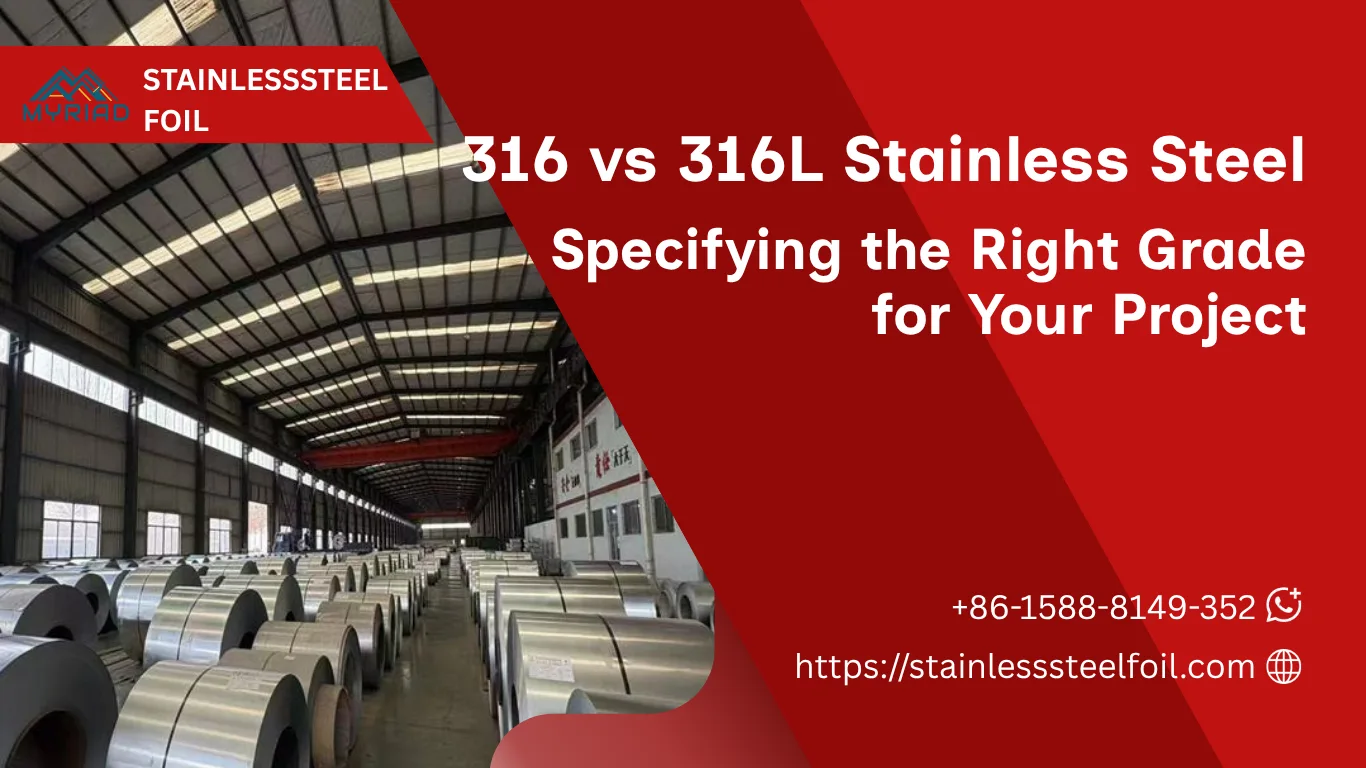
When procurement managers, engineers, and project specifiers talk about 316 vs 316L stainless steel, the conversation often begins and ends with a single letter. That “L” designation might seem like a minor footnote on a material certificate, but it carries significant implications for weld performance, corrosion resistance, regulatory compliance, and total project cost. Getting this decision wrong can result in premature equipment failure, costly rework, and liability exposure that no business wants to absorb.
This guide cuts through the confusion and gives you a clear, business-focused breakdown of 316 vs 316L stainless steel so you can specify the right grade with confidence.
Understanding the Core Difference in 316 vs 316L Stainless Steel
Both 316 and 316L are austenitic stainless steel grades from the 300 series family. They share the same base alloying elements — chromium (16–18%), nickel (10–14%), and molybdenum (2–3%) — which together deliver the superior corrosion resistance that makes this family of alloys a go-to choice in demanding industrial environments.
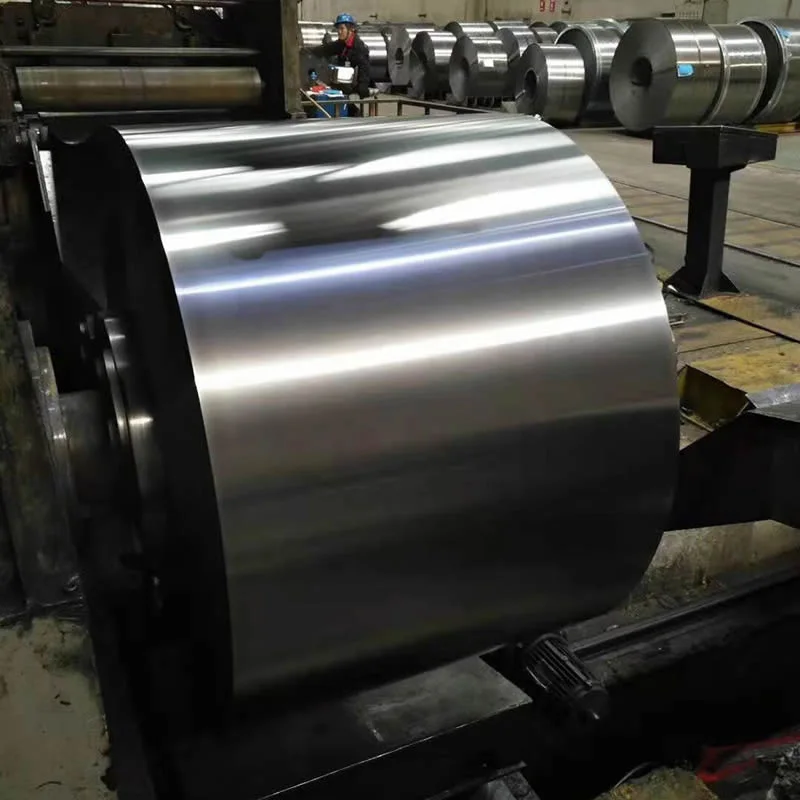
The defining difference comes down to carbon content:
- Grade 316 contains up to 0.08% carbon
- Grade 316L (the “L” stands for Low carbon) contains a maximum of 0.03% carbon
On paper, that gap seems negligible. In practice, it determines how these materials behave under heat, particularly during welding, and that behavior has direct consequences for performance and longevity in service.
Why Carbon Content Matters: The Science Behind the Specification
When stainless steel is heated to temperatures between approximately 425°C and 860°C, a range commonly encountered during welding, carbon in the steel migrates to grain boundaries and bonds with chromium to form chromium carbide precipitates. This process is known as sensitization.
The problem with sensitization is that it depletes chromium from the areas immediately surrounding the grain boundaries, reducing the local corrosion resistance of the material. In these depleted zones, the steel becomes vulnerable to a particularly aggressive form of degradation called intergranular corrosion, sometimes referred to as weld decay, where corrosion propagates along the grain boundaries rather than on the surface.
In welded assemblies made from standard Grade 316, this sensitization risk is real and must be managed. In practice, it often means post-weld heat treatment (PWHT) or solution annealing to restore corrosion resistance processes that add time, cost, and complexity to fabrication.
Grade 316L, with its significantly lower carbon ceiling, resists sensitization far more effectively. Because less carbon is available to form chromium carbide precipitates, the material retains its chromium-rich corrosion-resistant microstructure even in the heat-affected zones around welds. This makes 316L the preferred choice for welded components and assemblies that will operate in corrosive environments — without requiring post-weld treatment.
316 vs 316L Stainless Steel: Mechanical Properties Compared
One area where businesses sometimes hesitate to specify 316L is mechanical strength. The concern is understandable: lower carbon typically correlates with reduced hardness and tensile strength in carbon steels. However, in the context of 316 vs 316L stainless steel, the differences are modest and rarely project-critical.
| Property | Grade 316 | Grade 316L |
|---|---|---|
| Tensile Strength (min.) | 515 MPa | 485 MPa |
| Yield Strength (min.) | 205 MPa | 170 MPa |
| Elongation | 40% | 40% |
| Hardness (Brinell, max.) | 217 | 217 |
| Carbon Content (max.) | 0.08% | 0.03% |
| Molybdenum Content | 2–3% | 2–3% |
For most structural and process applications, this strength delta is inconsequential. However, in high-stress or high-temperature applications where maximum mechanical performance is critical, Grade 316 may retain a marginal edge. Always consult your engineering team when operating near the limits of either specification.
When to Specify 316L: Key Industrial Applications
Understanding when 316L stainless steel is the right call is critical for any procurement or engineering professional. The following industries and application types consistently favor 316L:
Pharmaceutical and Biotech Manufacturing: In pharmaceutical processing, equipment must meet stringent hygienic standards, and welded surfaces are commonplace. The risk of intergranular corrosion in sensitized welds poses a contamination and compliance risk that the industry simply cannot accept. 316L is the standard specified grade in pharmaceutical piping systems, bioreactors, and clean-in-place (CIP) equipment, often in compliance with ASME BPE standards.
Food and Beverage Processing: Similar hygienic and corrosion requirements apply in food production. Welded tanks, pipelines, and fittings that come into contact with acidic or saline food products demand the superior weld corrosion resistance that 316L delivers.
Marine and Offshore Environments: The molybdenum content in both 316 and 316L provides excellent resistance to chloride-induced pitting and crevice corrosion, a key reason this grade family is designated “marine grade stainless steel.” In welded marine structures exposed to seawater, specifying 316L protects weld zones from accelerated corrosion attack.
Chemical Processing: Vessels, reactors, and pipework handling aggressive chemicals, organic acids, chloride-containing solutions, and oxidizing environments benefit from 316L’s ability to maintain weld integrity without additional heat treatment.
Oil and Gas: Subsea and topside equipment handling corrosive process fluids increasingly specifies 316L where weld quality and long-term corrosion performance are non-negotiable.
When Grade 316 May Still Be the Right Choice
It would be misleading to suggest that 316L is universally superior. There are scenarios where Grade 316 remains a legitimate and cost-effective specification:
Non-Welded or Machined Components: If a component is produced entirely by machining from bar stock or plate and will never be welded the sensitization risk associated with 316’s higher carbon content is eliminated. In these cases, 316 delivers adequate corrosion resistance at a potentially lower price point.
Elevated Temperature Mechanical Applications: At sustained high operating temperatures where creep resistance and mechanical strength are paramount, Grade 316 may offer a marginal performance advantage over 316L.
Availability and Lead Time Pressures: In certain markets or product forms, 316 may be more readily available than 316L. Where lead time is critical, and the application genuinely permits either grade, 316 can be the pragmatic choice, provided the engineering basis supports it.
Supply Chain Risk: 316 vs 316L Stainless Steel
One of the most significant and underappreciated business risks in the 316 vs 316L stainless steel debate is inadvertent grade substitution. Because the two grades are visually identical and share similar mechanical properties, a supplier or distributor substituting 316 for 316L in a welded application may not be immediately detectable without proper material traceability controls.
For businesses in regulated industries, this is not a hypothetical concern. Incomplete mill test reports (MTRs), mixed-grade inventory, or lax incoming inspections can cause teams to fabricate systems with 316 instead of the specified 316L. The consequences from accelerated corrosion in process equipment to regulatory non-compliance in pharmaceutical or food-grade systems can be severe.
Robust procurement practices should include:
- Requiring full material traceability from heat number to finished component
- Reviewing MTRs for carbon content confirmation (≤ 0.03% for 316L)
- Conducting incoming material verification where high-stakes applications are involved
- Qualifying suppliers with documented quality management systems
316 vs 316L Stainless Steel: Making the Final Specification Decision
When specifying between 316 and 316L stainless steel, the decision framework is straightforward once the application parameters are understood:
Choose 316L when:
- The component will be welded
- The application is in a corrosive environment (marine, chemical, food, pharmaceutical)
- Post-weld heat treatment is not feasible or practical
- Regulatory or hygienic standards require it
- Long service life with minimal maintenance is a priority
Choose 316 when:
- The component is non-welded and machined
- Elevated temperature strength is the primary driver
- Budget or availability constraints make it the practical option and the engineering basis permits it
In many real-world projects, the marginal cost premium of 316L over 316 is small relative to the total project value — and significantly smaller than the cost of failure, rework, or regulatory exposure. For welded applications in demanding environments, the business case for 316L is compelling.
Final Summary
Choosing between 316 vs 316L stainless steel balances engineering precision with business risk. For procurement and project managers, understanding this difference is a vital risk-mitigation strategy, not just a technical detail.
Specifying the wrong grade in a welded, corrosive application does not always result in immediate failure. It often results in degradation that is slow, incremental, and invisible until it becomes a very expensive problem. By understanding the role of carbon content, sensitization, and intergranular corrosion resistance in the 316 vs 316L comparison, your business can make material decisions that protect equipment performance, ensure compliance, and deliver long-term value.
When in doubt, consult with your materials supplier and engineering team — and always insist on full material documentation. In stainless steel specifications, the details are never just details.
FAQs
What is the primary difference between 316 vs 316L stainless steel?
The core difference lies in their carbon content. Standard 316 stainless steel contains up to 0.08% carbon, whereas 316L (the “L” stands for low carbon) caps its carbon content at 0.03%. This slight structural variation gives 316L superior weldability, while standard 316 retains slightly higher mechanical strength.
When comparing 316 vs 316L stainless steel, which grade offers better corrosion resistance?
In terms of raw atmospheric or chemical corrosion, both grades perform identically because they share the same molybdenum, chromium, and nickel content. However, 316L stainless steel provides significantly better corrosion resistance after welding. Standard 316 is vulnerable to intergranular corrosion (weld decay) in heat-affected zones, a failure point that 316L successfully avoids.
Is 316L more expensive than standard 316 stainless steel?
Historically, 316L carried a price premium due to the additional refining required to reduce its carbon content. In modern steel manufacturing, however, advanced refining methods have made the cost difference negligible. Today, the two grades command nearly identical prices, and mills frequently dual-certify heavy products like plates and bars as both 316 and 316L to reduce supply chain costs.
Can I use 316 vs 316L stainless steel interchangeably in marine environments?
Yes, but it depends entirely on whether your manufacturing process involves welding. For machined hardware, fasteners, or non-welded rigging, standard 316 is often preferred for its higher yield strength. For welded marine brackets, coastal enclosures, or underwater structures, 316L must be specified to prevent premature joint failure from saltwater pitting.