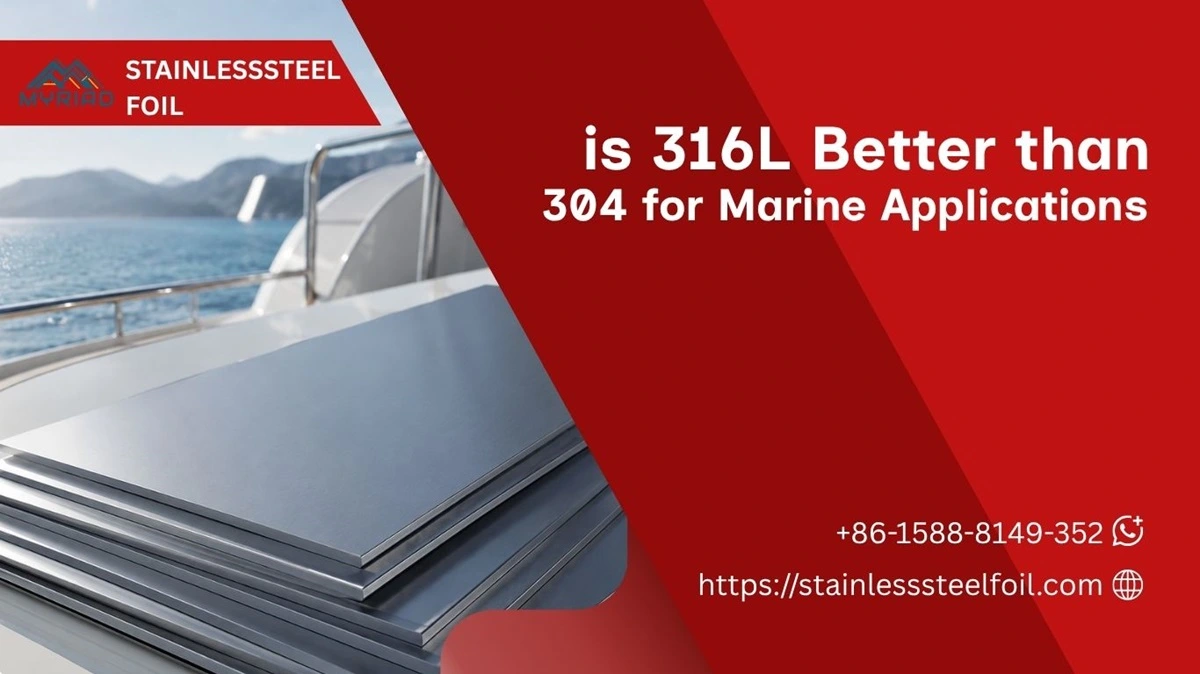
Marine environments are some of the most corrosive conditions for metals, where saltwater, humidity, and chloride ions constantly attack exposed surfaces. Choosing the right stainless steel grade is crucial for ensuring durability, safety, and cost-effectiveness in shipbuilding, offshore engineering, and coastal construction. The debate often centers on is 316L better than 304, since both are widely used but perform differently under saltwater exposure.
304 stainless steel, with its 18–20% chromium and 8–10.5% nickel, is affordable and versatile, making it popular in kitchens, architecture, and industrial piping. However, in marine settings, it suffers from pitting corrosion and crevice corrosion. By contrast, 316L stainless steel contains 2–3% molybdenum and lower carbon content, which dramatically improves resistance to chlorides and welding performance. This makes 316L the preferred choice for marine hardware, boat fittings, and offshore platforms.
For engineers and manufacturers, understanding these differences is vital. Explore more details on stainless steel grades at Stainless Steel Foil, compare 304L vs 304 stainless steel, and discover advanced 316L stainless steel foil applications.
304 Stainless Steel
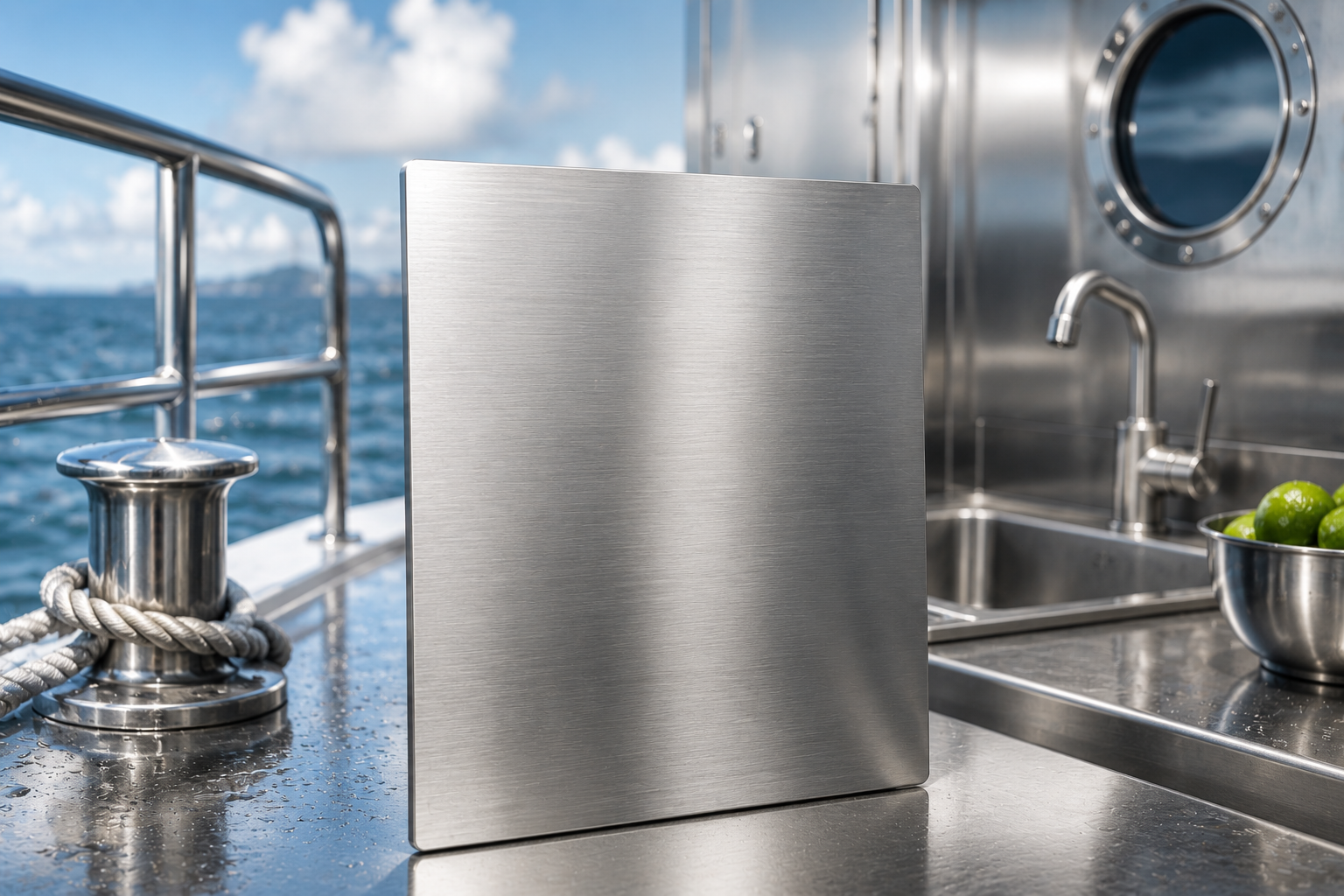
304 stainless steel is the most widely used grade in the austenitic family, often referred to as “18/8” stainless due to its chromium and nickel content. Its composition includes 18–20% chromium and 8–10.5% nickel, along with small amounts of carbon, manganese, and silicon. This balance gives 304 its excellent resistance to oxidation and corrosion in mild environments, making it a reliable choice for everyday applications. It is also affordable, easy to fabricate, and readily available worldwide.
Limitations in Marine Use
Despite its popularity, 304 stainless steel struggles in marine environments. Chloride ions present in seawater attack the protective oxide layer, leading to pitting corrosion and crevice corrosion. Over time, this weakens structural integrity, especially in areas with stagnant water or welded joints. While 304 performs well in kitchens, architectural projects, and general industrial use, it is not the best option for long-term saltwater exposure. For marine durability, engineers often turn to 316L stainless steel, which offers superior chloride resistance.
316L Stainless Steel
Composition and Properties
316L stainless steel is essentially an enhanced version of 304, designed to perform better in aggressive environments. The key difference lies in the addition of 2–3% molybdenum, which significantly boosts resistance against chlorides and acidic conditions. This makes it far more reliable in saltwater exposure compared to 304.
Its standout features include superior corrosion resistance in marine settings, a low carbon content that minimizes carbide precipitation during welding, and excellent durability in chemical industries. For engineers and manufacturers working with seawater or harsh chemicals, 316L is the preferred choice. Explore detailed applications at 316L stainless steel foil ultrathin.
Why It Excels in Marine Applications
316L is specifically designed to withstand aggressive environments. Its molybdenum content makes it resistant to pitting corrosion, which is the primary failure mode in marine stainless steel. This is why shipbuilders, offshore engineers, and marine equipment manufacturers often prefer 316L.
304 vs 316L in Marine Applications
| Property | 304 Stainless Steel | 316L Stainless Steel |
|---|---|---|
| Corrosion Resistance | Good in mild environments | Excellent in saltwater and chlorides |
| Cost | Lower | Higher |
| Weldability | Good | Excellent (low carbon prevents carbide precipitation) |
| Durability in Marine Use | Poor to moderate | Outstanding |
| Applications | Kitchenware, architecture, industrial piping | Marine hardware, chemical processing, medical devices |
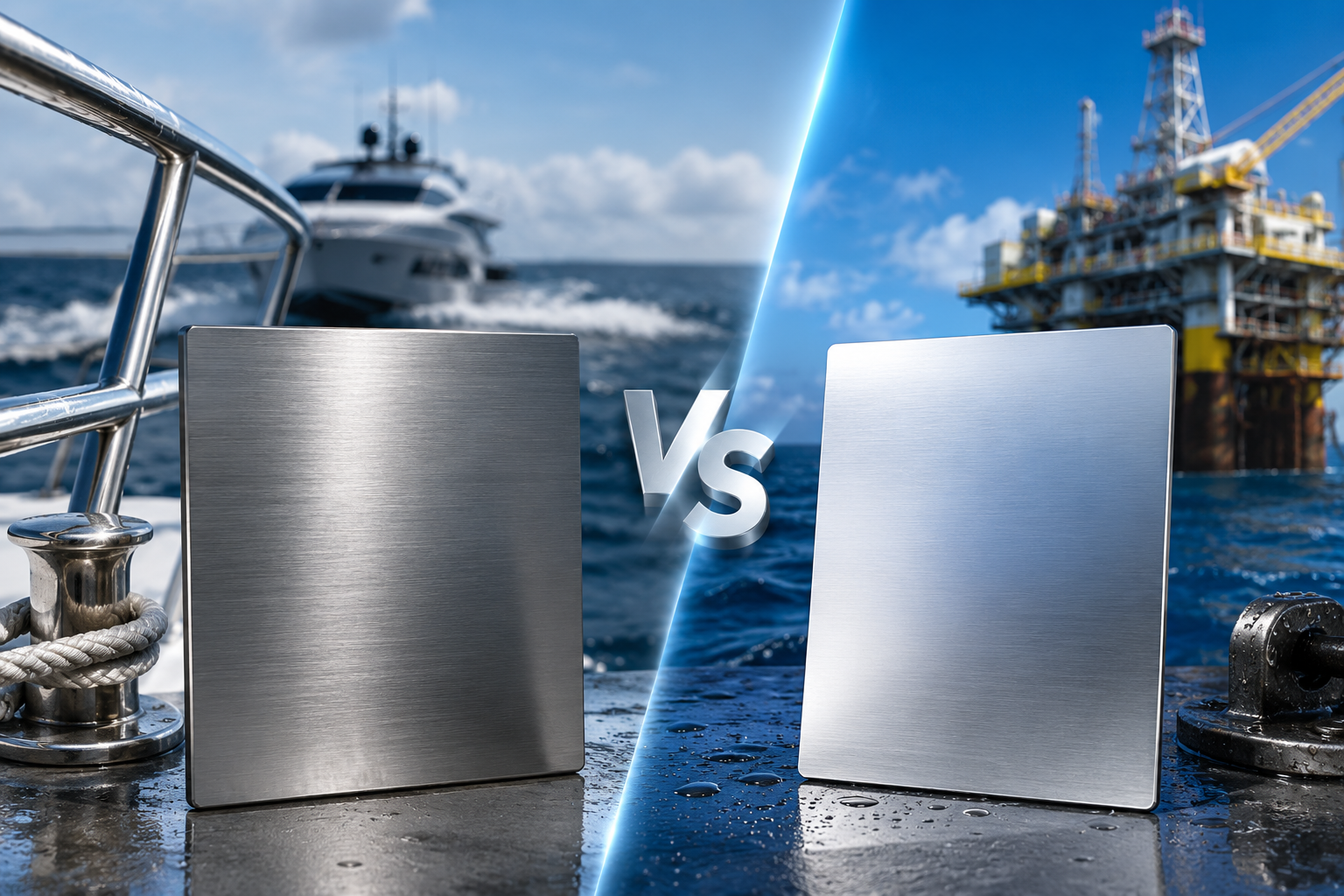
For a deeper dive into 316 vs 316L, see this technical comparison.
Case Studies and Real-World Applications
Marine Hardware
Boat fittings, propeller shafts, and underwater fasteners often use 316L. In contrast, 304 fittings may corrode within months of exposure to seawater.
Offshore Oil & Gas
Platforms and pipelines rely on 316L for its ability to resist chloride-induced corrosion. Using 304 in these environments would lead to costly maintenance and replacements.
Medical and Food Industries
Interestingly, 316L is also used in surgical instruments and food processing equipment due to its resistance to contamination and ease of sterilization.
Benefits of 304 vs 316L
When comparing stainless steel grades, both 304 and 316L offer unique benefits depending on the environment and application. 304 stainless steel is the most widely used due to its affordability, ease of fabrication, and strong resistance to oxidation in mild conditions. It is ideal for kitchens, architectural projects, and general industrial use. However, in marine environments, chloride ions in seawater can quickly cause corrosion.
This is where 316L stainless steel excels. With its added molybdenum and low carbon content, 316L provides superior resistance to chlorides, making it the preferred choice for shipbuilding, offshore oil rigs, and coastal construction. While 316L is more expensive, its durability in saltwater reduces long-term maintenance costs.
Ultimately, the choice depends on the setting: 304 is cost-effective for everyday use, while 316L ensures reliability in harsh marine conditions. For more details, explore stainless steel foil products, compare 304L vs 304 stainless steel, and discover advanced 316L stainless steel foil applications.
Summary
304 stainless steel remains the most widely used alloy thanks to its affordability, strength, and resistance to oxidation in mild environments. However, in marine applications, chloride ions in seawater can cause pitting and crevice corrosion, limiting its durability. For long-term saltwater exposure, 316L stainless steel is the superior choice due to its molybdenum-enhanced corrosion resistance.
If you’re sourcing stainless steel for industrial, architectural, or marine projects, explore premium options at Stainless Steel Foil. Browse our products, learn more on our blog, and reach out via our contact us page for expert guidance.
FAQs
Why does 304 stainless steel corrode in marine environments?
304 stainless steel contains chromium and nickel, which protect against oxidation in mild conditions. However, seawater is rich in chloride ions that penetrate its passive oxide layer. This leads to pitting corrosion and crevice corrosion, especially in areas with stagnant water or tight joints. Over time, structural integrity weakens. That’s why engineers often ask is 316L better than 304, since 316L’s molybdenum addition provides far superior chloride resistance.
Can 304 stainless steel be used for boat fittings or coastal construction?
Yes, but only for short‑term or decorative purposes. In coastal construction, 304 may discolor or rust within months due to salt spray. Boat fittings made from 304 often require frequent cleaning and replacement. For critical components like propeller shafts, anchors, or fasteners, is 316L better than 304 becomes a vital consideration, as 316L withstands saltwater exposure for years without significant degradation.
How does welding affect 304 stainless steel in marine applications?
Welding 304 stainless steel can reduce its corrosion resistance. Heat from welding depletes chromium near the weld, creating zones vulnerable to attack. In marine environments, these areas corrode faster, leading to premature failure. The low carbon content in 316L prevents carbide precipitation during welding, making it more reliable. This is why experts often conclude that is 316L better than 304 when welding is required for marine hardware.
What industries prefer 316L over 304 due to marine exposure?
Industries such as shipbuilding, offshore oil and gas, desalination plants, and coastal architecture consistently choose 316L. Its molybdenum content ensures resistance to chloride‑induced corrosion, reducing maintenance costs and extending service life. While 304 remains popular in food processing, medical devices, and general construction, the marine sector answers the question is 316L better than 304 with a resounding yes, because durability in saltwater is non‑negotiable.