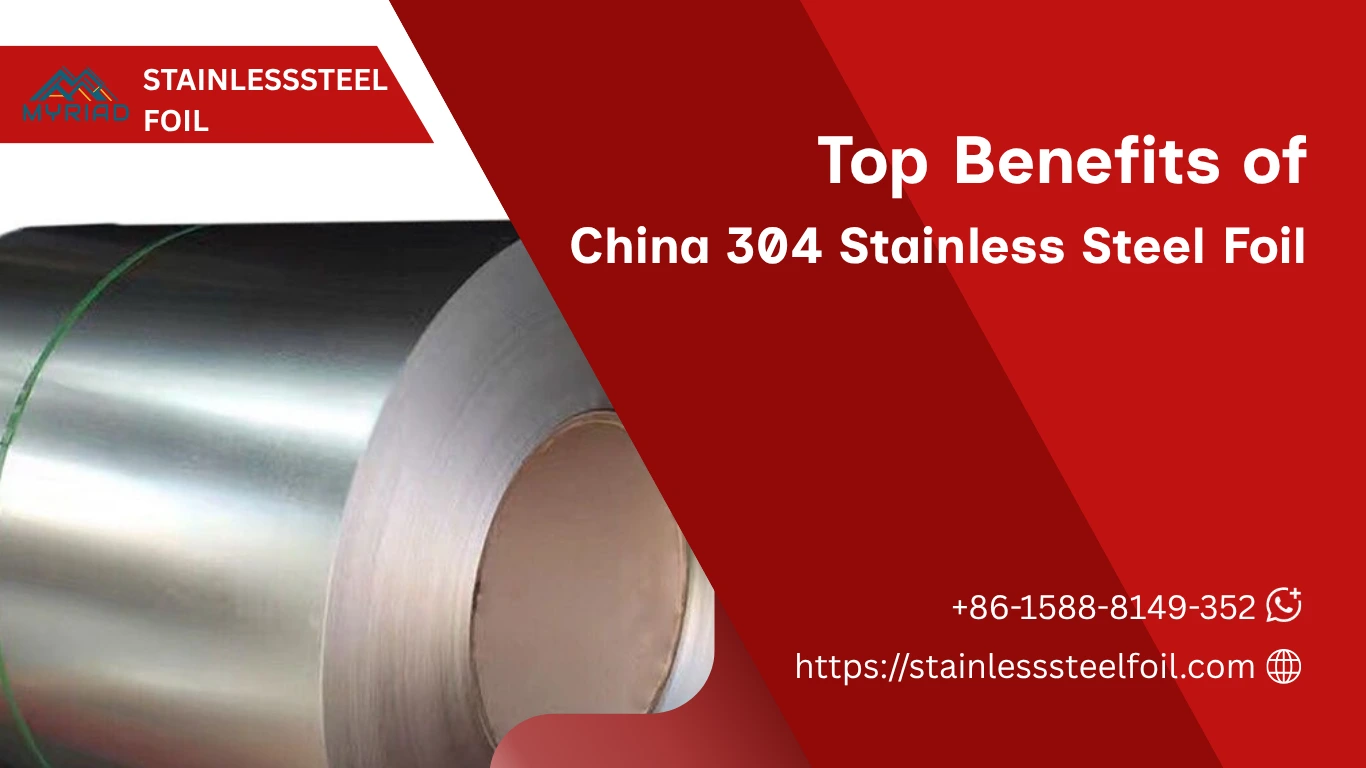
If you manufacture products that demand precision, corrosion resistance, and long-term durability, the material you choose at the foil stage can make or break your final product. This is exactly why so many procurement teams and engineers across electronics, automotive, aerospace, and medical device industries are turning to China 304 Stainless Steel Foil as their go-to raw material.
In this article, we’ll break down why this Stainless Steel Foil has become the preferred choice for manufacturers worldwide, how it compares to alternatives like 301 Stainless Steel Foil and 316L Stainless Steel Foil, and what to look for when evaluating China 304 Stainless Steel Foil Suppliers.
Cost Efficiency and Scalability of China 304 Stainless Steel Foil
For industrial procurement managers, raw material cost directly dictates profit margins and final product pricing competitiveness. China 304 Stainless Steel Foil provides a distinct economic advantage without sacrificing technical integrity.
Capitalizing on Integrated Supply Chains
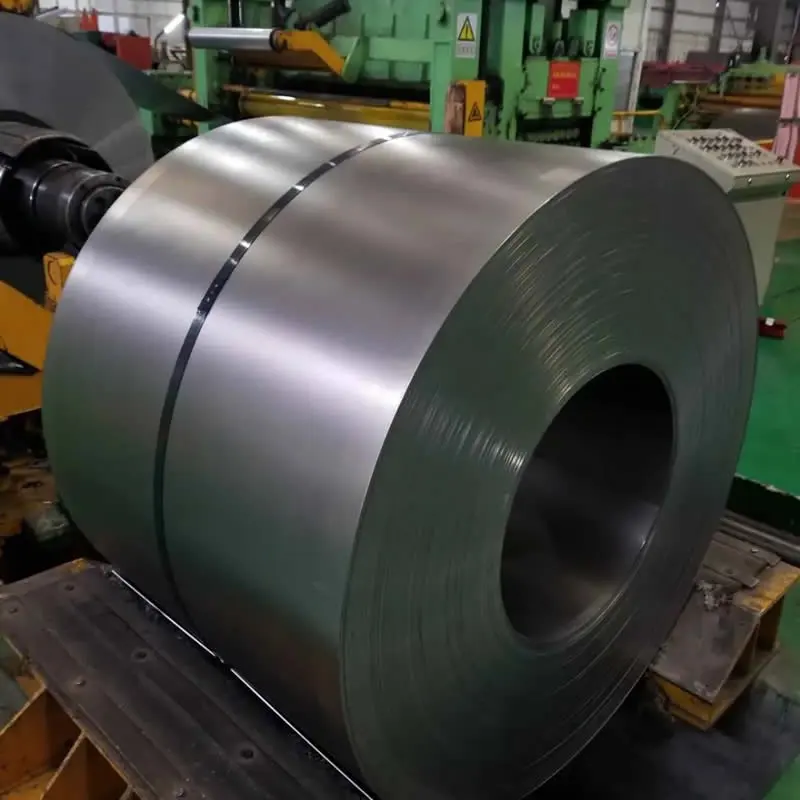
China houses the world’s most comprehensive stainless steel manufacturing ecosystem. From raw nickel and chromium refining to advanced mill processing, localized supply chains dramatically lower production overheads. When sourcing it, buyers benefit from these economies of scale, gaining high-quality materials at more competitive prices than those offered by European or North American suppliers.
Unmatched Production Scalability
Whether your facility requires short-run prototype coils or multi-ton continuous shipments, China 304 Stainless Steel Foil Suppliers offer high flexibility in Minimum Order Quantities (MOQs). This agility allows manufacturers to optimize cash flow, lean inventory management, and rapidly scale output during demand spikes without encountering supplier bottlenecks.
Superior Mechanical and Chemical Properties of China 304 Stainless Steel Foil
Grade 304 (UNS S30400 / 1.4301) is an austenitic chromium-nickel alloy renowned for its versatile performance profile. When engineered into ultra-thin foil formats, its intrinsic properties translate into reliable structural resilience.
Excellent Corrosion Resistance
With an 18% chromium and 8% nickel baseline composition, China 304 Stainless Steel Foil forms an immediate, self-healing passive oxide film upon exposure to oxygen. This passive surface protects against atmospheric moisture, chemical splatters, and organic acids, preventing degradation in demanding industrial settings.
High Tensile Strength and Ductility
Unlike softer non-ferrous foils (such as aluminum or copper), it maintains impressive tensile strength (≥ 515 MPa) alongside superior elongation capacity (≥ 40%). This balance allows precision stamping, deep drawing, and complex folding during manufacturing without risk of tearing or micro-fracturing.
Thermal Stability
Grade 304 foil maintains structural integrity in operating temperatures up to 870 °C continuous service (and 925 °C intermittent service). This makes it ideal for thermal barriers, engine bay heat shields, and industrial furnace gaskets.
Comparing Against Alternative Alloys
Selecting the correct foil grade requires matching environmental demands against material cost. While Grade 304 serves as the industry workhorse, comparing it with 301 Stainless Steel Foil and 316L Stainless Steel Foil clarifies its distinct value proposition.
304 Stainless Steel Foil vs. 301 Stainless Steel Foil
301 Stainless Steel Foil contains slightly lower chromium and nickel levels, causing it to work-harden much faster when cold-worked. This makes 301 foil useful for high-strength springs, flexural clips, and components requiring maximum fatigue resistance.
However, for general manufacturing requiring deep drawing, uniform forming, and consistent corrosion resistance, China 304 Stainless Steel Foil is far easier to fabricate and resists oxidation in broader operating conditions.
304 Stainless Steel Foil vs. 316L Stainless Steel Foil
316L Stainless Steel Foil includes 2-3% Molybdenum and extra-low carbon levels, providing resistance against severe pitting in chloride-heavy, marine, or sterile pharmaceutical environments.
Yet, 316L comes at a significant cost premium due to molybdenum price fluctuations. Unless your product faces continuous submersion in saltwater or aggressive chemical processing, China 304 Stainless Steel Foil delivers identical functional performance at a noticeably lower procurement cost.
Advanced Manufacturing Technologies
The production of ultra-thin Stainless Steel Foil relies on advanced metallurgy and heavy machine engineering. Leading Chinese mills have invested heavily in foreign and domestic precision equipment to meet strict international standards (ASTM A240, JIS, DIN, EN).
State-of-the-Art 20-High Cold Rolling Mills
Chinese mills utilize multi-roll Sendzimir (20-high) cold rolling mills capable of exerting immense, uniform pressure across thin strip widths. This technology allows China 304 Stainless Steel Foil to achieve ultra-thin gauges—down to 0.01 mm (10 microns)—with thickness tolerances tighter than $\pm 10\%$.
Bright Annealing (BA) Line Capabilities
To restore ductility after intense cold rolling, the foil undergoes bright annealing in a controlled hydrogen-nitrogen protective atmosphere. This prevents surface oxidation and creates a bright BA finish without additional pickling.
Precision Slitting and Edging
Micro-electronics and battery components require burr-free edges to avoid internal short circuits or stress concentration cracks. Advanced Chinese slitting lines cut foil coils into narrow widths from 3 mm to 1000 mm, delivering smooth edges ready for automated assembly.
Key Industrial Applications for China 304 Stainless Steel Foil
Due to its balance of formability, strength, and thermal resistance, China 304 Stainless Steel Foil serves as a core material across several fast-growing industries:
Electronics & Telecommunications: Used in EMI/RFI shielding, flexible circuit board substrates, phone speaker diaphragms, and strain gauges. Its non-magnetic properties in the annealed state make it suitable for delicate electronic environments.
Automotive & Electric Vehicles (EV): Integrated into EV battery current collectors, pressure relief burst discs, catalytic converter honeycomb substrates, and high-temperature manifold gaskets.
Precision Engineering & Machinery: Stamped into precision shims, spacers, and custom washers where accurate thickness tolerances are required to calibrate tool clearances.
Renewable Energy: Applied as a substrate foil for flexible solar panels and specialized hydrogen fuel cell bipolar plates.
How to Partner with Reliable Suppliers
To ensure seamless procurement and reliable quality, B2B buyers must follow a structured evaluation framework when partnering with China 304 Stainless Steel Foil Suppliers.
1. Verify Mill Test Certificates (MTC)
Always demand ISO 9001 quality management verification along with EN 10204 3.1 Mill Test Certificates. The MTC confirms that the delivered China 304 Stainless Steel Foil matches strict chemical composition limits (18-20% Cr, 8-10.5% Ni) and mechanical performance metrics.
2. Specify Surface Finish and Temper
Define the exact mechanical temper required for your tooling:
Soft/Annealed (HV < 200): Best for deep drawing, stamping, and complex forming.
1/4 Hard, 1/2 Hard, Full Hard (HV > 370): Essential for spring-loaded parts, wear plates, and high-tensile structural diaphragms.
3. Require Custom Protective Packaging
Because ultra-thin Stainless Steel Foil is sensitive to edge damage and moisture during ocean transport, reputable Suppliers utilize multi-layer export packaging:
Inner Layer: VCI (Vapor Corrosion Inhibitor) film with desiccants.
Core Support: Eye-to-Sky or Eye-to-Wall suspension on heavy-duty wooden reels to prevent flat-spotting.
Outer Crate: Fully enclosed, fumigated wooden cases built for fork-lift handling.
Final Summary
For manufacturers balancing cost, quality, and scalability, China 304 Stainless Steel Foil offers a compelling combination of affordability, corrosion resistance, formability, and supply chain maturity that’s difficult to match elsewhere. Whether you’re producing electronics components, automotive parts, or precision industrial equipment, partnering with experienced China 304 Stainless Steel Foil Suppliers — who can also provide complementary grades like 301 Stainless Steel Foil and 316L Stainless Steel Foil — gives your manufacturing operation the flexibility and reliability needed to stay competitive in a global market.
As demand for high-performance stainless steel foil grows, businesses that build strong sourcing partnerships today will be better positioned for efficient future growth.
FAQs
What is China 304 Stainless Steel Foil?
It is a thin, high-quality stainless steel material manufactured in China using Grade 304 stainless steel. It offers excellent corrosion resistance, durability, and formability, making it ideal for electronics, automotive, medical, and industrial applications.
Why is China 304 Stainless Steel Foil popular in manufacturing?
It is widely used because it combines corrosion resistance, excellent workability, high strength, and cost-effectiveness. Manufacturers also benefit from China’s advanced production capabilities, competitive pricing, and reliable supply chains.
What is the difference between China 304 Stainless Steel Foil and 316L Stainless Steel Foil?
316L Stainless Steel Foil contains molybdenum, which provides enhanced resistance to chlorides and harsh chemicals. However, China 304 Stainless Steel Foil is more cost-effective and ideal for most industrial and commercial applications.
Is China 304 Stainless Steel Foil suitable for precision manufacturing?
Absolutely. Its excellent formability and stability make it ideal for electronics, battery tabs, connectors, and medical devices.