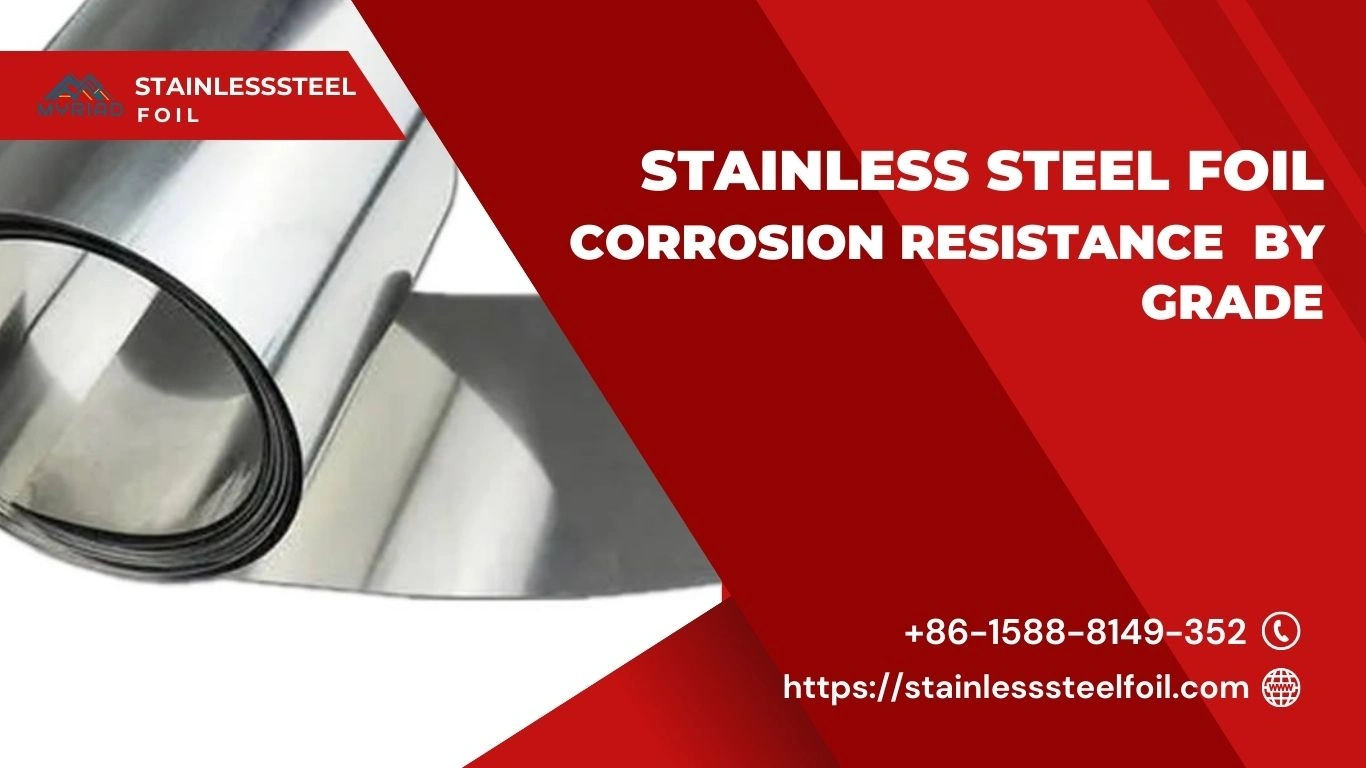
When engineers and procurement managers evaluate thin-gauge metals, Stainless Steel Foil Corrosion Resistance by Grade becomes one of the most critical decision factors. A foil that performs flawlessly in dry indoor conditions may fail rapidly in coastal, chemical, or high-temperature environments. Understanding how corrosion resistance varies by stainless steel grade helps you choose the right material the first time.
Stainless steel foil is widely used in food processing, medical devices, electronics shielding, aerospace components, heat exchangers, and chemical processing equipment. However, not all stainless steel foils offer the same level of protection against rust, pitting, crevice corrosion, or chemical attack.
In this comprehensive guide, we explore Stainless Steel Foil Corrosion Resistance by Grade, explain the science behind corrosion resistance, compare popular grades, and help you select the best foil for your application.
If you’re new to stainless steel foils, you may want to first review this detailed guide on What is Stainless Steel Foils? for foundational knowledge.
Stainless Steel Foil and Corrosion Resistance
Before diving into Stainless Steel Foil Corrosion Resistance by Grade, it’s essential to understand why stainless steel resists corrosion in the first place.
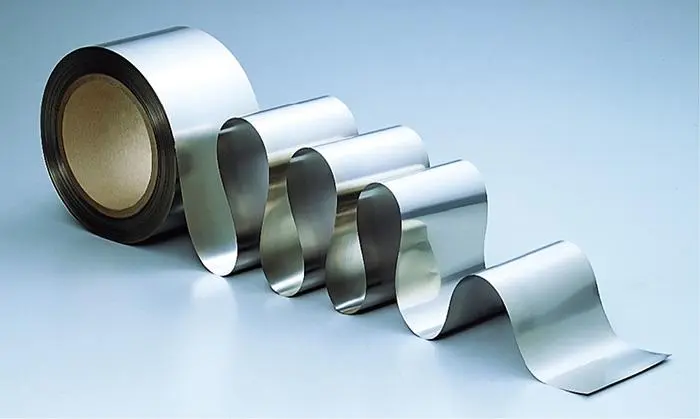
According to the detailed explanation on Wikipedia’s stainless steel page, stainless steel contains a minimum of 10.5% chromium. This chromium forms a thin, invisible oxide layer on the surface. This layer is called a passive film. It prevents oxygen and moisture from penetrating the metal.
When damaged, the passive layer regenerates itself. This self-healing property gives stainless steel its corrosion resistance.
However, corrosion resistance depends on:
- Chromium percentage
- Nickel content
- Molybdenum addition
- Environmental exposure
- Temperature
- Surface finish
- Chloride concentration
That’s why Stainless Steel Foil Corrosion Resistance by Grade varies significantly between 304, 316, 430, and other alloys.
Stainless Steel Foil Corrosion Resistance by Grade: Detailed Comparison
Let’s examine the most commonly used grades in foil form and compare their corrosion performance.
304 Stainless Steel Foil – General Purpose Corrosion Resistance
304 is the most widely used stainless steel grade globally. It belongs to the austenitic family.
Composition Overview:
- 18–20% Chromium
- 8–10.5% Nickel
- Low carbon
304 stainless steel foil provides excellent resistance to:
- Atmospheric corrosion
- Mild chemicals
- Food processing environments
- Indoor industrial exposure
This makes it ideal for food-grade applications such as 304 stainless steel foil for food.
However, 304 performs poorly in high-chloride environments. Seawater exposure or salt-heavy conditions can cause pitting corrosion.
In terms of Stainless Steel Foil Corrosion Resistance by Grade, 304 ranks as a strong general-purpose performer but not a marine-grade solution.
Common applications include:
- Kitchen equipment
- Architectural panels
- Electronic components
- Light chemical containers
316 Stainless Steel Foil – Superior Chloride Resistance
316 stainless steel foil contains molybdenum, which significantly improves corrosion resistance.
Composition Overview:
- 16–18% Chromium
- 10–14% Nickel
- 2–3% Molybdenum
The addition of molybdenum increases resistance to:
- Chloride-induced pitting
- Crevice corrosion
- Marine environments
- Chemical processing conditions
In comparative corrosion testing, 316 can withstand chloride concentrations up to 1,000 ppm better than 304.
When analyzing Stainless Steel Foil Corrosion Resistance by Grade, 316 clearly outperforms 304 in aggressive environments.
This grade is widely used in:
- Marine equipment
- Medical devices
- Pharmaceutical production
- Coastal construction
- Chemical tanks
If corrosion risk is high, 316 stainless steel foil is typically worth the higher initial cost.
You can explore available material options in the full product catalog.
430 Stainless Steel Foil – Budget Option with Moderate Resistance
430 stainless steel is a ferritic grade. It contains chromium but little to no nickel.
Composition Overview:
- 16–18% Chromium
- Very low nickel
430 provides moderate corrosion resistance but lacks protection against:
- Strong acids
- Chlorides
- Marine environments
In the hierarchy of Stainless Steel Foil Corrosion Resistance by Grade, 430 ranks lower than 304 and 316.
However, it offers:
- Lower cost
- Good oxidation resistance
- Magnetic properties
Applications include:
- Decorative trim
- Indoor appliances
- Automotive parts
For dry indoor use, 430 can be sufficient. For chemical or salt exposure, it is not recommended.
321 Stainless Steel Foil – High-Temperature Stability
321 stainless steel contains titanium. This stabilizes the alloy and improves performance at high temperatures.
321 resists:
- Intergranular corrosion
- Oxidation up to 900°C
In high-heat applications, Stainless Steel Foil Corrosion Resistance by Grade shifts from chloride resistance to oxidation resistance. That is where 321 excels.
Applications include:
- Aircraft exhaust systems
- Heat exchangers
- Thermal processing equipment
904L Stainless Steel Foil – Extreme Corrosion Resistance
904L is a high-alloy austenitic stainless steel with very high corrosion resistance.
It contains:
- High nickel content
- High molybdenum
- Copper
904L offers outstanding resistance to:
- Sulfuric acid
- Phosphoric acid
- High-chloride environments
In industrial corrosion ranking systems, 904L often scores above 316 in severe environments.
For extreme chemical processing, Stainless Steel Foil Corrosion Resistance by Grade analysis frequently points toward 904L as a premium solution.
Comparative Table: Stainless Steel Foil Corrosion Resistance by Grade
| Grade | Chloride Resistance | Acid Resistance | Marine Suitability | Cost Level |
|---|---|---|---|---|
| 430 | Low | Low | Not recommended | Low |
| 304 | Moderate | Moderate | Limited | Medium |
| 316 | High | High | Excellent | Medium-High |
| 321 | Moderate | Good (High Temp) | Limited | Medium |
| 904L | Very High | Very High | Excellent | High |
This comparison simplifies Stainless Steel Foil Corrosion Resistance by Grade, but real-world selection requires application-specific analysis.
Environmental Factors That Affect Stainless Steel Foil Corrosion Resistance
Even the best grade can fail if environmental conditions exceed design limits.
Chloride Exposure
Chlorides are the main enemy of stainless steel. Saltwater, deicing salts, and chemical plants increase pitting risk.
316 significantly outperforms 304 in chloride environments.
Temperature
High temperatures accelerate corrosion rates. 321 performs better at sustained heat than 304.
Surface Finish
Smooth finishes resist corrosion better. Polished stainless steel foil traps fewer contaminants.
You can review available finishes at Steel Foil Sheet options.
Thickness
Thinner foils are more susceptible to localized corrosion penetration. Selecting the correct thickness matters.
Industrial Applications and Grade Selection
Understanding Stainless Steel Foil Corrosion Resistance by Grade is essential across industries.
Food Processing Industry
Food-grade applications often use 304. It offers safe corrosion resistance for organic acids.
For more demanding food environments, visit Use of Stainless Steel Foils.
Marine Industry
Marine components almost always use 316 due to chloride exposure.
Medical Equipment
Medical environments require both corrosion resistance and sterilization durability. 316 is preferred.
Chemical Processing
Highly acidic environments may require 904L.
Cost vs Corrosion Resistance: Finding the Right Balance
Higher corrosion resistance usually means higher cost.
However, lifecycle cost often favors better grades.
For example:
- 304 may need replacement in 5 years in coastal areas.
- 316 can last 15+ years in the same conditions.
This difference dramatically affects long-term budgets.
Choosing based on Stainless Steel Foil Corrosion Resistance by Grade prevents costly downtime and replacements.
How to Source High-Quality Stainless Steel Foil
Material quality varies by supplier.
Work with reputable suppliers that provide:
- Mill test certificates
- Verified chemical composition
- Surface finish options
- Thickness tolerance control
You can explore high-quality options directly at the official website: stainless steel foil.If you’re unsure which grade suits your project, consult experts through the Contact Us page. For buyers asking where to purchase reliable sheets and foils, see this guide: Where to Buy Stainless Steel Sheet.
Summary
Stainless Steel Foil Corrosion Resistance by Grade is essential for choosing the right material for your project. From the versatile 304 to the marine-grade 316 and the ultra-resistant 904L, each grade offers unique benefits. Selecting the right foil ensures durability, safety, and cost-effectiveness across industries. For more insights, visit the Stainless Steel Foil Blog or contact experts directly via Contact Us.
FAQs
Which grade has the best Stainless Steel Foil Corrosion Resistance by Grade comparison?
In most environments, 316 offers the best balance of corrosion resistance and cost. However, for highly acidic or extreme chloride conditions, 904L ranks highest in Stainless Steel Foil Corrosion Resistance by Grade evaluations.
Is 304 stainless steel foil suitable for marine use?
304 provides moderate protection but may develop pitting in saltwater. When evaluating Stainless Steel Foil Corrosion Resistance by Grade for marine applications, 316 is the safer choice.
Why does molybdenum improve corrosion resistance?
Molybdenum strengthens resistance to pitting and crevice corrosion. That is why Stainless Steel Foil Corrosion Resistance by Grade rankings consistently show 316 outperforming 304.
Does thickness affect corrosion resistance?
Yes. Thicker foil provides more material before perforation. However, Stainless Steel Foil Corrosion Resistance by Grade remains the primary determining factor.
What grade is best for food processing?
304 works well for most food applications. In Stainless Steel Foil Corrosion Resistance by Grade comparisons, it provides safe and reliable performance in standard food environments.