When engineers, procurement managers, and manufacturers require a dependable, high-performance, ultra-thin metal substrate, 304 stainless steel foil consistently emerges as the premier choice. From food processing facilities in Southeast Asia to precision electronics plants across Europe, this specific material grade has earned a global reputation as the definitive solution for rigorous industrial environments.
Which market sectors rely heavily on its properties? How do you determine the correct thickness gauge for your operations, and how can you secure a trustworthy manufacturing partner? This comprehensive guide covers every critical detail, whether you are sourcing this precision material for the first time or looking to streamline your existing corporate supply chain.
What Is 304 Stainless Steel Foil?
304 stainless steel foil is an ultra-thin, flat-rolled variant of austenitic stainless steel delivered in precision-wound coils or rolls. It belongs to the AISI 304 family, frequently designated as 18/8 stainless steel due to its characteristic metallurgical composition of roughly 18% chromium and 8% nickel. This precise chemical framework provides the material with its hallmark advantages: exceptional corrosion resistance, outstanding formability, and robust structural integrity under stress.
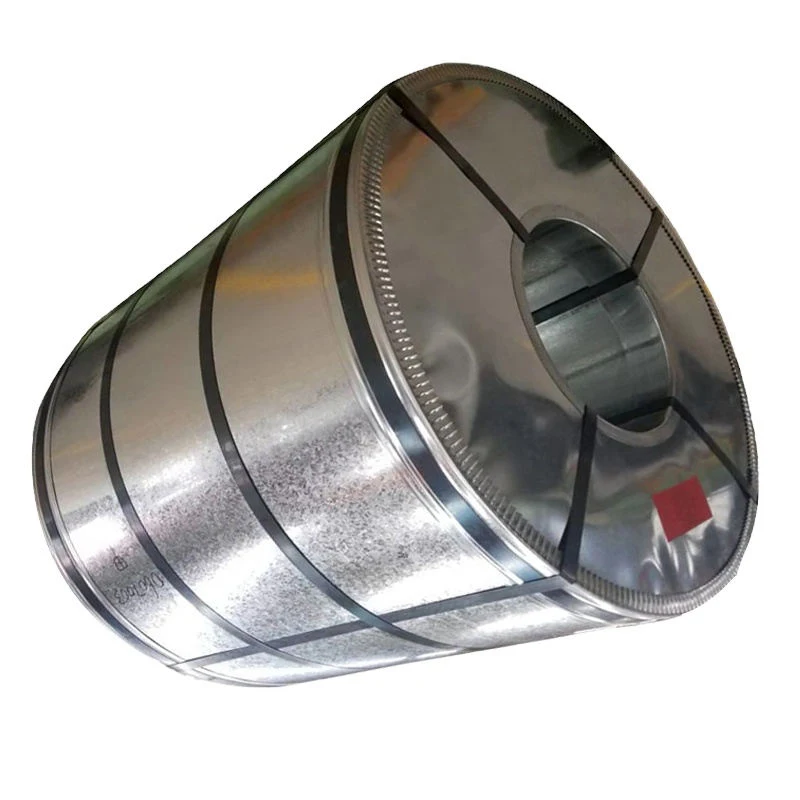
Unlike standard stainless steel sheets or heavy plates, it is explicitly defined by its remarkably thin profile, typically ranging from 0.01mm to 0.10mm (0.00039 to 0.0039 inches). This micro-gauge precision allows it to fulfill complex engineering roles that thicker metals simply cannot accommodate.
Key Chemical Composition of 304 Stainless Steel Foil
| Element | Content (%) |
|---|---|
| Chromium | 18.0 – 20.0 |
| Nickel | 8.0 – 10.5 |
| Carbon | ≤ 0.08 |
| Manganese | ≤ 2.0 |
| Silicon | ≤ 1.0 |
| Phosphorus | ≤ 0.045 |
| Sulfur | ≤ 0.03 |
| Iron | Balance |
Core Properties of 304 Stainless Steel Foil Driving Industrial Demand
Analyzing the physical and chemical metrics of stainless steel foil allows procurement teams to make confident, data-driven sourcing decisions. The core performance attributes that make this material indispensable across heavy industry include:
1. Exceptional Corrosion Resistance
The rich chromium content within 304 stainless steel foil forms an invisible, self-healing passive oxide layer across the surface. This microscopic barrier shields the underlying metal from oxidation, environmental moisture, and various chemical agents. Consequently, it is optimal for harsh environments where rust or material degradation would cause catastrophic system failures—such as sterile food processing, medical device manufacturing, and marine-adjacent instrumentation.
2. Outstanding Formability
Among common industrial alloys, 304 stainless steel foil is highly celebrated for its superior ductility and elongation characteristics. It can undergo deep drawing, progressive stamping, intricate bending, and complex rolling into highly specialized geometries without micro-cracking or losing its structural stability. This makes it an ideal match for component designers requiring custom-shaped metal diaphragms or enclosures.
3. High Strength-to-Weight Ratio
Despite its paper-thin dimensions, 304 stainless steel foil provides impressive tensile strength relative to its mass. Aerospace and automotive engineers frequently leverage this property to shave weight off advanced assemblies while maintaining strict safety and structural reliability metrics.
4. Thermal and Heat Resistance
This alloy performs exceptionally well under thermal stress, retaining its mechanical properties in operating environments reaching up to 870°C (1598°F) during intermittent service. This robust thermal profile makes it highly valuable for localized heat-treatment wraps, exhaust systems, and high-temperature thermal barriers.
5. Hygienic and Non-Porous Surface Finish
The ultra-smooth, non-porous surface structure of 304 stainless steel foil actively resists microbial colonization and bacterial adhesion. It is easily sanitized and sterilized using harsh chemical agents, making it a mandatory choice for food-grade systems and pharmaceutical production lines where hygiene compliance is non-negotiable.
6. 100% Recyclability
As global industries face strict environmental mandates, the sustainability of raw materials is vital. It is completely recyclable without any degradation to its native material properties, allowing enterprise brands to reduce their carbon footprint and fulfill ESG supply chain goals.
304 Stainless Steel Foil Thickness Guide
A vital step when purchasing 304 stainless steel foil is picking the exact thickness gauge. Your selection directly impacts the component’s mechanical load capacity, flexible formability, and production cost.
| Thickness Range | Common Applications |
|---|---|
| 0.01mm – 0.02mm | EMI/RF shielding, precision sensors, flexible electronics |
| 0.02mm – 0.05mm | Medical devices, gaskets, diaphragms, battery components |
| 0.05mm – 0.08mm | Food packaging laminates, automotive shims, heat shields |
| 0.08mm – 0.1mm | Industrial seals, stamped parts, and architectural cladding |
Top Industries Relying on 304 Stainless Steel Foil
The operational versatility of 304 stainless steel foil cements its role across a wide array of multi-billion dollar industrial markets:
1. Food Processing and Flexible Packaging
This alloy is heavily integrated into commercial food processing machinery, automated conveyor systems, and bulk storage vats. Its natural resistance to organic acids, mineral oils, and humidity prevents food batch contamination. Furthermore, it serves as a high-barrier laminate layer in flexible food packaging, safeguarding perishable goods against light, moisture, and oxygen ingress.
Target Sectors: Food packaging OEMs, flexible packaging converters, commercial kitchen hardware suppliers, and food-grade process engineers.
2. Automotive and Transportation Manufacturing
Modern automotive design utilizes 304 stainless steel foil for high-efficiency exhaust system wraps, localized heat barriers, internal fuel cell membranes, and ultra-precise structural shims. As global manufacturing pivots rapidly toward electric vehicles (EVs), the demand for thin, light, high-strength foils for battery cell configurations continues to skyrocket.
Target Sectors: Automotive OEMs, Tier-1 and Tier-2 component suppliers, EV battery assembly plants, and custom exhaust fabricators.
3. Electronics, Semiconductors, and Circuit Shields
In electronics manufacturing, this material acts as an effective shield against Electromagnetic Interference (EMI) and Radio Frequency Interference (RFI). It is also widely deployed as a durable substrate for flexible printed circuit boards (PCBs) and microscopic elements within sensors or actuators. The consistent surface finish is essential when working with tolerances measured in microns.
Target Sectors: PCB fabrication firms, consumer electronics OEMs, semiconductor equipment suppliers, and sensor manufacturers.
4. Medical Device and Pharmaceutical Production
Biocompatibility and sterilization survival make 304 stainless steel foil a trusted material for medical applications. It is frequently manufactured into surgical instruments, catheter assemblies, implantable stents, and sterile medical product packaging.
Target Sectors: Medical device OEMs, surgical instrument fabricators, pharmaceutical packaging firms, and medical equipment distributors.
5. Aerospace, Avionics, and Defense
Weight optimization paired with absolute structural reliability is an absolute requirement in aerospace defense. Fabricators use 304 stainless steel foil within honeycomb core panels, jet engine insulation blankets, cryogenic fluid line wraps, and precision cockpit instrumentation housings.
Target Sectors: Aerospace structural component manufacturers, defense contractors, commercial aviation MRO (Maintenance, Repair, and Overhaul) facilities, and satellite system engineers.
6. Architectural Design and Commercial Construction
Architects leverage the material for premium exterior building cladding, weather-proof roofing membranes, and modern interior accents. It provides an eye-catching, high-end aesthetic while guaranteeing decades of weather and moisture resistance without structural breakdown.
Target Sectors: Commercial construction firms, architectural metal cladding fabricators, structural engineering firms, and luxury building material distributors.
7. Chemical Processing and Refineries
Chemical processing plants rely on 304 stainless steel foil to line reaction vessels, fabricate heat exchanger components, and cut custom sealing gaskets. Its resilience against industrial solvents, weak acids, and alkaline solutions keeps harsh process facilities running smoothly with minimal downtime.
Target Sectors: Chemical plant operators, industrial gasket suppliers, heat exchanger manufacturers, and process engineering firms.
When evaluating this type of stainless steel foil, it’s important to understand how it performs against alternative grades. Choosing the wrong grade can result in premature failure, increased costs, or regulatory non-compliance.
304 Stainless Steel Foil vs. Alternative Grades
| Property | 304 Stainless Steel Foil | 316 Stainless Steel Foil |
|---|---|---|
| Corrosion Resistance | Excellent | Superior (especially to chlorides) |
| Formability | Outstanding | Good |
| Price | More affordable | Higher (due to molybdenum content) |
| Best for | General industrial use | Marine, chemical, pharmaceutical |
304 Stainless Steel Foil vs 301 Stainless Steel Foil
| Property | 304 Stainless Steel Foil | 301 Stainless Steel Foil |
|---|---|---|
| Strength | Good | Higher (work-hardens faster) |
| Corrosion Resistance | Better | Lower |
| Formability | Better | Good for spring applications |
| Best for | Corrosion-sensitive uses | Springs, fasteners, clips |
Buying Guide: Evaluating Sourcing Metrics
Sourcing raw metals requires looking past base pricing to evaluate a supplier’s quality control framework and technological capabilities.
Demand a Certified Material Test Report (MTR)
Never purchase wholesale metal without verifying its lineage. Ensure your stainless steel supplier provides an authentic MTR or Certificate of Compliance confirming that the batch complies with international standards like ASTM A240, EN 10088, or JIS G4305.
Verify Advanced Analytical Testing
Partner with manufacturers that use precise testing systems, such as spectrometers imported from Germany, to verify the chemical makeup of every batch. This guarantees your material contains the correct ratios of chromium and nickel, protecting you from sub-par steel.
Surface Finish Customization
Depending on your downstream application, specify the exact surface treatment your assembly line requires:
2B Finish: Smooth, slightly reflective standard finish; perfect for structural and general industrial roles.
BA (Bright Annealed) Finish: Mirror-like, highly reflective surface; optimized for electronics and decorative consumer goods.
No. 4 Finish: Distinctly brushed texture; preferred for commercial food equipment and high-traffic architectural accents.
Assess Quality Frameworks and Shipping Timelines
Always verify that your chosen 304 stainless steel foil manufacturers hold an active ISO 9001 certification. If you are importing bulk orders internationally—such as from primary manufacturing centers in China—always clarify lead times (typically ranging from 2 to 6 weeks) and confirm global commercial shipping terms (FOB, CIF, DDP) to avoid unexpected logistical bottlenecks.
Processing and Precision Fabrication Methods
Processing metal that is only a fraction of a millimeter thick requires specialized machinery and sharp tooling to prevent edge-waves, burrs, or material distortion.
Slitting: Ideal for long production runs where wide master coils must be converted into narrow strip rolls. Clean, automated slitting blades maintain exact widths across thousands of meters.
Laser Cutting: Perfect for custom geometric shapes and rapid prototyping. It delivers high dimensional accuracy, though laser power settings must be managed carefully to avoid thermal distortion along the cut path.
Water Jet Cutting: Best for layered stacks or thicker foil gauges where any form of a Heat-Affected Zone (HAZ) must be entirely avoided.
Progressive Die Stamping: Highly efficient for high-volume, punched components. Tooling designers should slightly over-calculate bending angles to offset the natural springback tendency of the 304 alloy.
Environmental Integrity and Lifecycle Sustainability
Modern supply chain strategies must integrate eco-friendly procurement models. Fortunately, 304 stainless steel foil fits perfectly into sustainable manufacturing workflows:
Infinite Lifecycle: Stainless steel is one of the most closed-loop materials in existence. At the end of its functional life, the foil melts down and remanufactures completely into new high-grade components without losing any of its native mechanical or chemical strengths.
Extensive Product Lifespan: The material’s corrosion resistance ensures components last for decades, reducing the need for frequent replacements and lowering your long-term environmental footprint.
High Recycled Content: Leading global metal mills consistently use high percentages of recycled scrap steel in their production furnaces, significantly reducing energy consumption and carbon emissions compared to manufacturing virgin steel from iron ore.
When evaluating global partners, check if your supplier holds an ISO 14001 certification. This gives your procurement team clear confirmation that the manufacturer adheres to verified environmental management systems, strengthening your brand’s commitment to sustainable progress.
Summary
In a fast-evolving global marketplace defined by component miniaturization and strict regulatory benchmarks, 304 stainless steel foil remains a foundational material choice across heavy industry. Whether it safeguards delicate microcircuitry from electromagnetic fields, improves thermal insulation within high-performance vehicles, or preserves sterile conditions in food production, its balanced profile of formability, strength, and chemical durability outperforms any alternative.
By paying close attention to micro-thickness tolerances, demanding certified material test reports, and partnering with verified, vertically integrated manufacturers, your company can minimize production waste, eliminate component failures, and bring superior products to market. Invest in premium material processing, optimize your fabrication workflows, and let the enduring strengths of precision cold-rolled alloys support your business growth.
FAQs
What is the minimum thickness available for 304 stainless steel foil?
High-precision manufacturers can produce it as thin as 0.01mm (10 microns). This ultra-thin gauge is used in specialized applications like flexible electronics, sensors, and precision shielding.
Is this type of stainless steel foil food safe?
Yes. 304 stainless steel foil is approved for food contact applications in most international standards, including FDA (USA), EC 1935/2004 (EU), and GB 4806.9 (China). Its non-reactive, non-porous surface makes it hygienic and easy to sanitize.
Can 304 stainless steel foil be welded?
Yes, 304 stainless steel foil can be welded using TIG (GTAW) welding with ER308L filler wire. However, welding ultra-thin foil requires skilled operators and proper heat management to prevent warping or burn-through.