Stainless steel is one of the most versatile materials used across industries, from aerospace and automotive to food processing and medical equipment. Yet, when it comes to choosing between stainless steel foil and stainless steel sheet, many professionals and buyers find themselves confused. Both are stainless steel products, but they differ significantly in thickness, applications, and manufacturing processes. Understanding these differences is crucial for selecting the right material for your project.
In this article, we’ll explore the distinctions between stainless steel foil and stainless steel sheet, their unique properties, applications, and how to choose the right one.
Stainless Steel Foil and Stainless Steel Sheet
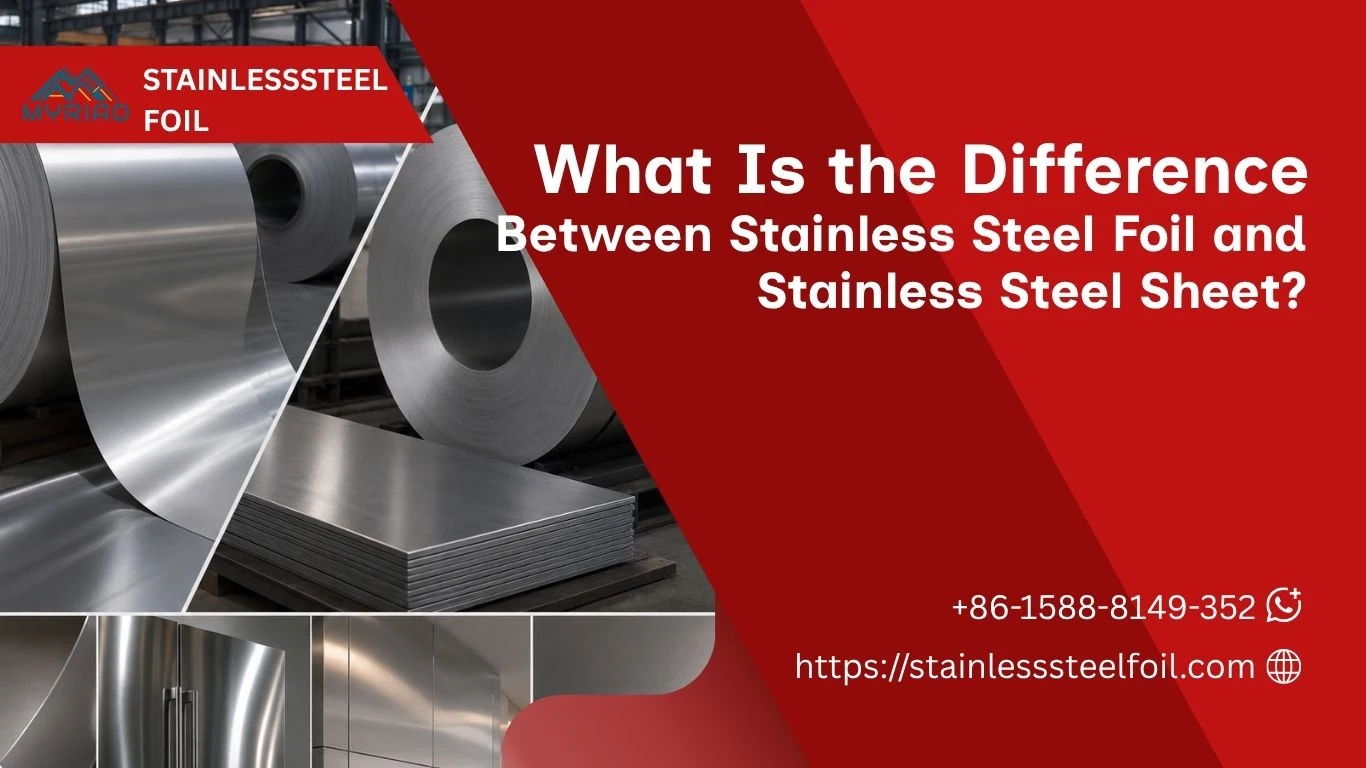
When it comes to stainless steel, two commonly used forms are stainless steel foil and stainless steel sheet. While they share the same corrosion-resistant properties, their thickness and applications set them apart.
Stainless steel foil is extremely thin, usually less than 0.2 mm, and is valued for its flexibility and precision. It is widely used in industries such as aerospace, electronics, and medical devices. For example, 301 stainless steel foil is known for its high strength and spring temper, making it ideal for delicate yet durable components.
On the other hand, stainless steel sheet is thicker, ranging from 0.5 mm to several millimeters. It provides structural strength and is commonly used in construction, automotive, and food-grade equipment. The 316 stainless steel sheet is particularly important in medical environments due to its superior corrosion resistance.
In short, foil is chosen for lightweight, precision applications, while sheet is selected for durability and load-bearing purposes. To explore more about these materials, visit Stainless Steel Foil.
Stainless Steel Foil: Definition and Characteristics
Stainless steel foil is a specialized form of stainless steel that is rolled into extremely thin sheets, typically less than 0.2 mm in thickness. Despite its delicate appearance, stainless steel foil retains the same durability, corrosion resistance, and strength that stainless steel is known for. Its thinness makes it highly flexible, allowing it to be wrapped, layered, or shaped for precision applications.
One of the most notable characteristics of stainless steel foil is its ability to withstand harsh environments while maintaining structural integrity. For example, 316 stainless steel foil is widely used in industries exposed to moisture, chemicals, and high temperatures because of its superior corrosion resistance. Similarly, 301 stainless steel foil offers high strength and spring temper qualities, making it ideal for aerospace and medical applications.
Stainless steel foil is commonly used in electronics for shielding, in medical devices for precision components, and in food packaging for safety and hygiene. To explore more about its unique properties and applications, visit the dedicated stainless steel foil product page at StainlessSteelFoil.com.
Stainless Steel Sheet: Definition and Characteristics
Stainless steel sheet is a thicker, more rigid form of stainless steel compared to foil. It typically ranges from 0.5 mm to several millimeters in thickness, making it suitable for structural and load-bearing applications. Unlike foil, which is prized for flexibility, stainless steel sheet is valued for its durability, strength, and ability to withstand mechanical stress.
One of the defining characteristics of stainless steel sheet is its versatility. It can be cut, welded, and fabricated into a wide variety of shapes, making it indispensable in industries such as construction, automotive, and food processing. For example, 316 stainless steel sheet is widely used in medical equipment because of its superior resistance to corrosion and ability to maintain hygiene standards.
Stainless steel sheet also comes in different grades, with 304 and 316 being the most common. While 304 is often used in kitchen appliances and architectural projects, 316 is preferred in harsher environments where exposure to chemicals or saltwater is common.
To explore more about stainless steel sheet and its applications, visit the Stainless Steel Foil website for detailed product insights and industry resources.
Stainless Steel Foil vs Stainless Steel Sheet: A Comparison
| Property | Stainless Steel Foil | Stainless Steel Sheet |
|---|---|---|
| Thickness | Less than 0.2 mm | 0.5 mm to several mm |
| Flexibility | Highly flexible, can be wrapped | Rigid, structural |
| Applications | Medical, electronics, aerospace | Construction, automotive, industrial |
| Strength | Strong but thin | High strength, load-bearing |
| Cost | Higher for precision grades | Economical for bulk use |
Why Thickness Matters
The thickness of stainless steel determines its usability. Foil is chosen when precision, flexibility, and lightweight properties are required. Sheet is selected when durability, strength, and structural support are essential.
For example, 316 stainless steel foil is perfect for environments exposed to moisture and chemicals, while sheets are better suited for building facades or machinery.
Choosing Between Stainless Steel Foil and Stainless Steel Sheet
Selecting the right material often depends on the specific requirements of your project. Both stainless steel foil and stainless steel sheet share the same corrosion-resistant properties, but their thickness and mechanical characteristics make them suitable for different applications.
If your project requires flexibility, lightweight design, and precision, stainless steel foil is the better choice. For example, 301 stainless steel foil is widely used in aerospace and medical industries where high strength and spring properties are essential. Foil is also ideal for electronics, shielding, and packaging because it can be wrapped or layered without losing durability.
On the other hand, if your application demands structural strength, durability, and load-bearing capacity, stainless steel sheet is the preferred option. The 316 stainless steel sheet is particularly valuable in medical and food-grade environments due to its superior resistance to corrosion and chemicals. Sheets are commonly used in construction, automotive, and heavy machinery where rigidity is critical.
Ultimately, the choice between foil and sheet depends on whether your project prioritizes precision or strength. To explore more details and product options, visit Stainless Steel Foil.
Industry Insights and Statistics
According to industry reports, stainless steel demand continues to grow at a rate of 5–6% annually, driven by construction, medical, and aerospace sectors. Thin foils are increasingly used in electronics and medical devices, while sheets dominate construction and automotive industries.
For more industry updates, visit the Stainless Steel Foil Blog.
Summary
The difference between stainless steel foil and stainless steel sheet lies in thickness, flexibility, and application. Foil is thin, lightweight, and used in precision industries like medical and aerospace.
Sheet is thicker, stronger, and widely used in construction, automotive, and heavy-duty applications. Choosing the right material depends on your project’s requirements, environment, and budget. For more insights, visit Stainless Steel Foil and contact us
FAQs
Q: What is the main difference between stainless steel foil and stainless steel sheet?
A: The primary difference lies in thickness. Stainless steel foil and stainless steel sheet vary in flexibility and applications, with foil being thin and flexible, and sheet being thicker and structural.
Q: Can stainless steel foil replace stainless steel sheet?
A: Not usually. Stainless steel foil and stainless steel sheet serve different purposes. Foil is used for precision and lightweight applications, while sheet is used for strength and durability.
Q: Which is better for medical equipment: foil or sheet?
A: Both are used, but stainless steel sheet (especially 316 grade) is preferred for surgical tools and equipment, while foil is used for delicate components.
Q: Is stainless steel foil more expensive than sheet?
A: Yes, in many cases. Due to its specialized manufacturing process, stainless steel foil and stainless steel sheet differ in cost, with foil often being pricier.
Q: Where can I buy stainless steel foil and sheet?
A: You can explore high-quality products at Stainless Steel Foil or contact their team directly via Contact Us.