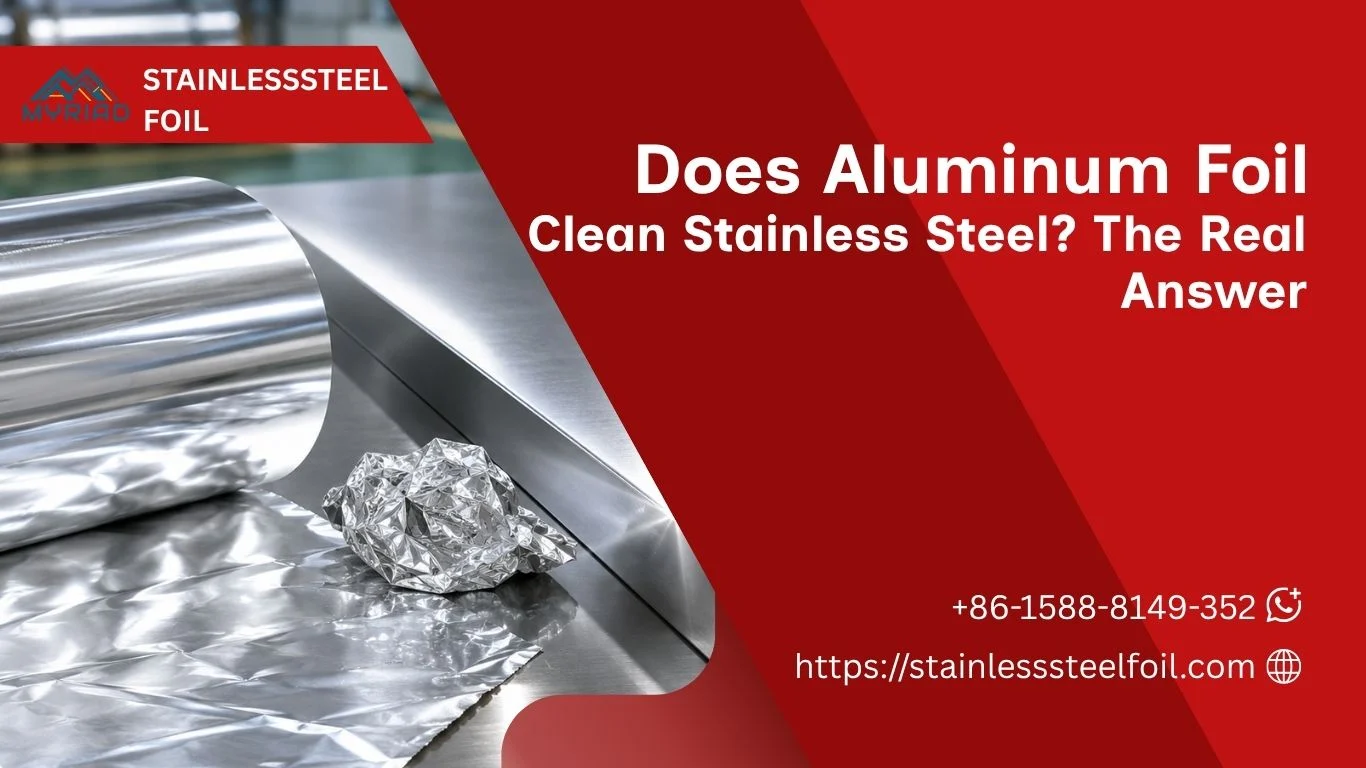
Stainless steel is celebrated for its durability, sleek appearance, and resistance to corrosion, making it a favorite in kitchens, industries, and architectural projects. Yet, one question continues to intrigue homeowners and professionals alike: Does aluminum foil clean stainless steel? The idea of using a simple household item like foil to restore shine or remove rust spots sounds almost too good to be true. In reality, aluminum foil can indeed play a role in cleaning stainless steel, but only under specific conditions.
How this method works—and when it should be avoided—is essential for protecting your appliances and surfaces. In this guide, we’ll explore the science behind aluminum foil cleaning, compare it with other methods, and highlight practical tips for safe use. For more insights into stainless steel’s unique properties, visit Stainless Steel Foil and discover how this versatile material continues to shape modern living.
What Makes Stainless Steel Unique?
Stainless steel stands apart from other metals because of its remarkable combination of strength, durability, and resistance to corrosion. Unlike ordinary steel, stainless steel contains chromium, which forms a thin, invisible oxide layer on the surface. This protective film prevents rust and gives stainless steel its long-lasting shine. The higher the chromium content, the stronger the resistance against oxidation and staining.
Another unique aspect is its versatility. Stainless steel is used in everything from kitchen appliances and medical instruments to aerospace components and architectural structures. Its ability to withstand extreme temperatures and harsh environments makes it indispensable in industries where reliability is critical.
Stainless steel also offers aesthetic appeal. Its sleek, modern look fits seamlessly into contemporary design, while its hygienic properties make it ideal for food preparation and healthcare settings.
To explore specialized applications, visit Stainless Steel Foil Products and discover how this material is engineered for precision industries. For a deeper understanding of its composition and history, check out Stainless Steel on Wikipedia.
How Aluminum Foil Cleans Stainless Steel
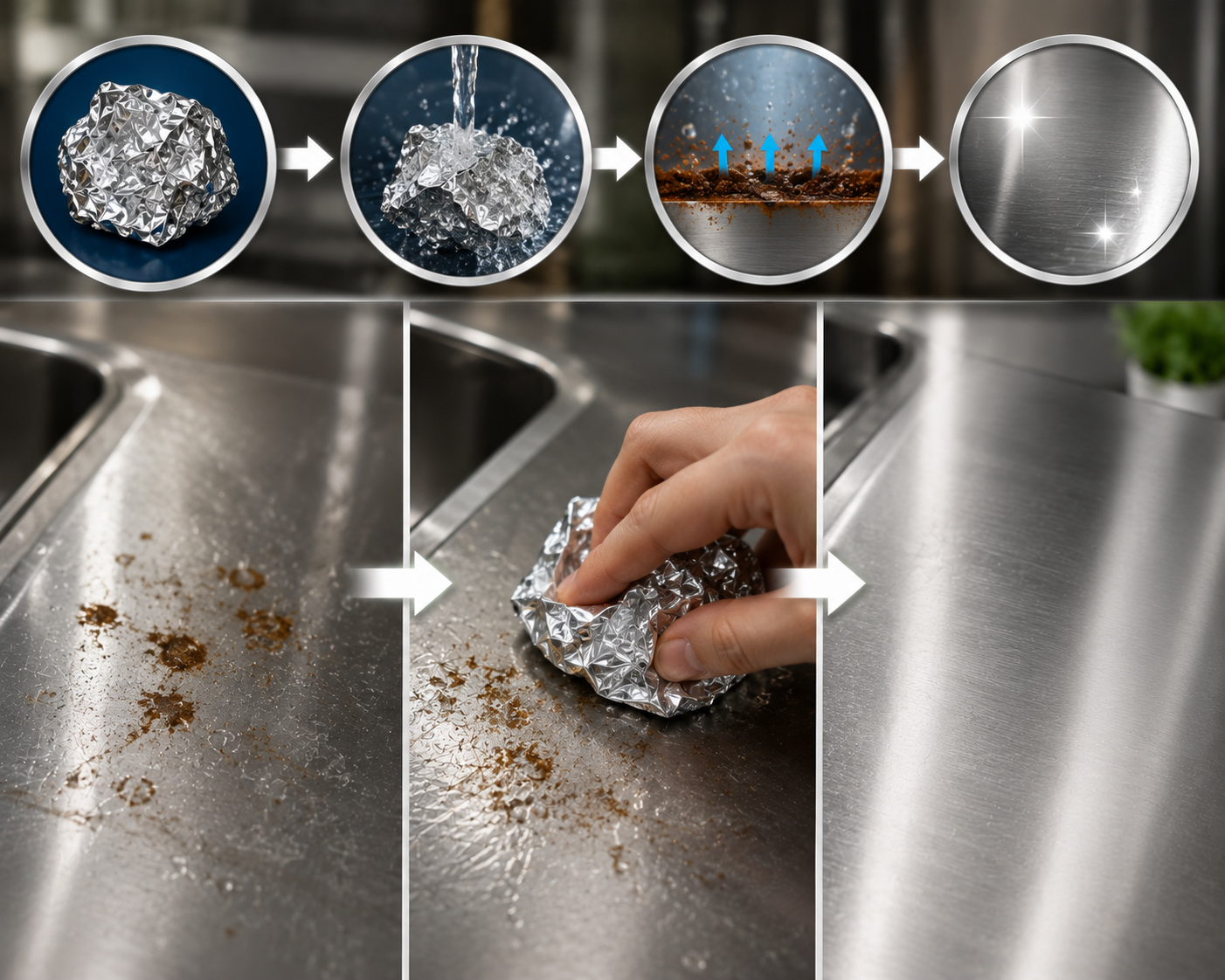
The idea of using aluminum foil to clean stainless steel may sound unusual, but it is rooted in science. When aluminum foil is crumpled and rubbed against stainless steel with a bit of water, a mild electrochemical reaction occurs. Aluminum is softer than stainless steel, so it doesn’t cause deep scratches. Instead, the friction helps loosen rust particles and oxidation, leaving the surface cleaner. This makes aluminum foil particularly effective for removing rust spots from grills, outdoor furniture, and even stainless steel sinks.
Another reason aluminum foil works is its ability to act as a reducing agent. Rust is essentially iron oxide, and aluminum can help break down these particles when combined with moisture. The process is simple, affordable, and surprisingly effective for small problem areas. However, it is not a universal cleaning solution. For polished stainless steel appliances, aluminum foil may dull the finish, so gentler methods are recommended.
For step-by-step instructions, see How to Clean Stainless Steel with Aluminum Foil. To explore more about stainless steel’s unique applications, visit Stainless Steel Foil. This method highlights how everyday materials can be used creatively to maintain stainless steel surfaces.
Comparing Aluminum Foil vs. Other Cleaning Methods
| Method | Effectiveness | Best Use Case | Risk of Damage |
|---|---|---|---|
| Aluminum Foil | Good for rust removal | Grills, outdoor furniture | Low |
| Steel Wool | Very effective | Heavy rust | High (scratches) |
| Baking Soda Paste | Gentle | Everyday cleaning | Very low |
| Commercial Cleaners | Strong | Industrial stains | Moderate |
| Stainless Steel Foil Tape | Preventive | Protecting surfaces | None |
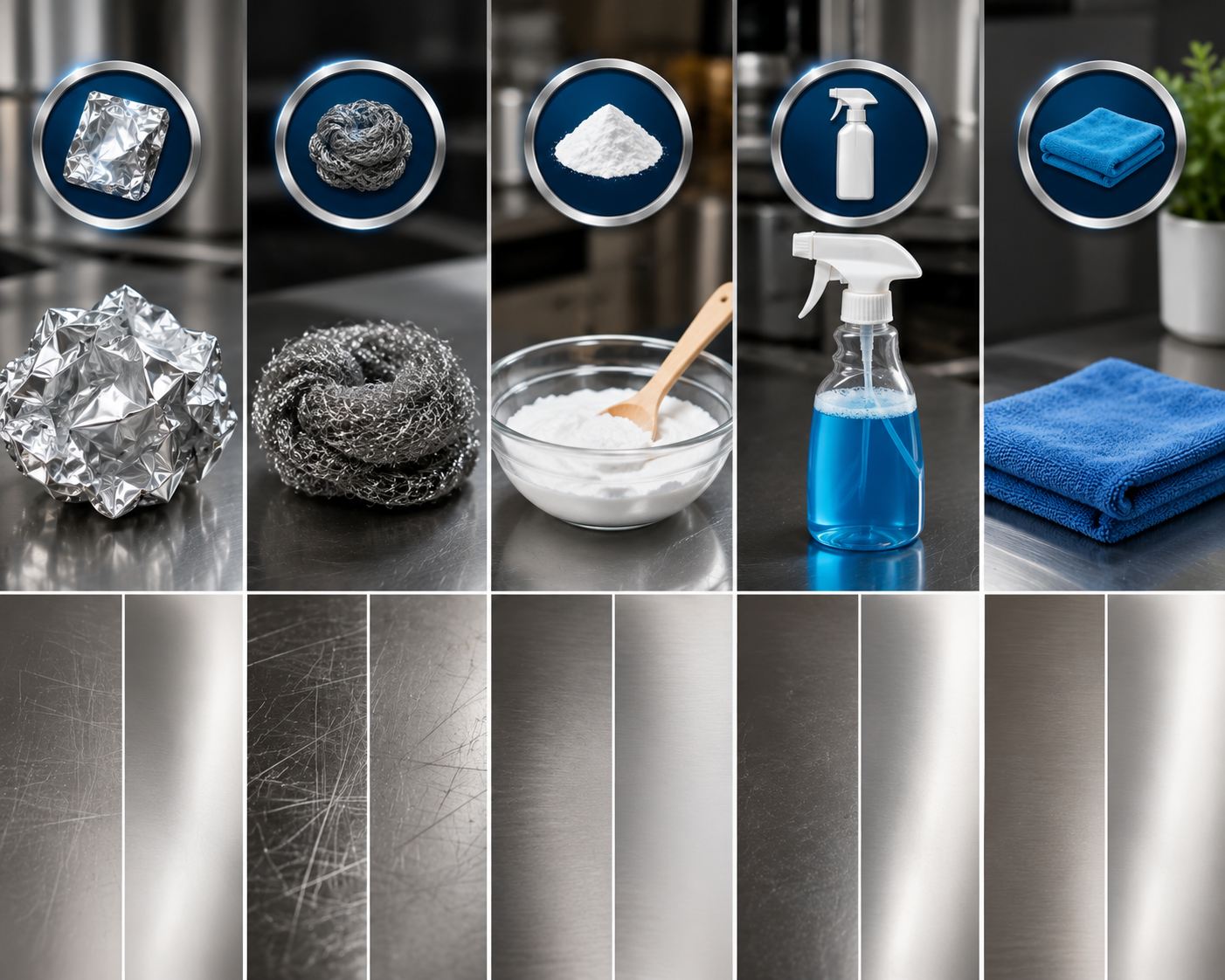
For a deeper comparison, explore stainless steel vs aluminum differences.
Pros and Cons of Using Aluminum Foil
Using aluminum foil to clean stainless steel has gained popularity because it is simple, inexpensive, and surprisingly effective in certain situations. However, like any cleaning method, it comes with both advantages and drawbacks that should be considered before use.
Pros: One of the biggest benefits is affordability. Aluminum foil is widely available in households, making it an accessible cleaning tool. It is particularly effective at removing rust and oxidation from stainless steel surfaces such as grills, sinks, and outdoor furniture. Unlike steel wool, which can leave deep scratches, aluminum foil is gentler and less likely to damage the protective chromium oxide layer that gives stainless steel its corrosion resistance. This makes it a safer option for tackling stubborn rust spots without compromising durability.
Cons: Despite its strengths, aluminum foil is not suitable for polished stainless steel surfaces. Scrubbing can dull the finish and reduce the aesthetic appeal of appliances. It also has limited effectiveness against grease, fingerprints, or food stains, which require detergents or specialized cleaners. Additionally, aluminum foil works best when combined with water or mild detergent, meaning it is not a standalone solution.
For practical cleaning tips, explore How to Clean Stainless Steel with Aluminum Foil and discover safer alternatives at Stainless Steel Foil. This balance of pros and cons highlights when aluminum foil is useful—and when it’s better to choose other methods.
Industrial Applications
Stainless steel plays a vital role in modern industry because of its strength, corrosion resistance, and versatility. In aerospace, stainless steel foil is used for lightweight yet durable components that withstand extreme temperatures. In electronics, thin stainless steel sheets provide shielding and precision parts. Medical industries rely on stainless steel for surgical instruments and implants due to its hygienic properties and biocompatibility.
In construction, stainless steel is chosen for architectural cladding and structural reinforcements, offering both durability and aesthetic appeal. Automotive manufacturers also use stainless steel for exhaust systems and safety-critical parts. These diverse applications highlight why stainless steel remains indispensable across sectors. For specialized industrial uses, explore Steel Foil and Stainless Steel Foil Products. To compare materials, see Stainless Steel vs Aluminum: Key Differences.
Summary
So, does aluminum foil clean stainless steel? The answer is yes, but with limitations. Aluminum foil is an affordable and accessible method for removing rust and oxidation from stainless steel grills, sinks, and outdoor furniture. However, it is not ideal for polished surfaces or grease removal, where specialized cleaners are more effective. Understanding when to use aluminum foil ensures you protect the durability and shine of stainless steel.
For more detailed insights, explore our Blog where we cover practical cleaning methods and industrial applications. If you’re interested in high-quality stainless steel materials, visit our Products Page to see how stainless steel foil is engineered for precision use. For personalized guidance or inquiries, reach out through our Contact Us page.
FAQs
Does aluminum foil clean stainless steel effectively?
Yes, aluminum foil can clean stainless steel by removing rust and oxidation. When crumpled and rubbed with water, it creates mild friction that loosens rust particles without scratching the surface. This makes it especially useful for grills, sinks, and outdoor furniture. For detailed instructions, see How to Clean Stainless Steel with Aluminum Foil.
Will aluminum foil scratch stainless steel surfaces?
Generally, no. Aluminum foil is softer than stainless steel, so it doesn’t cause deep scratches. However, polished or mirror-finish stainless steel may lose its shine if scrubbed too aggressively. For delicate appliances, microfiber cloths or specialized cleaners are safer. Learn more about stainless steel’s protective properties on Stainless Steel Foil.
Can aluminum foil clean stainless steel appliances like refrigerators?
Aluminum foil is effective for rust spots but not ideal for grease or fingerprints on appliances. Fingerprints require gentle cleaners or vinegar-based solutions. For broader cleaning tips, explore our Blog where we cover safe methods for maintaining stainless steel appliances.
Is aluminum foil better than steel wool for cleaning stainless steel?
Yes, aluminum foil is gentler compared to steel wool, which can damage the chromium oxide layer that protects stainless steel from corrosion. Steel wool may leave scratches that compromise durability. For industrial-grade cleaning and maintenance, check out Stainless Steel Foil Products designed for precision and safety.