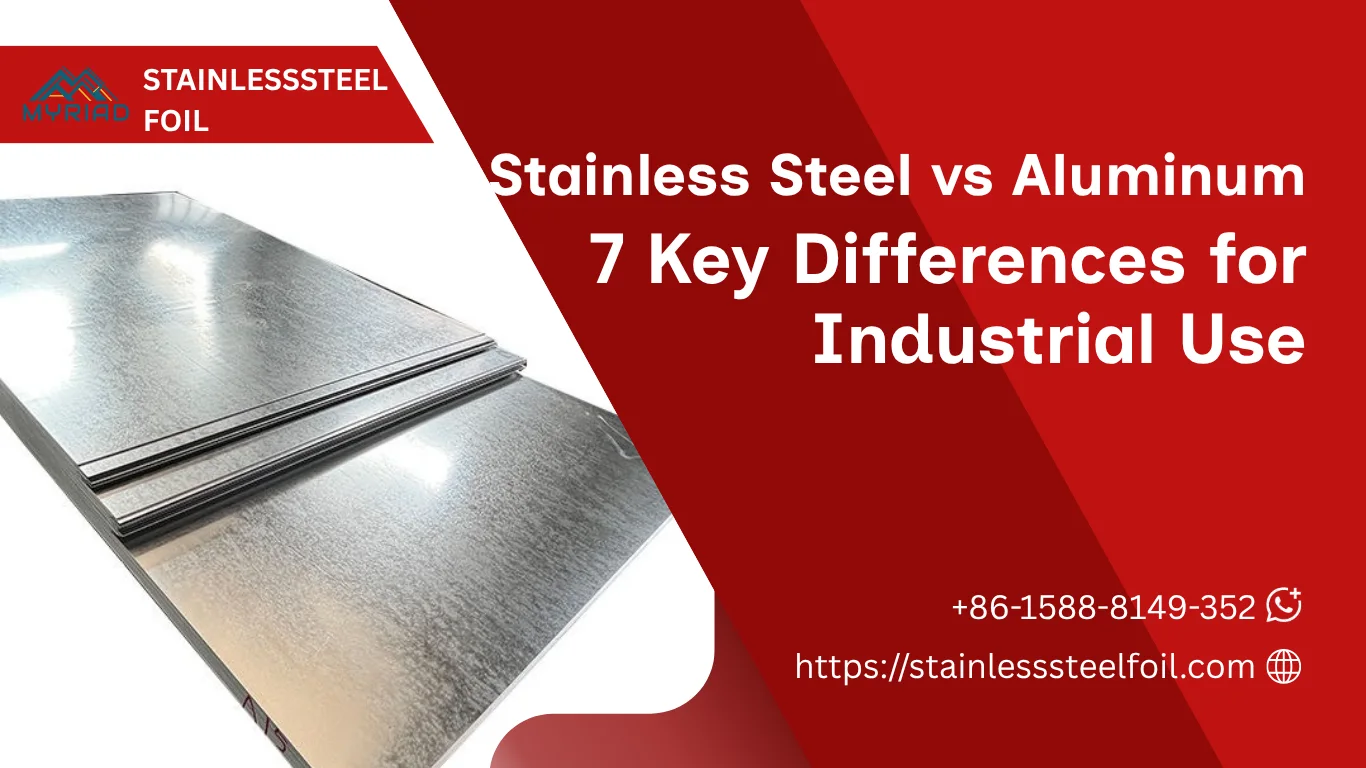
In industrial manufacturing, selecting the right metal can make or break operational efficiency, product durability, and long-term costs. The debate between stainless steel and aluminum dominates procurement decisions across sectors such as aerospace, food processing, chemical handling, and heavy machinery. Both materials offer unique advantages, but their performance under real-world conditions differs, demanding careful evaluation.
This metal comparison industrial guide breaks down stainless steel vs aluminum across seven critical factors. Whether you’re engineering pressure vessels, fabricating structural components, or sourcing corrosion-resistant foils, understanding these distinctions ensures optimal material selection for high-stakes applications. Let’s dive into the specifics.
1. Stainless Steel vs Aluminum Strength
When it comes to stainless steel vs aluminum strength, stainless steel pulls ahead in demanding industrial environments. Stainless steel alloys, such as 304 or 316 grades, boast tensile strengths ranging from 500-1000 MPa, depending on the variant. This makes them ideal for structural beams, pipelines, and heavy-duty frames where failure isn’t an option.
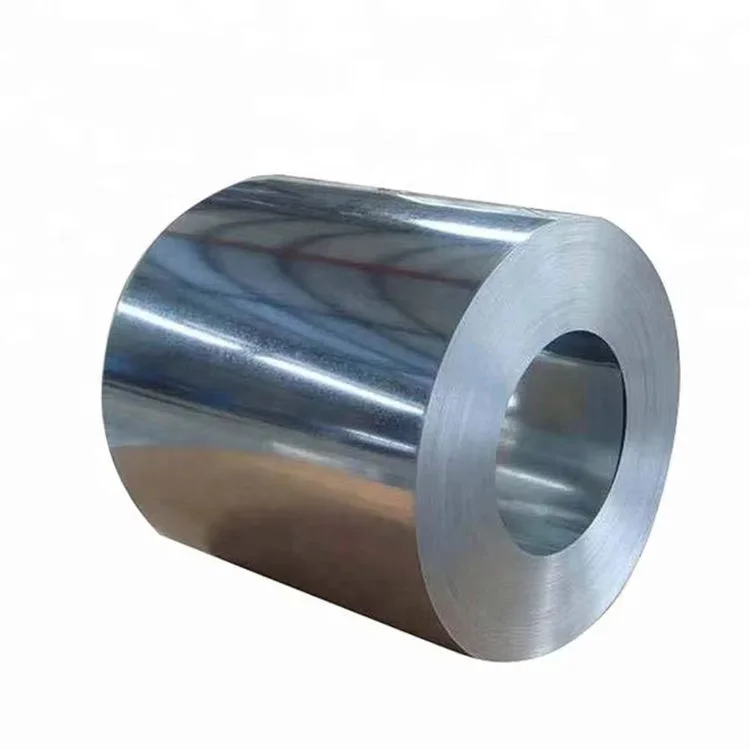
Aluminum, even in high-strength alloys like 7075, tops out at around 500-570 MPa. While sufficient for lighter loads, it deforms under extreme stress—think hydraulic presses or conveyor systems under constant vibration. In a metal comparison industrial context, stainless steel vs aluminum strength reveals stainless as the go-to for applications exceeding 200 MPa, such as offshore platforms or chemical reactors.
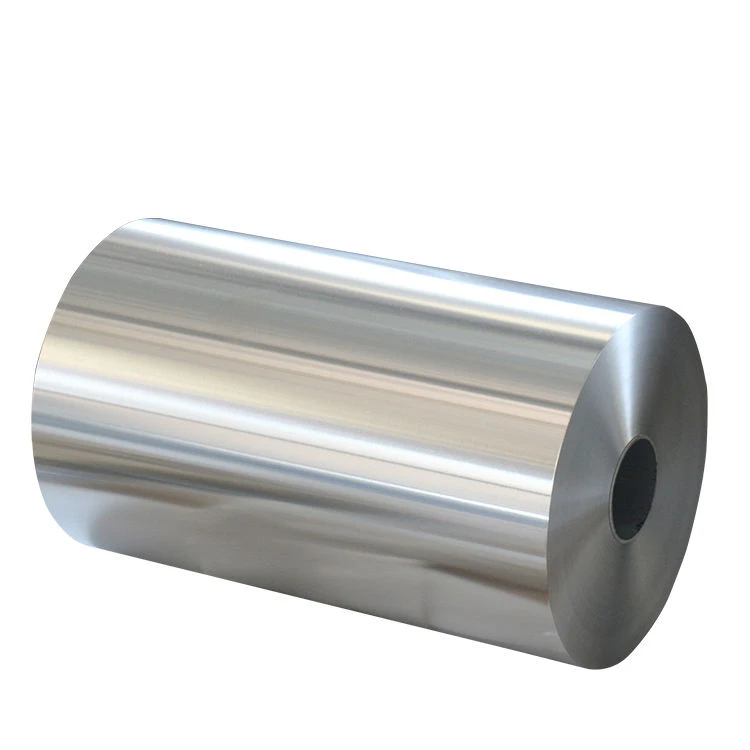
Consider a real-world example: In food processing plants, stainless steel conveyor frames withstand repeated impacts from heavy crates, while aluminum might require frequent reinforcements. For precision needs, thin stainless steel foils maintain integrity in high-pressure laminates, outperforming aluminum equivalents that buckle under load.
2. Stainless Steel vs Aluminum Weight
Stainless steel vs aluminum weight is a pivotal factor for transport, assembly, and fuel efficiency in industrial designs. Aluminum shines here with a density of just 2.7 g/cm³—about one-third that of stainless steel’s 7.8-8.0 g/cm³. This lightness reduces shipping costs and eases installation in mobile equipment like trucks or aircraft components.
However, in fixed industrial installations, stainless steel’s heft translates to superior stability. Heavier stainless structures resist wind shear in outdoor silos or seismic activity in manufacturing floors. The stainless steel vs aluminum weight trade-off means aluminum suits aerospace panels or portable tooling, while stainless dominates foundational elements like storage tanks.
Procurement teams often calculate total lifecycle weight: Aluminum’s savings diminish if frequent replacements are needed due to wear. In chemical processing, stainless steel vessels provide unwavering stability without the flex that lighter aluminum might introduce under thermal expansion.
3. Stainless Steel vs Aluminum Cost
Budget-conscious engineers scrutinize stainless steel vs aluminum cost from raw material to end-of-life. Aluminum ore (bauxite) is abundant, driving base prices to $2,000-2,500 per ton, versus stainless steel’s $3,000-5,000 per ton for common grades. Fabrication costs favor aluminum too—it’s 30-50% easier to machine and weld.
Yet, stainless steel’s longevity flips the equation in industrial settings. Stainless steel vs aluminum cost over 10-20 years favors stainless, as aluminum demands recoating or replacement every 5-7 years in corrosive environments. A metal comparison industrial analysis shows stainless payback in under three years for marine or pharmaceutical applications.
For instance, a brewery opting for stainless fermenters saves on downtime versus aluminum, which corrodes from acidic wort. Specialty suppliers highlight stainless steel foil rolls at competitive rates for custom gaskets, offering better value than aluminum films that degrade faster.
4. Stainless Steel vs Aluminum Corrosion
No industrial metal comparison industrial overlooks stainless steel vs aluminum corrosion. Stainless steel’s chromium content (minimum 10.5%) forms a passive oxide layer, granting “corrosion-proof” status in moist, saline, or acidic settings. Grades like 316L excel in chloride-rich environments, such as desalination plants or oil refineries.
Aluminum relies on a natural oxide skin, effective in neutral atmospheres but vulnerable to galvanic corrosion when paired with other metals. In alkaline or acidic exposures—like battery manufacturing—aluminum pits rapidly. Stainless steel vs aluminum corrosion data from ASTM tests shows stainless enduring 1,000+ hours in salt spray, while aluminum fails at 200-500 hours without anodizing.
Industrial buyers in food and pharma prioritize stainless for hygienic compliance (e.g., FDA standards), as aluminum’s corrosion risks contamination. Thin-gauge stainless foils resist pitting in flexible packaging machinery, a clear win over aluminum prone to stress cracking.
5. Stainless Steel vs Aluminum Temperature Tolerance
Extreme temperatures test material limits, making stainless steel vs aluminum thermal properties crucial. Stainless steel handles -200°C to 800°C+ seamlessly; austenitic grades like 304 retain ductility at cryogenic levels for LNG storage, while martensitic variants endure furnace linings up to 1,200°C.
Aluminum softens above 200°C (melting at 660°C) and loses strength below -50°C due to brittleness. This caps its use in high-heat extrusion dies or low-temp reactors. In a detailed stainless steel vs aluminum analysis for industrial ovens, stainless maintains 90% strength at 500°C, versus aluminum’s 50% drop.
Automotive exhaust systems exemplify this: Stainless manifolds survive 900°C cycles, while aluminum prototypes warp. For cryogenic pumps, stainless foils seal without cracking, underscoring their versatility.
6. Stainless Steel vs Aluminum Machinability and Formability
Ease of processing influences production scalability. Stainless steel vs aluminum machinability favors aluminum—its softness allows high-speed CNC milling with minimal tool wear, cutting cycle times by 40%. Formability is stellar too; aluminum bends into complex automotive panels without cracking.
Stainless steel demands slower feeds and robust tooling due to work-hardening, but its formability shines in deep draws for tanks or foil rolling. Modern alloys like 304L balance this for progressive stamping. In metal comparison industrial workflows, aluminum accelerates prototyping, but stainless steel ensures precision in high-volume runs like pharmaceutical hoppers.
Suppliers note stainless steel foil’s superior roll-forming for ultra-thin gauges (0.01mm), enabling intricate seals aluminum can’t match without tearing.
7. Stainless Steel vs Aluminum Sustainability and Recyclability
Sustainability shapes modern procurement. Both metals are infinitely recyclable—aluminum at 95% energy efficiency, stainless at 80-90%. However, stainless steel vs aluminum lifecycle emissions tilt toward stainless in durable applications, as fewer replacements mean less mining.
Aluminum production guzzles energy (13-15 kWh/kg via electrolysis), while stainless uses recycled scrap efficiently. In green industrial initiatives, stainless’s 50-100 year lifespan reduces embodied carbon. EU regulations favor stainless steel for long-life infrastructure.
A solar panel frame study shows stainless outlasting aluminum by 2x, cutting total emissions 30%. Recycled stainless foils support circular economies in electronics manufacturing.
Stainless Steel vs Aluminum: Choosing the Right Metal for Your Operations
The stainless steel vs aluminum verdict hinges on your industrial priorities. Stainless steel excels in strength, corrosion resistance, and thermal extremes—perfect for corrosive, high-load environments like processing plants or marine gear. Aluminum wins on weight, cost, and machinability for lightweight, high-volume applications like transport or consumer goods.
Stainless Steel vs Aluminum: Industrial Application Decision Guide
Based on the seven key differences outlined above, here is a practical framework for selecting between stainless steel and aluminum across common industrial application categories.
Choose Stainless Steel When:
- Operating in corrosive, marine, or chemically aggressive environments
- High structural strength and pressure ratings are required
- Service temperatures exceed 200°C
- Hygienic surface finish is required (food, pharma, medical)
- Long service life with minimal maintenance is a priority
- Compliance with industry standards demands specific material grades (e.g., 316L for pharmaceutical, ASTM A240 for pressure vessels)
Choose Aluminum When:
- Weight minimization is a critical design parameter
- Operating environment is mild and corrosion risk is low
- Rapid heat dissipation is the primary thermal function
- High-volume precision machining is required and cycle time drives cost
- Upfront capital cost is constrained and lifecycle environment is favorable
- Application is in transportation, aerospace, or portable equipment sectors
Final Summary
Selecting between stainless steel and aluminum is rarely about universal superiority; rather, it is about identifying the material that aligns most effectively with your technical requirements, environmental exposure, and financial objectives.
The choice typically bifurcates based on performance priorities. Stainless steel remains the industry standard for high-stress environments where extreme strength, heat resistance, and long-term corrosion protection are non-negotiable. Conversely, aluminum is the strategic choice for projects prioritizing weight reduction, thermal transfer, and efficient machining.
For engineering and procurement professionals, the most robust strategy is to avoid material bias. Instead, conduct a focused evaluation of each component based on the seven key factors outlined above to ensure the material matches the specific operational demand.
When your specifications call for high-precision stainless steel—particularly foils, strips, or coils in 300-series grades like 304 or 316L—partnering with a manufacturer that specializes in exacting tolerances and rigorous alloy compliance is critical to ensuring long-term project success.
FAQs
Is stainless steel stronger than aluminum?
Yes, in terms of absolute tensile strength and hardness, Stainless Steel vs Aluminum comparisons usually favor steel. Stainless steel is much denser and can withstand significantly higher loads and impacts without deforming. However, aluminum has a superior strength-to-weight ratio, meaning it provides substantial strength while remaining incredibly light.
Is aluminum cheaper than stainless steel?
In many cases, the upfront cost of aluminum raw material is lower, and because it is easier to machine and weld, fabrication costs are often reduced. However, when evaluating Stainless Steel vs Aluminum for long-term industrial projects, stainless steel can be more cost-effective over time due to its durability and lower maintenance requirements, leading to a better total cost of ownership.
Can I weld aluminum to stainless steel?
Welding these two metals together is extremely difficult due to their vastly different melting points and thermal conductivity rates. In most industrial settings, joining Stainless Steel vs Aluminum is done using mechanical fasteners (like bolts or rivets) or specialized bimetallic transitions to prevent galvanic corrosion and structural failure.
Which metal is more sustainable for industrial manufacturing?
Both metals are highly sustainable and 100% recyclable. Aluminum recycling is exceptionally energy-efficient, requiring only 5% of the energy needed to produce primary aluminum. Stainless steel is also prized for its “infinite” lifecycle; most new stainless steel produced today consists of approximately 60% to 80% recycled content.
Does aluminum or stainless steel conduct electricity better?
Aluminum is a significantly better conductor of electricity than stainless steel. It is frequently used in high-voltage power lines and electrical enclosures because of its conductivity and light weight. Stainless steel is a poor conductor and is often used when electrical resistance or non-magnetic properties are required.