
For procurement managers and engineers, selecting between Grade 304 and Grade 316 stainless steel is a high-stakes decision. Choosing the correct alloy ensures decades of reliability, while a mismatch can lead to rapid corrosion, expensive recalls, and regulatory failure.
This guide provides a definitive technical comparison of these two grades, analyzing their chemistry, performance, and cost-effectiveness to ensure your team makes a data-driven, defensible material choice.
Understanding the Stainless Steel Grade Comparison: 304 vs 316
Both Grade 304 and Grade 316 belong to the austenitic family of stainless steels. They share a face-centered cubic crystal structure that delivers excellent toughness, ductility, and weldability across a wide temperature range. However, a single alloying difference the presence of molybdenum in Grade 316 creates a meaningful performance gap in demanding environments.
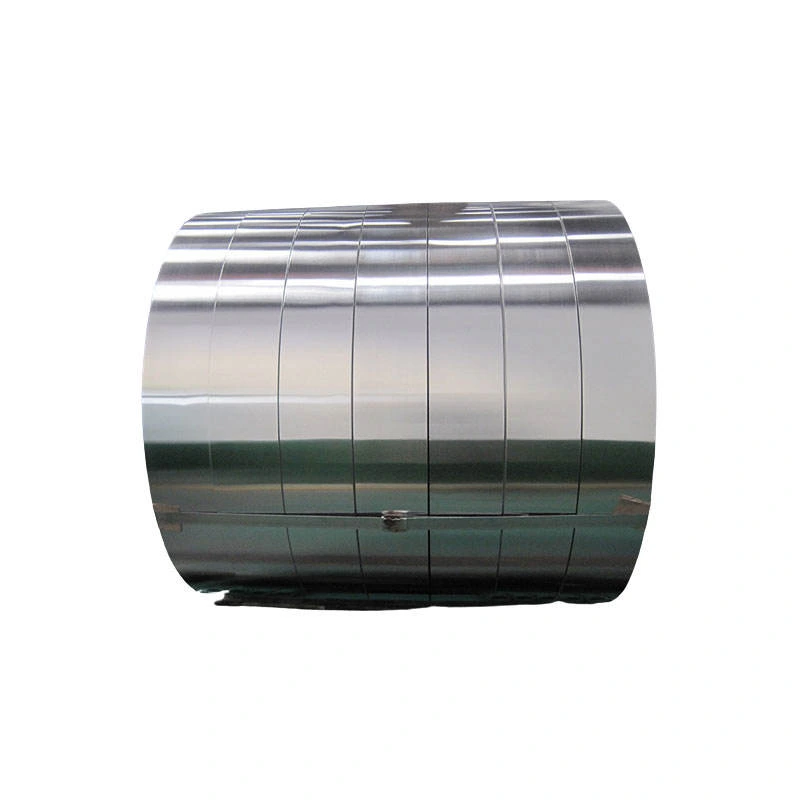
Before diving into specific properties, here is a high-level orientation:
Grade 304: The workhorse. Excellent all-around corrosion resistance, outstanding formability, and the most cost-effective option for general industrial and commercial use.
Grade 316: The specialist. Adds molybdenum for superior resistance to chlorides and aggressive chemicals, making it the preferred choice for marine, medical, and process-intensive industries.
Chemical Composition: Where 304 vs 316 Stainless Steel Diverges
Grade 304 Stainless Steel Properties
Grade 304 is defined by its balanced chromium-nickel composition:
- Chromium: 18.0–20.0% (forms the passive oxide layer that resists corrosion)
- Nickel: 8.0–10.5% (stabilizes the austenitic structure and enhances ductility)
- Carbon: ≤0.08%
- Manganese: ≤2.0%
- Silicon: ≤1.0%
- Phosphorus: ≤0.045%, Sulfur: ≤0.030%
This composition is essentially the industry standard for non-aggressive corrosive environments. It is widely available, easy to fabricate, and performs admirably in the vast majority of industrial settings.
Grade 316 Stainless Steel Properties
Grade 316 builds on the 304 foundation with two key additions:
- Chromium: 16.0–18.0%
- Nickel: 10.0–14.0% (increased for structural stability)
- Molybdenum: 2.0–3.0% (the critical differentiator)
- Carbon: ≤0.08%
- Manganese: ≤2.0%
- Silicon: ≤1.0%
The molybdenum addition is what elevates 316 from a general-purpose alloy into a high-performance engineering material. Molybdenum reinforces the passive film and dramatically improves resistance to pitting and crevice corrosion initiated by chloride ions — the mechanism responsible for the majority of stainless steel failures in real-world industrial environments.
304 vs 316 Stainless Steel: Full Comparison Table
The table below summarizes the most decision-relevant properties for engineering teams:
| Property | Grade 304 | Grade 316 |
| Chromium Content | 18–20% | 16–18% |
| Nickel Content | 8–10.5% | 10–14% |
| Molybdenum Content | None | 2–3% |
| Corrosion Resistance | Good (standard environments) | Excellent (incl. chlorides) |
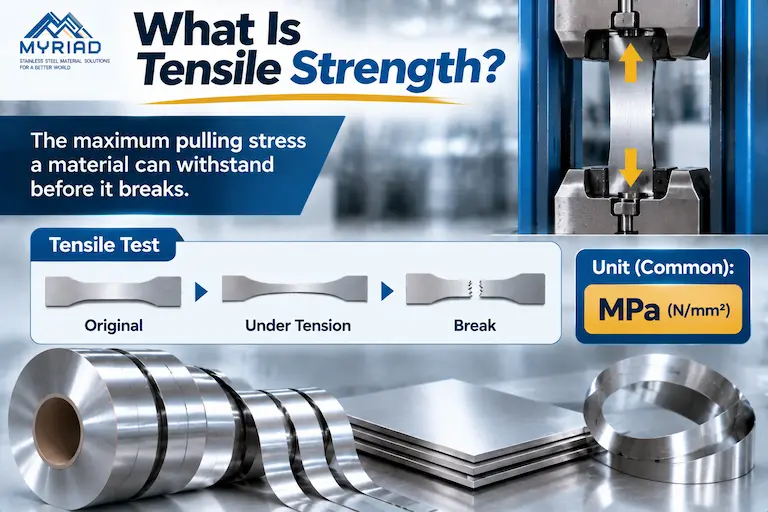
| Tensile Strength (annealed) | ~515 MPa | ~515 MPa |
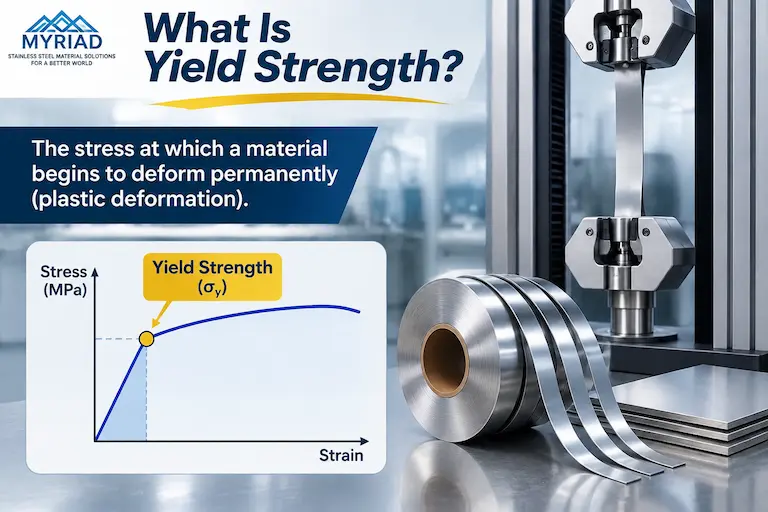
| Yield Strength (annealed) | ~205 MPa | ~205 MPa |
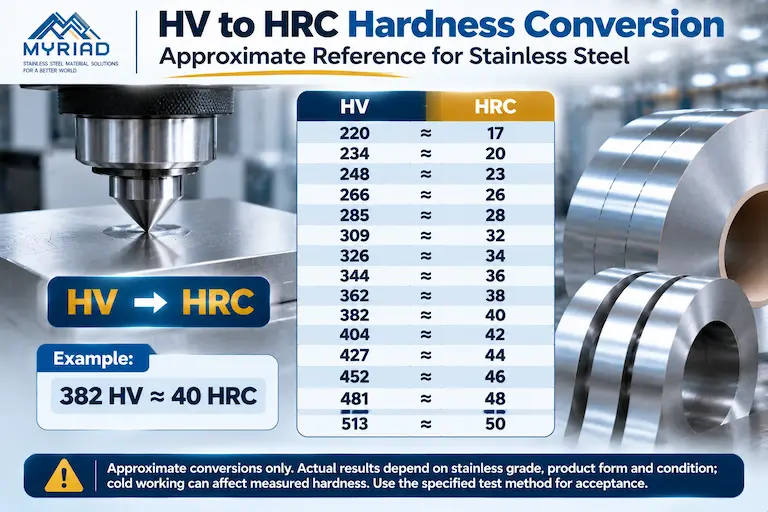
| Hardness (Rockwell B) | ~92 | ~95 |
| Elevated-temperature suitability | Evaluate oxidation, exposure and allowable stress separately for the exact product. | Evaluate oxidation, exposure and allowable stress separately for the exact product. |
| Weldability | Excellent | Excellent |
| Formability | Excellent | Very Good |
| Relative Cost | Lower | Often higher; verify with a comparable quote |
| Typical Applications | Food processing, kitchenware, and architecture | Marine, medical, pharma, chemical |
304 vs 316 Corrosion Resistance: The Critical Differentiator
Corrosion resistance is typically the deciding factor in a 304 vs 316 stainless steel evaluation. Understanding the mechanisms involved helps engineers specify correctly rather than defaulting to a more expensive grade out of caution.
How Stainless Steel Resists Corrosion
Both grades resist corrosion through the same fundamental mechanism: a thin, self-healing chromium oxide passive film that forms spontaneously on the surface when exposed to oxygen. If the film is scratched or damaged, it re-forms automatically, provided sufficient oxygen is present.
Where Grade 304 Performs Well
Grade 304 provides reliable corrosion protection in:
- Freshwater and mild aqueous environments
- Food processing facilities with standard CIP (Clean-In-Place) cleaning cycles
- Indoor architectural and structural applications
- Atmospheric exposure in rural and urban (non-coastal) environments
- Pharmaceutical environments with low chloride cleaning protocols
- Chemical processing with dilute, non-halide acids
Where Grade 304 Falls Short and 316 Excels
The passive film on Grade 304 is vulnerable to chloride attack. When chloride concentrations exceed threshold levels, they penetrate the oxide layer and initiate pitting corrosion localized, deep pits that can lead to structural perforation even while surrounding surfaces appear intact.
Grade 316 with its molybdenum stainless steel composition closes this vulnerability. Molybdenum stabilizes the passive film in the presence of chlorides and reduces the rate of pit initiation. This makes Grade 316 the preferred specification for:
- Marine and coastal environments (seawater, salt spray, tidal zones)
- Offshore oil and gas equipment
- Medical devices requiring repeated sterilization with saline or chloride-based solutions
- Pharmaceutical manufacturing with stringent cleaning agents
- Chemical processing involving chlorides, sulfuric acid, or phosphoric acid
- Swimming pool and water treatment infrastructure
Food processing with high-salinity products (brine, pickled goods, seafood)
Mechanical Properties: How 304 and 316 Compare Under Load
For most structural and precision applications, Grades 304 and 316 are mechanically equivalent. This is an important practical point: the decision between the two grades is rarely driven by mechanical performance differences, but by corrosion and cost considerations.
Tensile and Yield Strength
In the annealed condition, both grades exhibit very similar mechanical performance. Tensile strength for both grades in the annealed condition is approximately 515 MPa, while yield strength is approximately 205 MPa. Elongation at break is around 40–50% for both grades. This near-identical mechanical profile means engineers can substitute between grades without redesigning load-bearing geometry.
Hardness
Grade 316 typically exhibits marginally higher hardness due to its molybdenum content — approximately 95 HRB vs 92 HRB for Grade 304. This difference is rarely significant in practice.
Work Hardening
Both grades work harden significantly during cold rolling and forming. Specify the required temper, hardness range and test method for your forming operation.
Temperature Performance
The maximum service temperature is not a single alloy number. Oxidation resistance, creep and allowable stress have different limits. Assess the applicable design code, product form, condition, load, atmosphere and exposure duration. Cryogenic use likewise requires verification for the finished part and service.
Fabrication and Formability: 304 vs 316 in Production
304 Stainless Steel Properties in Fabrication
Grade 304 is widely regarded as the most formable of the common austenitic stainless steels. Its combination of high ductility and manageable work hardening rate makes it the default choice for:
- Deep drawing and complex stamping operations
- Precision slitting to narrow widths
- Roll forming and tube fabrication
- Thin foil, where the required grade, temper and dimensions are confirmed
316 Stainless Steel Properties in Fabrication
Grade 316 is somewhat less formable than 304 due to its higher nickel content and the presence of molybdenum. However, it remains highly processable and is routinely used in:
- Medical device manufacturing requires tight tolerances
- Chemical processing equipment with complex geometries
- Precision components requiring both corrosion resistance and dimensional accuracy
For foil and strip, agree on the thickness tolerance for the specific grade, thickness, width and temper rather than assuming a universal tolerance.
Welding
Both grades are excellent candidates for welding using standard TIG, MIG, and resistance welding processes. For Grade 316, it is best practice to use 316L filler material to minimize carbon precipitation in the heat-affected zone (HAZ) and prevent sensitization-induced corrosion.
Cost Analysis: Pricing 304 vs 316 Stainless Steel
Cost is rarely the only consideration in a stainless steel grade comparison, but it is always a relevant one. Grade 316 can cost more than Grade 304. Compare current quotes for the same product form, dimensions, temper, quantity and documentation.
Total Cost of Ownership Perspective
For B2B procurement teams, the relevant cost is not the raw material price per kilogram but the total cost of ownership (TCO) across the component’s service life. The following considerations should inform your analysis:
- Maintenance costs: In chloride-exposed environments, Grade 304 components require more frequent inspection, maintenance, and replacement than Grade 316, eroding the initial cost advantage.
- Failure costs: Premature corrosion failure in critical systems — medical devices, offshore equipment, pharmaceutical processing lines — carries costs far exceeding any material savings.
- Regulatory exposure: In regulated industries, using a material that fails to meet environmental or safety standards can trigger recalls, fines, and reputational damage.
Application Guide: When to Specify 304 vs 316 Stainless Steel
Choose Grade 304 When:
- Your operating environment has low chloride exposure
- The application involves standard food processing, pharmaceutical, or beverage service
- You need maximum formability for complex drawn or stamped geometries
- Architectural or structural components are exposed to indoor or non-coastal outdoor environments
- Cost optimization is critical and corrosive conditions are mild
- You are producing high volumes of consumer goods, kitchenware, or hardware
Choose Grade 316 When:
- The application is marine, coastal, or involves direct seawater contact
- Your process involves chloride-bearing chemicals, brines, or saline solutions
- You are manufacturing medical implants, surgical tools, or devices subject to repeated sterilization
- Chemical processing involves sulfuric, phosphoric, or acetic acids
- The governing product specification and validated service conditions call for Grade 316
- Long service life with minimal maintenance is a design objective
- The application involves offshore energy, desalination, or wastewater treatment
Grade Variants: 304L, 316L, and Other Considerations
In addition to standard 304 and 316, procurement teams should be aware of the L-grade variants:
- 304L: Low-carbon variant (≤0.03% C). Used where welding is required and sensitization must be avoided. Mechanical properties are marginally lower, but corrosion performance in welded assemblies is superior.
- 316L: A low-carbon variant often specified for welded assemblies where reduced sensitization is important. Confirm product form, thickness and suitability for the application.
- 316Ti (1.4571): Titanium-stabilized variant for high-temperature applications. Confirm the applicable standard and product-form availability with your supplier.
Summary
The 304 vs 316 stainless steel decision reduces to a single governing question: what is the chloride exposure profile of your application?
In low-chloride environments, Grade 304 delivers outstanding performance at a lower cost. Its excellent formability, weldability, and availability make it the logical default for the majority of industrial, food processing, architectural, and general manufacturing applications.
In chloride-exposed, marine, medical, or aggressive chemical environments, the molybdenum stainless steel advantage of Grade 316 justifies its premium. The investment in superior corrosion resistance typically pays back many times over in reduced maintenance, extended service life, and avoided failure costs.
Contact Myriad with your required grade, product form, thickness, finished width, temper and application. Confirm availability, material documentation and any sample requirements for your enquiry.
FAQs
What is the main difference between 304 and 316 stainless steel?
The primary difference is the chemical composition. While both contain Chromium and Nickel, Grade 316 contains 2–3% Molybdenum. This specific addition significantly increases 316’s resistance to corrosion, particularly against chlorides (like salt) and industrial solvents.
Is 316 stainless steel always better than 304?
Not necessarily. While 316 is more corrosion-resistant, it is also more expensive. If your application is for indoor furniture, kitchen appliances, or dry environments, Grade 304 offers more than enough protection at a lower price point. Use 316 only when the environment demands it.
Which grade is better for marine environments?
Grade 316 is the industry standard for marine applications. Grade 304 is susceptible to “pitting” when exposed to salt spray, which leads to localized holes and structural compromise. 316, often called “Marine Grade,” resists this chloride-induced decay.
Are both 304 and 316 stainless steel magnetic?
Generally, no. Both belong to the austenitic family, which is naturally non-magnetic. However, both can become slightly magnetic after cold working (such as bending, drawing, or forming into foil). If absolute zero magnetism is required, 316 tends to remain slightly more stable after processing than 304.
Why is 316 stainless steel more expensive?
Molybdenum and nickel content can contribute to a price difference. There is no fixed premium; compare current supplier quotes on the same specification.