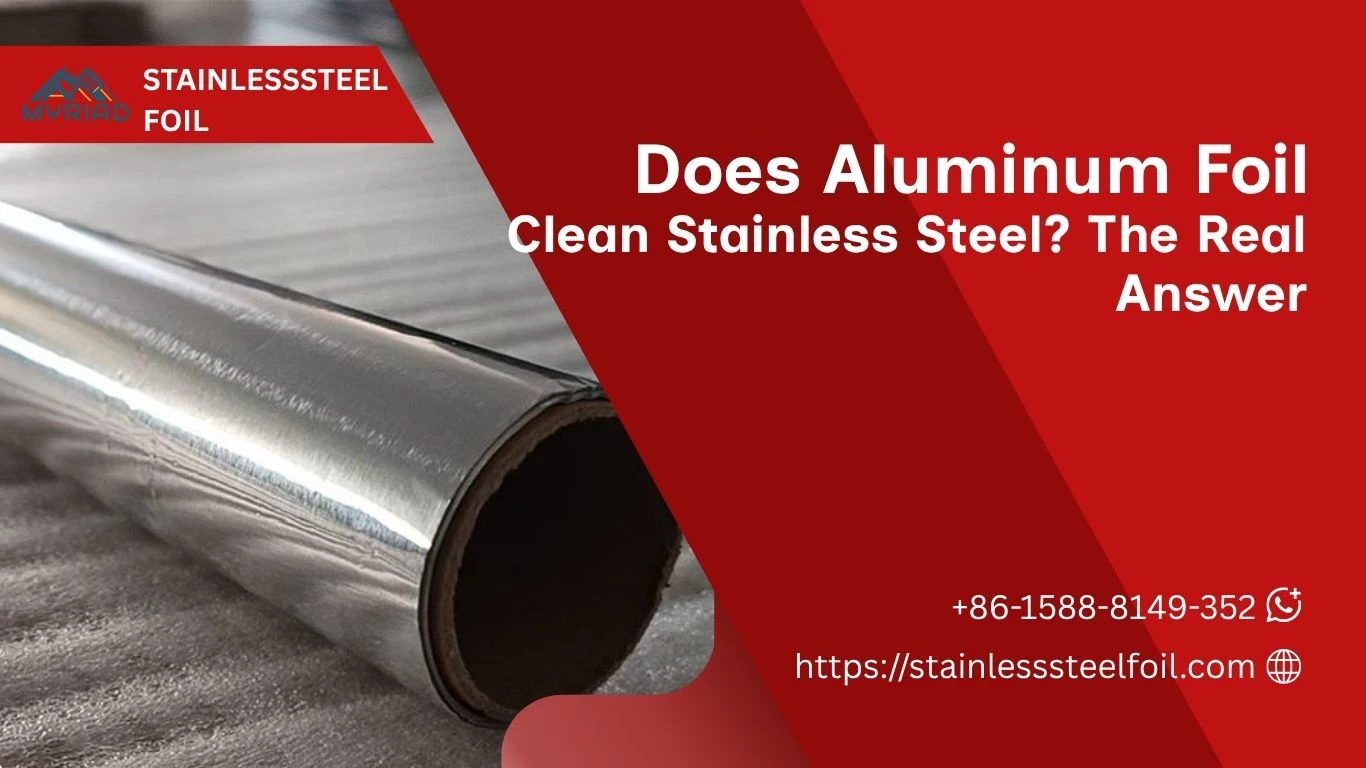
If you’ve spent time browsing cleaning hacks online, you’ve probably come across the claim that you can clean Stainless Steel with Aluminum Foil. Some people swear it removes rust, eliminates stains, and restores shine in minutes. Others warn that rubbing aluminum foil against stainless steel may scratch the surface or even reduce its corrosion resistance over time.
So, which side is correct?
The answer is more nuanced than a simple yes or no. Whether cleaning Stainless Steel with Aluminum Foil works depends on the stainless steel grade, the surface finish, the type of stain, and how the foil is used. In some situations, aluminum foil can help remove light oxidation or stubborn residue. In others, it can leave fine scratches that permanently affect the appearance of polished stainless steel.
This guide explains the science behind the method, where it works, where it fails, and which professional alternatives provide better long-term results. Whether you maintain kitchen equipment, industrial machinery, medical instruments, or stainless steel foil products, understanding the proper cleaning method protects both appearance and performance. If you’re looking for premium stainless steel materials, visit stainless steel foil
Why Stainless Steel Resists Corrosion
Before deciding whether to clean Stainless Steel with Aluminum Foil, it helps to understand why stainless steel resists rust in the first place.
Unlike ordinary carbon steel, stainless steel contains at least 10.5% chromium. When chromium reacts with oxygen in the air, it forms an extremely thin chromium oxide layer across the surface. Although invisible, this protective layer prevents moisture and oxygen from attacking the metal underneath.
One remarkable feature of stainless steel is that this passive layer continuously repairs itself whenever the surface remains clean and exposed to oxygen.
However, dirt, chlorides, grease, mineral deposits, or iron contamination can interfere with that protective layer. When contaminants remain for extended periods, staining or localized corrosion may eventually appear. Cleaning removes those contaminants and allows the passive film to continue protecting the surface.
Can You Really Clean Stainless Steel with Aluminum Foil?
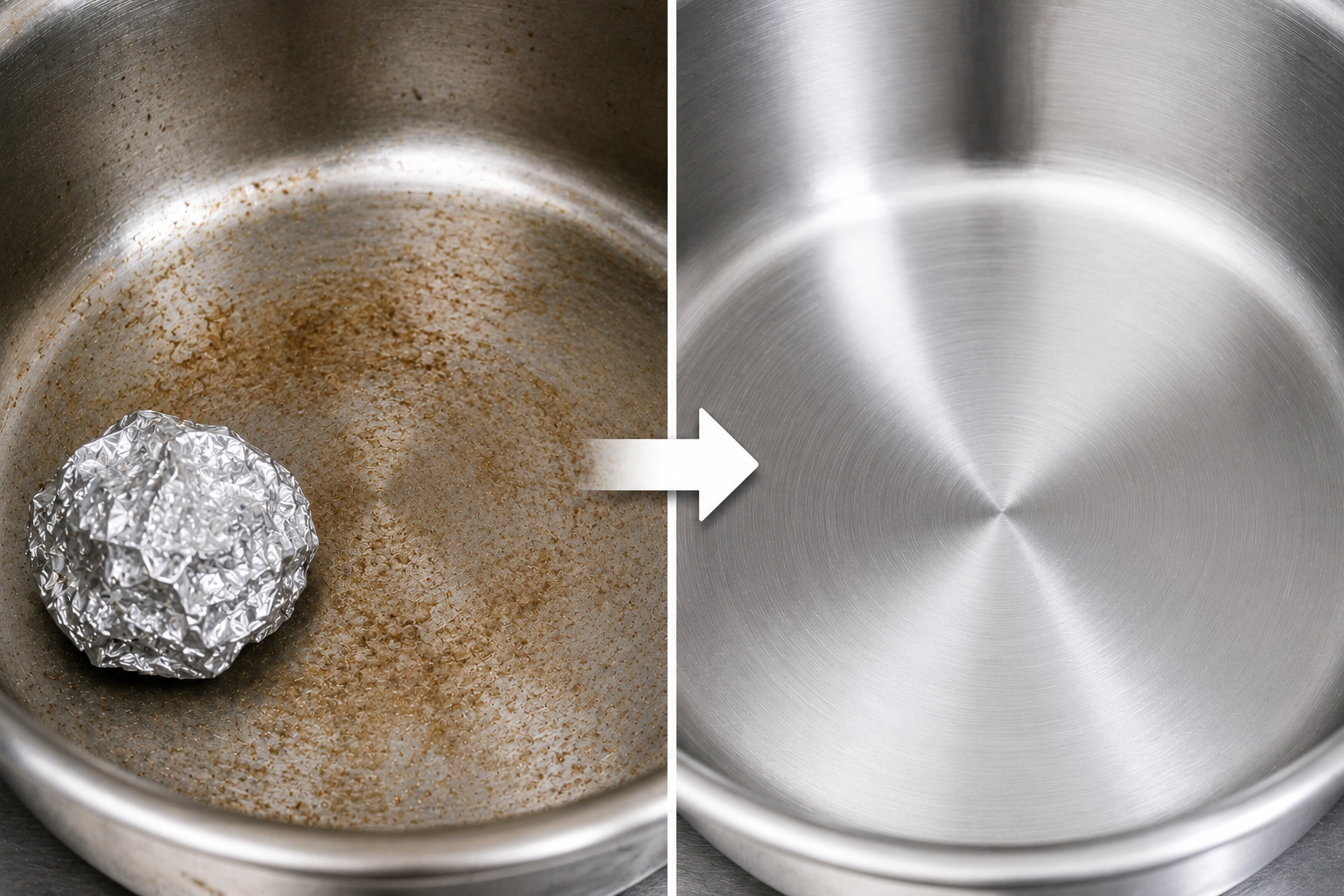
Yes—but only under certain conditions. The popular cleaning hack usually involves crumpling ordinary household aluminum foil into a loose ball before gently rubbing a damp stainless steel surface. Supporters claim the aluminum acts as a mild abrasive that removes stains without damaging the steel.
From a scientific perspective, aluminum is softer than stainless steel. On the Mohs hardness scale, aluminum measures roughly 2.5–3, while many stainless steel grades range between 5.5 and 6. Because aluminum is softer, it normally cannot cut deeply into stainless steel.
However, the real issue isn’t the aluminum itself. Small particles of trapped dirt, sand, burnt food, or metal debris can become trapped between the foil and the surface. Those contaminants—not the aluminum—often cause visible scratching.
That explains why some people report excellent results while others damage expensive cookware or polished appliances.
When Cleaning Stainless Steel with Aluminum Foil Works Best
Cleaning Stainless Steel with Aluminum Foil can be surprisingly effective in a few specific situations. Light mineral deposits, dried food residue, mild discoloration from heat exposure, and surface oxidation often respond well when the foil is used gently with warm water or a mild cleaning solution.
Many homeowners use this technique on stainless steel pots, baking trays, grills, and certain outdoor equipment.
Because the foil conforms to irregular surfaces, it sometimes reaches corners that ordinary cloths cannot. Nevertheless, success depends heavily on surface condition.
If the stainless steel already contains scratches or rough areas, aggressive rubbing usually makes those defects more noticeable.
Situations Where Aluminum Foil Should Not Be Used
Professional stainless steel fabricators generally avoid using aluminum foil on decorative finishes. Mirror-polished panels, brushed architectural stainless steel, medical equipment, precision stainless steel foil, and food-processing machinery require controlled cleaning methods. Fine scratches may not appear immediately under normal lighting.
Later, however, sunlight or bright indoor lighting often reveals swirl marks across the surface. For premium stainless steel foil used in electronics or industrial applications, even microscopic surface defects may reduce product performance. If you manufacture or purchase precision stainless steel foil, explore products stainless steel foil
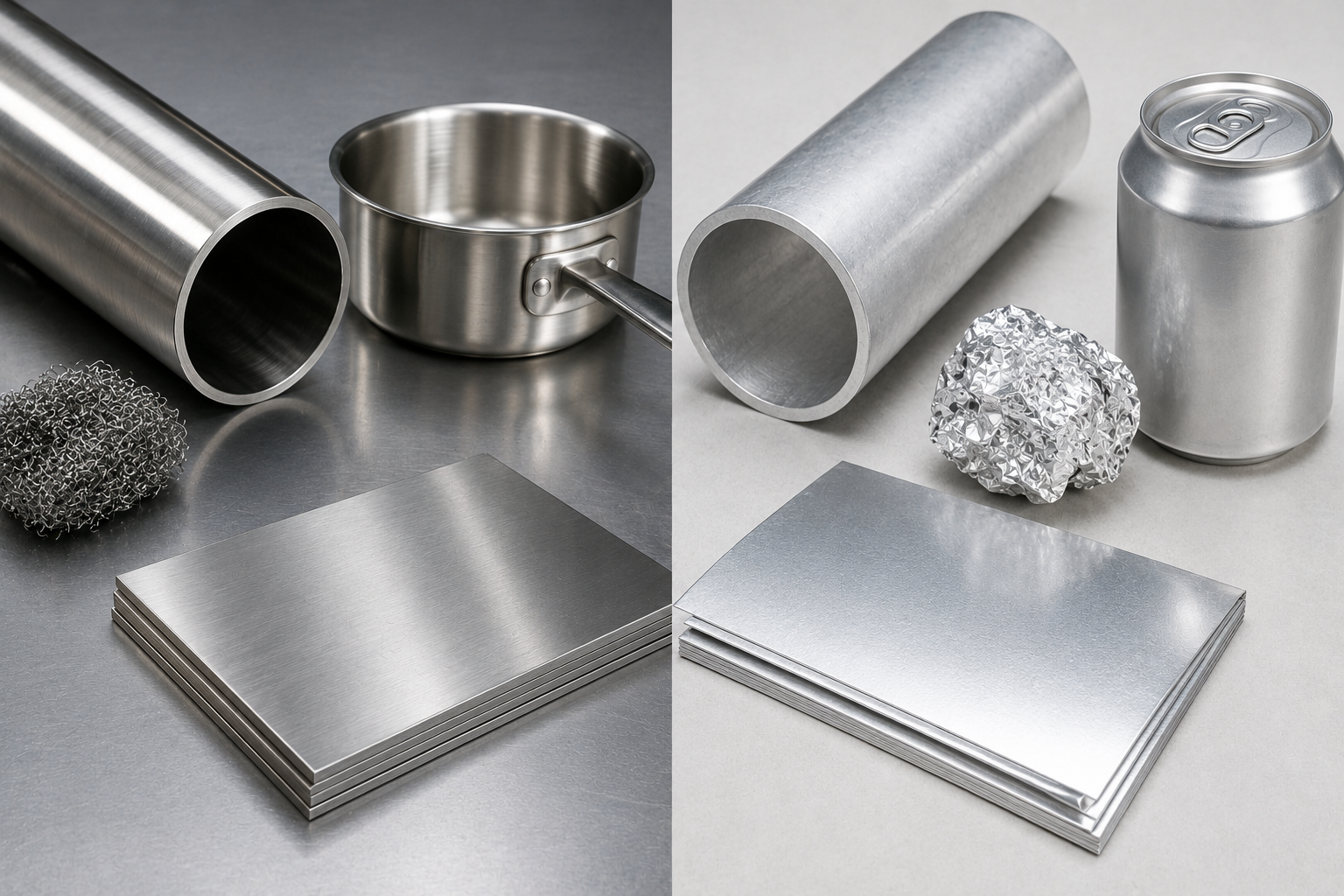
The Difference Between Stainless Steel and Aluminum
Many people mistakenly believe stainless steel and aluminum behave similarly because both resist corrosion.
In reality, they are very different engineering materials.
| Property | Stainless Steel | Aluminum |
|---|---|---|
| Strength | Very High | Moderate |
| Corrosion Resistance | Excellent | Very Good |
| Heat Resistance | Excellent | Moderate |
| Wear Resistance | High | Lower |
| Surface Hardness | Higher | Lower |
| Industrial Durability | Excellent | Moderate |
For a more detailed comparison, see stainless steel foil vs aluminum You can also compare both materials here stainless steel foil vs aluminum foil
The Science Behind the Cleaning Process
Why do some people achieve impressive results? The answer involves simple physics rather than chemistry. When loosely crumpled aluminum foil moves across a damp surface, its irregular edges help dislodge loose deposits. Meanwhile, warm water softens food residue and mineral buildup.
Adding a drop of dish soap reduces surface tension, allowing contaminants to lift more easily. Contrary to many online claims, aluminum foil does not chemically “repair” stainless steel.
Instead, it assists mechanical cleaning. Once dirt disappears, the stainless steel naturally appears brighter because the chromium oxide layer becomes visible again.
Step-by-Step Method for Safe Cleaning
If you decide to clean Stainless Steel with Aluminum Foil, use a gentle approach. Begin by rinsing loose dirt from the surface.
Next, apply warm water mixed with a small amount of mild dish soap. Lightly crumple fresh aluminum foil into a loose ball without creating sharp corners.
Rub only in the direction of the stainless steel grain. Avoid circular scrubbing because random motions increase the visibility of scratches.
After cleaning, rinse thoroughly with clean water. Dry immediately using a microfiber cloth to prevent water spots. Finally, inspect the surface under bright light before repeating the process. If scratches appear, stop using aluminum foil immediately.
Better Alternatives Recommended by Professionals
Industrial stainless steel manufacturers rarely rely on aluminum foil. Instead, they prefer pH-neutral cleaners, microfiber cloths, soft nylon pads, and specialized stainless steel cleaning products.
These methods preserve the chromium oxide layer while minimizing cosmetic damage. For industrial stainless steel foil applications, maintaining an uncontaminated surface is essential because surface defects may affect stamping, forming, welding, and corrosion resistance.
Learn more about stainless steel foil applications stainless steel foil steel foil
Cleaning Mistakes
Many cleaning problems result from poor technique rather than poor products. Using steel wool remains one of the biggest mistakes because ordinary steel particles become embedded inside stainless steel.
Those particles eventually rust, creating orange stains that people mistakenly blame on stainless steel itself. Another common mistake involves chlorine bleach.
Bleach attacks the protective passive layer and may cause pitting corrosion, especially on lower-alloy grades. Likewise, highly abrasive powders should be avoided on decorative finishes.
Caring for Stainless Steel Foil Products
Ultra-thin stainless steel foil requires even greater care. Its precision surface finish supports demanding industries including electronics, batteries, aerospace, medical manufacturing, and heat treatment. Improper cleaning may affect flatness, surface roughness, or forming performance.
For specialized industrial uses, explore stainless steel foil for heat treatment You may also find additional technical resources here stainless steel foil blog Need assistance selecting the right stainless steel foil stainless steel foil contact us.
Summary
Cleaning Stainless Steel with Aluminum Foil is one of the internet’s most popular metal-cleaning hacks, but it is not a universal solution. While the technique can remove light stains, oxidation, and stubborn residue from some stainless steel items, it also carries the risk of scratching polished or precision-finished surfaces if used incorrectly. For everyday maintenance, professional cleaners, soft microfiber cloths, and gentle cleaning methods remain the safest choice. Understanding the material, choosing the right cleaning technique, and maintaining the protective chromium oxide layer will keep stainless steel looking attractive and performing reliably for years. Get for more information visit Stainless Steel foil and contact us .
FAQs
Q: Does cleaning Stainless Steel with Aluminum Foil remove rust?
A: Yes, Stainless Steel with Aluminum Foil may help remove light surface discoloration or minor oxidation, but it cannot repair deep corrosion or pitting.
Q: Can aluminum foil scratch stainless steel?
A: Although aluminum itself is softer, cleaning Stainless Steel with Aluminum Foil can create scratches if dirt or abrasive particles become trapped between the foil and the surface.
Q: Is this method safe for stainless steel cookware?
A: Cleaning Stainless Steel with Aluminum Foil may be suitable for heavily stained cookware when performed gently, but polished cookware should always be tested in a small hidden area first.
Q: Should professionals use aluminum foil on industrial stainless steel?
A: Most manufacturers avoid cleaning Stainless Steel with Aluminum Foil on precision industrial products because specialized cleaners provide better surface protection.
Q: What is the safest way to clean stainless steel?
A: For routine maintenance, Stainless Steel with Aluminum Foil is generally less reliable than warm water, mild detergent, and a microfiber cloth used along the grain.