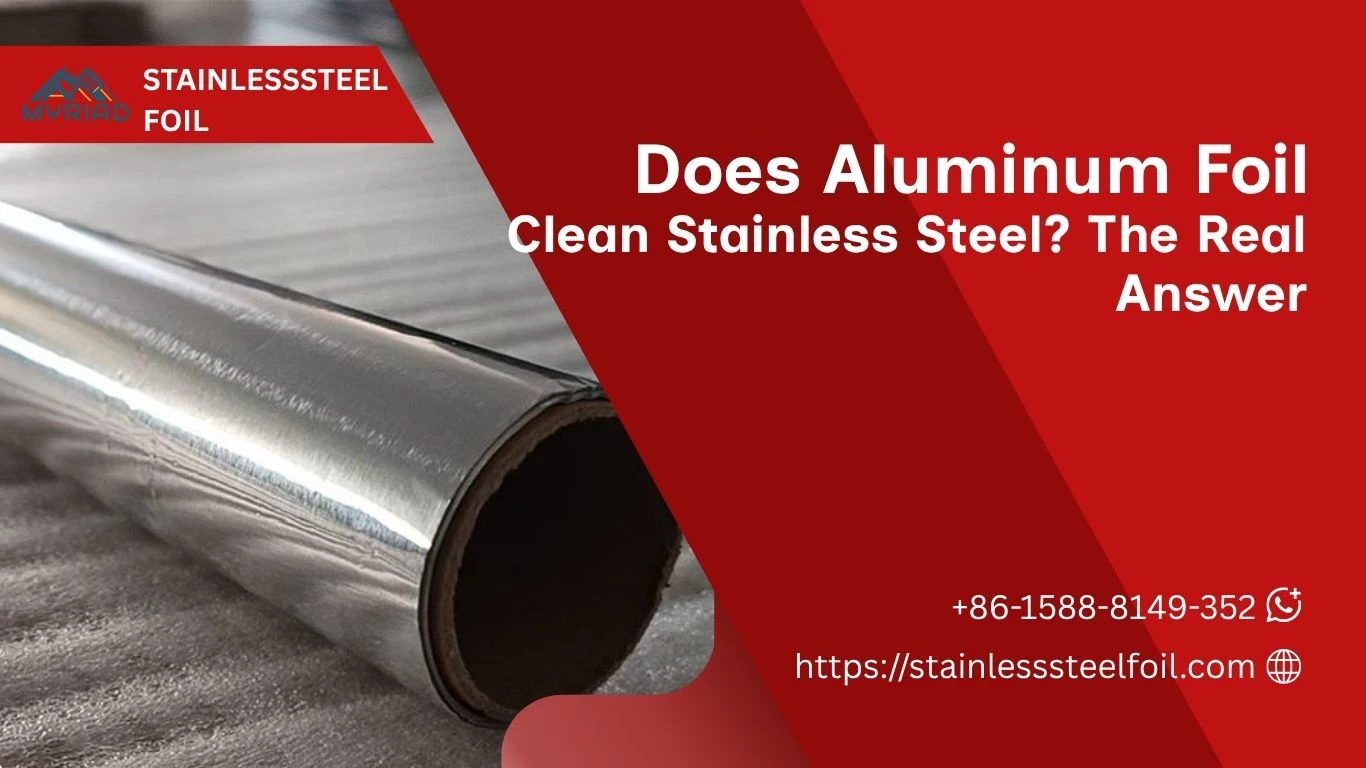
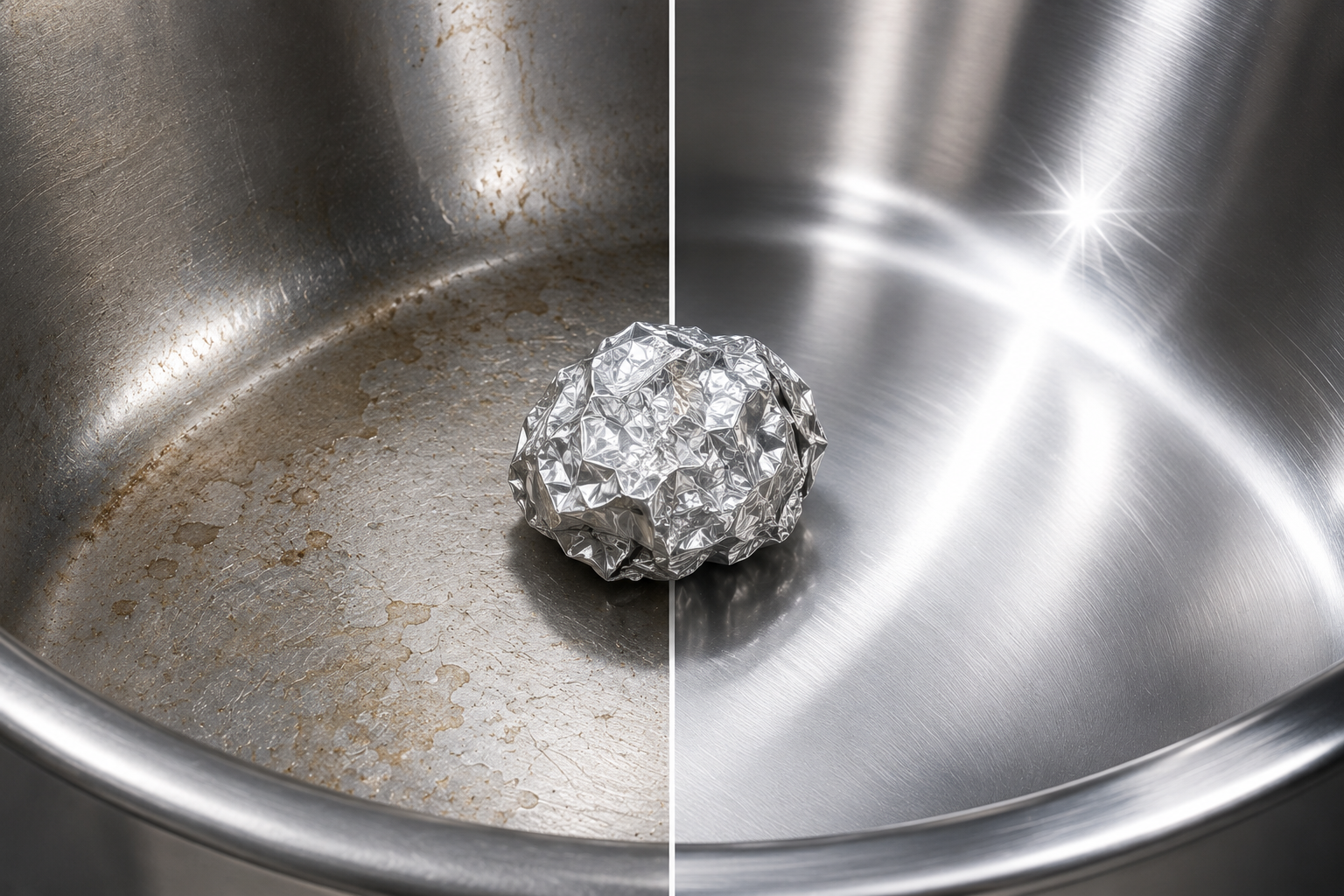
If you’ve ever searched for quick household cleaning hacks, you’ve probably come across the claim that aluminum foil can restore the shine of stainless steel. Social media videos, DIY blogs, and online forums often suggest crumpling a piece of foil and rubbing it across sinks, cookware, or appliances to remove stains and discoloration. This raises an important question: Does Aluminum Foil Clean Stainless Steel?
The answer is more nuanced than many people realize.
In some situations, aluminum foil can help remove mineral deposits, water spots, and certain surface contaminants. However, it is not a universal cleaning solution. In fact, using aluminum foil incorrectly may damage polished finishes or leave fine scratches on stainless steel surfaces.
Understanding how aluminum and stainless steel interact can help homeowners, maintenance professionals, and industrial users make better decisions. Whether you are cleaning a kitchen sink, maintaining food-processing equipment, or working with industrial stainless steel foil, knowing the science behind the method is essential.
This guide explores whether Aluminum Foil Clean Stainless Steel is fact or fiction, how the process works, when it is safe to use, and which alternatives often deliver better results.
What Is Stainless Steel and Why Is It So Durable?
Before discussing cleaning methods, it helps to understand what makes stainless steel unique.
According to information published on the stainless steel reference page at wiki Stainless_steel, stainless steel is an iron-based alloy containing at least 10.5% chromium. This chromium reacts with oxygen in the air to form a thin protective oxide layer.
That invisible layer is the reason stainless steel resists rust, corrosion, and staining far better than ordinary steel.
The material is widely used in kitchens, hospitals, laboratories, food-processing facilities, chemical plants, and marine environments because it combines strength, durability, and hygiene.
Industrial manufacturers also rely on specialized stainless steel foil products because they offer excellent heat resistance, corrosion protection, and dimensional stability. Readers interested in learning more can explore available products at products stainless steel foil.
Does Aluminum Foil Clean Stainless Steel?
The short answer is yes—but only under certain circumstances. When people say that aluminum foil cleans stainless steel, they are usually referring to its ability to remove surface deposits rather than actually cleaning the metal itself.
For example, hard-water stains, mineral buildup, oxidation marks, and some forms of discoloration may come off when gently rubbed with wet aluminum foil.
This happens because aluminum foil acts as a very mild abrasive. The foil helps loosen contaminants from the surface, making them easier to remove.
However, this does not mean aluminum foil is chemically restoring the stainless steel. Instead, it is physically removing deposits that sit on top of the metal. As a result, the effectiveness depends heavily on the type of contamination present.
Why Aluminum Foil Sometimes Appears to Work So Well
Many users report impressive results after cleaning stainless steel with aluminum foil. There are several reasons for this. First, aluminum is softer than stainless steel. Because of this difference in hardness, aluminum foil can sometimes remove mineral deposits without immediately damaging the underlying metal.
Second, the crumpled foil creates multiple contact points that help break up stubborn residue.
Third, when water or mild cleaning solutions are present, a slight electrochemical interaction may occur that helps loosen oxidation products.
These combined effects often create the appearance of deep cleaning.
In reality, most of the improvement comes from removing surface contamination rather than altering the stainless steel itself.
The Difference Between Stainless Steel and Aluminum
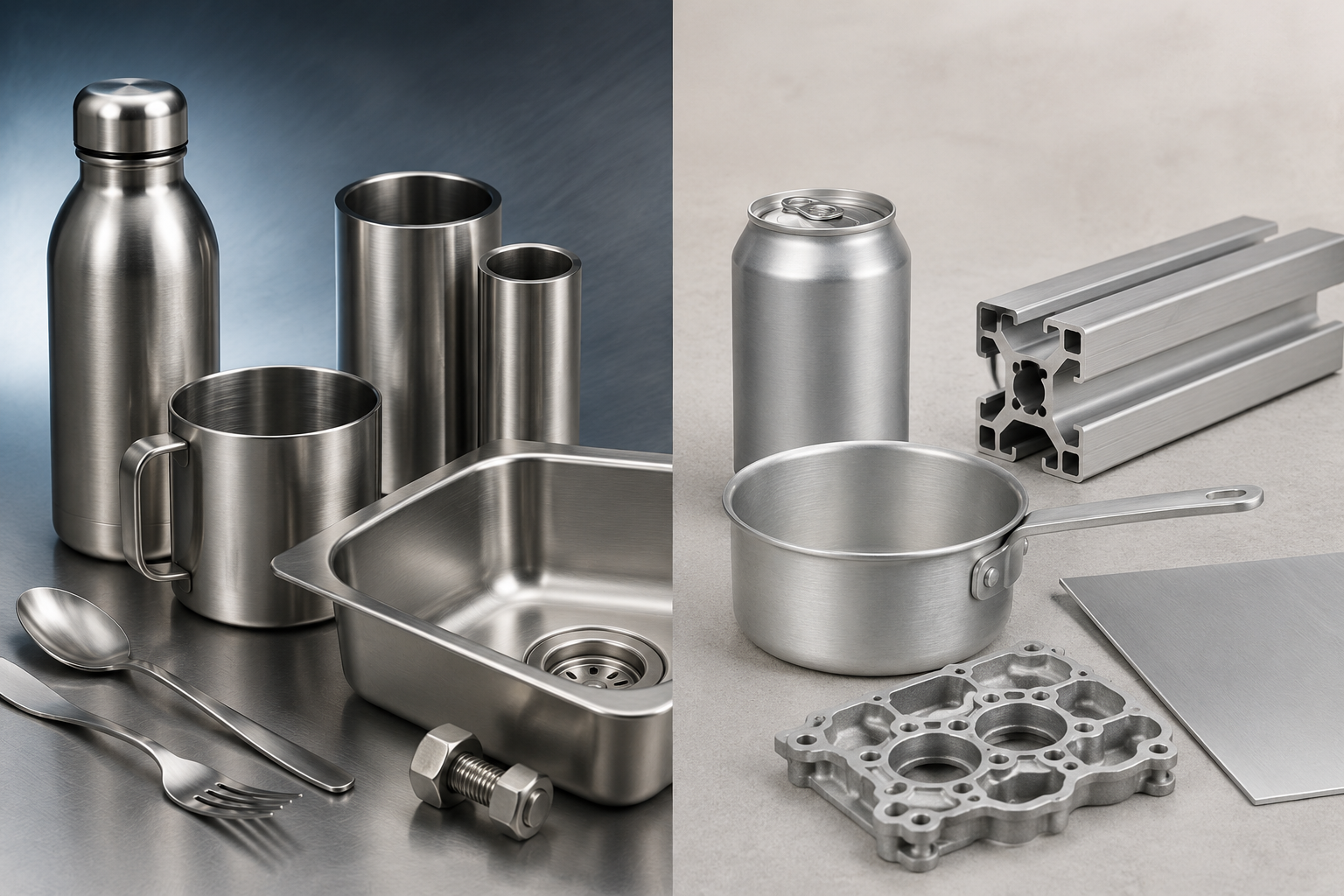
To understand whether Aluminum Foil Clean Stainless Steel is a good idea, it helps to compare the two materials.
| Property | Aluminum Foil | Stainless Steel |
|---|---|---|
| Corrosion Resistance | Moderate | Excellent |
| Hardness | Low | High |
| Heat Resistance | Good | Excellent |
| Durability | Moderate | Outstanding |
| Industrial Applications | Packaging, insulation | Medical, food, industrial |
| Surface Protection | Oxide Layer | Chromium Oxide Layer |
A detailed comparison of the two materials is available in this guide stainless-steel-foil-vs-aluminum
Although both metals resist corrosion, stainless steel generally offers superior long-term durability.
When Aluminum Foil Can Be Useful for Cleaning Stainless Steel
There are situations where aluminum foil may provide acceptable cleaning results. One common example is hard-water staining. Minerals such as calcium and magnesium often leave white spots on stainless steel sinks and appliances. In some cases, damp aluminum foil can loosen these deposits.
Another example involves minor discoloration caused by cooking residues. Certain cookware surfaces develop stubborn stains that resist ordinary wiping. Light pressure with aluminum foil may help remove these marks.
Some people also use foil to remove oxidation from stainless steel utensils and tools. However, success depends on surface condition, steel grade, and cleaning technique.
Potential Risks of Using Aluminum Foil on Stainless Steel
Although many online tutorials present aluminum foil as a harmless solution, several risks exist. The most common concern is scratching. While aluminum is softer than stainless steel, contaminants trapped between the foil and the surface can create abrasions.
Polished appliances are particularly vulnerable. Fine scratches may not appear immediately. However, repeated cleaning can gradually reduce surface quality.
Another concern involves altering brushed finishes. Many stainless steel products feature directional grain patterns. Aggressive rubbing with aluminum foil can disrupt that appearance.
For medical, pharmaceutical, and food-processing equipment, manufacturers generally recommend approved cleaning methods instead of household hacks.
Better Alternatives to Aluminum Foil
Professional maintenance teams rarely rely on aluminum foil for routine cleaning. Instead, they use products specifically designed for stainless steel.
Microfiber cloths remain one of the safest options because they remove dirt without scratching the surface. Mild dish soap mixed with warm water works well for everyday cleaning.
White vinegar effectively removes mineral deposits and water spots. Specialized stainless steel cleaners provide excellent results while preserving the protective chromium oxide layer.
For industrial applications, approved cleaning chemicals often deliver superior performance without compromising material integrity.
Why Stainless Steel Grade Matters
Not all stainless steel grades behave the same way. For example, 316 stainless steel offers better corrosion resistance than many other grades because it contains molybdenum.
This improvement makes it particularly valuable in marine and chemical environments. Readers interested in marine-grade materials can learn more at 316 stainless steel foil for marine and chemical use
Similarly, understanding the difference between 316 and 316L can help users choose the correct material for demanding environments. A detailed comparison is available here 316 vs 316l stainless steel foil comparison
Industrial Applications Where Surface Integrity Matters
In industrial settings, surface condition is more than an aesthetic concern. Food-processing facilities depend on smooth stainless steel surfaces to maintain hygiene standards. Medical manufacturers require contamination-free finishes.
Chemical processing equipment must resist corrosion while maintaining structural integrity. These industries often use stainless steel foil because of its exceptional performance.
Applications range from precision components to heat-treatment systems and protective barriers. Readers can explore common industrial uses at top industrial applications of 316l stainless steel foil
For information about foil thickness and performance, visit thin stainless steel foil thickness applications
The Importance of Proper Maintenance
Proper maintenance extends the lifespan of stainless steel products. Routine cleaning prevents contaminants from accumulating on the surface.
Regular inspection helps identify early signs of corrosion or staining. Using appropriate cleaning tools reduces the risk of accidental damage.
While aluminum foil may occasionally help remove certain deposits, it should not replace established maintenance procedures. Professional cleaning methods generally provide safer and more consistent results.
Stainless Steel Foil and High-Temperature Applications
Stainless steel foil is often used in high-temperature environments because it maintains strength and corrosion resistance under extreme conditions.
Industries involved in heat treatment, thermal processing, and manufacturing frequently rely on specialized foil products. Readers interested in these applications can learn more at stainless steel foil for heat treatment Additional educational resources and industry updates are available through the Stainless Steel Foil blog blog
Professionals seeking manufacturing insights can also explore youtube.@MyriadStainlessSteel2014
Summary
The idea that Aluminum Foil Clean Stainless Steel surfaces is partly true. Aluminum foil can help remove certain deposits and stains, but it is not a universal cleaning solution. Because it acts primarily as a mild abrasive, improper use may cause scratches or surface damage. For routine maintenance, specialized stainless steel cleaners remain the safest and most effective option.
The limitations of aluminum foil helps protect stainless steel surfaces and ensures long-term performance. Get For more information about stainless steel foil products, technical specifications, and custom manufacturing solutions, visit stainless steel foil and Contact us.
FAQs
Q: Does aluminum foil damage stainless steel?
A: When used gently, aluminum foil may not immediately damage stainless steel. However, excessive rubbing can create scratches, especially on polished finishes. Therefore, users should exercise caution when attempting to Aluminum Foil Clean Stainless Steel surfaces.
Q: Why do people use aluminum foil to clean stainless steel?
A: Many people use aluminum foil because it can remove mineral deposits and oxidation. In certain situations, Aluminum Foil Clean Stainless Steel methods may improve surface appearance temporarily.
Q: Is aluminum foil safer than steel wool?
A: Generally, aluminum foil is less aggressive than steel wool. However, neither option is ideal for delicate finishes. Professional cleaning products remain the safest choice when attempting to Aluminum Foil Clean Stainless Steel equipment.
Q: Can aluminum foil remove rust from stainless steel?
A: Minor surface discoloration may improve with foil cleaning. However, severe corrosion usually requires specialized treatment. While some people use Aluminum Foil Clean Stainless Steel techniques for rust removal, results vary.
Q: What is the best way to clean stainless steel?
A: Microfiber cloths, mild soap, and approved stainless steel cleaners provide the best results. These methods preserve the protective surface while avoiding risks associated with Aluminum Foil Clean Stainless Steel cleaning practices.
Q: Is aluminum foil recommended for industrial stainless steel surfaces?
A: Most manufacturers do not recommend routine foil cleaning. Industrial equipment typically requires approved maintenance procedures rather than Aluminum Foil Clean Stainless Steel methods.