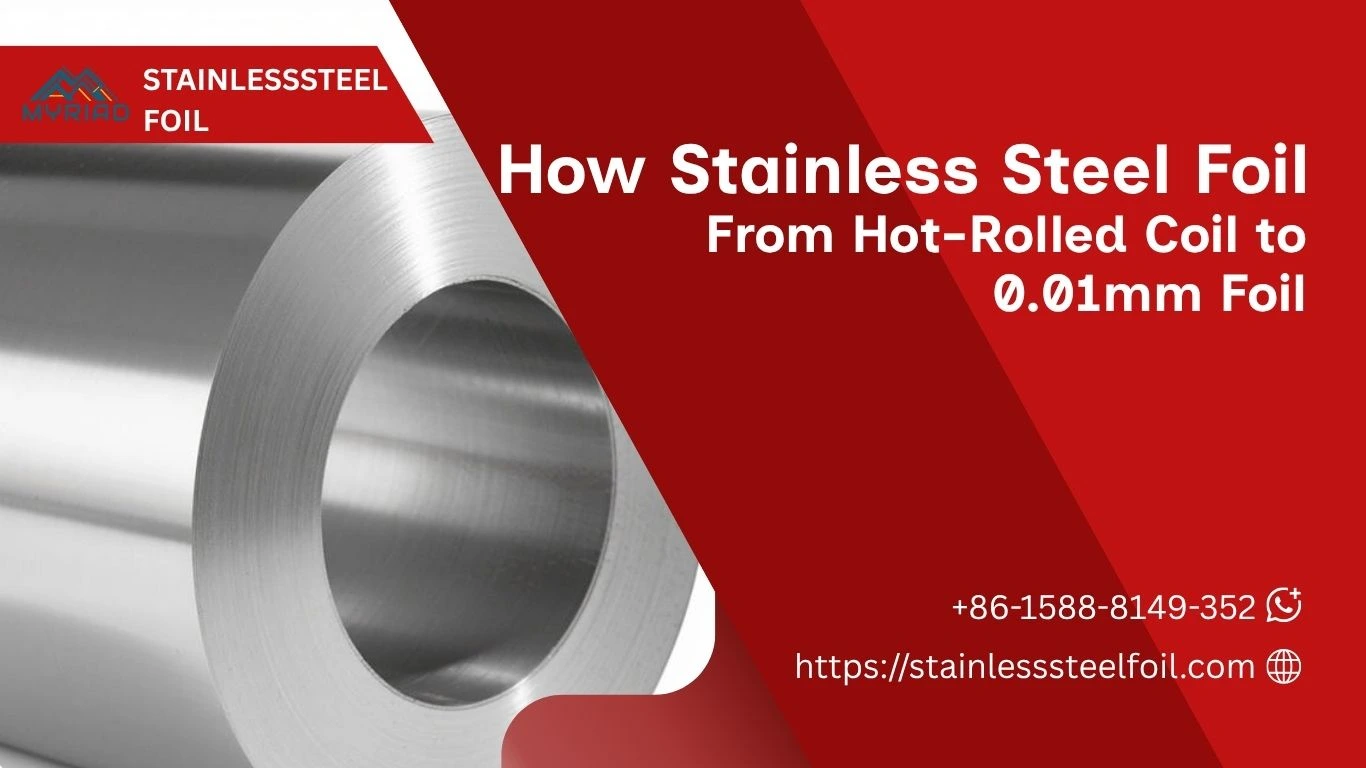
Manufacturing stainless steel foil is far more complex than simply rolling a sheet of metal thinner. Every stage, from selecting the right raw material to achieving an ultra-thin thickness of 0.01mm, requires advanced equipment, strict quality control, and decades of metallurgical expertise. Understanding how Stainless Steel Foil Is Made helps engineers, manufacturers, and buyers choose the right material for demanding applications such as electronics, batteries, aerospace, medical devices, precision stamping, and industrial heat treatment.
Unlike ordinary stainless steel sheet, foil must deliver exceptional flatness, precise thickness tolerance, outstanding surface finish, and excellent mechanical properties. Even a tiny variation of a few microns can affect the final performance of electronic components or precision industrial parts.
If you are searching for high-quality stainless steel foil, visit stainless steel foil to explore professional manufacturing solutions and industry resources.
Why Manufacturing Stainless Steel Foil Is Different
Producing stainless steel foil requires much tighter tolerances than manufacturing standard stainless steel sheet or plate. A conventional steel sheet may measure several millimeters thick, while stainless steel foil can range from 0.3mm down to only 0.01mm.
As thickness decreases, controlling material properties becomes increasingly difficult. Small inconsistencies in rolling pressure, temperature, lubrication, or surface cleanliness can lead to cracks, waviness, edge defects, or thickness variations.
This is why experienced manufacturers rely on multiple rolling stages, repeated annealing processes, advanced inspection systems, and automated quality control throughout production.
Stainless Steel Foil Is Made Starting with Premium Raw Materials
The manufacturing journey begins long before the first rolling mill starts operating.
Everything starts with carefully selected stainless steel grades. Depending on the intended application, manufacturers commonly choose:
- 301 Stainless Steel
- 304 Stainless Steel
- 304L Stainless Steel
- 316 Stainless Steel
- 316L Stainless Steel
- 430 Stainless Steel
Each grade contains different amounts of chromium, nickel, molybdenum, and carbon, which determine corrosion resistance, strength, ductility, and heat resistance.
For industries requiring extreme corrosion resistance, 316L stainless steel remains one of the most popular options. Learn more about its industrial uses here top industrial applications of 316l stainless steel foil
Step 1: Producing the Hot-Rolled Coil
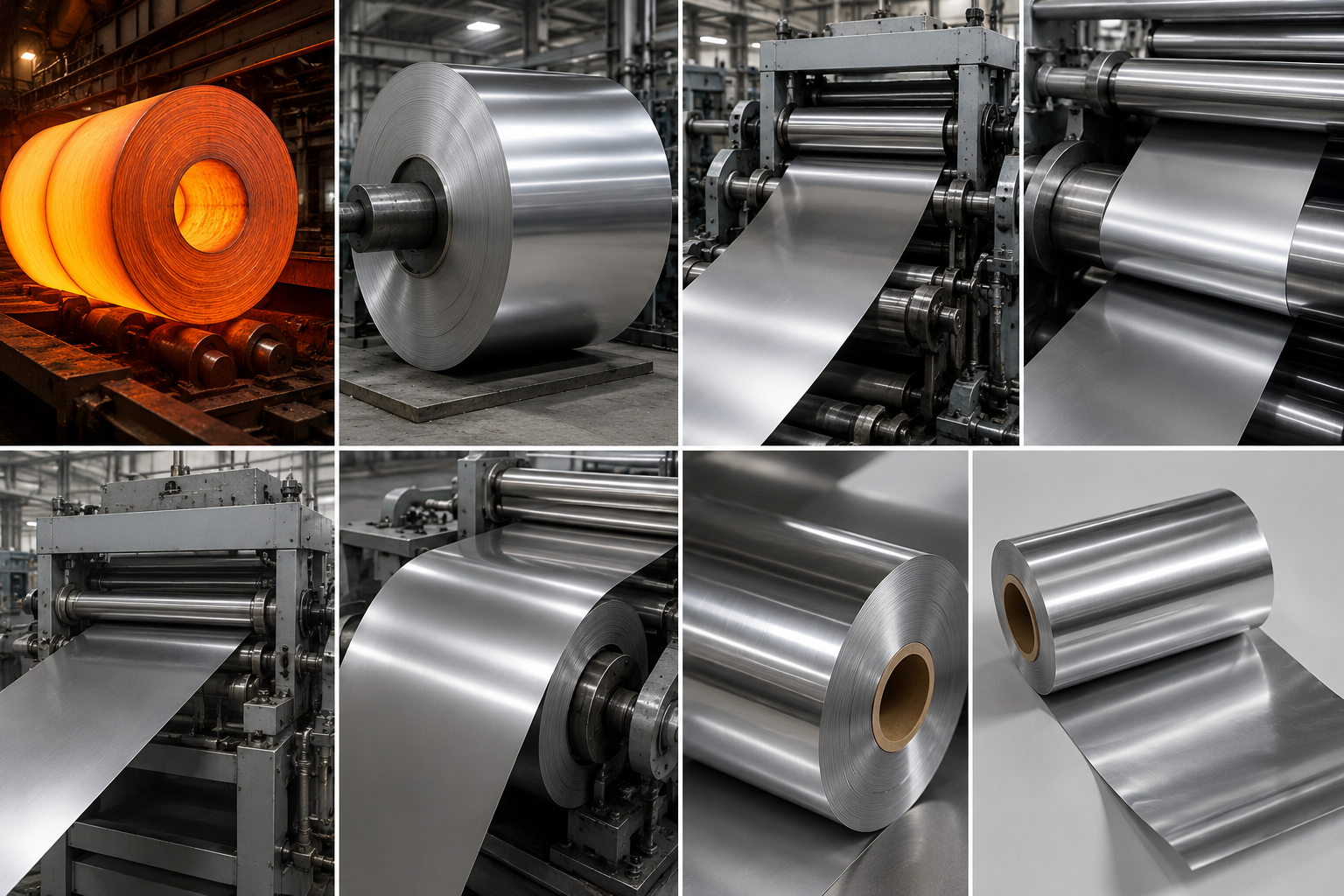
The first major manufacturing stage involves melting raw materials inside an electric arc furnace. Iron, chromium, nickel, recycled stainless steel, and alloying elements are melted at temperatures exceeding 1,600°C.
After refining the molten steel, manufacturers cast it into slabs. These slabs are reheated before entering a hot rolling mill. Hot rolling reduces the slab thickness dramatically while improving grain structure.
At this stage, thickness usually reaches between 2mm and 6mm, depending on the future foil specification. Although the material becomes much thinner, it still cannot qualify as stainless steel foil. Instead, it becomes a hot-rolled coil ready for further processing.
Step 2: Pickling Removes Surface Scale
Hot rolling creates a thick oxide layer called mill scale. Before precision rolling begins, this scale must be completely removed. Manufacturers immerse the hot-rolled coil inside specialized acid solutions. This chemical cleaning process is called pickling.
Pickling removes:
- Surface oxides
- Heat scale
- Iron contamination
- Rolling residues
A perfectly clean surface ensures consistent cold rolling and excellent final surface quality. Without effective pickling, later rolling stages would produce scratches, pits, and uneven finishes.
Step 3: Cold Rolling Begins the Precision Process
This is where Stainless Steel Foil Is Made into an increasingly thinner material. Unlike hot rolling, cold rolling takes place at room temperature.
Large precision rolling mills compress the stainless steel through multiple rolling passes. Instead of reducing thickness in one operation, manufacturers gradually decrease thickness over many controlled stages.
This method provides:
- Better dimensional accuracy
- Higher tensile strength
- Improved hardness
- Excellent surface finish
- Superior flatness
Every rolling pass requires careful monitoring. Modern automatic gauge control systems continuously measure thickness while adjusting roller pressure in real time. Some premium mills maintain thickness tolerances within only a few microns.
Step 4: Intermediate Annealing Restores Ductility
Repeated cold rolling hardens stainless steel. Eventually the material becomes too brittle for further thickness reduction. Manufacturers solve this problem through annealing. The foil passes through a controlled furnace where temperatures generally reach between 950°C and 1,100°C, depending on the stainless steel grade.
The controlled heating process allows new grains to form inside the metal. After cooling, the material regains flexibility without sacrificing corrosion resistance. Multiple rolling and annealing cycles may occur before reaching ultra-thin foil dimensions.
Step 5: Precision Rolling to 0.01mm
Producing foil as thin as 0.01mm represents one of the most technically demanding stages in metal manufacturing. At this thickness, the foil measures only a fraction of the diameter of a human hair.
Specialized Sendzimir rolling mills or multi-roll precision mills apply enormous pressure while maintaining remarkable dimensional consistency.
Advanced sensors monitor:
- Thickness
- Edge profile
- Surface defects
- Strip tension
- Flatness
- Width
Computer-controlled adjustments happen continuously during production. Without this level of automation, maintaining consistent thickness would be nearly impossible.
Step 6: Surface Finishing
Different industries require different surface finishes. After precision rolling, manufacturers create finishes including:
| Surface Finish | Typical Application |
|---|---|
| BA (Bright Annealed) | Electronics, medical |
| 2B | Industrial components |
| Matte Finish | General manufacturing |
| Mirror Finish | Decorative products |
| Precision Rolled | Battery and precision stamping |
The selected finish influences appearance, corrosion resistance, cleanability, and forming performance. For many electronic applications, extremely smooth surfaces help improve conductivity and manufacturing precision.
Step 7: Slitting and Precision Cutting
After achieving the desired thickness, large master coils undergo precision slitting. Modern CNC slitting machines cut the foil into narrow widths with exceptional accuracy.
Customers may require widths ranging from only a few millimeters up to hundreds of millimeters depending on the application. Precision edge quality becomes especially important for battery manufacturing and electronic stamping.
Step 8: Quality Inspection
No professional manufacturer ships stainless steel foil without extensive testing. Every production batch undergoes multiple quality inspections.
Engineers verify thickness, width, tensile strength, elongation, hardness, surface finish, chemical composition, corrosion resistance, and dimensional accuracy.
Laser measuring systems inspect the entire coil continuously rather than relying only on random samples.
Some manufacturers also perform bend testing, microscopic grain analysis, and surface roughness measurements before approving shipment.
Why Thickness Accuracy Matters
When Stainless Steel Foil Is Made for high-tech industries, even microscopic deviations can create serious production problems. Battery manufacturers require uniform foil thickness to maintain consistent electrical performance.
Medical manufacturers demand exceptionally clean surfaces for sterilization. Heat treatment applications depend on reliable temperature resistance.
Precision stamping operations require excellent flatness to reduce tool wear.
Because of these demanding requirements, premium manufacturers often maintain thickness tolerances measured in microns instead of millimeters.
Typical Stainless Steel Foil Thickness Range
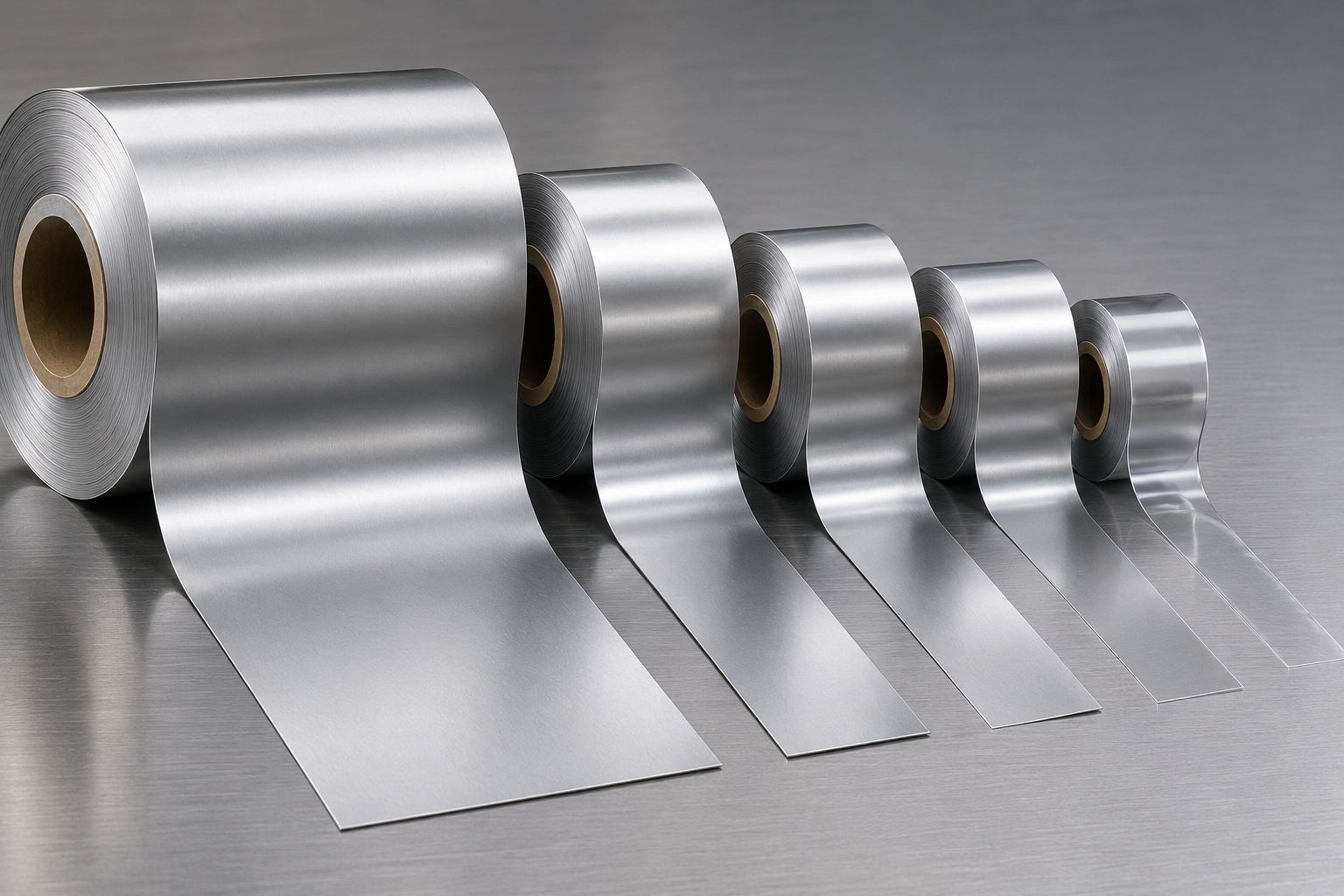
| Thickness | Common Applications |
|---|---|
| 0.30 mm | Industrial fabrication |
| 0.20 mm | Automotive components |
| 0.10 mm | Electronics |
| 0.05 mm | Precision stamping |
| 0.03 mm | Medical devices |
| 0.02 mm | Battery components |
| 0.01 mm | High-precision electronics |
For additional information about thickness selection, visit thin-stainless-steel-foil-thickness-applications
Applications of Ultra-Thin Stainless Steel Foil
Modern industries depend on ultra-thin stainless steel foil for hundreds of demanding applications. Electronics manufacturers use it inside connectors, sensors, shielding materials, and precision components. Battery manufacturers rely on thin foil for advanced energy storage systems.
Medical companies produce surgical instruments, diagnostic equipment, and precision medical components using corrosion-resistant stainless steel foil.
Aerospace manufacturers value its excellent strength-to-weight ratio. Industrial heat treatment companies also use specialized foil wraps to protect metal components during high-temperature processing.
Learn more here stainless steel foil for heat treatment
Stainless Steel Foil vs Aluminum Foil
Although aluminum foil dominates household applications, stainless steel foil offers several advantages in industrial environments. It provides significantly higher strength, better corrosion resistance, greater heat resistance, and longer service life.
For an in-depth comparison, read stainless steel foil stainless steel foil vs aluminum
Choosing the Right Manufacturer
Selecting the right supplier matters just as much as selecting the correct alloy. Look for manufacturers offering advanced rolling equipment, strict quality control, international certifications, customized dimensions, and technical support. Explore available stainless steel foil products stainless steel foil You can also watch manufacturing videos from youtube@MyriadStainlessSteel2014
Summary
Stainless Steel Foil Is Made reveals why this remarkable material plays such a critical role across modern industries. Beginning with carefully selected raw materials, manufacturers transform hot-rolled coils through pickling, precision cold rolling, repeated annealing, ultra-thin rolling, surface finishing, and rigorous quality inspection. Every stage contributes to the foil’s exceptional strength, corrosion resistance, dimensional accuracy, and reliability.
Whether your application involves electronics, medical equipment, aerospace components, or industrial manufacturing, choosing high-quality stainless steel foil from an experienced supplier ensures consistent performance and long-term value.
FAQs
Q: How Stainless Steel Foil Is Made thinner than 0.05mm?
A: Stainless Steel Foil Is Made through repeated cold rolling, intermediate annealing, precision rolling mills, and strict thickness control until the required ultra-thin dimension is achieved.
Q: Why is annealing important?
A: When Stainless Steel Foil Is Made, annealing restores ductility after cold rolling, allowing additional thickness reduction without cracking.
Q: Which stainless steel grade is best for foil?
A: How Stainless Steel Foil Is Made depends on the application, but 304, 304L, 316, 316L, and 301 remain the most widely used grades.
Q: Can stainless steel foil reach 0.01mm?
A: Yes. Modern precision rolling technology allows Stainless Steel Foil Is Made as thin as 0.01mm while maintaining dimensional accuracy and excellent mechanical properties.
Q: What industries use stainless steel foil?
A: After Stainless Steel Foil Is Made, it serves electronics, batteries, aerospace, medical devices, automotive manufacturing, chemical processing, and industrial heat treatment.