304 stainless steel foil is one of the most widely used materials in modern manufacturing due to its excellent corrosion resistance, mechanical strength, and versatility. From thermal insulation systems to food-grade applications, its adaptability makes it a preferred choice across industries such as construction, electronics, automotive, and healthcare.
According to the World Steel Association, stainless steel demand continues to grow globally, driven by infrastructure development and advanced manufacturing needs. Among all stainless grades, 304 stainless steel remains the most commonly used austenitic alloy.
What is 304 Stainless Steel Foil?
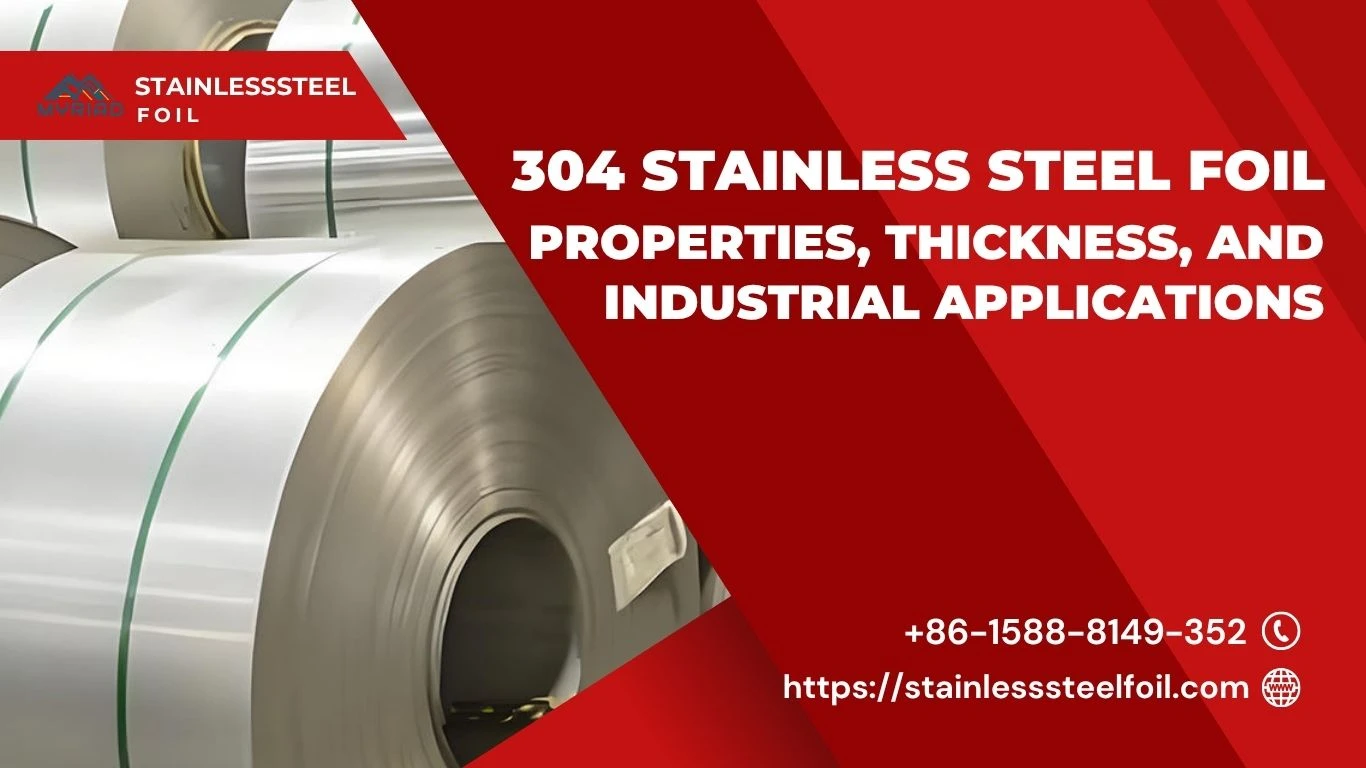
304 stainless steel foil is a thin, flat-rolled product made from austenitic stainless steel containing chromium and nickel. It is typically manufactured through cold rolling processes to achieve extremely thin gauges, sometimes as low as 0.01 mm.
For a deeper technical breakdown of ultra-thin manufacturing, you can explore this guide:
https://stainlesssteelfoil.com/how-thin-can-stainless-steel-foil-actually-get-0-01mm/
Chemical Composition and Material Properties
304 stainless steel belongs to the austenitic family and is known for its balanced composition and performance.
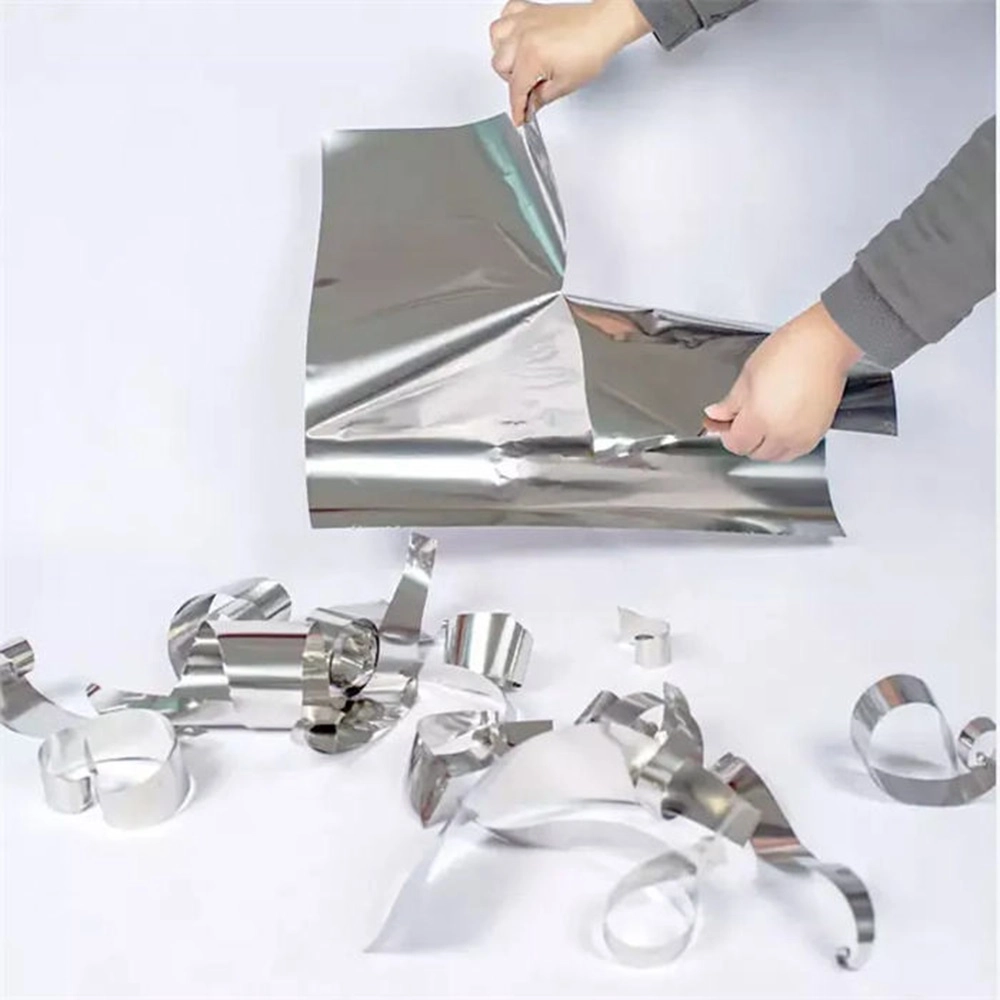
Chemical Composition
According to ASM International, the typical composition of 304 stainless steel includes:
- Chromium (Cr): 18–20%
- Nickel (Ni): 8–10.5%
- Carbon (C): ≤ 0.08%
- Manganese (Mn): ≤ 2%
- Silicon (Si): ≤ 1%
This high chromium content forms a passive oxide layer, which provides excellent corrosion resistance in various environments.
Mechanical Properties
Based on data from AZoM:
- Tensile Strength: ~515 MPa
- Yield Strength: ~205 MPa
- Elongation: ~40%
- Density: 8.0 g/cm³
These properties make 304 stainless steel foil both strong and flexible, especially when processed into ultra-thin sheets.
Thickness, Width, and Hardness Specifications
The performance of stainless steel foil depends heavily on its physical specifications.
Thickness Range
304 stainless steel foil is typically manufactured in thicknesses ranging from:
- 0.01 mm to 0.1 mm (ultra-thin foil)
- 0.1 mm to 0.5 mm (thin sheet applications)
According to ASTM International standards (such as ASTM A240), thickness tolerance and consistency are critical for industrial use.
Width Range
- Standard widths: 100 mm to 1000 mm
- Custom widths are often required for specific industrial processes such as lamination or stamping
Hardness and Temper
The hardness of 304 stainless steel foil can vary depending on cold working:
- Soft (annealed): Maximum flexibility, ideal for bending and forming
- Half-hard: Balanced strength and ductility
- Full-hard: High strength, lower flexibility
Available Thickness Range and Selection Criteria
Modern precision rolling technology allows production of 304 stainless steel foil in thicknesses as thin as 0.01mm, though the practical range for most industrial applications spans from 0.01mm to 0.1mm. According to recent market analysis, the 0.1-0.3mm thickness segment held a dominant 38.8 percent market share in 2024, reflecting its broad applicability across various industries (Market.us Stainless Steel Foil Report). Understanding
how thin stainless steel foil can actually get helps engineers specify the right material for precision applications.
| Thickness Range | Typical Applications | Key Characteristics |
| 0.01-0.02mm | EMI shielding, flexible circuits, HDD components | Maximum flexibility, requires careful handling |
| 0.03-0.05mm | Heat exchanger elements, gaskets, thermal barriers | Balanced formability and structural integrity |
| 0.06-0.08mm | Packaging, moisture barriers, decorative applications | Good handling characteristics, moderate forming |
| 0.09-0.10mm | Automotive components, stamped parts, shims | Higher rigidity, suitable for secondary operations |
When specifying thickness tolerances, most manufacturers can hold ±0.005mm on standard production runs, though tighter tolerances of ±0.002mm are achievable with CNC-controlled rolling systems and additional quality inspection steps. Working with an established 304 stainless steel strip supplier ensures consistent dimensional accuracy across production batches.
Application-Specific Industrial Solutions
One of the most important aspects of 304 stainless steel foil is how its specifications are tailored for different applications.
1. Thermal Insulation Films
304 stainless steel foil is widely used in thermal insulation systems for buildings and industrial equipment.
Technical Requirements:
- Thickness: 0.02–0.08 mm
- Width: 500–1000 mm
- Temper: Soft (annealed)
Why it works:
- High reflectivity reduces heat transfer
- Corrosion resistance ensures long service life
According to ScienceDirect, thin metallic foils significantly improve thermal barrier efficiency when used in multilayer insulation systems.
2. Electronics and Precision Components
In the electronics industry, 304 stainless steel foil is used for shielding, connectors, and micro-components.
Technical Requirements:
- Thickness: 0.01–0.05 mm
- High-dimensional accuracy
- Clean surface finish
Why it works:
- Excellent formability for micro-stamping
- Good resistance to oxidation at moderate temperatures
3. Food Processing and Medical Applications
304 stainless steel is widely recognized for its safety in food and medical environments.
Technical Requirements:
- Smooth, polished surface
- Thickness: 0.03–0.1 mm
According to U.S. Food and Drug Administration, stainless steel materials like 304 are considered safe for food contact due to their non-reactive and corrosion-resistant nature.
4. Automotive and Industrial Gaskets
Foil is used in high-temperature gaskets and sealing systems.
Technical Requirements:
- Thickness: 0.05–0.2 mm
- Half-hard or full-hard temper
Why it works:
- against heat and pressure
- Maintains structural integrity under stress
Manufacturing Process and Quality Control
304 stainless steel foil is produced through advanced rolling and finishing techniques.
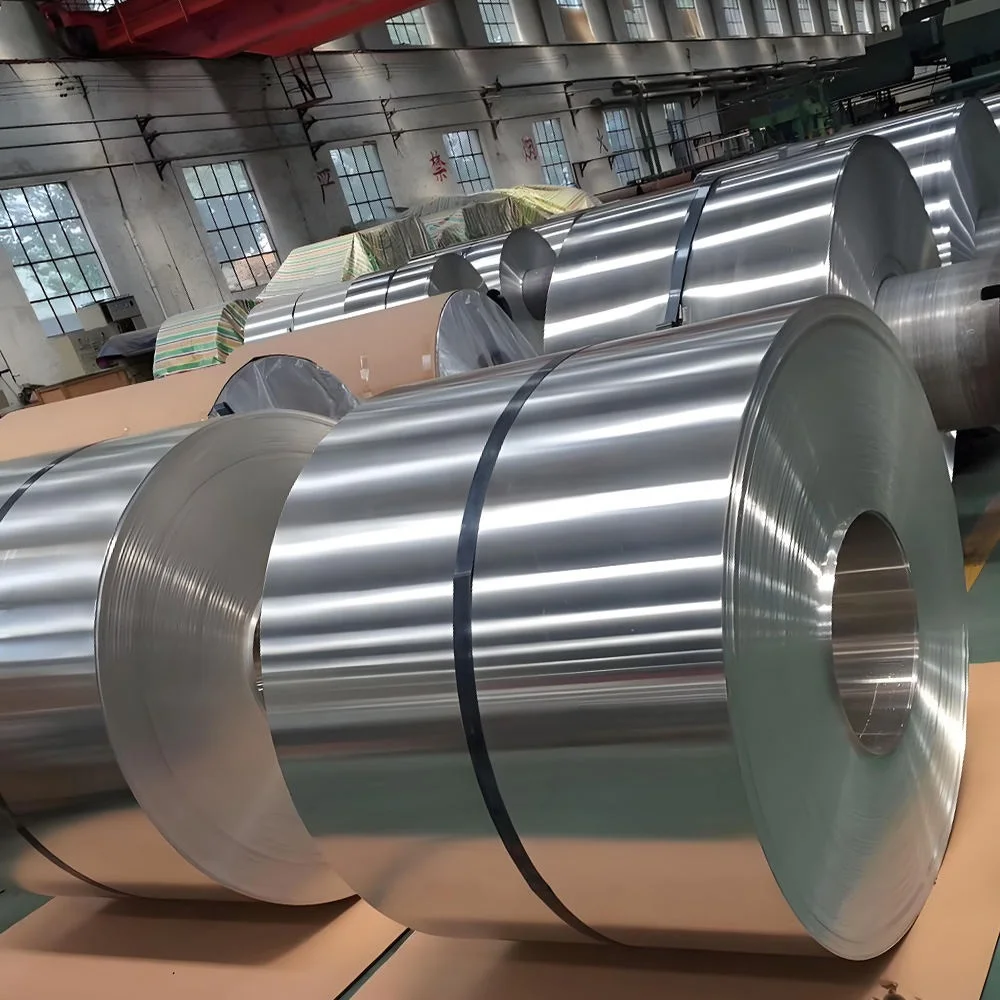
According to the International Stainless Steel Forum:
- Cold rolling increases strength
- Annealing improves ductility
- Surface finishing enhances corrosion resistance
To explore industrial-grade strip materials,
Or check supplier details here:
https://stainlesssteelfoil.com/myriad-304-stainless-steel-strip-supplier/
Market Trends and Industry Growth
The global stainless steel market continues to expand due to:
- Infrastructure development
- Renewable energy projects
- Electric vehicle production
The World Steel Association reports consistent growth in stainless steel demand, especially in Asia and North America.
For sustainable architecture insights: Stainless steel coil sustainable architecture impact.
Comparison: 304 vs Other Stainless Steel Foils
Compared to other grades like 301 or 316:
- 304 offers better cost-performance balance
- 316 provides higher corrosion resistance
- 301 offers higher strength but less corrosion resistance
Learn more about 301 here:
https://stainlesssteelfoil.com/what-is-301-stainless-steel-foil/
Summary
304 stainless steel foil remains one of the most versatile and widely used materials in modern industry. Its balanced composition, excellent corrosion resistance, and wide range of thickness options make it suitable for applications ranging from thermal insulation to precision electronics.
By selecting the correct thickness, width, and hardness, manufacturers can optimize performance for specific use cases. Supported by authoritative data from organizations like ASM International and World Steel Association, this material continues to drive innovation across industries.
FAQs
Q: What is 304 stainless steel foil used for?
A: 304 stainless steel foil is used in insulation, electronics, food processing, and industrial sealing due to its corrosion resistance and flexibility.
Q. How thin can 304 stainless steel foil get?
A: 304 stainless steel foils can be manufactured as thin as 0.01 mm using advanced rolling processes, making it suitable for precision applications.
Q: Is 304 stainless steel foils heat-resistant?
Yes, 304 stainless steel foils can withstand temperatures up to 870°C intermittently, according to AZoM.
Q: Is 304 stainless steels foil food safe?
Yes, 304 stainless steel foil is food-safe and approved for food contact applications by the U.S. Food and Drug Administration.
Q: What thickness should I choose for insulation?
For insulation, 304 stainless steel foil between 0.02 and 0.08 mm is ideal, depending on flexibility and thermal performance requirements.