High-performance industries, a few microns can define success or failure. Whether in aerospace shielding, medical components, or micro-electronics, Precision Stainless Steel Foil Solutions plays a decisive role when tolerances matter most. Manufacturers rely on ultra-thin gauges not only for corrosion resistance, but also for dimensional stability, surface finish control, and predictable mechanical performance.
Unlike standard sheet products, precision foil requires advanced rolling, annealing, and slitting processes. It must meet strict flatness, thickness, and hardness specifications. Even a small variation can disrupt automated assembly lines or compromise product safety.
This guide explores how precision stainless steel foil is manufactured, where it is used, and why tolerance control has become essential in modern engineering.
Stainless Steel Before Precision Foil
To appreciate the performance of precision stainless steel foil, it helps to understand stainless steel itself. According to the detailed overview of stainless steel composition and properties on Wikipedia, stainless steel contains at least 10.5% chromium. This chromium forms a passive oxide layer that protects the surface from corrosion.
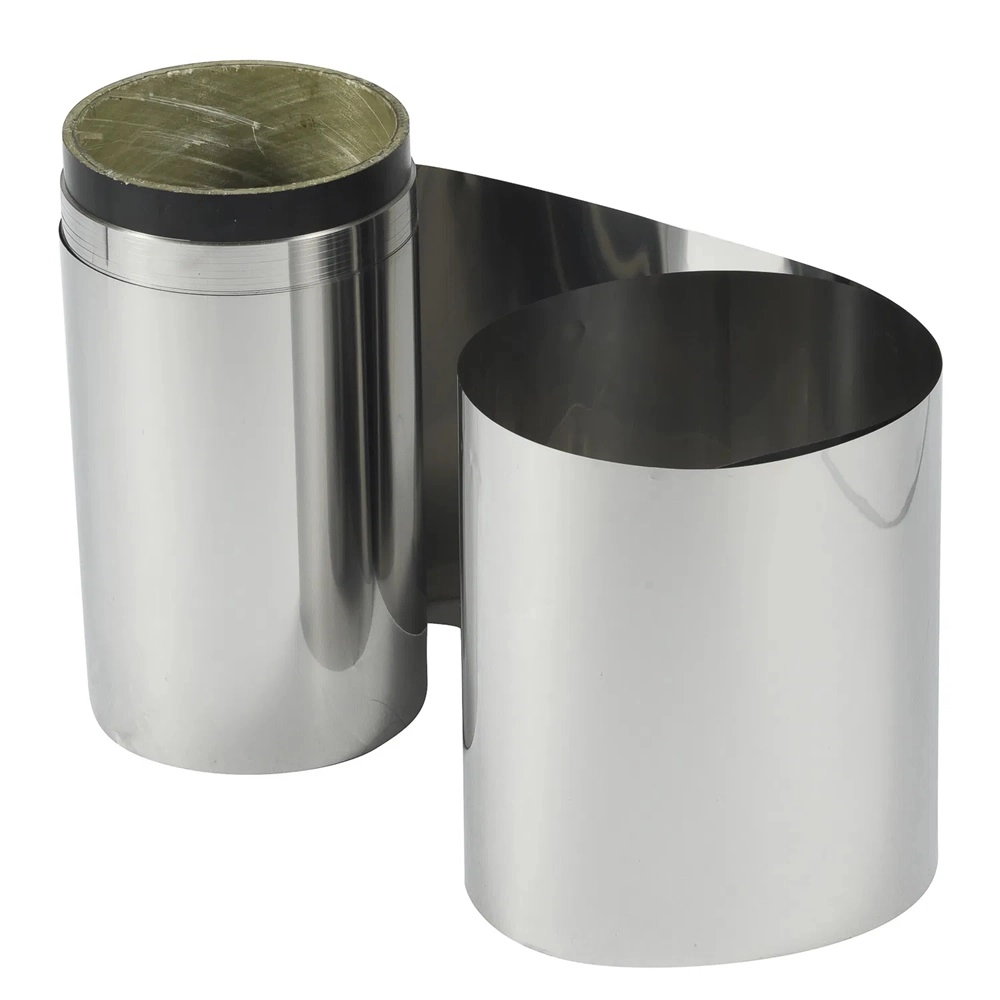
However, when stainless steel is rolled down to foil thickness—sometimes below 0.02 mm—the material behaves differently. Grain structure, work hardening, and surface condition all become critical factors.
For readers seeking a foundational explanation, the guide on What is Stainless Steel Foils? explains how foil differs from sheet and strip products. Precision foil typically refers to material rolled to ultra-thin dimensions with tight thickness tolerances and controlled mechanical properties.
What Makes Precision Stainless Steel Foil Different?
Thickness Accuracy at the Micron Level
Standard sheet tolerances often vary by ±5–10%. Precision stainless steel foil, by contrast, can maintain tolerances within ±2–5 microns depending on thickness.
For example:
| Nominal Thickness | Standard Tolerance | Precision Tolerance |
|---|---|---|
| 0.10 mm | ±0.01 mm | ±0.003 mm |
| 0.05 mm | ±0.007 mm | ±0.002 mm |
| 0.02 mm | ±0.005 mm | ±0.0015 mm |
This level of control ensures consistent forming, stamping, and laser cutting.
Surface Finish and Cleanliness
Precision stainless steel foil often requires:
- Bright annealed surfaces
- Low inclusion content
- Burr-free edges
- Minimal surface roughness
Contaminants or micro-scratches can interfere with electronics, medical implants, or heat-treatment wraps.
Controlled Mechanical Properties
Engineers specify hardness ranges such as quarter-hard, half-hard, or full-hard. The microstructure must remain uniform across the entire coil.
For example, 301 stainless steel foil is frequently selected for high strength and spring properties. Meanwhile, 309 stainless steel foil performs exceptionally in elevated temperature environments due to its higher chromium and nickel content.
The Manufacturing Process Behind Precision Stainless Steel Foil
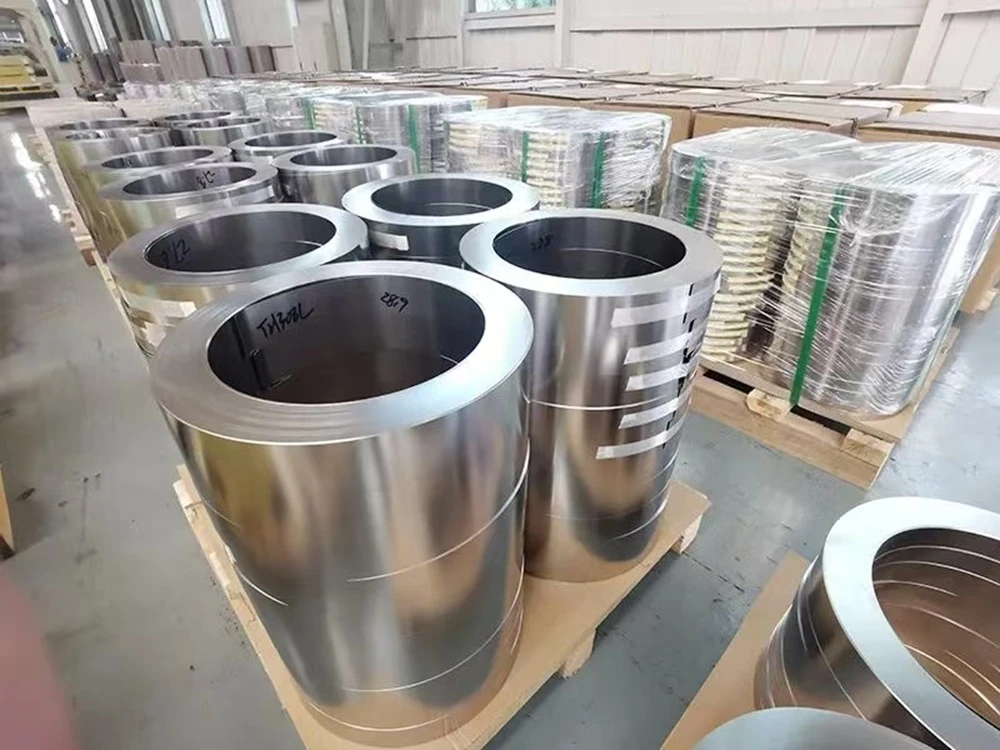
The journey from hot-rolled coil to ultra-thin precision foil involves several carefully controlled stages.
Hot Rolling
Production begins with hot-rolled stainless steel slab reduced into coil form. Thickness may initially exceed 3 mm.
Cold Rolling
Cold rolling gradually reduces thickness through multiple passes. This step increases strength through work hardening while improving surface finish.
For a detailed explanation of this transformation process, see How stainless steel foil is made from hot rolled coil to ultra-thin precision.
Intermediate Annealing
Annealing restores ductility lost during cold rolling. Precision stainless steel foil often undergoes bright annealing in controlled atmospheres to maintain surface integrity.
Final Rolling and Gauge Control
Modern rolling mills use automatic thickness control systems and laser measurement devices. These systems detect deviations in real time and adjust roll pressure instantly.
Slitting and Inspection
After rolling, the material is slit into narrow strips. Burr-free edges are essential for electronics and battery manufacturing. Each coil undergoes dimensional inspection, hardness testing, and surface evaluation.
For complete technical data, refer to the Stainless Steel Technical Resource.
Why Tolerances Matter Most
Aerospace and Defense
Aircraft shielding and thermal barriers demand consistent thickness. Even minor variation can affect electromagnetic shielding effectiveness or thermal conductivity.
In aerospace assemblies, automation requires uniform feed rates. Precision stainless steel foil ensures predictable performance across thousands of parts.
Medical Devices
Medical springs, surgical tools, and implant components require biocompatibility and tight dimensional control. A deviation of a few microns may compromise device reliability.
Battery and Energy Systems
Lithium-ion battery tabs and fuel cell components depend on precise foil thickness to control electrical resistance and heat dissipation.
Heat Treatment Applications
Tool and die manufacturers wrap components in stainless steel foil during vacuum or atmosphere heat treatment. Thickness consistency ensures oxygen protection without excessive material waste.
The guide on Stainless Steel Foil Heat Treatment explains how foil prevents decarburization and scaling during high-temperature processing.
Comparing Precision Stainless Steel Foil vs Standard Foil
| Feature | Standard Foil | Precision Stainless Steel Foil |
|---|---|---|
| Thickness Control | Moderate | Ultra-tight |
| Surface Finish | Variable | Controlled |
| Edge Quality | Basic slit | Burr-free precision slit |
| Mechanical Uniformity | General | Engineered specification |
| Application | General use | Critical engineering |
The difference often determines product lifespan and safety.
Popular Grades Used in Precision Applications
301 Stainless Steel
Offers high tensile strength and excellent spring properties. Ideal for clips, springs, and connectors.
304 Stainless Steel
The most widely used austenitic grade. Balances corrosion resistance and formability.
309 Stainless Steel
Superior oxidation resistance at elevated temperatures. Frequently used in heat shields and furnace wraps.
Each grade serves specific purposes depending on environment and load conditions.
Surface Treatments and Finishes
Precision stainless steel foil may feature:
- Bright annealed (BA)
- 2B finish
- Matte finish
- Custom surface roughness
Surface finish directly affects weldability, adhesion, and electrical contact performance.
If you are selecting between foil and sheet formats, the article on Steel Foil Sheet clarifies dimensional differences.
Industries That Depend on Precision Stainless Steel Foil
Electronics manufacturers use ultra-thin foil for shielding against electromagnetic interference. Automotive engineers rely on it for exhaust gaskets and flexible connectors. Chemical processing plants require corrosion-resistant barrier layers.
The broader Use of Stainless Steel Foils illustrates how diverse these applications have become.
Meanwhile, manufacturers searching for tailored dimensions can explore available options on the Stainless Steel Foil Products Page.
Quality Control Standards
Precision stainless steel foil must comply with standards such as ASTM A240 and ASTM A480. Testing includes:
- Tensile strength verification
- Elongation measurement
- Hardness testing
- Thickness mapping
- Surface inspection
Automated systems now map thickness across the full coil width. Data logging ensures traceability.
According to industry data, advanced gauge control systems can maintain thickness variation within 1% across a production run.
How to Select the Right Precision Stainless Steel Foil
When choosing foil, consider:
Thickness requirements
Hardness condition
Corrosion environment
Forming complexity
Temperature exposure
Start by reviewing technical resources available on the official stainless steel foil website. You can also contact specialists directly through the Contact Page for guidance. If you want broader product options, visit the complete Products Section.
Cost vs Performance Considerations
Precision stainless steel foil may cost more than standard strip. However, tighter tolerances reduce scrap rates and improve manufacturing efficiency.
In automated stamping operations, even a small thickness variation can cause die misalignment. That downtime costs far more than investing in precision material.
Therefore, many manufacturers treat Precision Stainless Steel Foil Solutions as an operational investment rather than a raw material expense.
Sustainability and Recycling
Stainless steel is 100% recyclable without loss of quality. Modern production uses significant recycled content.
Because precision foil minimizes material waste through tight gauge control, it also supports sustainable manufacturing practices.
The Future of Precision Stainless Steel Foil
Emerging industries such as electric vehicles, wearable electronics, and hydrogen fuel systems continue to push tolerance requirements even tighter.
Advanced rolling mills now integrate AI-based thickness monitoring. These systems predict deviations before they occur.
As tolerances narrow and applications expand, Precision Stainless Steel Foil Solutions will remain a foundational material in next-generation engineering.
For more industry insights, explore additional articles on the Stainless Steel Foil Blog.
Summary
When tolerances matter most, precision stainless steel foil delivers reliability at the micron level. From aerospace shielding to medical springs and battery tabs, its consistent thickness, controlled hardness, and superior surface finish make it indispensable. Manufacturers seeking performance, efficiency, and long-term durability continue to rely on Precision Stainless Steel Foil Solutions as a cornerstone material in modern engineering. Get for more information visit stainless steel foil and contact us.
FAQs
What thickness range defines precision stainless steel foil?
Precision stainless steel foil typically ranges from 0.01 mm to 0.10 mm, with tight tolerances maintained within a few microns. Manufacturers specify precision stainless steel foil when consistent thickness is critical for performance.
Why is precision stainless steel foil important in aerospace?
Aerospace components demand extreme reliability. Precision stainless steel foil ensures uniform shielding, thermal stability, and structural integrity under vibration and heat.
How does precision stainless steel foil differ from regular sheet metal?
Unlike sheet metal, precision stainless steel foil features ultra-thin gauges, tighter tolerances, and controlled mechanical properties tailored for critical engineering applications.
Can precision stainless steel foil withstand high temperatures?
Yes. Grades like 309 are engineered for elevated temperatures. Selecting the correct Precision Stainless Steel Foil Solutions grade ensures reliable oxidation resistance.
Is precision stainless steel foil recyclable?
Absolutely. Precision stainless steel foil retains full recyclability, making it a sustainable choice for advanced manufacturing.