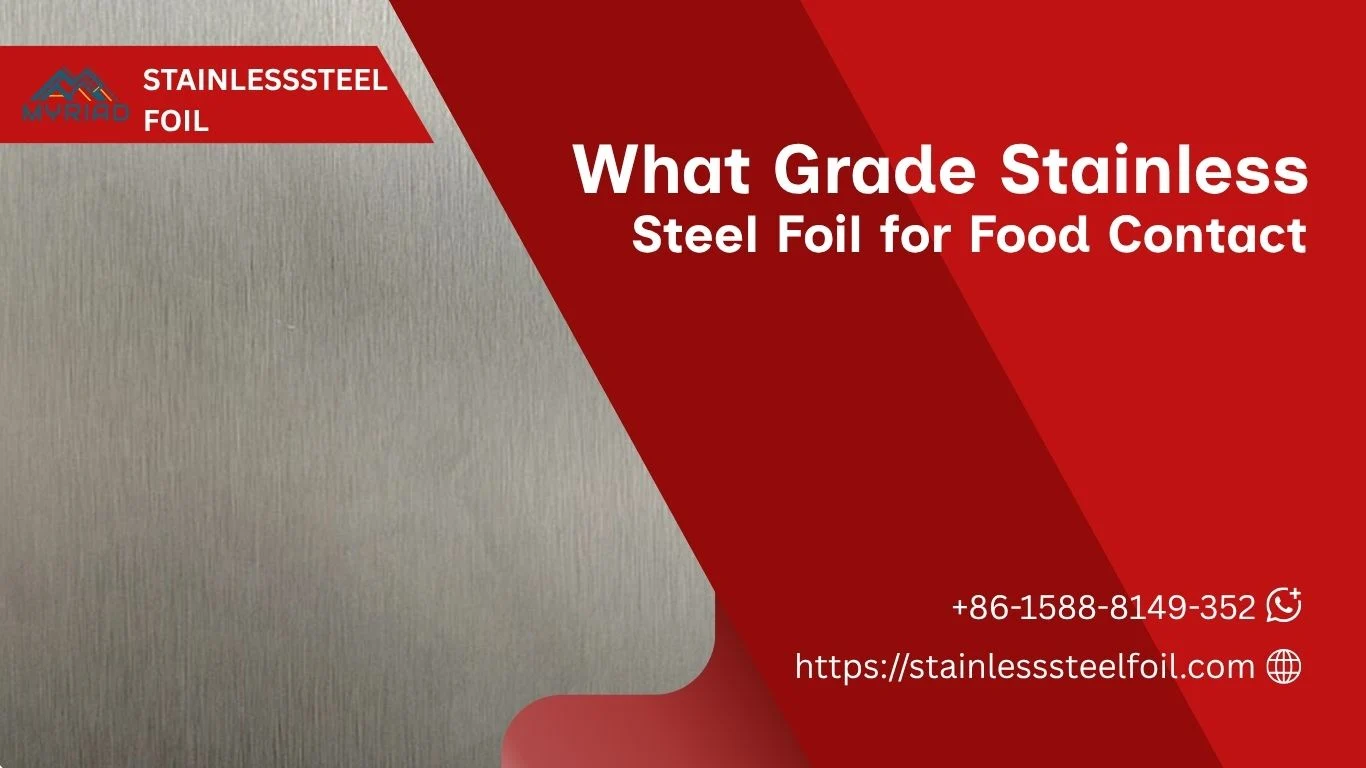
Food safety depends on more than ingredients and processing methods. The materials used during preparation, packaging, storage, and transportation also play a critical role. Among these materials, stainless steel foil has become one of the most trusted options for food-contact applications because of its strength, corrosion resistance, and hygienic properties.
However, many buyers, manufacturers, and food processors often ask the same question What grade stainless steel foil is safe for food contact?
The answer is not always straightforward. Several grades of stainless steel foil are available on the market, and each offers different levels of corrosion resistance, durability, and performance. While some grades are ideal for direct food contact, others are better suited for industrial applications where food safety is not the primary concern.
In this guide, we will explore the most common food-grade stainless steel foil grades, explain their differences, and help you choose the best material for your application.
Stainless Steel Foil for Food Applications
Stainless steel is an iron-based alloy containing chromium and, in many cases, nickel and other elements. According to the information available on Wikipedia’s stainless steel resource wiki Stainless_steel, stainless steel must contain at least 10.5% chromium. This chromium creates a protective oxide layer that helps prevent rust and corrosion.
When manufactured into thin sheets, the material becomes stainless steel foil, which offers flexibility, durability, and excellent resistance to heat and chemicals.
Because food products often contain moisture, acids, oils, and salts, choosing a corrosion-resistant material is essential. This is why stainless steel foil has become a preferred material in commercial kitchens, food-processing facilities, bakeries, and packaging operations.
For a detailed overview of available foil grades, readers can explore the guide available at the different grades of stainless steel foil and their uses
Why Stainless Steel Foil Is Popular in the Food Industry
The food industry demands materials that remain safe under challenging conditions. Equipment and food-contact surfaces are exposed to heat, moisture, cleaning chemicals, and acidic ingredients every day. A high-quality stainless steel foil offers several advantages. First, it resists corrosion exceptionally well. Unlike ordinary steel, it does not rust easily when exposed to water or food acids.
Second, it can tolerate high temperatures without losing its structural integrity. This makes it suitable for baking, cooking, sterilization, and heat-treatment applications.
Third, it provides a smooth, non-porous surface that helps reduce bacterial growth and simplifies cleaning procedures.
Finally, stainless steel foil is recyclable and environmentally friendly, making it an attractive option for companies focused on sustainability.
What Makes Stainless Steel Food Grade?
Not every stainless steel alloy qualifies as food grade. Food-grade stainless steel must resist corrosion, prevent contamination, and remain stable when exposed to food products.
The key factors that determine food-grade suitability include chemical composition, surface finish, corrosion resistance, and compliance with food-contact regulations.
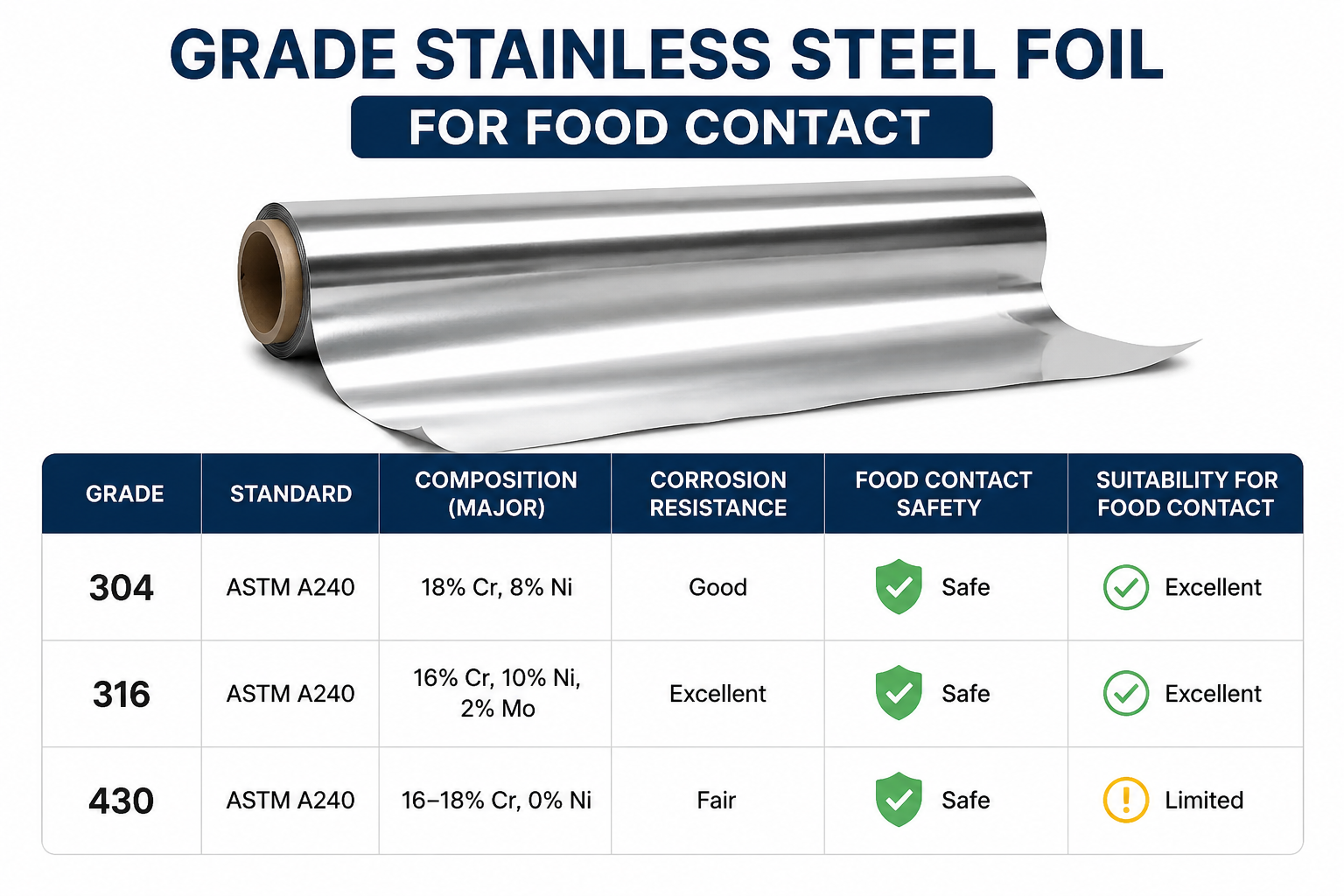
The most commonly approved grades for food-contact applications are 304 and 316 stainless steel.
These grades have been widely used in food manufacturing for decades because they provide the right balance of safety, durability, and affordability.
304 Stainless Steel Foil: The Industry Standard
When discussing food-safe materials, 304 stainless steel foil is usually the first grade mentioned. This alloy contains approximately 18% chromium and 8% nickel. These elements create excellent corrosion resistance while maintaining affordability.
As a result, 304 stainless steel foil has become the standard choice for most food-processing applications.
Many manufacturers use it in food storage containers, bakery equipment, preparation tables, cooking systems, and food packaging machinery.
A more detailed explanation can be found in this resource 304 stainless steel foil for food
One reason for its popularity is versatility. It performs well across a wide range of temperatures and environmental conditions. It also resists staining and maintains an attractive appearance even after years of use.
For buyers seeking additional technical information, the complete guide at complete guide for 304 stainless steel foil offers valuable insights.
When 316 Stainless Steel Foil Is a Better Choice
Although 304 stainless steel foil works well in most situations, some food-processing environments are more demanding. This is where 316 stainless steel foil becomes important.
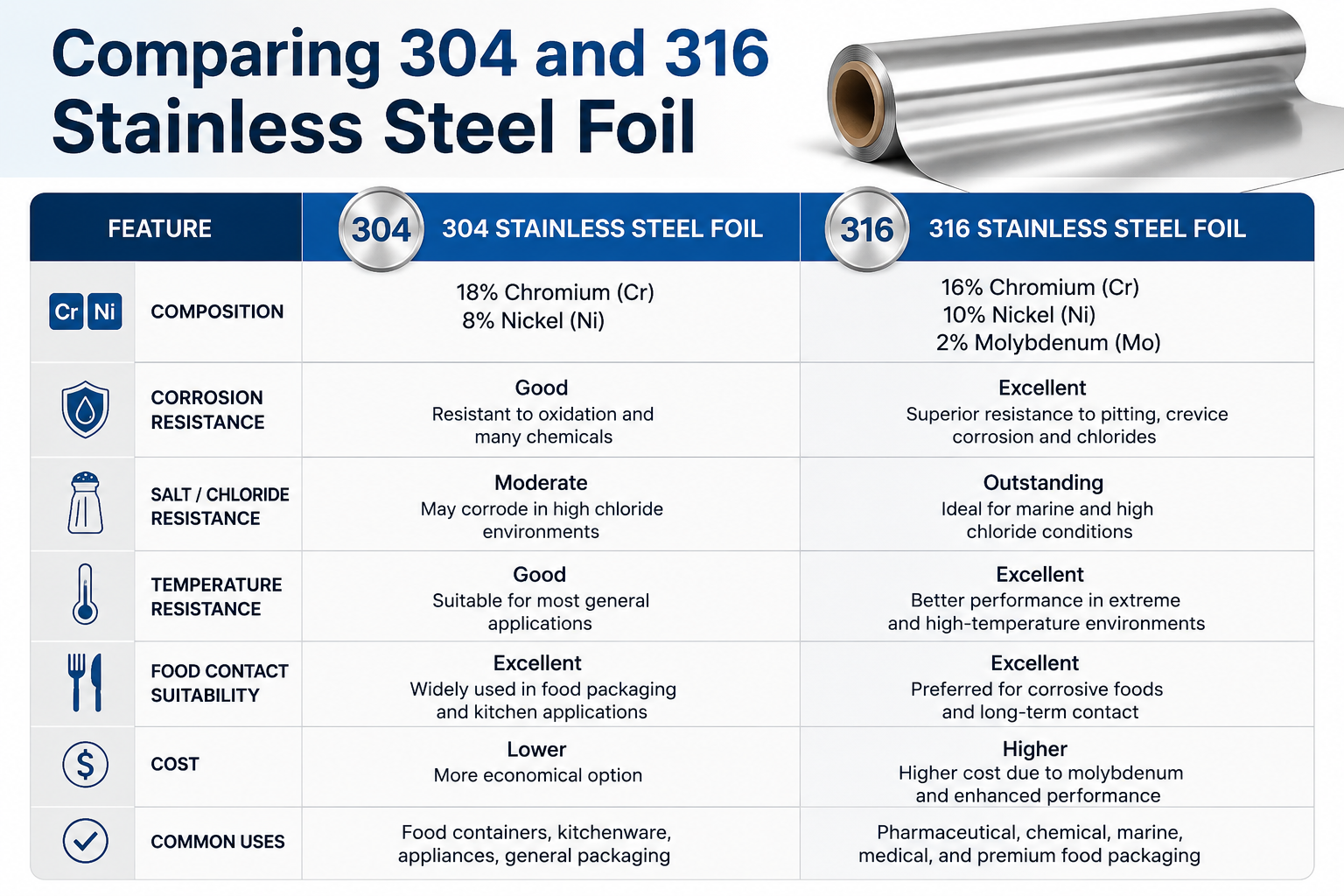
The primary difference between 304 and 316 stainless steel is the addition of molybdenum in 316. Molybdenum improves resistance to chlorides and aggressive chemicals.
As a result, 316 stainless steel foil is often preferred for seafood processing, marine food production, pickling facilities, and applications involving high salt concentrations.
The improved corrosion resistance comes with a higher price tag, but many manufacturers consider the investment worthwhile when operating in harsh environments.
Comparing 304 and 316 Stainless Steel Foil
| Property | 304 Stainless Steel Foil | 316 Stainless Steel Foil |
|---|---|---|
| Food Safety | Excellent | Excellent |
| Corrosion Resistance | Very Good | Outstanding |
| Salt Resistance | Good | Excellent |
| Acid Resistance | Good | Excellent |
| Cost | Lower | Higher |
| Availability | High | Moderate |
| Food Processing | Excellent | Excellent |
| Seafood Applications | Good | Preferred |
For most commercial kitchens and food-processing facilities, 304 remains the preferred option because it offers outstanding performance at a reasonable cost. However, operations involving saltwater, seafood, or aggressive sanitizing chemicals may benefit from upgrading to 316.
Is 430 Stainless Steel Foil Suitable for Food Contact?
Another grade occasionally used in food applications is 430 stainless steel. Unlike 304 and 316, 430 contains little or no nickel. This makes it less expensive, but it also reduces corrosion resistance.
In dry-food environments, 430 stainless steel foil may perform adequately. However, it is generally not the first choice for demanding food-processing applications.
Facilities dealing with moisture, acidic ingredients, or frequent cleaning cycles typically choose 304 or 316 instead.
Food Industry Applications of Stainless Steel Foil
Today, stainless steel foil is used in a wide range of food-related industries. Bakeries rely on it because it withstands repeated heating cycles. Food packaging companies use it because it resists contamination. Commercial kitchens value its durability and ease of cleaning. Meat and poultry processors appreciate its corrosion resistance. Dairy manufacturers benefit from its hygienic surface properties.
Industrial food-processing facilities often use stainless steel foil in heat shields, conveyor systems, and specialized manufacturing equipment.
Readers interested in cooking-related applications can learn more at stainless steel foil for cooking safety benefits and uses
Choosing the Right Thickness for Food Contact
Grade selection is important, but thickness also affects performance. Thin stainless steel foil works well for flexible packaging applications. Medium-gauge foil is often used in food-processing equipment and thermal barriers.
Heavier gauges provide greater strength for industrial manufacturing environments. The best thickness depends on operating temperature, mechanical stress, and processing requirements.
Companies looking for different foil specifications can review available options at products stainless steel foil
How to Verify Food-Grade Stainless Steel Foil
Purchasing from a reputable supplier is essential. A reliable manufacturer should provide documentation confirming chemical composition and production quality.
Mill test certificates, quality-control reports, and material traceability records help ensure compliance with food-industry requirements.
Businesses should also evaluate surface finish quality, dimensional consistency, and manufacturing standards before making a purchase.
Additional technical resources can be found at 304 stainles -steel foil properties applications For industry updates and educational content, readers may visit stainless steel foil blog
The Growing Demand for Stainless Steel Foil in Food Processing
Global food production continues to grow each year. At the same time, food safety regulations are becoming more stringent. These trends have increased demand for hygienic materials such as stainless steel foil.
Manufacturers are investing in durable, corrosion-resistant materials that reduce maintenance costs and improve product safety. Because stainless steel is recyclable and long-lasting, it also aligns with sustainability goals adopted by many food companies worldwide.
Industry professionals seeking additional manufacturing insights can explore youtube.com/@MyriadStainlessSteel2014
How to Select a Reliable Stainless Steel Foil Supplier
Finding the right supplier is just as important as selecting the right material grade. Experienced suppliers offer technical support, material certifications, quality assurance documentation, and customized solutions. A trusted supplier can also help determine the best grade and thickness for specific food-processing applications. Businesses seeking assistance with material selection can contact industry experts through contact us Additional product information is available at stainless steel foil.
Summary
Selecting the right stainless steel foil for food contact is essential for maintaining food safety and product quality. While several grades exist, 304 stainless steel foil remains the preferred choice for most applications because it offers excellent corrosion resistance, durability, and affordability. For more demanding environments, 316 stainless steel foil provides additional protection against salt and chemicals.
Choosing certified food-grade materials ensures long-term performance and compliance with food-industry standards. Get for more information visit stainless steel foil and contact us.
FAQs
Q: What is the best stainless steel foil grade for food contact?
A: For most food-processing applications, 304 stainless steel foil is considered the best balance of food safety, corrosion resistance, and affordability.
Q: Is stainless steel foil safer than ordinary steel?
A: Yes. Stainless steel foil contains chromium, which creates a protective layer that helps prevent rust and contamination.
Q: Can stainless steel foil be used for cooking?
A: Yes. Stainless steel foil can withstand high temperatures and is widely used in commercial cooking and food-processing operations.
Q: Why is 316 stainless steel foil more expensive?
A: 316 stainless steel foil contains molybdenum, which improves resistance to salt, acids, and harsh cleaning chemicals.
Q: Does stainless steel foil rust over time?
A: Under normal conditions, high-quality stainless steel foil resists rust very effectively. Proper maintenance further extends its lifespan.
Q: Is stainless steel foil recyclable?
A: Yes. Stainless steel foil is highly recyclable and can be reused without significant loss of performance or quality.