Stainless steel is an alloy primarily composed of iron, chromium, and nickel. Its resistance to corrosion, durability, and versatility make it one of the most widely used materials in modern manufacturing. Each stainless steel grade has unique characteristics that determine its suitability for specific environments.
Grades such as 301, 304, and 316 are among the most common, but they differ in composition, mechanical strength, and corrosion resistance. By comparing them side by side, you can identify which grade best fits your project needs. For a deeper dive into stainless steel basics, you can explore Wikipedia’s stainless steel overview.
Why Stainless Steel Grade Matters
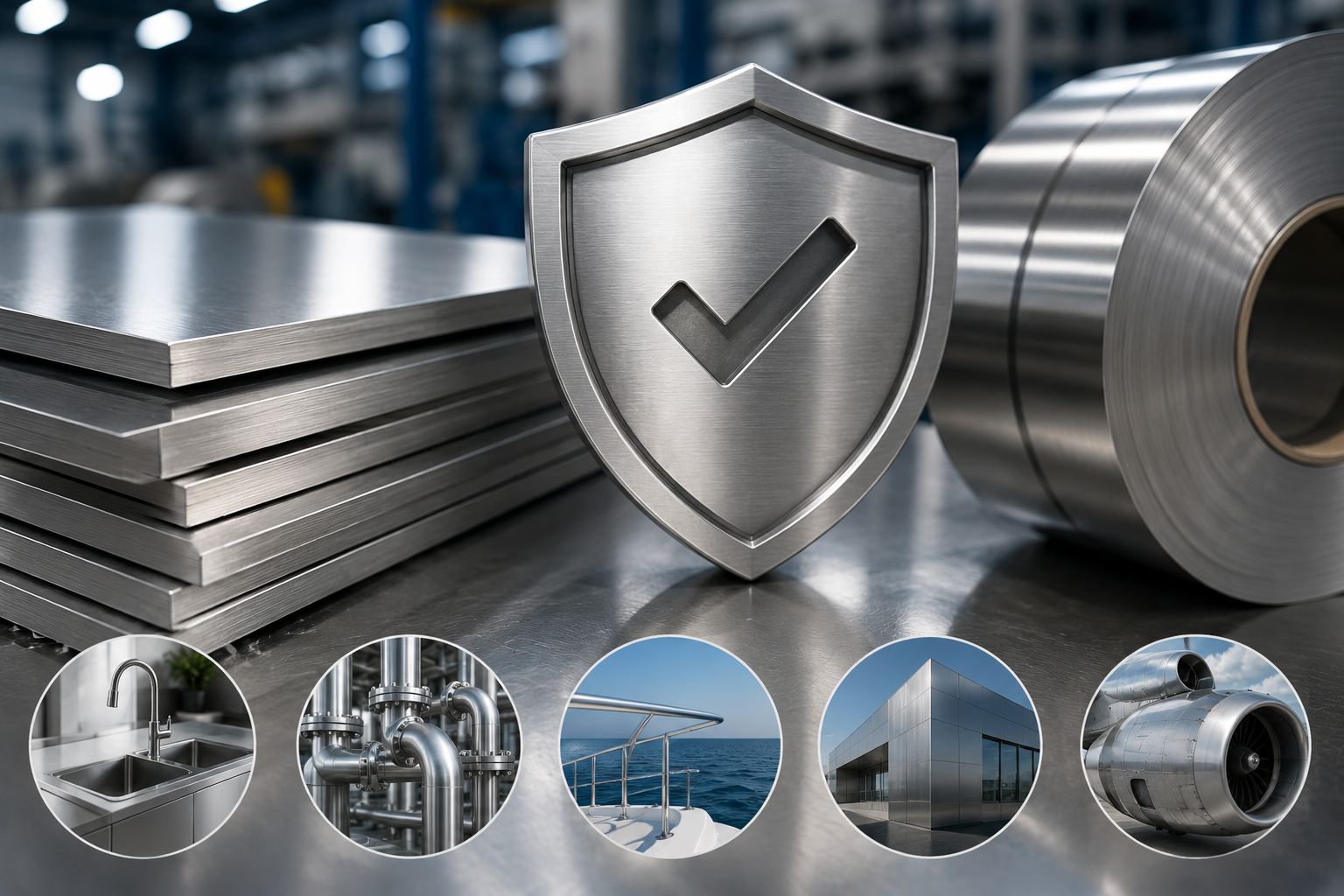
Selecting the right stainless steel grade is more than just a technical decision—it directly impacts the performance, safety, and longevity of your project. Each grade, whether 301, 304, or 316, has unique properties that make it suitable for different environments. For example, 301 stainless steel is prized for its high tensile strength, making it ideal for aerospace and automotive applications where durability under stress is critical. In contrast, 304 stainless steel offers excellent corrosion resistance and affordability, which is why it dominates in food processing, kitchen equipment, and architectural projects. Meanwhile, 316 stainless steel stands out in marine and chemical industries due to its molybdenum content, which provides superior resistance against chlorides and harsh chemicals.
Choosing the wrong grade can lead to premature corrosion, structural failure, or unnecessary costs. That’s why understanding the differences is essential for industries ranging from food safety to hydrogen energy systems. If you’re unsure which grade suits your needs, explore the detailed stainless steel grade comparison chart or browse stainless steel foil products to see how each grade is applied in real-world scenarios. By making an informed choice, you ensure your investment delivers maximum value, durability, and compliance with industry standards
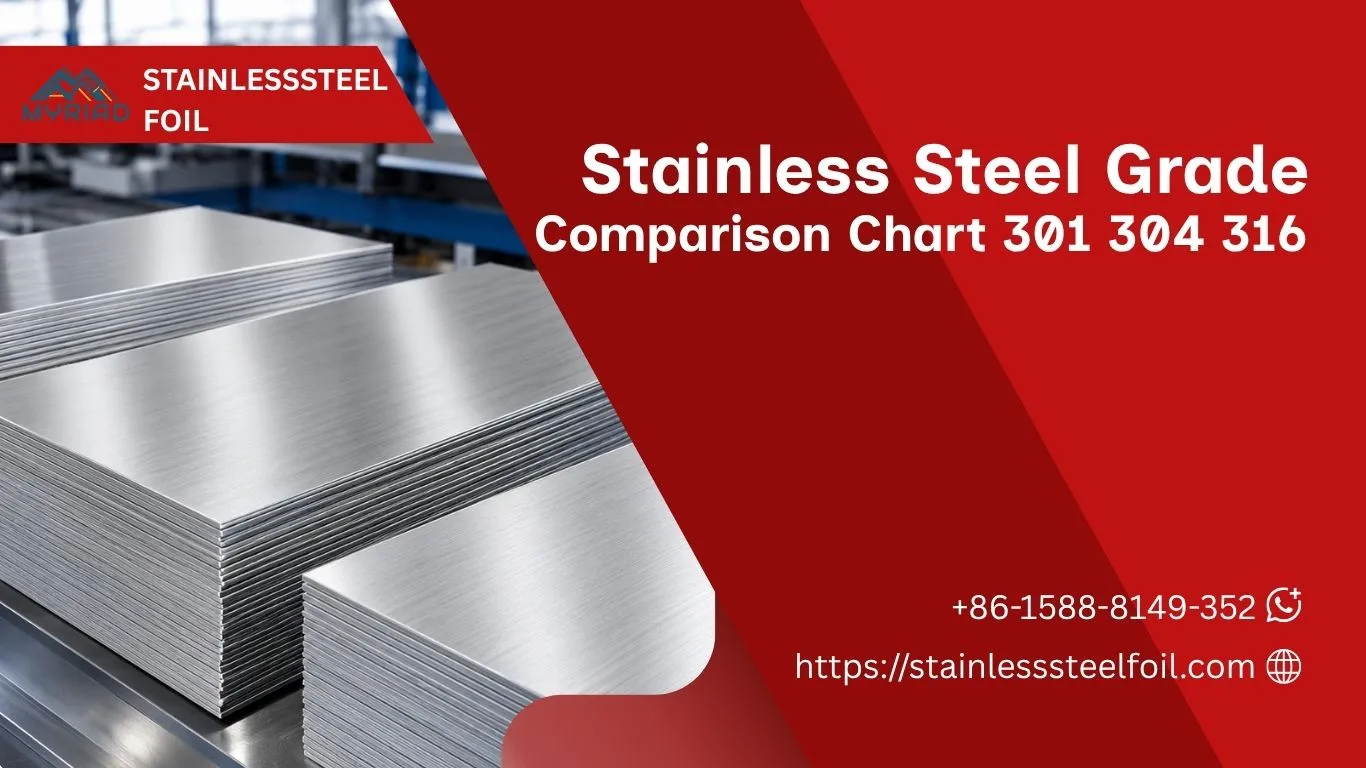
Stainless Steel Grade Comparison Chart: 301 vs 304 vs 316
Here’s a detailed chart comparing the three grades:
| Stainless Steel Grade | Composition | Corrosion Resistance | Mechanical Strength | Common Applications |
|---|---|---|---|---|
| 301 | 16–18% Cr, 6–8% Ni | Moderate | High tensile strength | Springs, automotive trim, aerospace |
| 304 | 18–20% Cr, 8–10.5% Ni | Excellent | Good balance of strength and ductility | Food processing, kitchen equipment, architecture |
| 316 | 16–18% Cr, 10–14% Ni, 2–3% Mo | Superior (especially against chlorides) | Strong and tough | Marine, chemical processing, medical implants |
Stainless Steel Grade 301
The 301 stainless steel grade is a versatile alloy widely recognized for its exceptional strength and durability. Unlike 304 and 316, 301 is specifically engineered to deliver higher tensile strength, making it ideal for industries where mechanical performance is more critical than corrosion resistance. With a chromium content of 16–18% and nickel levels between 6–8%, this grade achieves remarkable toughness while maintaining flexibility.
One of the defining features of 301 stainless steel is its ability to work harden rapidly. This means that when subjected to mechanical stress, it becomes even stronger, which is why it is often used in aerospace, automotive, and industrial applications. Springs, aircraft components, and conveyor belts are common examples where 301 excels. However, its corrosion resistance is moderate compared to 304 stainless steel grade, which is more suitable for food and hygienic environments.
For projects requiring thin yet strong materials, 301 stainless steel foil is a popular choice. You can explore specialized options at stainless steel foil products. If you want a side-by-side breakdown of how 301 compares with other grades, check the detailed stainless steel grade comparison chart.
Stainless Steel Grade 304
The 304 stainless steel grade is the most widely used and recognized type of stainless steel worldwide. Often referred to as “18/8 stainless steel” because of its composition—approximately 18% chromium and 8% nickel—it offers an excellent balance of corrosion resistance, durability, and affordability. This makes it the go-to choice for industries ranging from food processing to construction.
One of the biggest advantages of 304 stainless steel grade is its resistance to oxidation and rust in everyday environments. It performs exceptionally well in kitchens, breweries, and hospitals, where hygiene and cleanliness are critical. Unlike 301, which prioritizes strength, 304 provides superior corrosion resistance, making it ideal for utensils, sinks, and architectural cladding. However, it does have limitations in chloride-rich environments, such as coastal regions, where 316 stainless steel grade may be more suitable.
304 stainless steel is also easy to fabricate, weld, and polish, which explains its popularity in decorative and structural applications. For those working in food-related industries, you can explore stainless steel foil for food to see how 304 foil ensures safety and quality. Additionally, if you want to compare 304 with other grades, check the detailed stainless steel grade comparison chart.
Stainless Steel Grade 316
The 316 stainless steel grade is often regarded as the premium choice among common stainless steels because of its exceptional resistance to corrosion, especially in chloride-rich environments. Its composition includes 16–18% chromium, 10–14% nickel, and 2–3% molybdenum. The addition of molybdenum is what sets 316 apart from grades like 301 and 304, giving it superior protection against pitting and crevice corrosion.
This grade is widely used in industries where exposure to saltwater, chemicals, or acidic environments is unavoidable. For instance, marine equipment, chemical processing plants, and surgical instruments often rely on 316 stainless steel grade because of its ability to withstand aggressive conditions without compromising structural integrity. It is also a preferred choice in pharmaceutical and medical applications, where hygiene and durability are critical.
Although 316 is more expensive than 304 or 301, its long-term performance often justifies the investment. In coastal construction projects, for example, 316 stainless steel can last decades longer than 304, reducing maintenance costs significantly. For those interested in variations, you can explore 316 vs 316L stainless steel to understand subtle differences in performance.
If you want to see how 316 compares directly with other grades, check the detailed stainless steel grade comparison chart. Ultimately, 316 stainless steel grade is the material of choice when maximum corrosion resistance and durability are required.
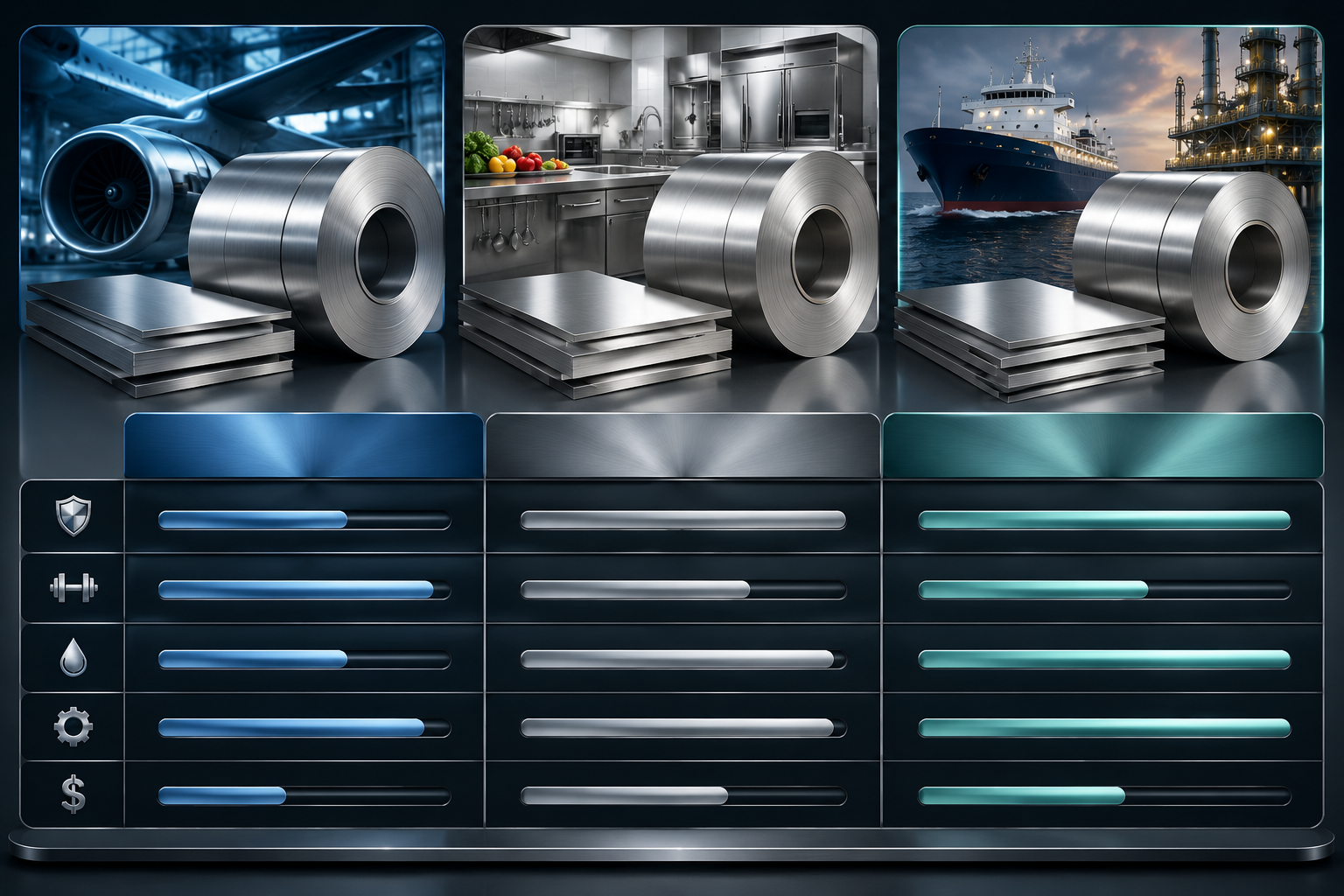
Practical Applications of Stainless Steel Grades
- Food Industry: 304 stainless steel dominates due to its hygienic properties. See stainless steel foil for food.
- Marine Industry: 316 stainless steel is the go-to choice for saltwater resistance.
- Aerospace Industry: 301 stainless steel is valued for its strength-to-weight ratio.
- Energy Systems: Stainless steel grades are critical in hydrogen energy systems. Learn more here.
Summary
Choosing the right stainless steel grade—whether 301, 304, or 316—depends on your application’s requirements. 301 offers strength, 304 balances corrosion resistance and affordability, while 316 excels in harsh environments. By understanding these differences, industries can make smarter material choices that ensure durability, safety, and cost-effectiveness.
For more insights, visit the Stainless Steel Foil Blog or contact us for expert guidance.
FAQs
What makes 301 stainless steel different from 304 stainless steel?
The main difference lies in strength versus corrosion resistance. 301 stainless steel grade has higher tensile strength, making it ideal for applications like springs, aircraft components, and automotive trim. However, it sacrifices some corrosion resistance compared to 304. On the other hand, 304 stainless steel grade is more balanced, offering excellent corrosion resistance and good formability, which is why it dominates in food processing and kitchen equipment.
Why is 316 stainless steel considered the premium choice?
The 316 stainless steel grade contains molybdenum (2–3%), which significantly improves resistance to chlorides and harsh chemicals. This makes it the preferred choice for marine environments, chemical plants, and medical implants.
Which stainless steel grade is best for food and beverage applications?
The 304 stainless steel grade is widely recognized as the best option for food and beverage industries. It resists staining, is easy to clean, and complies with food safety standards. Many commercial kitchens, breweries, and dairies rely on 304 for hygienic surfaces. However, in environments where salt or acidic foods are common, 316 stainless steel grade may be chosen for added protection. You can explore more about food-grade stainless steel for detailed guidance.
Can stainless steel foil be manufactured in all grades?
Yes, stainless steel foil is available in multiple grades, including 301, 304, and 316 stainless steel grades. Each grade offers unique benefits: 301 foil is strong and flexible, 304 foil is versatile and corrosion-resistant, and 316 foil is ideal for harsh chemical or marine environments. Industries such as electronics, aerospace, and food packaging often rely on these foils. See best-selling stainless steel foil for examples.