Selecting the right stainless steel grade is not always as straightforward as it seems. Many buyers assume that all stainless steels offer the same performance because they share a similar appearance. In reality, different grades are engineered for different environments, manufacturing processes, and performance requirements.
Among all commercially available stainless steels, grades 301, 304, and 316 are three of the most widely used materials. They belong to the austenitic stainless steel family, yet each grade offers distinct advantages. Some prioritize strength, while others focus on corrosion resistance or long-term durability in aggressive environments.
Whether you are sourcing material for industrial equipment, food processing systems, architectural projects, marine applications, or precision foil products, understanding the differences between each stainless steel grade can save significant costs and improve product lifespan.
In this guide, we will compare 301, 304, and 316 stainless steel in detail. You will learn how their chemical compositions differ, how they perform in real-world applications, and which grade is best suited for specific industries.
For readers new to the material, our guide explaining what stainless steel foil is provides a useful introduction before diving deeper into grade selection.
What Does Stainless Steel Grade Mean?
A stainless steel grade is a classification that identifies the chemical composition and performance characteristics of a stainless steel alloy. The grade determines how the material reacts to heat, moisture, chemicals, mechanical stress, and environmental exposure.
According to information published on stainless steel metallurgy, all stainless steels contain at least 10.5% chromium. This chromium reacts with oxygen to form a thin protective layer that shields the metal from corrosion.
Manufacturers adjust chromium, nickel, molybdenum, carbon, and other alloying elements to create different grades. These adjustments may seem minor on paper, but they can dramatically influence performance.
That is why choosing the correct stainless steel grade is often one of the most important decisions in any engineering or manufacturing project.
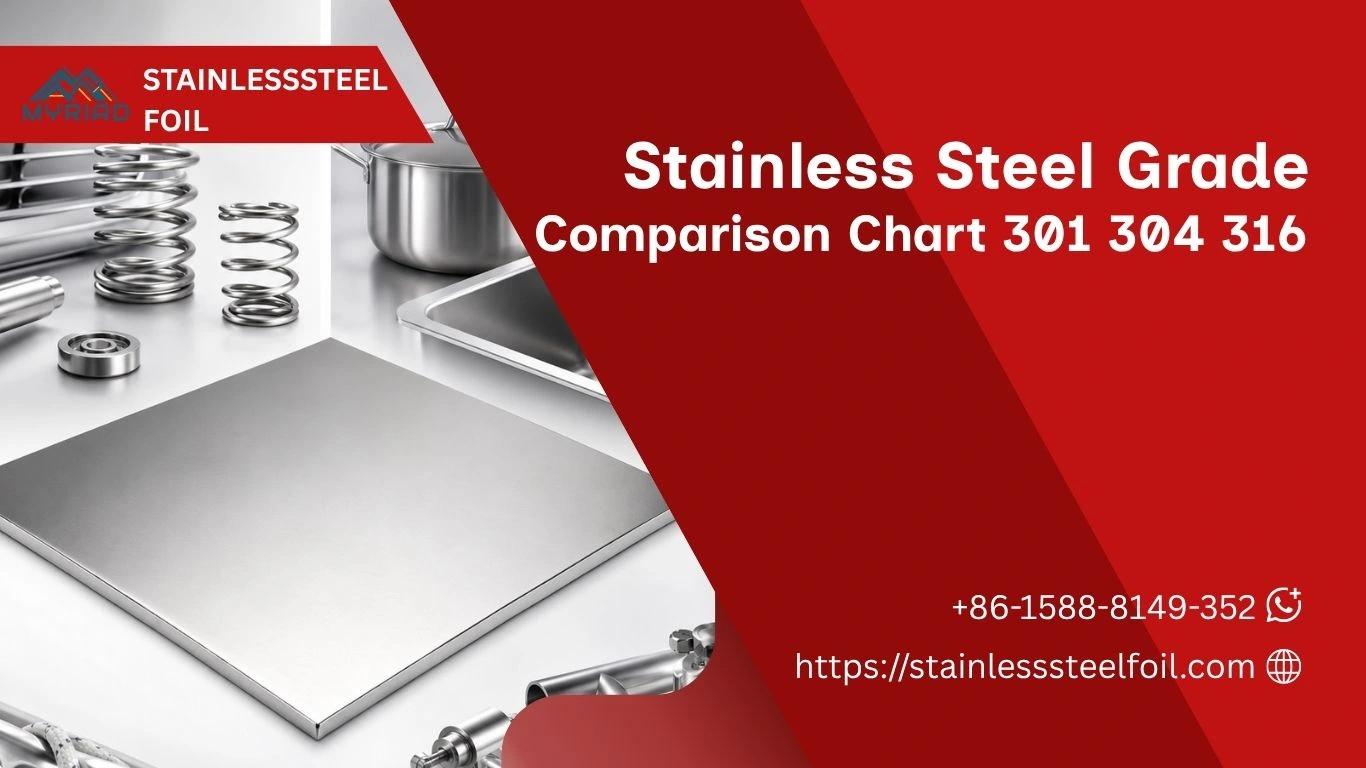
Stainless Steel Grade Comparison Chart
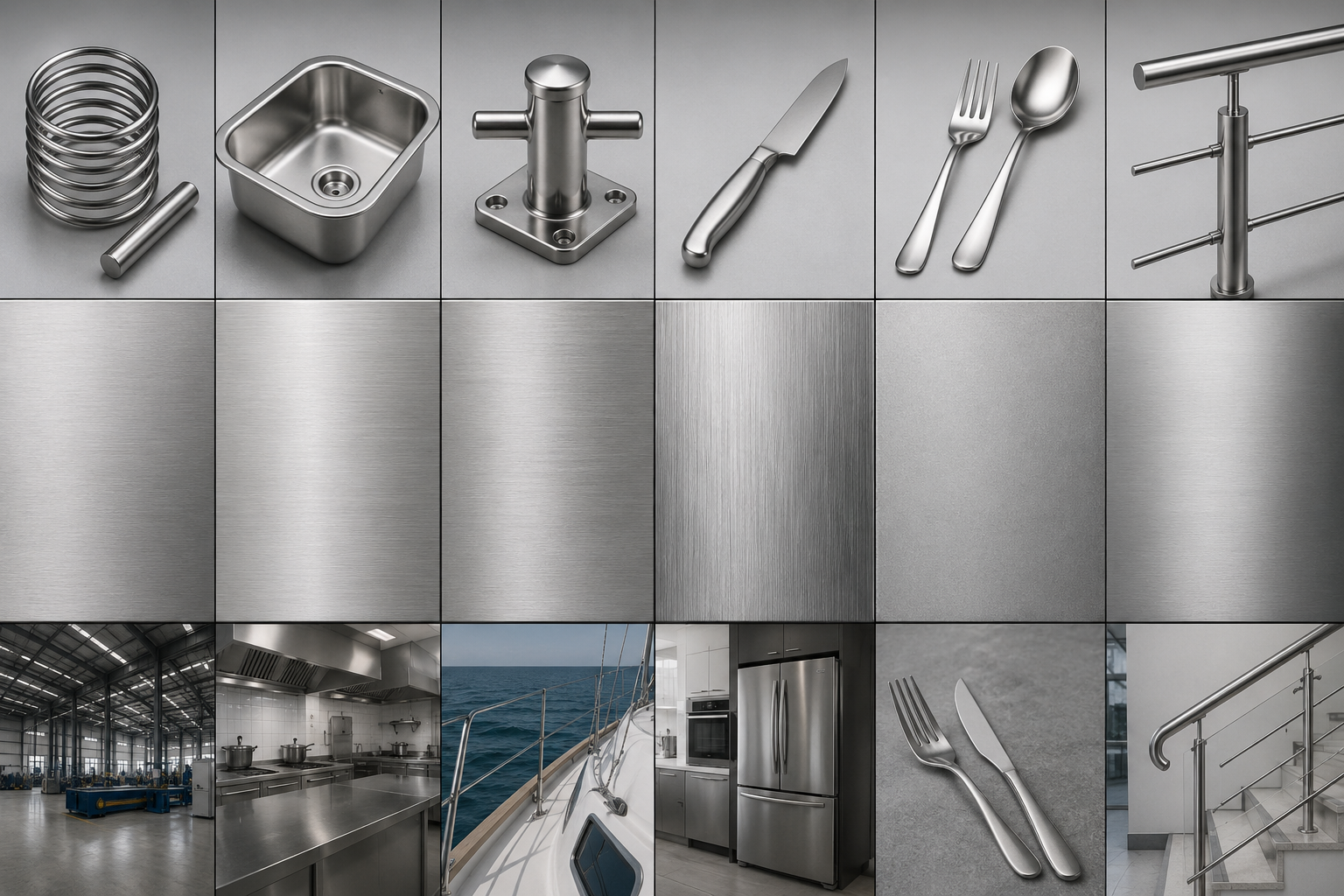
The following table provides a quick overview of the most important differences between 301, 304, and 316 stainless steel.
| Property | 301 | 304 | 316 |
|---|---|---|---|
| Chromium | 16-18% | 18-20% | 16-18% |
| Nickel | 6-8% | 8-10.5% | 10-14% |
| Molybdenum | No | No | 2-3% |
| Corrosion Resistance | Good | Excellent | Superior |
| Strength | Very High | High | High |
| Formability | Excellent | Excellent | Good |
| Weldability | Good | Excellent | Excellent |
| Marine Resistance | Fair | Moderate | Excellent |
| Cost | Lower | Medium | Higher |
While this chart provides a useful overview, understanding the practical implications of these differences requires a closer look at each grade.
301 Stainless Steel Grade
When engineers need a material that combines durability with exceptional strength, they often turn to 301 stainless steel.
This stainless steel grade contains slightly less nickel than 304, which allows it to work-harden more effectively. As a result, manufacturers can significantly increase its strength through cold forming processes.
One reason 301 remains popular is its ability to maintain strength without adding weight. This characteristic makes it attractive in transportation industries where reducing weight directly improves efficiency.
Aircraft manufacturers, railway equipment producers, and automotive suppliers frequently use 301 because it delivers outstanding mechanical performance while remaining relatively economical.
Although 301 offers good corrosion resistance, it is not usually the first choice for environments containing saltwater or aggressive chemicals. In those situations, higher-alloy grades often provide longer service life.
Why 304 Is the Most Popular Stainless Steel Grade
If there is one stainless steel grade that could be described as the industry standard, it would be 304.
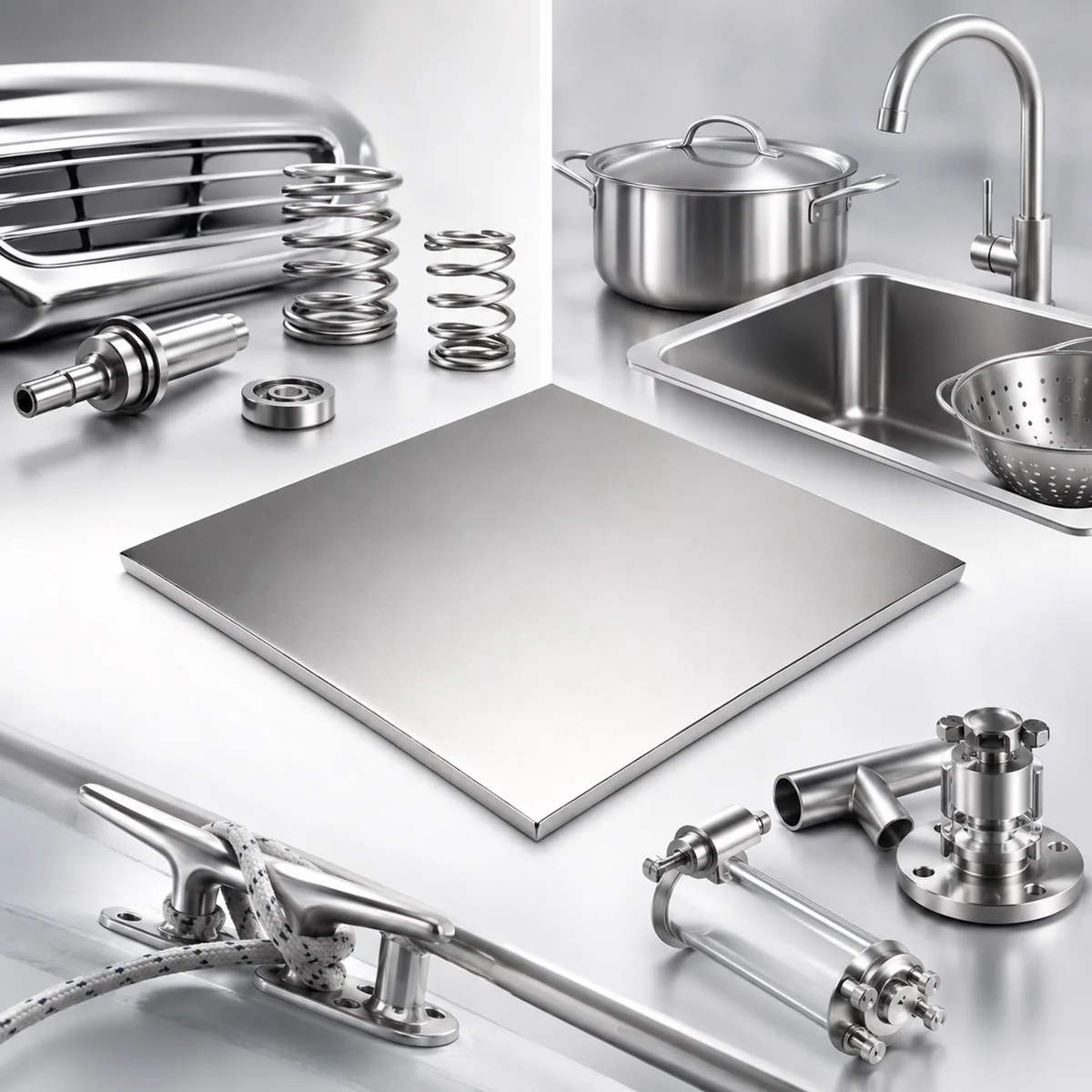
For decades, 304 has been the preferred material for manufacturers because it balances corrosion resistance, ease of fabrication, appearance, and cost. It performs well in a wide range of environments without requiring the premium price associated with specialized alloys.
The higher chromium and nickel content found in 304 creates a strong protective oxide layer. This allows the material to resist rust and staining in many everyday applications.
Food processing facilities, commercial kitchens, beverage manufacturers, pharmaceutical companies, and architectural fabricators rely heavily on 304 stainless steel. The material can be formed, welded, cut, and polished with relative ease, making it one of the most versatile engineering materials available today.
Many products in the stainless steel foil collection are manufactured using 304 stainless steel because it meets the requirements of numerous industries without incurring excessive costs.
316 Stainless Steel Grade
While 304 is often considered the general-purpose option, 316 is designed for more demanding conditions.
The key difference lies in the addition of molybdenum. This alloying element significantly improves resistance to chlorides and harsh industrial chemicals.
Because of this enhancement, 316 has earned a reputation as the premium stainless steel grade for corrosive environments.
Marine equipment manufacturers frequently choose 316 because it withstands exposure to seawater far better than most other stainless steels. Chemical processing plants also favor this grade due to its ability to resist acidic and corrosive substances.
Hospitals and medical equipment manufacturers often use 316 because it combines corrosion resistance with excellent cleanliness and durability.
Although 316 costs more than 304, many organizations view the additional investment as worthwhile because it reduces maintenance costs and extends service life.
For a detailed comparison, readers can explore this guide discussing 304 versus 316 stainless steel.
Corrosion Resistance Comparison
Corrosion resistance is often the first factor buyers evaluate when selecting a stainless steel grade.
In indoor environments or mild atmospheric conditions, 301 performs adequately. However, prolonged exposure to moisture, salt, or industrial contaminants can gradually reduce its effectiveness.
304 offers a substantial improvement. Its higher chromium and nickel content allow it to withstand most commercial environments. This is one reason it dominates food processing and architectural applications.
316 stands at the top of this comparison. The addition of molybdenum significantly increases resistance to pitting corrosion and chloride attack. As a result, coastal structures, marine hardware, and offshore equipment frequently rely on 316.
When corrosion is the primary concern, 316 generally provides the highest level of protection.
Strength and Mechanical Performance
Mechanical strength is another area where these materials differ considerably. 301 is often regarded as the strongest option because it work-hardens exceptionally well. Manufacturers can increase its tensile strength through cold rolling and forming operations, making it suitable for springs, clips, and structural components.
304 provides a balanced combination of strength and flexibility. It can withstand substantial loads while remaining easy to fabricate. 316 provides similar mechanical performance to 304, but manufacturers usually select it for its superior corrosion resistance rather than maximum strength.
Therefore, if your project prioritizes strength above all else, 301 may provide the most attractive solution.
Heat Resistance and High-Temperature Applications
Heat resistance plays a critical role in many industrial sectors. All three grades perform reasonably well at elevated temperatures. However, their long-term behavior varies depending on operating conditions.
Industries often choose 304 stainless steel for heat exchangers, industrial ovens, and processing equipment because it maintains good oxidation resistance at high temperatures.
316 also performs well under heat exposure while maintaining its superior corrosion resistance. Companies involved in thermal processing frequently evaluate specialized foil products such as those discussed in our guides covering the best stainless steel foil grade for heat and stainless steel foil for heat treatment.
For many heat-treatment applications, the optimal material depends on both temperature and environmental conditions.
Cost Considerations When Choosing a Stainless Steel Grade
Price always influences purchasing decisions. 301 is typically the most affordable option among these three grades. Its lower nickel content helps reduce material costs while still delivering excellent mechanical performance.
304 occupies the middle ground. It offers a strong combination of performance and affordability, making it the preferred choice for many industries.
316 commands the highest price because of its increased nickel and molybdenum content. However, organizations operating in corrosive environments often recover this additional cost through reduced maintenance and longer equipment lifespans.
Rather than focusing solely on the initial purchase price, buyers should consider total lifecycle costs when selecting a stainless steel grade.
Which Stainless Steel Grade Is Best for Stainless Steel Foil?
The answer depends entirely on the application. For applications requiring exceptional strength and flexibility, 301 often delivers excellent value.
For general industrial, architectural, and food-grade uses, 304 remains one of the most practical choices available.
For marine, pharmaceutical, and chemical processing environments, 316 is usually the preferred solution because of its superior corrosion resistance.
Companies seeking premium foil materials can review available options through the product catalog and explore additional resources on the company blog.
Emerging Applications for Advanced Stainless Steel Grades
As industries evolve, demand for specialized stainless steel materials continues to grow. Hydrogen energy systems represent one of the fastest-growing sectors. Engineers developing hydrogen infrastructure require materials capable of resisting corrosion while maintaining mechanical integrity. Our guide on stainless steel grades for hydrogen energy systems explores this topic in greater detail.
Electronics manufacturers are also increasingly utilizing stainless steel foil for shielding applications. The article discussing EMI shielding with stainless steel foil explains how these materials contribute to electromagnetic protection.
These emerging industries highlight the growing importance of selecting the correct stainless steel grade for specialized applications.
Summary
stainless steel grade requires balancing strength, corrosion resistance, fabrication requirements, and budget. While 301 excels in strength-focused applications, 304 remains the industry’s most versatile material. Meanwhile, 316 provides unmatched protection in harsh environments where corrosion poses a serious challenge.
Understanding these differences helps engineers, buyers, and manufacturers select materials that deliver long-term performance and value. Whether you are purchasing industrial foil, designing equipment, or evaluating material specifications, selecting the correct stainless steel grade is a decision that can significantly impact product success. For more information about stainless steel foil materials, grades, and applications, visit our stainless steel foil resource center or contact us to discuss your specific project requirements with our team.
FAQs
Q: Which stainless steel grade is best for corrosion resistance?
A: Among these three options, 316 is generally considered the best stainless steel grade for resisting corrosion in marine and chemical environments.
Q: Is 304 stainless steel better than 301?
A: The answer depends on the application. The 304 stainless steel grade provides better corrosion resistance, while 301 offers higher strength after cold working.
Q: Why is 316 more expensive?
A: The 316 stainless steel grade contains additional nickel and molybdenum, which increase both material cost and corrosion resistance.
Q: Which stainless steel grade is used in food processing?
A: The 304 stainless steel grade is commonly used in food and beverage manufacturing because it combines cleanliness, corrosion resistance, and affordability.
Q: Can stainless steel foil be produced in all three grades?
A: Yes. Manufacturers produce foil using each stainless steel grade depending on the performance requirements of the application.