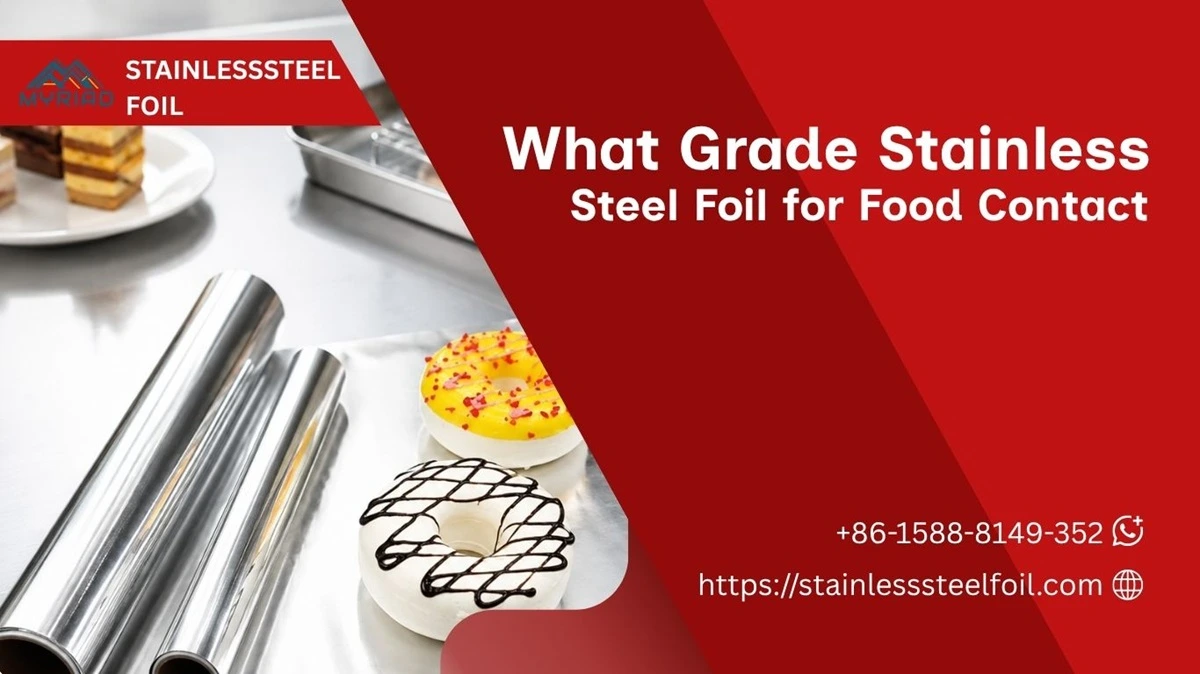
Selecting the right grade stainless steel foil for food is essential to ensure safety, durability, and compliance with international standards. Stainless steel foil is widely used in food packaging, storage, and processing because of its corrosion resistance, hygienic surface, and long-lasting performance.
Among the available grades, 304 stainless steel foil is the most common choice, while 316 stainless steel foil is preferred for more demanding environments involving acids or salts. Both grades meet FDA and NSF requirements, making them reliable for direct food contact.
What Makes Stainless Steel Foil “Food Grade”?
The term “food grade” stainless steel foil refers to materials that meet strict safety and hygiene standards for direct contact with food. To qualify, stainless steel foil must resist corrosion, avoid leaching harmful substances, and maintain a smooth, non-porous surface that prevents bacterial buildup. Grades such as 304 stainless steel foil and 316 stainless steel foil are the most common choices because they balance durability, affordability, and compliance with international regulations.
Food-grade stainless steel foil is recognized by organizations like the FDA, NSF/ANSI 51, and the European Union’s Regulation 1935/2004, ensuring that it can safely be used in packaging, cooking, and food processing equipment. The chromium and nickel content in these alloys provide excellent resistance to acids, salts, and cleaning chemicals, which is essential in maintaining food safety.
Another critical factor is cleanability. Stainless steel foil’s smooth surface makes it easy to sanitize, reducing the risk of contamination. This is why industries ranging from dairy to seafood rely heavily on food-grade stainless steel foil.
For more details, explore how to choose the best food grade stainless steel and discover why stainless steel foil remains the trusted choice for safe food contact applications.
Grades of Stainless Steel Foil for Food Contact
| Grade | Composition | Best Use | Advantages | |
|---|---|---|---|---|
| 304 Stainless Steel Foil | 18% Cr, 8% Ni | General food contact | Affordable, corrosion-resistant, widely accepted | |
| 316 Stainless Steel Foil | 16% Cr, 10% Ni, 2% Mo | Acidic foods, seafood | Superior chloride resistance, longer lifespan | |
| 304L / 316L | Low carbon versions | Welded food equipment | Reduced risk of weld corrosion | |
| 430 Stainless Steel Foil | 17% Cr, no Ni | Dry food contact | Cost-effective, magnetic, less corrosion resistance | |
| 420 Stainless Steel Foil | High carbon | Cutlery, blades | Hardness and edge retention |
Why 304 Stainless Steel Foil is the Industry Standard
The 304 stainless steel foil has earned its reputation as the industry standard for food contact applications because it strikes the perfect balance between affordability, durability, and safety. With a composition of approximately 18% chromium and 8% nickel, 304 stainless steel offers excellent corrosion resistance, making it suitable for environments where food is exposed to moisture, acids, and cleaning agents. This grade is widely accepted by regulatory bodies such as the FDA and NSF, ensuring compliance with international food safety standards.
Another reason why 304 stainless steel foil is preferred is its versatility. It can be used in food packaging, kitchen utensils, storage containers, and industrial food processing equipment. Unlike lower grades such as 430, which lack nickel and are more prone to corrosion, 304 provides long-term reliability without significantly increasing costs. Its smooth surface also prevents bacterial buildup, making it easier to clean and sanitize—an essential factor in food safety.
For businesses seeking a dependable solution, 304 stainless steel foil remains the go-to choice. Learn more about its applications and benefits at 304 Stainless Steel Foil for Food.
When to Choose 316 Stainless Steel Foil
The 316 stainless steel foil is the preferred choice when food applications involve high exposure to salt, acids, or harsh cleaning chemicals. Unlike 304, 316 contains molybdenum, which significantly enhances resistance to chloride corrosion. This makes it ideal for seafood packaging, acidic sauces, and environments where hygiene demands frequent sterilization.
Industries such as marine food processing, dairy, and beverage manufacturing often rely on 316 stainless steel foil because of its durability and ability to maintain food safety standards under challenging conditions. While it is more expensive than 304, the long-term performance and reduced risk of contamination justify the investment.
For more details, explore stainless steel foil for food and learn how 316 stainless steel can improve your food contact applications.
Compliance Standards for Food-Grade Stainless Steel
Food-grade stainless steel foil must comply with:
- FDA 21 CFR (U.S. food contact regulations)
- NSF/ANSI 51 (food equipment materials)
- 3-A Sanitary Standards (dairy and food processing)
- EU Regulation 1935/2004 (European food contact materials)
Applications of Stainless Steel Foil in Food Industry
The applications of stainless steel foil in the food industry are vast, ranging from packaging to equipment manufacturing. Its unique combination of strength, corrosion resistance, and hygienic properties makes it indispensable in modern food processing. One of the most common uses is in food packaging, where stainless steel foil provides a protective barrier against moisture, oxygen, and contaminants. This ensures longer shelf life and maintains the freshness of products.
In addition, stainless steel foil is widely used in kitchen utensils and cookware, offering durability and easy cleaning. Industrial food processors rely on stainless steel foil for lining storage containers and machinery components, as it prevents bacterial buildup and withstands frequent sterilization. The smooth surface of stainless steel foil also makes it ideal for applications where hygiene is critical, such as dairy and beverage production.
Another growing application is in energy-efficient food storage systems, where stainless steel foil helps regulate temperature and prevent contamination. Its versatility extends to specialized uses like wrapping acidic foods, seafood, and baked goods.
For more insights, explore stainless steel foil for food and discover how this material continues to shape the future of safe and sustainable food processing.
Summary
Choosing the right grade stainless steel foil for food is essential for safety, durability, and compliance in the food industry. Among the available options, 304 stainless steel foil is the industry standard, offering excellent corrosion resistance and affordability, while 316 stainless steel foil provides superior protection against acids and salts, making it ideal for seafood and acidic food applications. Both grades meet FDA and NSF requirements, ensuring they are safe for direct food contact.
Stainless steel foil is widely used in food packaging, storage containers, kitchen utensils, and industrial food processing equipment, thanks to its hygienic surface and long-lasting performance. Businesses across the globe rely on stainless steel foil to maintain food quality and safety standards.
To explore more about stainless steel foil grades and their applications, visit our Blog, check out our Products, and reach us directly through our Contact Us page for expert guidance.
FAQs
Which grade stainless steel foil is most suitable for food packaging?
The most suitable grade stainless steel foil for food packaging is 304 stainless steel foil, as it offers excellent corrosion resistance, durability, and compliance with FDA standards. It is widely used in wrapping, storage containers, and general food processing equipment. For more details, see 304 stainless steel foil for food.
Why should I choose 316 stainless steel foil over 304?
You should choose 316 stainless steel foil when dealing with highly acidic foods, seafood, or environments exposed to saltwater. The added molybdenum in 316 provides superior resistance to chloride corrosion, making it ideal for demanding food contact applications. Learn more at stainless steel foil for food.
Is stainless steel foil safe for long-term food storage?
Yes, food-grade stainless steel foil such as 304 and 316 is safe for long-term food storage. Its smooth, non-porous surface prevents bacterial buildup and ensures food safety. Proper cleaning and maintenance are essential to maximize its lifespan. Explore more at how to choose the best food grade stainless steel.
What standards define food-grade stainless steel foil?
Food-grade stainless steel foil must comply with FDA 21 CFR, NSF/ANSI 51, and EU Regulation 1935/2004 standards. These certifications guarantee that the foil is safe for direct food contact and resistant to corrosion, ensuring consumer safety. For industry insights, visit the Stainless Steel Foil Blog.