Today’s high-performance industries, Advanced Ultra-Thin Stainless Steel Foil Solutions plays a critical role in applications where precision, heat resistance, and corrosion protection matter at the micron level. From aerospace heat treating to medical devices and electronics shielding, manufacturers rely on foil thicknesses as low as 0.01 mm to deliver consistent performance under demanding conditions.
But how exactly is ultra thin stainless steel foil made? What processes allow manufacturers to transform solid stainless steel slabs into flexible, mirror-smooth sheets thinner than a human hair?
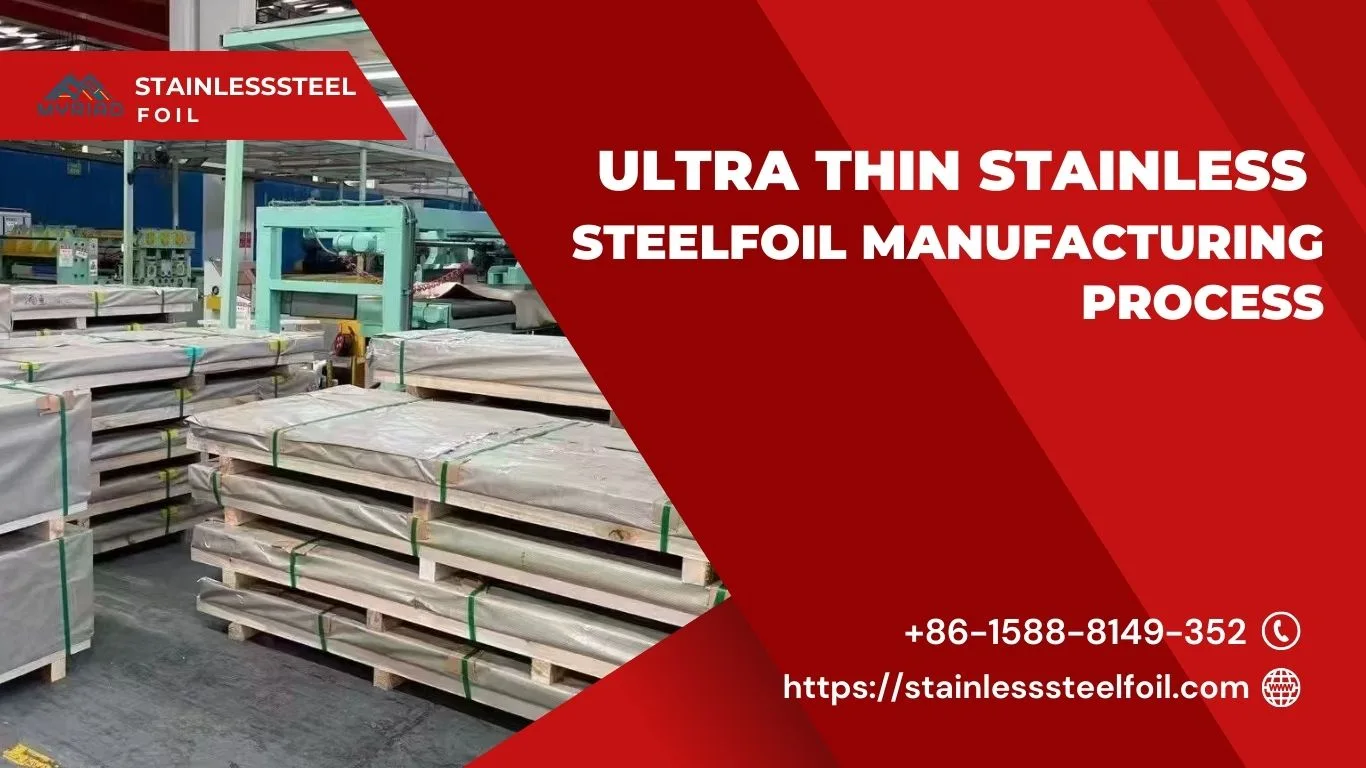
In this in-depth guide, we’ll explore the complete ultra thin stainless steel foil manufacturing process—from raw material selection to final inspection—while highlighting the advanced engineering, quality control, and metallurgical science behind it.
For more technical insights, you can explore the resources available at the official Stainless Steel Foil website.
Stainless Steel Before It Becomes Ultra Thin Foil
Before discussing production, it’s important to understand what stainless steel actually is. According to the detailed overview on Wikipedia’s stainless steel page, stainless steel is an iron-based alloy containing at least 10.5% chromium. This chromium forms a passive oxide layer that protects the metal from corrosion.
For ultra thin stainless steel foil, commonly used grades include:
- 304 stainless steel
- 316 stainless steel
- 316L stainless steel
Among these, 316L is widely preferred for heat treating and high-temperature applications due to its low carbon content and enhanced corrosion resistance. If you’re interested in ultra-precision heat treating foil, this detailed guide on how to manufacture ultrathin 316L stainless steel foil for heat treating explains the material benefits in depth.
The Complete Ultra Thin Stainless Steel Foil Manufacturing Process
Producing ultra thin stainless steel foil requires multiple tightly controlled steps. Each stage influences thickness tolerance, surface finish, grain structure, and mechanical performance.

Let’s walk through the process step by step.
Raw Material Selection and Melting
The process begins with high-quality stainless steel scrap and virgin alloying elements. Manufacturers melt the materials in electric arc furnaces or vacuum induction furnaces to ensure purity.
At this stage, chemical composition is carefully adjusted:
- Chromium content for corrosion resistance
- Nickel for ductility
- Molybdenum for high-temperature strength
- Carbon levels are tightly controlled for 316L
Even minor variations can impact how the ultra-thin stainless steel foil performs after rolling.
Continuous Casting
Once molten, the steel is cast into slabs or thin strip billets using continuous casting technology. This process improves:
- Structural uniformity
- Surface consistency
- Internal defect reduction
A uniform slab is critical because any micro-defect becomes magnified when rolled down to ultra-thin stainless steel foil thicknesses.
Hot Rolling: Reducing Thickness Efficiently
The cast slab enters a hot rolling mill where temperatures exceed 1000°C. Hot rolling reduces thickness significantly, transforming the slab into coil form.
Hot rolling serves three major purposes:
- Breaks down the cast structure
- Improves grain uniformity
- Prepares the material for cold rolling
At this stage, the thickness may reduce from several millimeters to approximately 2–3 mm.
For heat-related performance considerations, see the technical explanation of what is the heat tolerance of 316 stainless steel.
Pickling and Surface Cleaning
After hot rolling, oxide scale forms on the surface. Manufacturers remove it using acid pickling solutions.
This cleaning step is crucial because:
- Surface contaminants affect rolling accuracy
- Oxides reduce final surface smoothness
- Clean surfaces improve cold reduction quality
Only after complete surface preparation can the strip move toward becoming ultra-thin stainless steel foil.
Cold Rolling: The Core of Ultra-Thin Stainless Steel Foil Production
Cold rolling is where precision truly begins.
Unlike hot rolling, cold rolling occurs at room temperature using high-precision rolling mills. The strip passes repeatedly through rollers, each pass reducing the thickness incrementally.
Advanced mills can achieve:
- Thicknesses down to 0.01 mm
- Tolerances within ±2–5 microns
- Controlled hardness levels
Multiple intermediate annealing cycles may be required between rolling passes to restore ductility.
For product examples of extreme thinness, explore this dedicated product page for 316L stainless steel foil ultrathin 0.01mm.
Intermediate Annealing
Cold rolling increases hardness. However, ultra-thin stainless steel foil must remain flexible for wrapping, forming, or stamping.
Annealing involves heating the foil in controlled atmospheres to:
- Relieve internal stresses
- Refine grain structure
- Restore ductility
Modern continuous annealing lines use hydrogen or inert atmospheres to prevent oxidation.
A more comprehensive explanation can be found in this stainless steel foil heat treatment guide.
Precision Rolling and Thickness Control
As thickness approaches micron levels, manufacturers use:
- 20-high rolling mills
- Cluster mill technology
- Automatic gauge control (AGC)
- Laser thickness measurement systems
At 0.02 mm thickness, even a 1-micron variation represents a 5% deviation. That level of precision requires advanced digital monitoring.
Surface Finishing and Tension Leveling
After achieving the final thickness, the ultra-thin stainless steel foil undergoes surface finishing.
Depending on the application, finishes may include:
- Bright annealed
- Matte finish
- Mirror finish
- Custom textured surfaces
Tension leveling removes residual shape defects like waviness or edge curl.
For different product forms, visit the steel foil sheet section.
Slitting, Cutting, and Customization
Once rolled and finished, the foil is slit into precise widths.
Ultra-thin stainless steel foil can be supplied as:
- Narrow precision strips
- Full coils
- Custom die-cut sheets
- Heat treating wrap rolls
To explore available options, see the complete stainless steel foil product range.
Quality Control and Testing
Because applications often involve aerospace or medical components, quality testing is rigorous.
Manufacturers test for:
- Thickness uniformity
- Tensile strength
- Yield strength
- Elongation
- Surface roughness
- Heat resistance
Non-destructive testing ensures internal defects remain below acceptable limits.
Technical Comparison: Ultra Thin Foil vs Standard Stainless Sheet
| Property | Ultra Thin Stainless Steel Foil | Standard Stainless Sheet |
|---|---|---|
| Thickness | 0.01 mm – 0.1 mm | 0.5 mm – 10 mm |
| Flexibility | Extremely High | Moderate |
| Heat Treat Wrapping | Ideal | Not Suitable |
| Precision Applications | Electronics, Aerospace | Structural Use |
| Weight | Extremely Lightweight | Heavy |
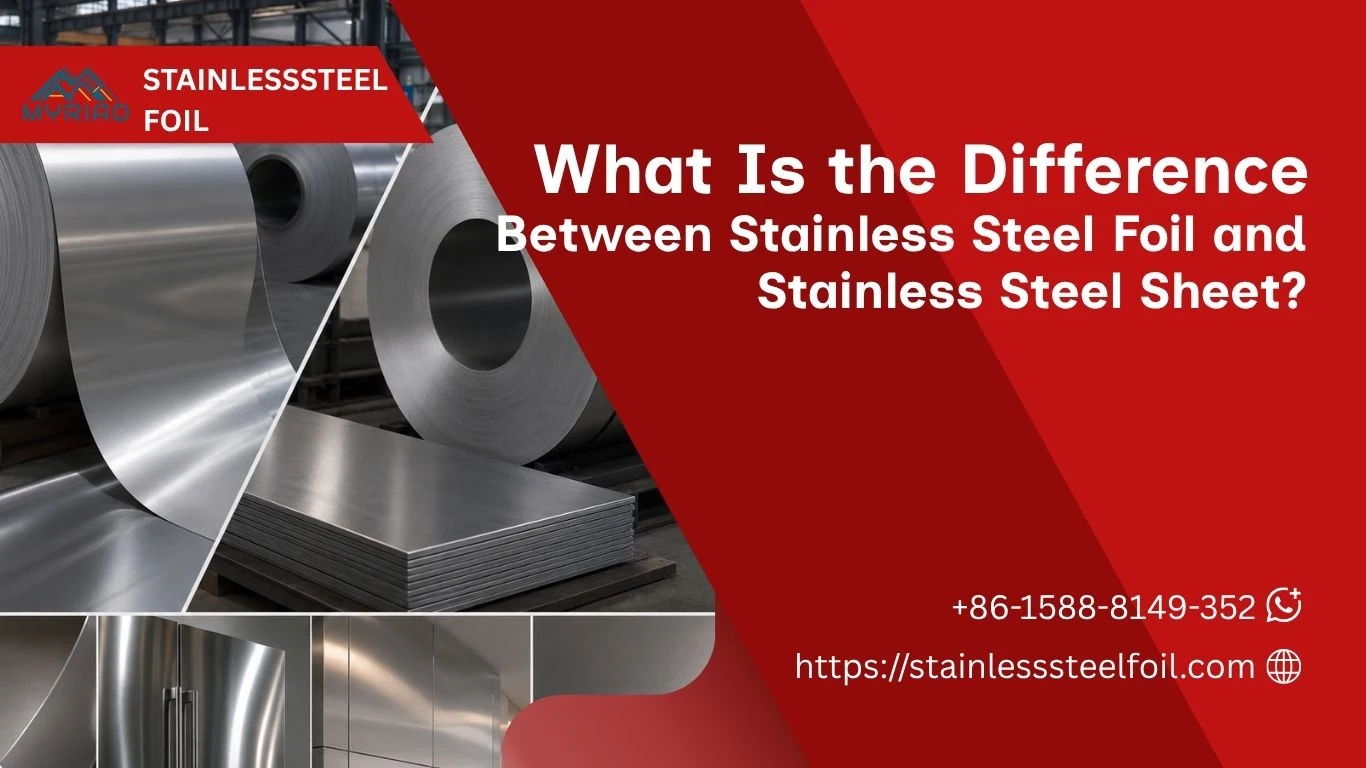
This comparison shows why ultra thin stainless steel foil is essential in precision industries.
Applications Driving Demand
The demand for Advanced Ultra-Thin Stainless Steel Foil Solutions continues to grow globally. According to industrial metal market analyses, precision stainless products are experiencing steady growth due to:
- Aerospace expansion
- Electric vehicle battery technology
- Advanced electronics manufacturing
- Medical device innovation
For real-world application examples, read about the use of stainless steel foils.
Heat Treating and Ultra Thin Stainless Steel Foil
One of the most common uses of ultra-thin stainless steel foil is a vacuum heat treating wrap. It protects tool steel components from oxidation and decarburization during high-temperature cycles.
Detailed insights can be found in this stainless steel foil heat treatment guide.
Challenges in Manufacturing Ultra-Thin Stainless Steel Foil
Producing foil below 0.02 mm is technically demanding.
Key challenges include:
- Edge cracking
- Roll wear
- Shape control
- Residual stress management
- Maintaining consistent grain structure
Only advanced rolling facilities with experienced metallurgical engineers can consistently produce high-quality ultra-thin stainless steel foil.
Why 316L is Often Preferred
316L offers superior corrosion resistance due to molybdenum addition. It also performs well in chloride environments.
Its lower carbon content reduces carbide precipitation during welding and heat exposure. This makes it ideal for heat treatment wrap applications.
To learn more, visit the article on manufacturing ultrathin 316L stainless steel foil for heat treating.
Sustainability and Recycling
Stainless steel is 100% recyclable. Many ultra-thin stainless steel foil manufacturers use high recycled content, reducing environmental impact.
The alloy maintains its properties after recycling, supporting sustainable manufacturing practices.
Future Trends in Ultra-Thin Stainless Steel Foil Manufacturing
Technology continues to evolve.
Future improvements include:
- AI-driven thickness monitoring
- Advanced nano-coatings
- Improved rolling mill automation
- Higher precision gauge control
The industry increasingly demands foil with tighter tolerances and improved performance under extreme heat.
For the latest updates, visit the official blog section.
Summary
The manufacturing process of ultra-thin stainless steel foil combines advanced metallurgy, precision rolling technology, and strict quality control. From melting and casting to cold rolling and annealing, each step determines performance at micron-level thickness.
Industries rely on ultra-thin stainless steel foil for heat treating, electronics, aerospace components, and medical applications because it offers exceptional corrosion resistance, thermal stability, and flexibility.
If you need high-precision stainless solutions, explore the full product line at products and connect with experts through contact us.
FAQs
What thickness qualifies as ultra-thin stainless steel foil?
Advanced Ultra-Thin Stainless Steel Foil Solutions generally refers to thicknesses between 0.01 mm and 0.1 mm. At these levels, the material becomes highly flexible and suitable for precision applications.
How is ultra-thin stainless steel foil different from regular sheet metal?
Ultra-thin stainless steel foil is manufactured using multiple precision cold rolling and annealing cycles, unlike regular sheet metal, which requires fewer reduction stages.
Is ultra-thin stainless steel foil heat-resistant?
Yes. Ultra-thin stainless steel foil, especially 316L grade, performs well at high temperatures. You can read more about its heat performance on this page about heat tolerance.
Can ultra-thin stainless steel foil be customized?
Absolutely. Advanced Ultra-Thin Stainless Steel Foil Solutions can be slit, cut, and supplied in various widths and coil sizes depending on application requirements.
Where can I buy high-quality ultra-thin stainless steel foil?
You can explore available options directly through the contact page or review product listings on the official website.