
AISI 301 (UNS S30100) is an austenitic chromium-nickel stainless steel. Cold working increases strength and can make the material more magnetic. Composition limits are expressed as percentages by mass, not parts per million.
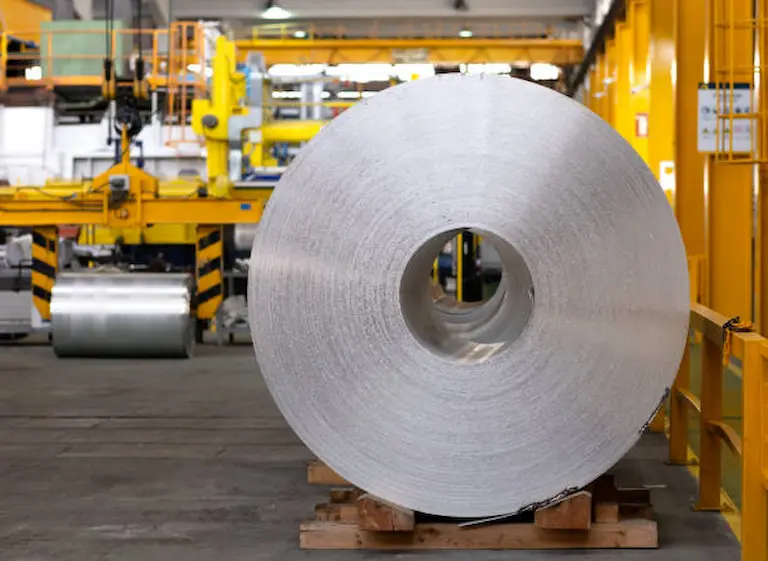
AISI 301 and AISI 304 are distinct grades. For UNS S30100, ATI lists 16.0–18.0% chromium and 6.0–8.0% nickel. Confirm the governing product specification and check the material test report before ordering.
Related: AISI 304 stainless steel. Contact Myriad for a separate quote for AISI 301 stainless steel samples.
AISI 301 work-hardens rapidly. Lower tempers generally retain more ductility for forming; harder tempers can be considered for spring and clip applications. Check the mechanical property requirements for the ordered form and temper.
Related: AISI 316L stainless steel.
Chromium helps form a passive surface film. Nickel helps stabilize austenite, but the magnetic response can change when cold working transforms some austenite to martensite.
AISI 301 is designated UNS S30100. The ATI 301 technical data reference lists ASTM A666 and ASTM A240 for common flat product forms; confirm the current edition and applicable product requirements before specifying. Aperam 301 / 1.4310 data cross-references 301 to EN 1.4310 (X10CrNi18-8).
Related: AISI 321 stainless steel.
The heat generated during welding means that it cannot be utilized in many applications and must be replaced with aisi 304 or 304L. AISI 301 chemical composition has a nominal composition of 17 percent chromium and 7 percent nickel, indicating that it is an austenitic stainless steel of the Type 301 (S30100) variety.
In connection, its hardness and resistance to air corrosion, as well as its qualities in each of the six available states or tempers, make this grade of steel a good choice.
As a result of its bright and appealing surface, it is an excellent choice for decorative structural applications, such as window frames by changing the chemical composition of the substance.
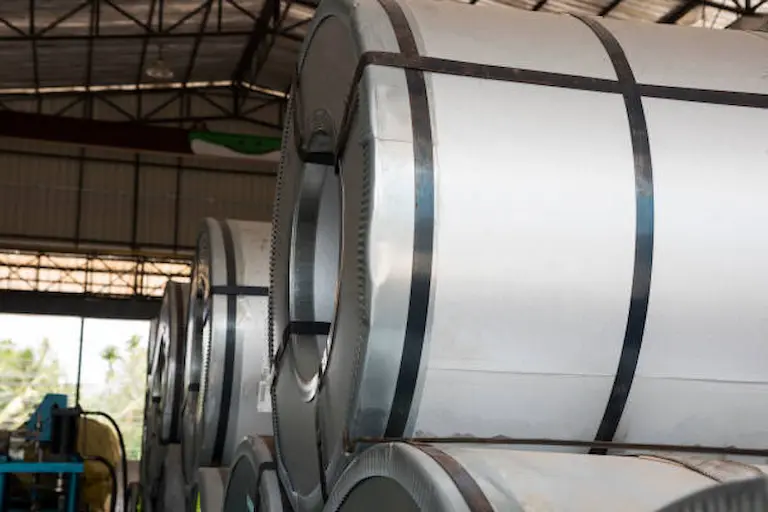
Thermal expansion, oxidation resistance and strength are different properties. Evaluate the specific service temperature, duration and material condition before selecting the alloy.
Related: ASTM A167 reference.
The unique chemical characteristics of aisi 301chemical composition’s material differentiate it from other materials and give it its distinct appearance:
Chromium supports passivation, but oxidation and chemical resistance depend on the environment and exposure. Do not infer compatibility from the alloy name alone.
Related: ASTM A240 Type 304 reference.
The table summarizes limits in the ATI 301 technical data for UNS S30100. Confirm the applicable standard and material test report for the ordered form.
| Element | Limit or range (mass %) |
|---|---|
| Chromium (Cr) | 16.0–18.0 |
| Nickel (Ni) | 6.0–8.0 |
| Carbon (C) | 0.15 max |
| Manganese (Mn) | 2.00 max |
| Silicon (Si) | 1.00 max |
| Phosphorus (P) | 0.045 max |
| Sulfur (S) | 0.030 max |
| Nitrogen (N) | 0.10 max |
| Iron (Fe) | Balance |
The chemistry identifies the grade; it does not establish the temper. Specify the grade, thickness, finished width and required mechanical properties, and ask Myriad to confirm availability.
Related: grade 304 stainless steel foil.
Martensitic stainless steels are a separate family. AISI 301 is classified as austenitic; cold working can form some strain-induced martensite without changing its grade designation.
Related: 316 and 316L stainless steel.
The stable austenite structure of austenitic stainless steel is achieved when the steel has roughly 18 percent Cr, approximately 8 percent to 10 percent Ni, and approximately 0.1 percent carbon in the alloy. Unlike other materials, it is nonmagnetic and has a high degree of toughness and flexibility, but its strength is modest; unlike other materials, it cannot be strengthened by phase change and can only be strengthened by cold working.
Ferritic stainless steels are a separate family; AISI 301 is not a ferritic grade. Cold-worked AISI 301 can show a magnetic response because of strain-induced martensite.
Related: Is 301 stainless steel magnetic?.
Duplex stainless steels are a different family with both austenite and ferrite in the microstructure. They should not be treated as forms or equivalents of AISI 301.