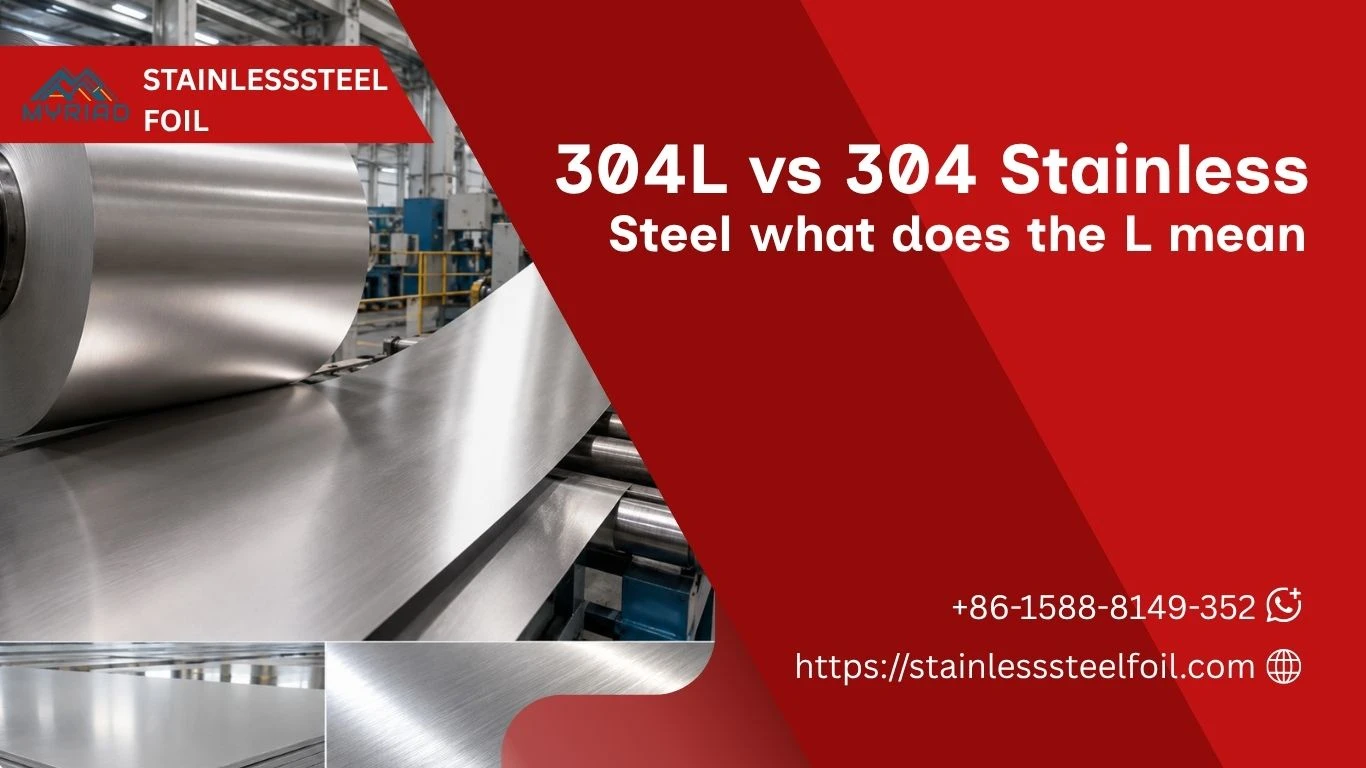
When comparing 304L vs 304 stainless steel, the “L” stands for Low Carbon. This small adjustment in carbon content makes 304L more suitable for welded applications, reducing the risk of carbide precipitation and weld decay. Both grades are widely used in industries ranging from food processing to petrochemicals, but choosing the right one depends on your application needs.
For businesses sourcing stainless steel foil, strip, or coil, understanding this difference ensures better performance and longevity. Explore more at Stainless Steel Foil.
What is 304 Stainless Steel?
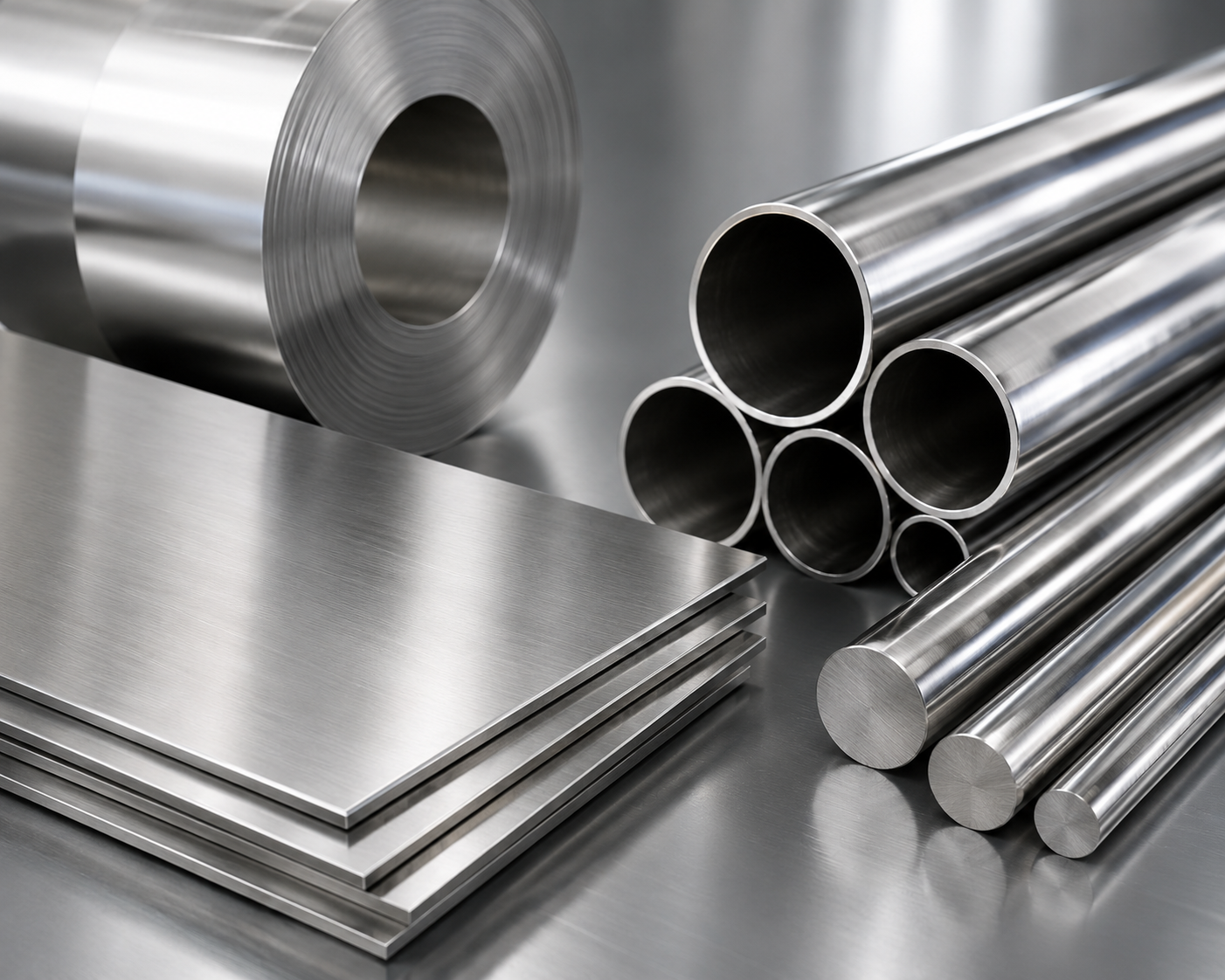
304 stainless steel is one of the most widely used and recognized grades of stainless steel in the world. Known as an austenitic stainless steel, it contains approximately 18% chromium and 8% nickel, which gives it excellent corrosion resistance and durability. This composition makes it highly versatile and suitable for a wide range of applications, from household items to industrial machinery.
The chromium content in 304 stainless steel forms a protective oxide layer on the surface, preventing rust and corrosion in most environments. Meanwhile, nickel enhances its toughness and resistance to acids and alkalis. Because of these properties, 304 stainless steel is often referred to as the “workhorse” of stainless steels.
Common uses include kitchen sinks, cutlery, food processing equipment, architectural panels, and chemical containers. It is also widely used in the production of stainless steel foil, which is essential in industries requiring thin, durable, and corrosion-resistant materials.
For businesses and engineers, understanding the properties of 304 stainless steel is crucial when selecting materials for projects. To explore more about its applications and differences with other grades, visit Stainless Steel Foil.
What is 304L Stainless Steel?
304L stainless steel is the low-carbon version of 304 stainless steel, specifically designed to improve weldability and reduce the risk of corrosion in welded structures. The “L” in 304L stands for Low Carbon, meaning its carbon content is restricted to a maximum of 0.03%, compared to 0.08% in standard 304. This small adjustment makes a big difference in performance, especially in industries where welding is essential.
When stainless steel with higher carbon is welded, it can suffer from carbide precipitation, leading to intergranular corrosion. 304L avoids this issue, making it the preferred choice for chemical processing tanks, pipelines, and pharmaceutical equipment. Although its tensile strength is slightly lower than 304, the trade-off is worth it for applications requiring durability after welding.
304L stainless steel also retains the excellent corrosion resistance, toughness, and versatility of 304, making it suitable for food processing, architectural projects, and marine environments. It is widely available in sheets, plates, coils, and stainless steel foil, offering engineers and manufacturers a reliable material for demanding applications.
For a deeper comparison between 304L and 304 stainless steel, visit 304L vs 304 Stainless Steel. This ensures you select the right grade for your project needs.
Chemical Composition Comparison
| Element | 304 | 304L |
|---|---|---|
| Carbon (C) | ≤0.08% | ≤0.03% |
| Chromium (Cr) | 18–20% | 18–20% |
| Nickel (Ni) | 8–10.5% | 8–12% |
| Manganese (Mn) | ≤2.0% | ≤2.0% |
| Silicon (Si) | ≤0.75% | ≤0.75% |

Mechanical Properties
| Property | 304 | 304L |
|---|---|---|
| Tensile Strength | ≥515 MPa | ≥485 MPa |
| Yield Strength | ≥205 MPa | ≥170 MPa |
| Elongation | ≥40% | ≥40% |
| Hardness (HRB) | ≤92 | ≤90 |
304 is slightly stronger, while 304L offers superior weldability.
Corrosion Resistance
Corrosion resistance is one of the most important properties that makes stainless steel such a valuable material across industries. In the case of 304 and 304L stainless steel, both grades offer excellent protection against rust, oxidation, and chemical attack due to their high chromium and nickel content. Chromium forms a thin, invisible oxide layer on the surface, which acts as a barrier against moisture and corrosive agents. This self-healing layer ensures that even if the steel is scratched, it quickly reforms to maintain protection.
The difference between 304 vs 304L stainless steel lies in how they perform after welding. Standard 304 stainless steel can suffer from intergranular corrosion if exposed to high heat during welding, as carbon combines with chromium to form carbides. These carbides reduce the chromium available for corrosion resistance. By contrast, 304L stainless steel, with its lower carbon content, minimizes carbide precipitation, making it far more resistant in welded structures.
This property makes 304L the preferred choice for chemical processing tanks, pipelines, and food industry equipment, where welded joints are common. For more details on stainless steel applications, explore 304 Stainless Steel Foil Properties & Applications.
Applications
The versatility of 304L vs 304 stainless steel makes both grades indispensable across industries. 304 stainless steel is widely used in kitchen equipment, food processing machinery, automotive trim, and architectural structures thanks to its strength and corrosion resistance. On the other hand, 304L stainless steel is the preferred choice for welded components such as chemical tanks, piping systems, and pharmaceutical equipment, where maintaining corrosion resistance after welding is critical.
In industries like medical devices, pressure vessels, and chemical storage, 304L ensures durability and safety under demanding conditions. Meanwhile, 304 continues to be a reliable option for non-welded applications requiring higher tensile strength.
If you’re sourcing materials for these applications, explore our premium stainless steel foil products and learn more about their unique properties. For tailored solutions, visit our blog or connect directly through our stainless steel foil page.
Cost and Availability
When comparing 304L vs 304 stainless steel, the cost difference is generally minimal. Both grades are widely available due to their popularity in industrial and consumer applications. However, 304L stainless steel may be slightly more expensive because of its specialized low-carbon composition, which enhances weldability and corrosion resistance. Availability is rarely an issue, as both grades are stocked globally in forms such as foil, strip, and coil. For sourcing, explore our stainless steel foil products or connect directly through our stainless steel foil products page for tailored supply solutions.
Summary
The difference between 304L vs 304 stainless steel is essential for engineers, manufacturers, and buyers working with stainless steel products. The “L” in 304L stands for Low Carbon, which improves weldability and reduces the risk of corrosion after welding. While 304 stainless steel offers slightly higher strength, 304L stainless steel is the better choice for welded structures, chemical tanks, and piping systems exposed to corrosive environments. Both grades remain popular in industries such as food processing, pharmaceuticals, and construction.
If you’re sourcing materials, explore our premium stainless steel foil products and learn more about their applications in different industries. For additional insights, visit our blog where we compare grades like 304 vs 316 stainless steel. Need expert guidance or a custom solution? Reach out today via our contact us page
FAQs
What is the main difference between 304L vs 304 stainless steel in terms of welding?
The biggest difference lies in weldability. Standard 304 stainless steel contains up to 0.08% carbon, which can lead to carbide precipitation during welding. This process reduces corrosion resistance and causes intergranular corrosion in heat-affected zones. By contrast, 304L stainless steel, with a maximum of 0.03% carbon, minimizes carbide formation. This makes it the preferred choice for welded structures such as pipelines, tanks, and chemical processing equipment. For more details, see 304L vs 304 Stainless Steel.
Can 304L stainless steel replace 304 in all applications?
Yes, in most cases. Many manufacturers now produce dual-certified 304/304L stainless steel, meaning the material meets both specifications. This allows engineers to use 304L in place of 304 without compromising performance. While 304 offers slightly higher tensile strength, 304L provides superior corrosion resistance after welding. For industries like food processing, pharmaceuticals, and petrochemicals, 304L is often the safer choice. Explore more about its applications at 304 Stainless Steel Foil Properties & Applications.
Is 304L more expensive than 304 stainless steel?
Generally, 304L stainless steel costs 3–7% more than standard 304 due to its low-carbon specification. However, the added expense is justified by its improved performance in welded environments. Choosing 304L reduces long-term maintenance costs and prevents costly failures caused by corrosion. For businesses sourcing stainless steel foil, strip, or coil, investing in 304L ensures durability and reliability. Learn more about available products at Stainless Steel Foil.
Which industries benefit most from using 304L vs 304 stainless steel?
Industries that rely heavily on welded structures benefit most from 304L. This includes chemical processing, pharmaceuticals, food and beverage production, and marine applications. In these sectors, welded joints are common, and resistance to intergranular corrosion is critical. While 304 stainless steel is excellent for general use, 304L stainless steel ensures long-term reliability in demanding environments. For comparisons with other grades, see 304 vs 316 Stainless Steel.