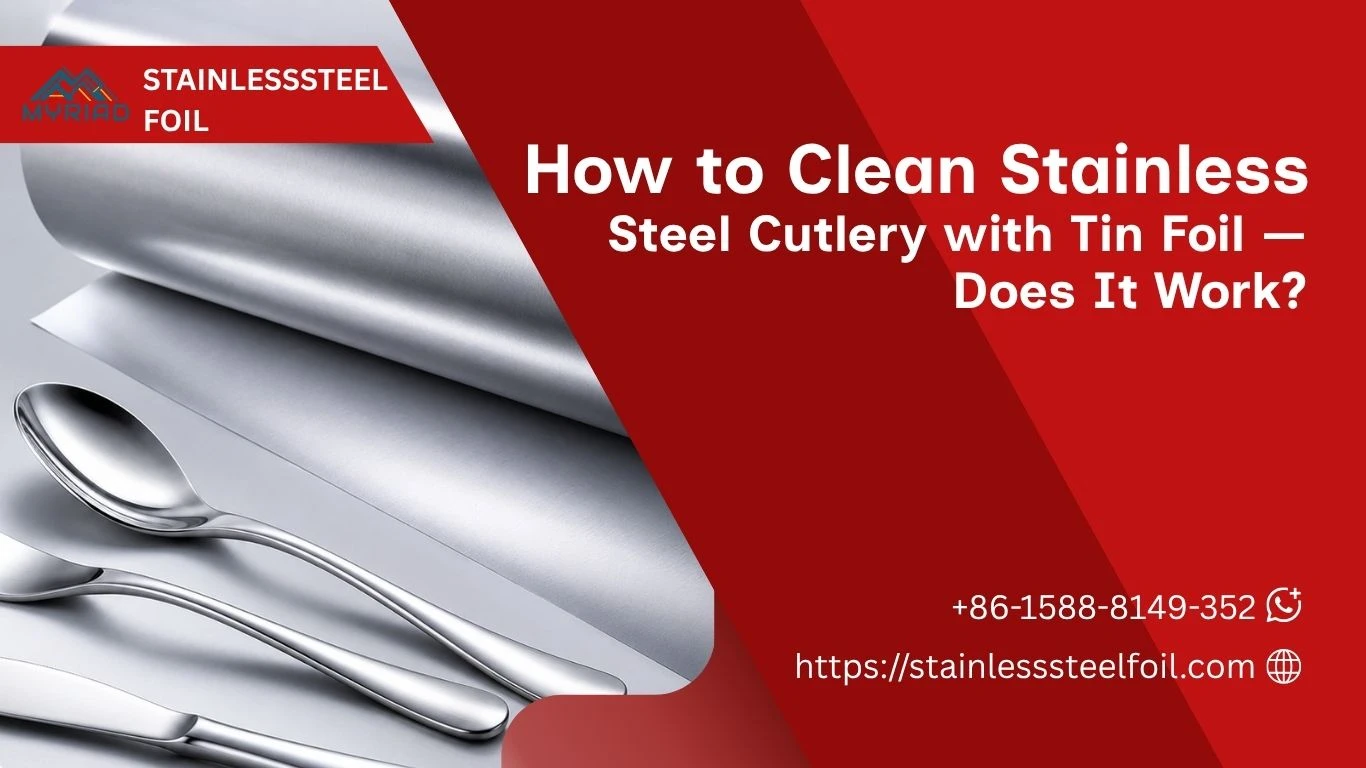
Cleaning stainless steel cutlery with tin foil has become a popular DIY hack shared across kitchens and social media. The idea is simple: use everyday household items like aluminum foil, baking soda, and hot water to restore shine to forks, spoons, and knives. It sounds almost too good to be true, which is why many people are curious about whether this method actually works.
Stainless steel is prized for its durability, resistance to rust, and sleek appearance, yet even the best cutlery can lose its sparkle over time. Water spots, food acids, and everyday wear can leave behind stains that regular washing doesn’t always remove. That’s where tin foil cleaning comes in—promising a quick, inexpensive solution without harsh chemicals.
But does science back up this method, or is it just another kitchen myth? In this article, we’ll explore the chemistry behind tin foil cleaning, compare it with other cleaning techniques, and share expert opinions. For more background on stainless steel’s unique properties, you can check the Wikipedia overview of stainless steel or explore detailed stainless steel foil applications.
What Makes Stainless Steel Special?
Stainless steel is considered one of the most remarkable materials in modern manufacturing and everyday life. Its unique composition of iron, chromium, and nickel gives it exceptional durability and resistance to corrosion. The chromium content is particularly important because it forms a thin, invisible oxide layer that protects the surface from rust and staining. This makes stainless steel ideal for kitchen cutlery, medical instruments, and industrial applications where hygiene and strength are essential.
Unlike ordinary steel, stainless steel maintains its shine and structural integrity even after years of use. It resists heat, moisture, and chemical exposure, which explains why it is widely used in food preparation and storage. Another advantage is its recyclability—stainless steel can be reused without losing quality, making it a sustainable choice for industries worldwide.
For a deeper understanding of stainless steel’s properties and applications, you can explore the Wikipedia overview of stainless steel or check the detailed guides on stainless steel foil applications. These resources highlight why stainless steel remains a cornerstone material in both household and industrial settings, combining practicality with long-term performance.
The Science Behind Tin Foil Cleaning
The science behind cleaning stainless steel cutlery with tin foil lies in a fascinating chemical reaction known as ion exchange. Tin foil, which is actually aluminum foil, interacts with tarnish and discoloration when combined with hot water and baking soda. The aluminum acts as a sacrificial metal, transferring electrons to the tarnished surface. This process helps break down the compounds causing dullness or stains, leaving the cutlery looking brighter.
This method is widely recognized for cleaning silver, where the tarnish is primarily silver sulfide. In stainless steel, however, the protective chromium oxide layer makes the reaction less dramatic. While tin foil can reduce minor discoloration, stainless steel often requires mild abrasives or acidic solutions like vinegar for deeper cleaning.
The effectiveness of this technique also depends on the grade of stainless steel. For example, 304 stainless steel is more resistant to corrosion compared to 301 stainless steel, meaning tin foil cleaning may show varied results.
For further insights into stainless steel’s unique properties, you can explore the stainless steel or the detailed guide to stainless steel foil applications. These resources highlight why stainless steel reacts differently compared to silver, making tin foil cleaning more of a quick DIY trick than a long-term solution.
Step-by-Step: Cleaning Stainless Steel Cutlery with Tin Foil
Prepare the Cleaning Bowl
- Line a medium-sized bowl with aluminum foil
- Ensure the shiny side faces upward
- Place the bowl on a stable surface
Add Hot Water and Baking Soda
- Pour boiling water into the foil-lined bowl
- Add 1–2 tablespoons of baking soda
- Stir gently until dissolved
Submerge Stainless Steel Cutlery
- Place forks, spoons, or knives into the bowl
- Ensure each piece touches the foil surface
- Leave submerged for 5–10 minutes
Rinse and Dry Thoroughly
- Take cutlery out carefully
- Rinse under clean running water
- Dry immediately with a soft cloth to prevent water spots
This process may reduce minor discoloration, but results vary depending on the grade of stainless steel. For example, 304 stainless steel is more resistant to corrosion than 301 stainless steel, so the effectiveness of tin foil cleaning can differ.
Comparing Tin Foil Cleaning with Other Methods
| Method | Effectiveness | Cost | Safety |
|---|---|---|---|
| Tin Foil + Baking Soda | Moderate | Very low | Safe |
| Commercial Stainless Steel Cleaner | High | Moderate | Safe |
| Vinegar + Water Solution | High | Low | Safe |
| Lemon Juice + Salt | Moderate | Low | Safe |
For industrial-grade stainless steel, such as 316 stainless steel, professional cleaning solutions are recommended.
Expert Opinions: Does It Really Work?
Expert opinions on cleaning stainless steel cutlery with tin foil are mixed, and most specialists emphasize that while the method is safe, it is not the most effective solution. Chemists explain that aluminum foil works best with silver because of the chemical reaction between silver sulfide and aluminum in the presence of baking soda and hot water. Stainless steel, however, has a protective chromium oxide layer that resists corrosion, meaning the reaction is far less pronounced.
Kitchenware experts often recommend vinegar or commercial stainless steel cleaners instead, as these provide more consistent results. According to guides on stainless steel foil applications, stainless steel is designed to resist tarnish naturally, so discoloration is usually surface-level and removable with mild acids or abrasives.
Some users report success with tin foil cleaning for light stains, but professionals caution against relying on it as a primary method. For deeper insights into stainless steel’s durability, the Wikipedia overview of stainless steel highlights why the alloy reacts differently compared to silver. In short, tin foil cleaning can be a quick DIY trick, but experts agree that vinegar, lemon juice, or specialized cleaners remain more reliable for maintaining shine and hygiene.
Summary
Cleaning stainless steel cutlery with tin foil is a popular DIY hack that can help with minor discoloration. While it’s safe and inexpensive, it’s not the most effective method compared to vinegar or commercial stainless steel cleaners. For everyday use, stick to simple soap and water, and reserve tin foil cleaning for occasional touch-ups.
For more insights into stainless steel properties and applications, visit the Stainless Steel Foil blog or explore product details like stainless steel foil sheets and contact us.
FAQs
Q: Does cleaning stainless steel cutlery with tin foil damage it?
A: No, cleaning stainless steel cutlery with tin foil does not damage the metal, but it may not be as effective as vinegar or commercial cleaners.
Q: Can tin foil remove rust from stainless steel cutlery?
A: Rust is rare in stainless steel, but if present, tin foil cleaning won’t fully remove it. Specialized rust removers are better for this purpose.
Q: Is tin foil cleaning safe for food-grade stainless steel?
A: Yes, using tin foil with baking soda and hot water is safe for stainless steel cutlery with tin foil cleaning, as long as you rinse thoroughly.
Q: How often should I clean stainless steel cutlery with tin foil?
A: It’s best used occasionally for stubborn stains. Regular cleaning with soap and water is sufficient for daily maintenance.
Q: Can I use tin foil cleaning for stainless steel cookware?
A: Yes, but results may vary. Cookware often requires stronger cleaning methods due to grease and heat stains.