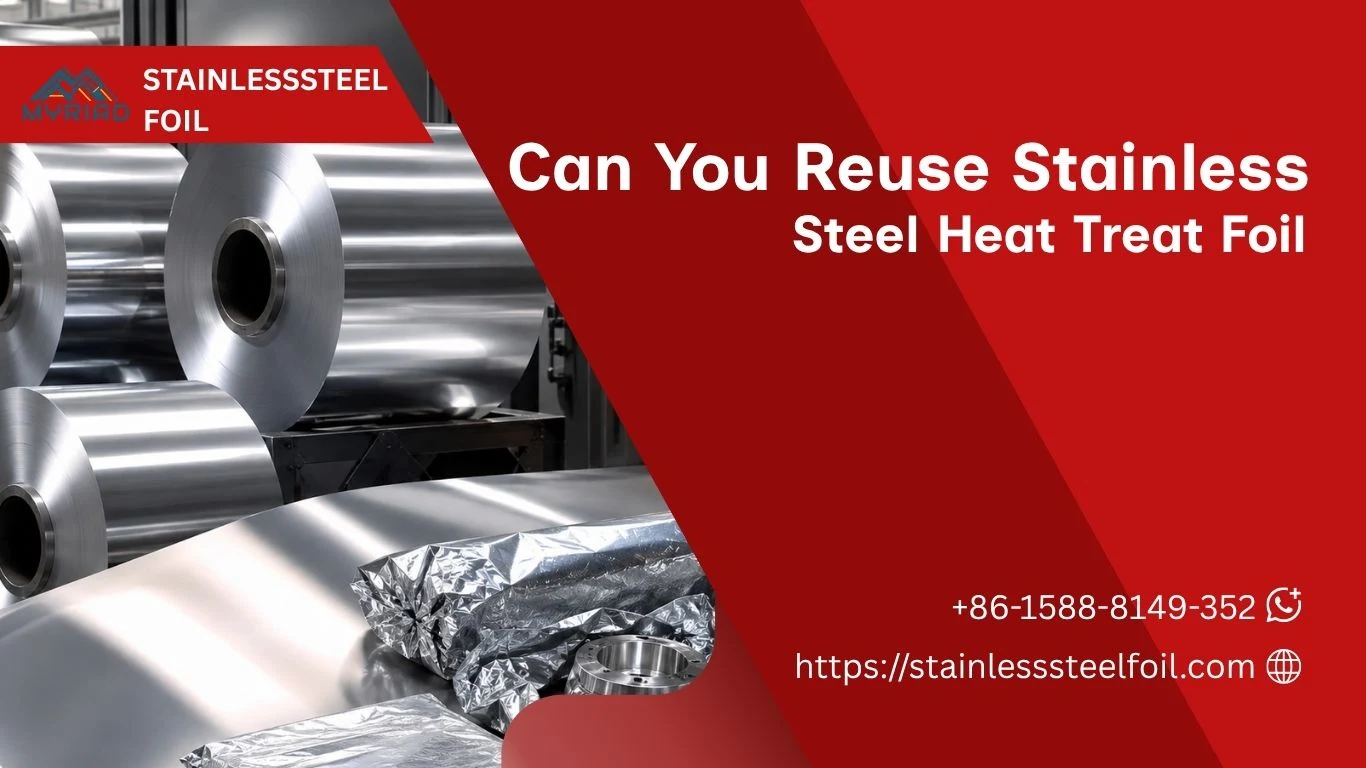
When it comes to heat treatment, precision and reliability are everything. One of the most essential tools in this process is stainless steel heat treat foil, often referred to as heat treat wrap. This specialized foil is designed to protect metal parts from oxidation, scaling, and contamination during high-temperature exposure. By creating a protective envelope around the workpiece, it ensures that the final product maintains its integrity, surface finish, and performance.
But here’s the question many machinists, toolmakers, and manufacturers ask: Can you reuse stainless steel heat treat foil? At first glance, reusing foil might seem like a practical way to save costs, especially given the price of premium grades like 304 and 316L stainless steel foil. However, the reality is more complex. Heat treatment subjects foil to extreme thermal stress, and once it has gone through a cycle, its properties change significantly.
What Is Stainless Steel Heat Treat Foil?
Stainless steel heat treat foil is a specialized material engineered to withstand extreme temperatures during the heat treatment of metals. It is often referred to as heat treat wrap because of its primary function: wrapping parts to create a protective barrier against oxidation, scaling, and contamination. When metals are exposed to high heat, oxygen reacts with the surface, leading to discoloration and weakened mechanical properties. By enclosing the part in stainless steel foil, manufacturers ensure a clean, controlled environment that preserves the integrity of the workpiece.
This foil is typically made from high-grade alloys such as 304 stainless steel and 316L stainless steel, both known for their durability and corrosion resistance. The foil is rolled into ultra-thin sheets, sometimes as fine as 0.01mm, allowing machinists to fold and seal it tightly around components. Its ability to maintain strength at elevated temperatures makes it indispensable in industries like aerospace, automotive, and tool-making.
For a deeper look at available grades, you can explore stainless steel foil products and learn about the best stainless steel foil grade for heat. Additionally, the manufacturing process is explained in detail here: how stainless steel foil is made.
Why People Consider Reusing Stainless Steel Heat Treat Foil
The idea of reusing stainless steel heat treat foil often comes from a practical standpoint. Heat treat foil is an essential material in industries such as aerospace, automotive, and tool-making, but it is not inexpensive. High-quality grades like 304 stainless steel foil and 316L stainless steel foil ultrathin 0.01mm are manufactured to withstand extreme temperatures, which makes them costly compared to ordinary wrapping materials. Because of this, many machinists and manufacturers wonder if the foil can be used more than once to reduce expenses.
Another reason people consider reuse is convenience. Preparing foil envelopes for each heat treatment cycle requires time and precision. Once a piece of foil has already been shaped and folded, it may seem easier to reuse it rather than start fresh. This is especially tempting in smaller workshops or hobbyist settings where budgets are tighter.
There’s also the perception that stainless steel, being durable and corrosion-resistant, should naturally withstand multiple heating cycles. After all, stainless steel is known for its longevity in other applications, such as automotive components and architectural uses.
However, while the motivation to reuse foil is understandable, the reality is that once stainless steel foil has gone through a heat cycle, its structural integrity, sealing ability, and protective qualities are compromised. For reliable results, manufacturers recommend using fresh stainless steel foil wrap for heat treating every time.
The Honest Manufacturer’s Answer
When customers ask whether they can reuse stainless steel heat treat foil, the straightforward answer from manufacturers is no. While stainless steel is known for its durability and resistance to corrosion, once the foil has gone through a heat treatment cycle, its properties change dramatically. The intense heat causes the foil to become brittle, making it prone to cracking and tearing. This compromises its ability to form an airtight seal, which is the most critical function of heat treat foil.
A proper seal ensures that oxygen cannot reach the part during heating. If reused foil develops even the smallest pinhole or weak fold, oxygen will infiltrate, leading to oxidation, scaling, and surface contamination. This not only affects the appearance of the part but can also reduce its mechanical strength. For industries like aerospace and automotive, where precision is non-negotiable, reusing foil is simply too risky.
Manufacturers recommend using fresh stainless steel foil wrap for every cycle to guarantee consistent results. While the upfront cost may seem higher, the long-term savings come from avoiding failed parts, wasted labor, and compromised quality. For more guidance, you can explore the stainless steel foil for heat treatments guide, which explains best practices in detail.
Technical Comparison: New vs. Reused Foil
| Property | New Stainless Steel Foil | Reused Stainless Steel Foil |
|---|---|---|
| Seal Integrity | Airtight | Weak, prone to leaks |
| Strength | Flexible, durable | Brittle, cracks easily |
| Contamination Risk | None | High |
| Heat Resistance | Full capacity | Reduced |
| Cost Efficiency | Higher upfront cost | Risk of failed parts |
Which Stainless Steel Foil Grade Is Best?
Choosing the right grade of stainless steel heat treat foil is crucial for achieving consistent results in high-temperature applications. Not all stainless steels perform the same under heat treatment, and selecting the wrong grade can lead to oxidation, contamination, or even foil failure.
The most commonly used grades are 304 stainless steel and 316L stainless steel. 304 stainless steel foil is widely preferred because it offers excellent oxidation resistance, affordability, and versatility. It is suitable for general tool-making, machining, and small-scale heat treatment projects. On the other hand, 316L stainless steel foil ultrathin 0.01mm provides superior corrosion resistance, especially in environments where exposure to moisture or chemicals is a concern. This makes it ideal for aerospace, medical, and precision engineering applications where reliability is non-negotiable.
Manufacturers often recommend selecting a grade based on the specific requirements of your project. For example, if cost efficiency is the priority, 304 foil is a solid choice. If durability and corrosion resistance are more important, 316L foil is the better option. For detailed guidance, you can explore the best stainless steel foil grade for heat, which outlines the strengths of each grade in different heat treatment scenarios.
How Stainless Steel Foil Is Made
The process of manufacturing stainless steel heat treat foil is highly precise, ensuring the material can withstand extreme temperatures while maintaining flexibility and strength. It begins with stainless steel sheets, typically grades like 304 and 316L, which are chosen for their corrosion resistance and durability. These sheets are rolled into ultra-thin strips using advanced cold rolling techniques. The rolling process reduces thickness to fractions of a millimeter, sometimes as fine as 0.01mm, while preserving the alloy’s mechanical properties.
Once the desired thickness is achieved, the foil undergoes annealing, a heat treatment process that relieves internal stresses and enhances ductility. This step is critical because it ensures the foil can be folded and sealed tightly around components during heat treatment without cracking. After annealing, the foil is cleaned and surface-finished to remove impurities, giving it a smooth, protective surface.
Finally, the foil is slit into rolls or sheets of varying sizes, ready for industrial use. Each batch is tested for consistency in thickness, tensile strength, and oxidation resistance to meet strict quality standards.
For a deeper look into the production process, you can explore how stainless steel foil is made. This ensures you understand why the material is so effective in protecting parts during heat treatment and why reusing it compromises its integrity.
Industry Practices
In professional manufacturing environments, reusing stainless steel heat treat foil is almost never practiced. Industries such as aerospace, automotive, and medical device production demand absolute precision, and any compromise in material integrity can lead to costly failures. Once foil has been exposed to extreme heat, it becomes brittle and loses its ability to form a reliable airtight seal. This is why manufacturers consistently recommend using fresh stainless steel foil wrap for every cycle.
For example, in automotive components, strict quality standards ensure that protective materials are never reused. Similarly, aerospace applications rely on best stainless steel foil grades for heat
Summary
The honest answer from manufacturers is simple: you should not reuse stainless steel heat treat foil. Once exposed to extreme heat, the foil becomes brittle, loses its sealing ability, and risks allowing oxygen to penetrate. This leads to oxidation, scaling, and contamination of your parts. While cost savings may tempt some to reuse foil, the risks far outweigh the benefits. For consistent, high-quality results, always use fresh stainless steel foil products for each cycle.
If you want to explore more about foil grades, thickness options, and applications, visit our product page. For personalized guidance or bulk orders, reach out directly through our contact us page.
FAQs
Can stainless steel heat treat foil be reused safely?
In most cases, reusing stainless steel heat treat foil is not recommended. After one heat cycle, the foil becomes brittle and loses its ability to form an airtight seal. Even microscopic cracks or pinholes can allow oxygen to enter, leading to oxidation and scaling. While some thicker grades may appear reusable, manufacturers emphasize that the risk of contamination outweighs any cost savings. For consistent results, always use fresh stainless steel foil wrap.
Why do some industries avoid reusing foil completely?
Industries like aerospace, automotive, and medical device manufacturing demand absolute precision. A single defect caused by reused foil can compromise safety and performance. For example, automotive components rely on strict quality standards, and reusing foil could lead to costly failures. In these sectors, manufacturers prefer best stainless steel foil grades for heat to ensure reliability.
Does foil thickness or grade affect reuse potential?
Yes, thickness and grade play a role. Thicker foils, such as 316L stainless steel foil ultrathin 0.01mm, may resist damage longer than thinner ones. However, once exposed to high heat, all grades eventually lose flexibility and sealing strength. Even premium alloys like 309 or 321 stainless steel, often used in toolmaking, are not immune to brittleness after repeated cycles. This is why manufacturers advise against reuse regardless of grade.
What are the alternatives to reusing stainless steel heat treat foil?
Instead of reusing foil, manufacturers recommend selecting the right grade for your application and recycling used foil as scrap metal. For example, 304 stainless steel foil is cost-effective for general use, while 316L foil offers superior corrosion resistance for demanding environments. Recycling ensures sustainability without compromising part quality. For guidance, see the stainless steel foil for heat treatments guide.