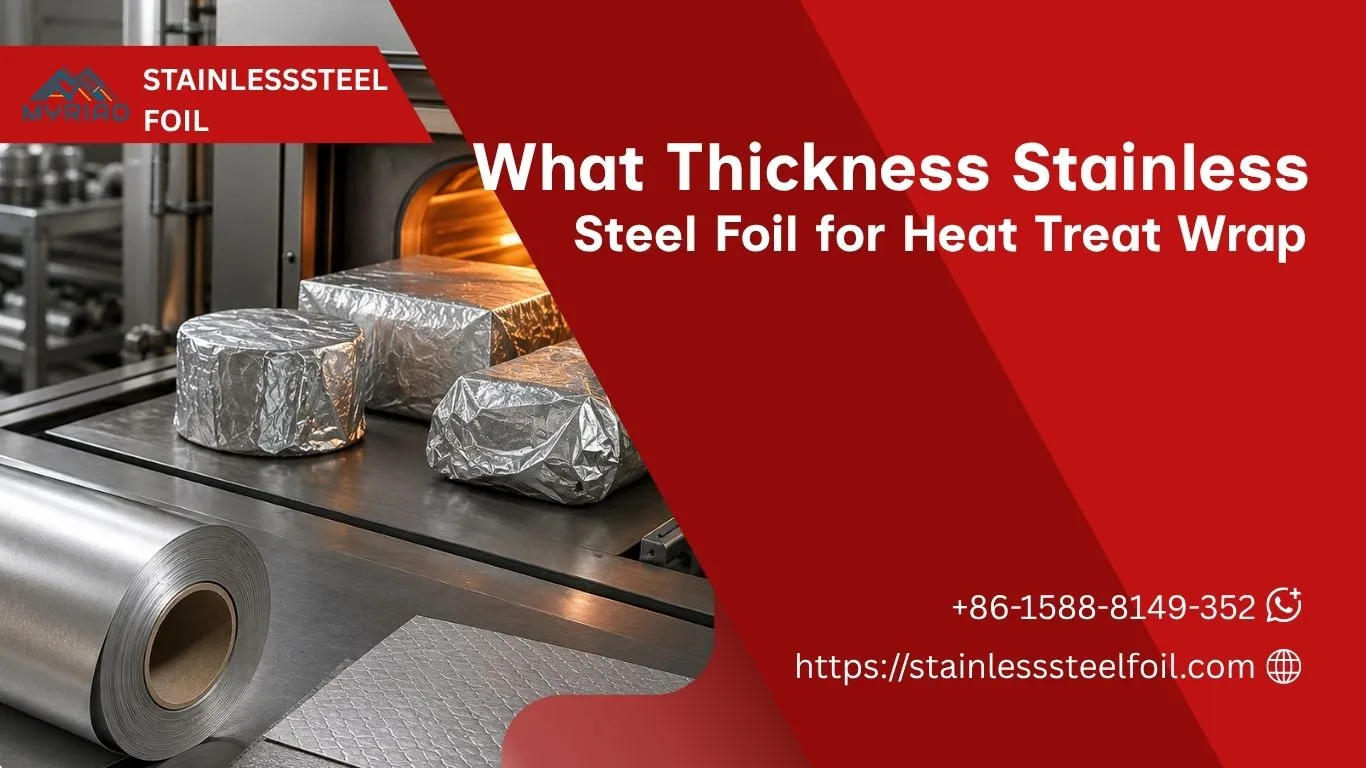
Heat treating is one of the most important processes in metallurgy, knife-making, aerospace, and automotive industries. During this process, metals are exposed to extremely high temperatures to alter their hardness, strength, and durability. However, without proper protection, metals can suffer from oxidation, scaling, and contamination, which reduces their performance and lifespan. This is where stainless steel foil for heat treat wrap becomes essential.
Stainless steel foil acts as a protective barrier, sealing the workpiece from oxygen and preventing unwanted reactions during heat treatment. The thickness of the foil plays a critical role in ensuring success. Thinner foils are easier to wrap and more cost-effective, while thicker foils provide superior durability and resistance to tearing. Choosing the right thickness depends on the type of metal, the temperature range, and the size of the component being treated.
In this article, we will explore the science behind stainless steel foil, compare different thickness options, and provide expert recommendations for selecting the best foil for your application. For more details, visit Stainless Steel Foil Products to see the full range available.
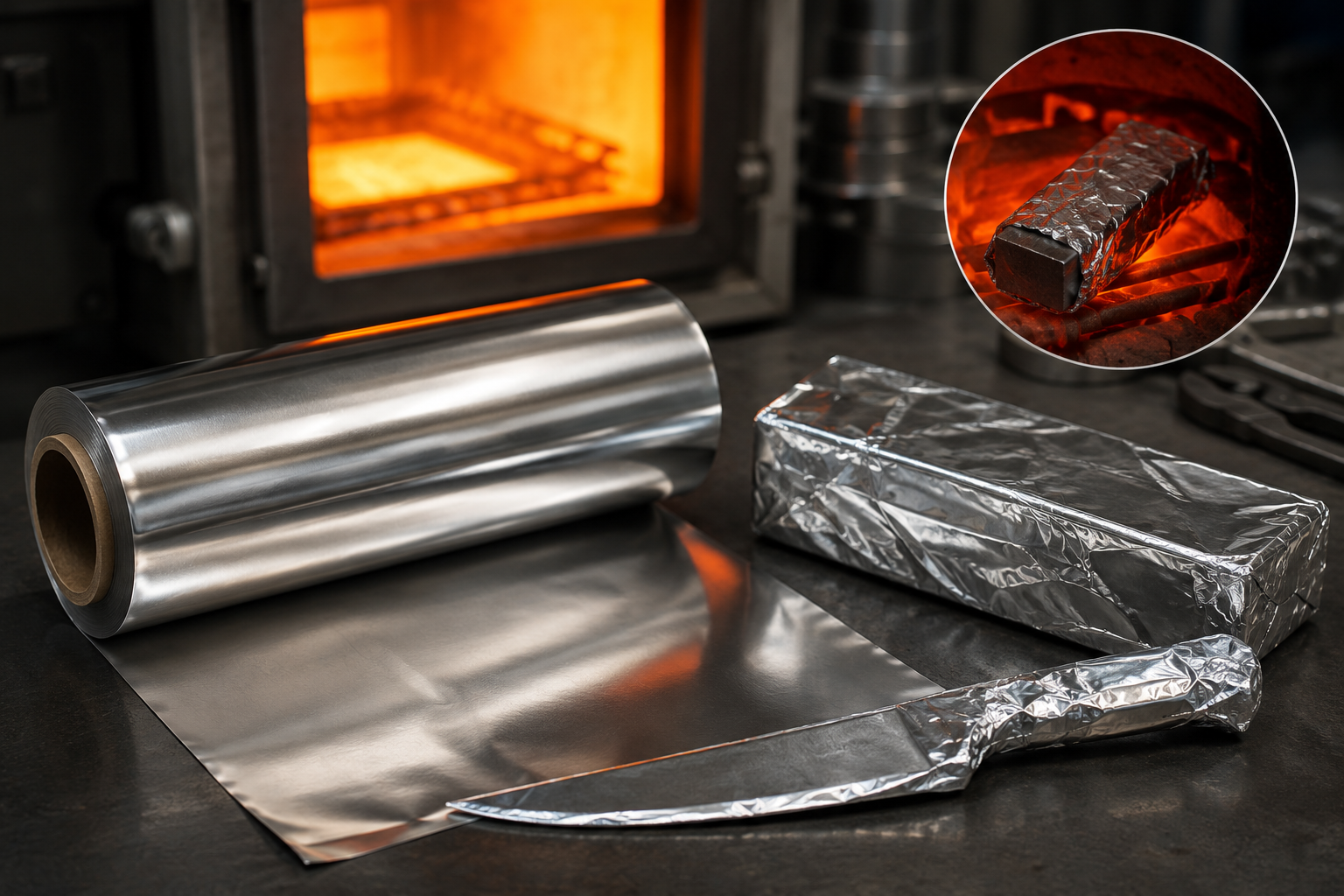
Stainless Steel Foil
Stainless steel foil is a versatile material widely used across industries for its durability, corrosion resistance, and ability to withstand extreme temperatures. Produced in ultra-thin sheets, stainless steel foil typically ranges from 0.01mm to 0.2mm in thickness, making it suitable for applications that demand precision and reliability.
One of the most important uses of stainless steel foil is in heat treating processes, where it serves as a protective wrap to shield metals from oxidation and scaling. By creating a sealed environment, the foil ensures that the treated metal retains its desired properties, such as hardness and strength. This makes stainless steel foil indispensable in fields like aerospace, automotive, electronics, and knife-making.
Different grades of stainless steel foil, such as 304 and 316L, offer unique benefits. For example, 304 stainless steel foil is cost-effective and versatile, while 316L stainless steel foil provides superior corrosion resistance for demanding environments.
To explore the full range of options and applications, visit the stainless steel foil products page. Whether for industrial components or precision tools, stainless steel foil remains a critical material for modern manufacturing.
Why Thickness Matters in Heat Treat Wrap
The thickness of stainless steel foil for heat treat wrap is more than just a technical detail—it directly influences the success of the heat treatment process. When metals are exposed to high temperatures, they are vulnerable to oxidation, scaling, and contamination. A properly chosen foil thickness creates a sealed environment that protects the workpiece from these damaging effects.
Thinner foils, such as 0.02mm to 0.05mm, are easier to fold and wrap tightly around smaller tools or knives. They are cost-effective but may require double wrapping to ensure complete protection. On the other hand, thicker foils, like 0.1mm to 0.2mm, provide superior durability and resistance to tearing, making them ideal for larger aerospace or automotive components. The trade-off is that thicker foils can be slightly harder to manipulate and more expensive.
Ultimately, the right thickness depends on the type of metal, the size of the part, and the heat treatment temperature. For detailed guidance, explore the stainless steel foil for heat treatments guide, which explains how foil thickness impacts performance across different industries.
Thickness Options
| Foil Thickness | Best Use Case | Advantages | Limitations |
|---|---|---|---|
| 0.01mm (Ultra-thin) | Precision instruments, electronics | Flexible, lightweight | Tears easily |
| 0.02mm – 0.05mm | Knives, small tools | Easy to wrap, cost-effective | May need double wrapping |
| 0.1mm | Aerospace, automotive parts | Strong, durable | Slightly harder to fold |
| 0.2mm | Heavy-duty industrial components | Maximum protection | More expensive |
Choosing the Right Thickness
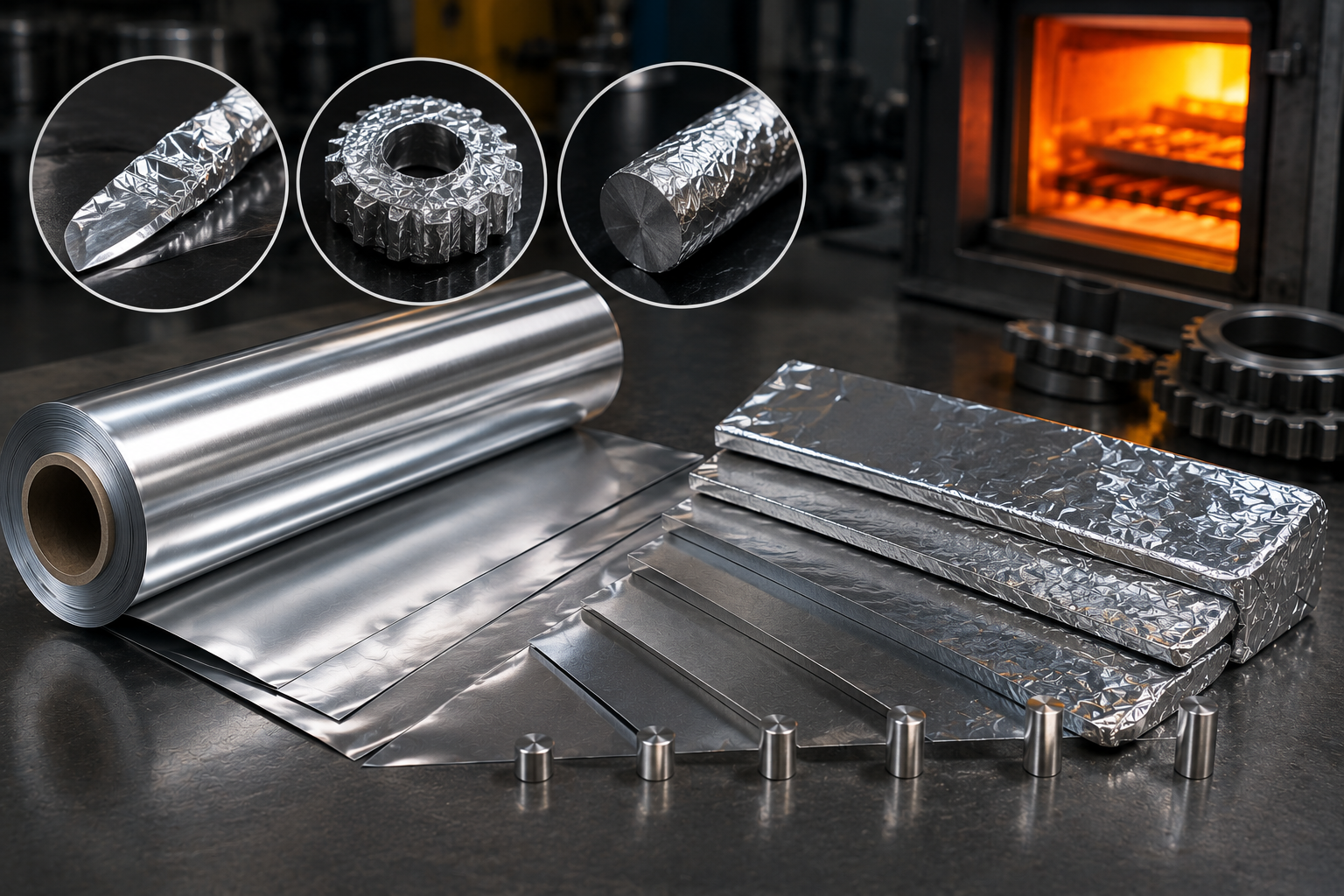
Selecting the correct thickness of stainless steel foil for heat treat wrap is essential for achieving consistent and reliable results in heat treatment. The foil acts as a protective shield, preventing oxidation and contamination during exposure to high temperatures. However, the thickness you choose directly impacts durability, ease of use, and cost efficiency.
For smaller tools, knives, or precision components, thinner foil in the range of 0.02mm to 0.05mm is often preferred. It is flexible, easy to fold, and cost-effective, though it may require double wrapping to ensure complete protection. In contrast, thicker foil such as 0.1mm to 0.2mm is ideal for larger aerospace or automotive parts. It provides superior resistance to tearing and punctures, ensuring that even under extreme heat cycles, the workpiece remains fully protected.
The decision ultimately depends on the type of metal, the size of the component, and the specific heat treatment process. For a detailed breakdown of applications and recommendations, explore the stainless steel foil for heat treatments guide. Choosing wisely ensures not only protection but also efficiency in industrial and precision manufacturing.
Stainless Steel Grades for Heat Treat Wrap
When selecting stainless steel foil for heat treat wrap, the grade of stainless steel is just as important as the thickness. Different grades offer unique properties that directly impact performance during high-temperature applications. The two most commonly used grades are 304 stainless steel and 316L stainless steel, each serving specific needs in industries like aerospace, automotive, and knife-making.
304 stainless steel foil is widely chosen for its affordability and versatility. It provides excellent resistance to oxidation and scaling, making it suitable for general heat treatment processes. Knife makers and tool manufacturers often prefer 304 foil because it balances cost and performance effectively.
On the other hand, 316L stainless steel foil offers superior corrosion resistance due to its molybdenum content. This makes it ideal for demanding environments such as aerospace and marine applications, where exposure to harsh conditions is common.
Choosing the right grade ensures that the foil not only protects the workpiece but also withstands repeated heat cycles without failure. For a detailed comparison of grades and their applications, visit the stainless steel foil for heat treatments guide. Selecting the correct grade guarantees consistent results and long-term durability in heat treatment processes.
Practical Applications
The use of stainless steel foil for heat treat wrap extends across multiple industries, proving its versatility and importance in modern manufacturing. In knife-making, stainless steel foil prevents decarburization, ensuring blades retain their sharpness and durability after heat treatment. In the aerospace sector, foil is used to protect precision components from oxidation during high-temperature processes, guaranteeing reliability in critical applications.
Similarly, the automotive industry relies on stainless steel foil for treating engine parts and other components, where maintaining strength and resistance to wear is essential. Even in electronics and medical tools, ultra-thin foil grades provide protection during delicate heat treatments. For a deeper look into industrial uses, explore stainless steel coil strip in automotive components.
By choosing the right thickness and grade, manufacturers can ensure consistent results, reduced waste, and improved product performance. This makes stainless steel foil an indispensable material across diverse applications.
Summary
Choosing the right stainless steel foil for heat treat wrap is vital for achieving consistent results in metallurgy, knife-making, aerospace, and automotive industries. The thickness of the foil directly impacts durability, ease of use, and protection against oxidation. Thinner foils, such as 0.02mm to 0.05mm, are flexible and cost-effective but may require double wrapping. Thicker foils, like 0.1mm to 0.2mm, provide superior resistance to tearing and are ideal for larger components exposed to extreme heat cycles. Equally important is the choice of grade. 304 stainless steel foil offers affordability and versatility, while 316L stainless steel foil delivers enhanced corrosion resistance for demanding environments. By carefully selecting both thickness and grade, manufacturers can ensure optimal protection, efficiency, and long-term durability.
For more detailed insights and product options, explore the stainless steel foil products page or consult the heat treatments guide. Making the right choice guarantees superior performance across diverse applications.
FAQs
Q: What thickness stainless steel foil for heat treat wrap is most commonly used in knife-making?
In knife-making, the most popular choice is 0.05mm to 0.1mm stainless steel foil for heat treat wrap. This thickness provides a balance of durability and flexibility, ensuring the blade is fully protected from oxidation while still being easy to fold tightly. Many knife makers prefer 304 stainless steel foil because it is cost-effective and reliable for repeated use in small-scale heat treatment.
Q2: Can stainless steel foil for heat treat wrap be used in aerospace applications?
Yes, aerospace industries rely heavily on stainless steel foil for heat treat wrap to protect precision components during high-temperature processes. For these applications, thicker foil such as 0.1mm to 0.2mm is often recommended because it resists tearing and maintains integrity under extreme conditions. The 316L stainless steel foil grade is particularly valued for its superior corrosion resistance, making it ideal for aerospace and marine environments.
Q3: Is double wrapping necessary when using thinner stainless steel foil for heat treat wrap?
When using thinner foil, such as 0.02mm to 0.05mm stainless steel foil for heat treat wrap, double wrapping is often advised. Thin foil can tear more easily, especially when wrapping sharp-edged tools or knives. Double wrapping ensures a complete seal against oxygen, preventing decarburization and scaling. For guidance on wrapping techniques, see the stainless steel foil for heat treatments guide.
Q4: What are the advantages of using stainless steel foil for heat treat wrap compared to other protective methods?
The main advantage of stainless steel foil for heat treat wrap is its ability to create a sealed environment around the workpiece. Industries ranging from automotive to knife-making rely on foil because it consistently delivers superior results compared to alternative protective methods.