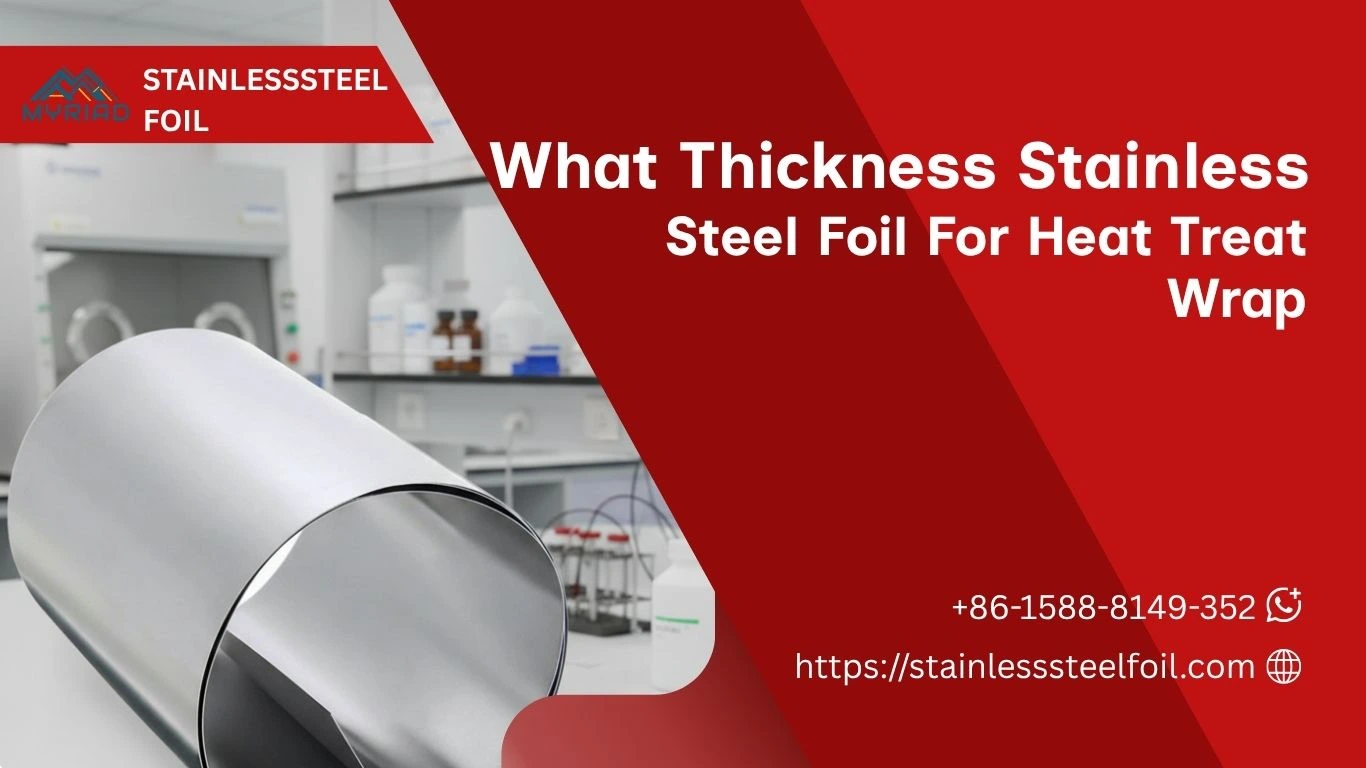
Heat treatment is a critical process in modern manufacturing. Whether you are hardening knife blades, processing tool steel, treating aerospace components, or improving industrial parts, protecting the material surface during heat treatment is essential.
One of the most effective ways to prevent oxidation, scaling, and decarburization is by using stainless steel foil as a heat treat wrap. However, many manufacturers, machinists, and heat treatment professionals ask the same question: What thickness stainless steel foil for heat treat wrap should you choose?
The answer depends on several factors, including furnace temperature, part size, cycle duration, component weight, and desired surface finish.
Choosing the wrong foil thickness can lead to tearing, oxidation damage, wasted material, and higher production costs. On the other hand, selecting the proper stainless steel foil thickness helps ensure cleaner parts, better surface quality, and more reliable heat treatment results.
In this guide, we will explain how heat treatment foil works, compare common thickness options, discuss best practices, and help you select the right foil for your application.
For a broad overview of available products, visit stainless steel foil and explore professional-grade heat treatment materials.
Stainless Steel Foil for Heat Treatment
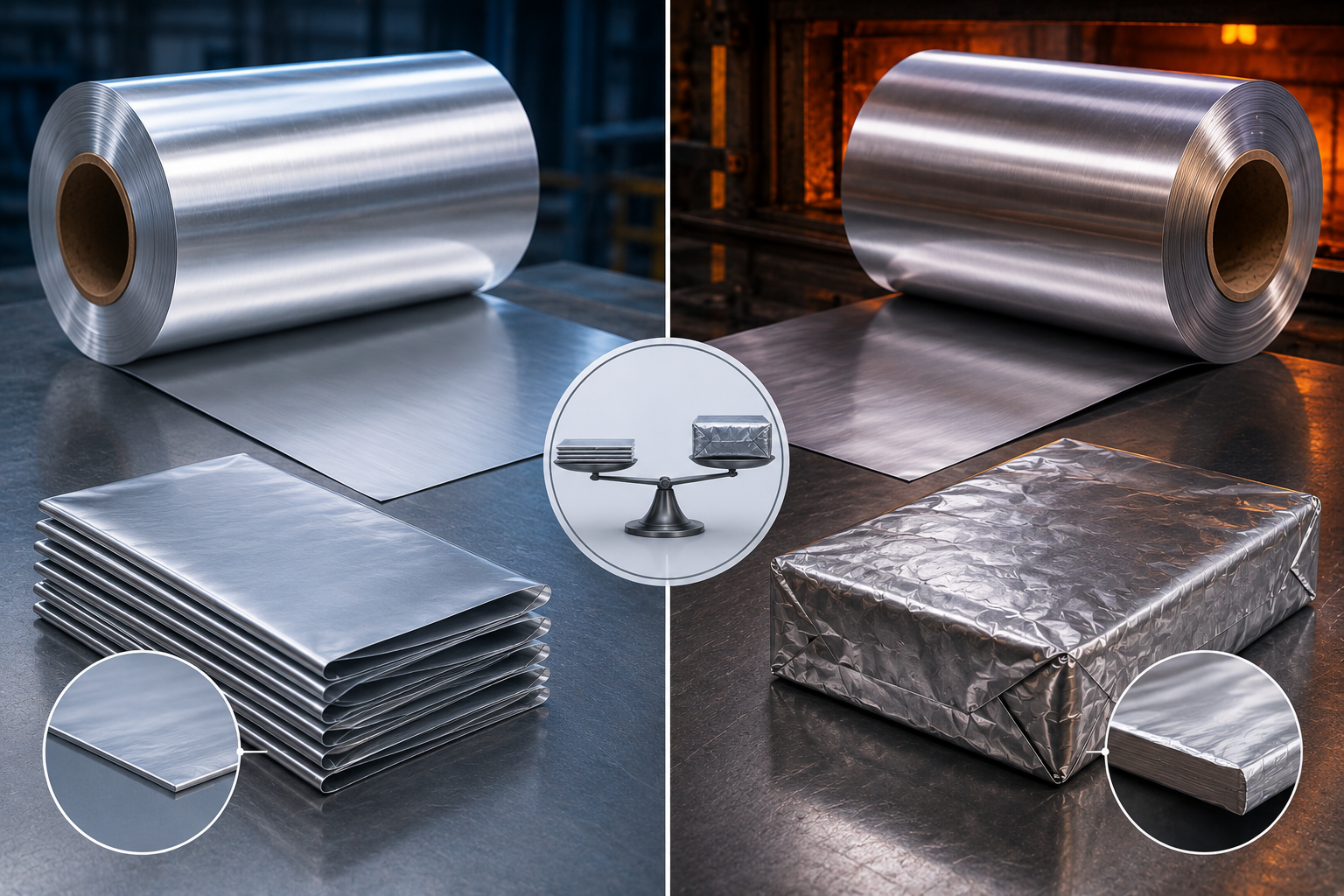
Before discussing thickness, it helps to understand why stainless steel foil is used during heat treatment.
Heat treatment often exposes metal components to temperatures above 1800°F (982°C). At these temperatures, oxygen inside the furnace can react with the metal surface.
This reaction creates:
- Oxidation
- Scale formation
- Surface discoloration
- Decarburization
These problems often require additional grinding, polishing, or machining after heat treatment.
A properly sealed stainless steel foil envelope creates a protective atmosphere around the component. This barrier greatly reduces oxygen exposure and helps preserve the original surface finish.
If you are new to the material, you can learn more from what is stainless steel foil
Why Stainless Steel Foil Thickness Matters
Not all foil performs the same way.
The thickness of stainless steel foil directly affects:
- Strength
- Puncture resistance
- Heat resistance
- Handling durability
- Cost efficiency
Thinner foil costs less and folds easily. Thicker foil provides greater durability and resists tearing better. The challenge is finding the right balance between protection and cost. Many heat treatment professionals make the mistake of assuming thicker foil always performs better. In reality, the ideal thickness depends on the application.
Stainless Steel Foil Thickness Options
Most heat treatment foil is available in several standard thicknesses.
| Thickness | Metric Equivalent | Typical Applications |
|---|---|---|
| 0.001″ | 0.025 mm | Small precision parts |
| 0.002″ | 0.050 mm | General heat treatment |
| 0.003″ | 0.076 mm | Tool steel applications |
| 0.005″ | 0.127 mm | Heavy industrial parts |
| 0.010″ | 0.254 mm | Specialized industrial use |
Among these options, 0.002-inch stainless steel foil remains the most widely used throughout the heat treatment industry.
Best Stainless Steel Foil Thickness for Most Heat Treatment Applications
For general-purpose heat treatment, 0.002-inch foil offers an excellent combination of flexibility and strength.
This thickness works well for:
- Tool steel
- High-speed steel
- Stainless steel components
- Mold inserts
- Cutting tools
- Precision machine parts
Because it balances durability and affordability, many commercial heat treatment facilities use this thickness as their standard material.
Additional thickness recommendations can be found here stainless steel heat treat foil thickness what works best
Stainless Steel Foil for Small Components
Small components place less stress on the foil package.
Examples include:
- Surgical tools
- Small gears
- Precision bearings
- Laboratory instruments
- Small knife blades
In these situations, 0.001-inch or 0.002-inch stainless steel foil often provides sufficient protection.
The thinner material wraps tightly around complex shapes and minimizes material waste.
For additional information regarding thinner materials, visit thin stainless steel foil thickness applications
Stainless Steel Foil for Tool Wrap Applications
Tool steel components create unique challenges. Sharp corners and cutting edges can puncture thin foil during handling or thermal expansion.
Therefore, many manufacturers prefer thicker material when wrapping:
- Dies
- Punches
- Reamers
- End mills
- Broaches
- Industrial cutting tools
A thickness of 0.003 inches often delivers the durability needed without becoming difficult to fold and seal.
More details are available in stainless steel foil tool wrap thickness
Stainless Steel Foil for Large Industrial Components
Large industrial parts often require greater protection. Heavy workpieces place additional strain on foil packages during transportation and loading. Long furnace cycles can further challenge the material.
For these demanding environments, 0.003-inch to 0.005-inch stainless steel foil is often recommended. Although the material cost is higher, improved reliability usually offsets the additional expense.
How Furnace Temperature Influences Stainless Steel Foil Selection
Temperature plays a major role in foil performance. As temperatures increase, metals naturally lose some mechanical strength.
This means the same foil that performs well at 1700°F may behave differently at 2200°F. When operating near maximum furnace temperatures, many facilities choose slightly thicker stainless steel foil to maintain package integrity throughout the cycle.
Long soak times may justify a similar approach.
Comparing Thin vs Thick Stainless Steel Foil
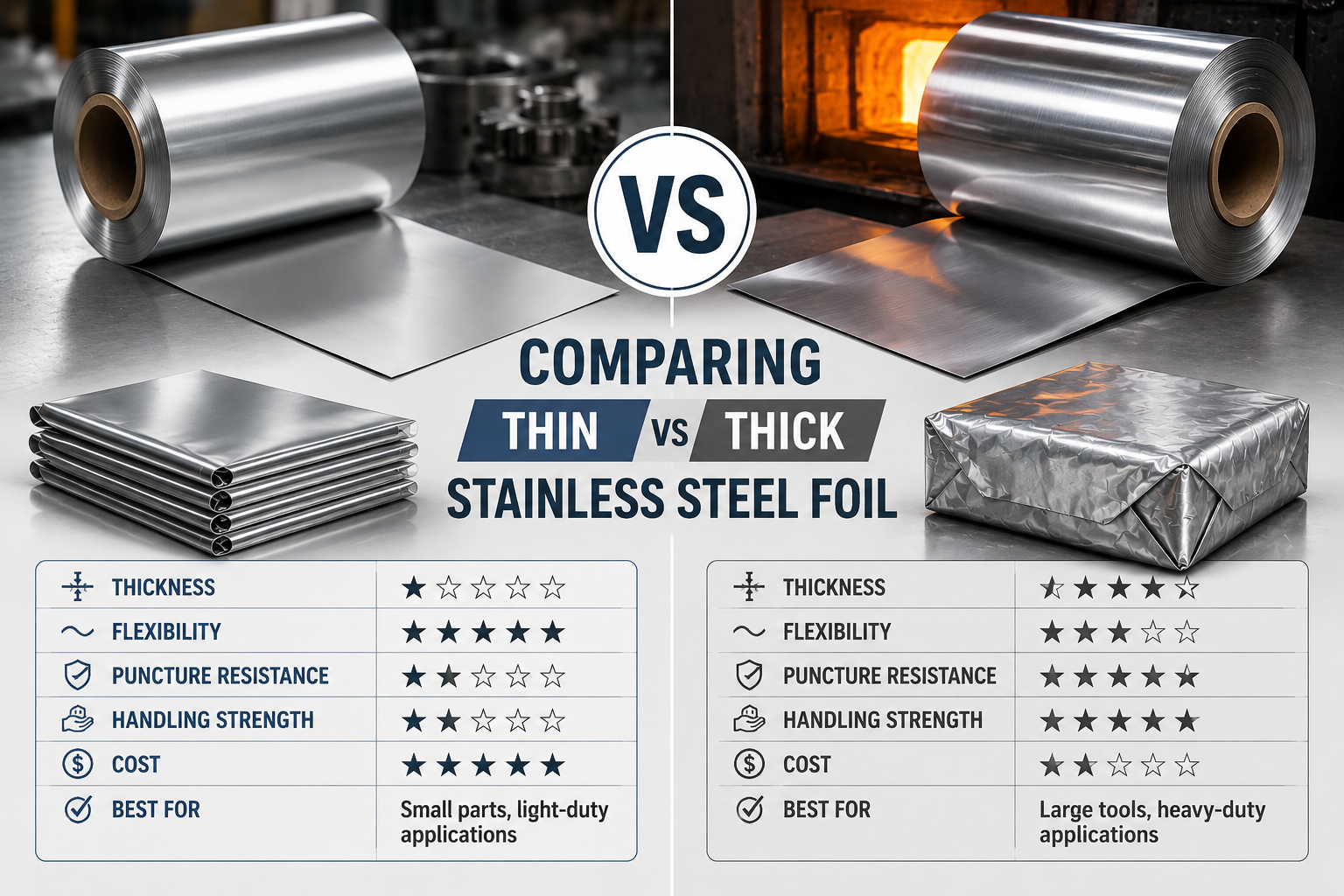
Choosing between thin and thick foil often depends on operational priorities.
| Feature | Thin Foil | Thick Foil |
|---|---|---|
| Cost | Lower | Higher |
| Flexibility | Excellent | Good |
| Ease of Folding | Excellent | Moderate |
| Tear Resistance | Moderate | Excellent |
| Puncture Resistance | Moderate | High |
| Large Tool Protection | Limited | Excellent |
The best choice depends on the specific application rather than simply selecting the thickest option available.
Mistakes When Choosing Stainless Steel Foil
Many heat treatment issues result from incorrect foil selection. One common mistake is using foil that is too thin. This increases the likelihood of:
- Tears
- Punctures
- Seal failures
- Oxidation damage
Another mistake is using unnecessarily thick material. While thicker foil provides greater strength, it also increases cost and may slow packaging operations. Successful facilities evaluate the entire process before selecting a foil specification.
Best Practices for Heat Treat Wrapping
Even premium stainless steel foil can fail if wrapping procedures are poor. Carefully inspect components before wrapping. Sharp edges should receive special attention. Foil seams should remain tightly folded.
Packages should allow slight room for thermal expansion. Operators should verify seal integrity before loading the furnace. Following these practices helps maximize foil performance and minimize oxidation risks.
For additional technical information, review stainless steel foil for heat treatment and heat treatment with stainless steel foil
How to Choose the Right Stainless Steel Foil Thickness
When selecting foil thickness, consider four key factors. First, determine the furnace temperature. Second, evaluate the size and weight of the workpiece. Third, identify any sharp edges that may puncture the foil. Finally, consider the duration of the heat treatment cycle.
For many applications, 0.002-inch stainless steel foil remains the best starting point. However, larger tools and demanding industrial environments may require thicker material.
When in doubt, consult an experienced supplier for guidance. For technical assistance, contact us
Summary
Choosing the correct stainless steel foil thickness is one of the most important decisions in heat treatment wrapping. The ideal thickness depends on furnace temperature, component size, cycle duration, and handling conditions. For many applications, 0.002-inch foil provides the best balance of performance and cost. Larger tools and heavy industrial components may require thicker material.
By selecting the proper stainless steel foil and following proven wrapping practices, manufacturers can reduce oxidation, improve surface quality, and achieve more consistent heat treatment results. Get for more information visit stainless steel foil and contact us.
FAQs
Q: What is the best stainless steel foil thickness for heat treatment?
A: For most applications, 0.002-inch stainless steel foil provides an excellent balance of flexibility, durability, and cost efficiency.
Q: Can stainless steel foil prevent oxidation during heat treatment?
A: Yes. Properly sealed stainless steel foil significantly reduces oxygen exposure and helps prevent oxidation and scaling.
Q: Is thicker stainless steel foil always better?
A: No. The ideal stainless steel foil thickness depends on part geometry, furnace conditions, and cycle duration.
Q: What thickness stainless steel foil should be used for tool steel?
A: Many manufacturers use 0.003-inch stainless steel foil when heat treating tool steel components with sharp edges.
Q: Can stainless steel foil be reused?
A: Most heat treatment applications use stainless steel foil as a single-use material because repeated exposure may reduce performance.
Q: Does foil thickness affect heat transfer?
A: Yes. While differences are usually small, stainless steel foil thickness can influence wrapping flexibility and heat transfer characteristics..