Stainless steel foil is a thin, flexible sheet of stainless steel, typically manufactured at thicknesses below 0.2 millimeters. Despite its delicate appearance, it retains the strength, durability, and corrosion resistance that stainless steel is known for. This unique combination of properties makes stainless steel foil an essential material across industries that demand precision and reliability.
The foil is produced through a rolling process, where stainless steel is compressed into ultra-thin sheets while maintaining uniformity and structural integrity. Because of its fine thickness, stainless steel foil can be easily shaped, layered, or wrapped, making it highly versatile.
Industries rely on stainless steel foil for applications such as electronics shielding, medical instruments, aerospace components, and chemical processing equipment. In these environments, the foil acts as a protective barrier against heat, moisture, and corrosive substances. Grades like 304 and 316L stainless steel foil are commonly used, with 316L offering superior resistance in harsh conditions.
Compared to alternatives like aluminum foil, stainless steel foil provides far greater strength and longevity. It resists tearing, maintains stability under high temperatures, and withstands exposure to corrosive chemicals. In short, stainless steel foil is a lightweight yet powerful solution for industries where performance and durability cannot be compromised.
Would you like me to expand this into a comparison between stainless steel foil and aluminum foil for industrial use, or focus more on applications in electronics and medical devices? You can explore more about its diverse uses in this guide on stainless steel foils.
For a deeper understanding of stainless steel itself, the Wikipedia entry on stainless steel provides a comprehensive overview of its history and metallurgy.
304 Stainless Steel Foil: Properties and Limitations
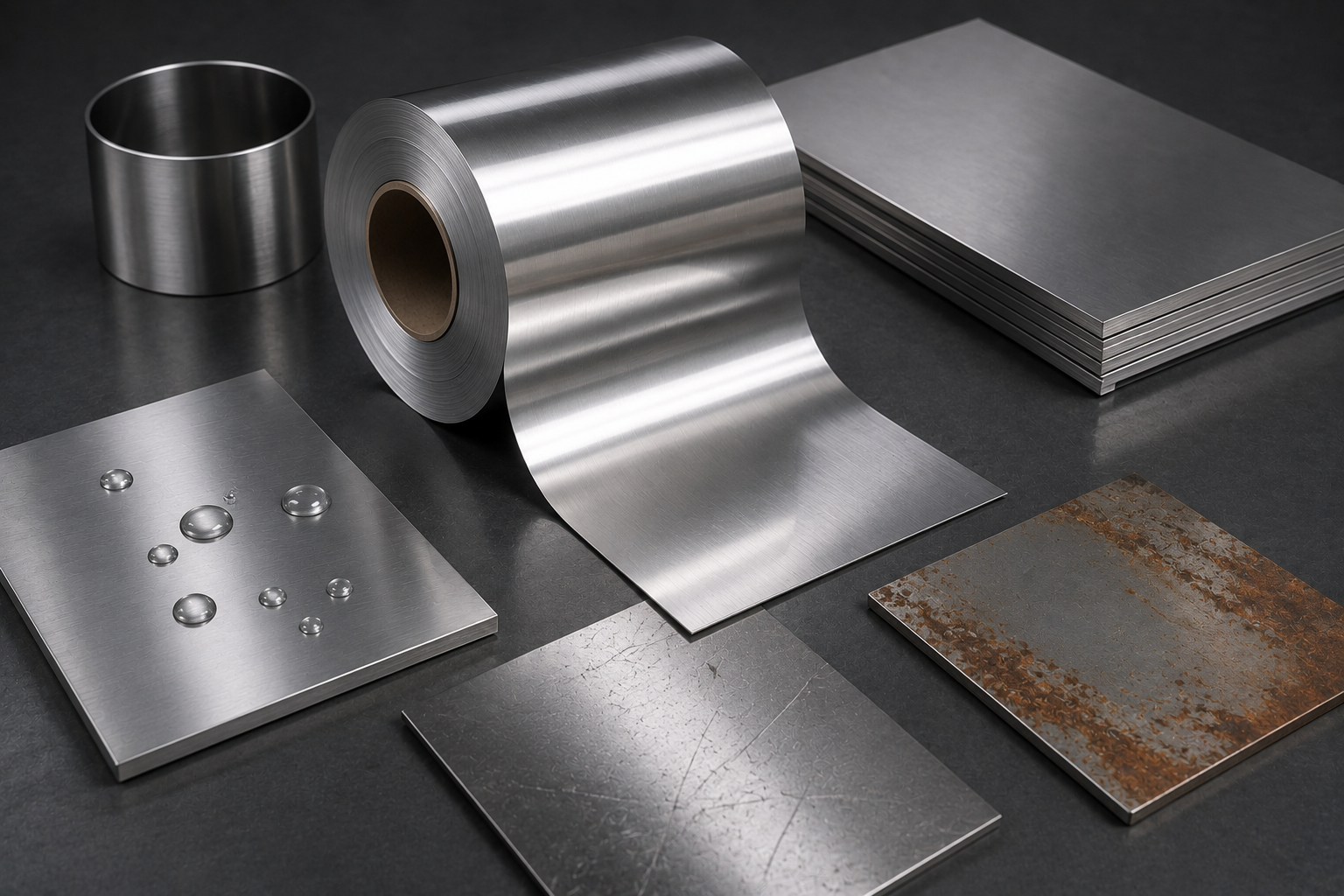
304 stainless steel foil is one of the most widely used grades in the stainless steel family. It contains approximately 18% chromium and 8% nickel, which provide a balanced combination of strength, durability, and corrosion resistance. Because of its affordability and versatility, 304 foil is often the first choice for industries requiring thin, flexible stainless steel sheets.
Its properties make it suitable for applications such as food processing equipment, automotive components, and general industrial use. The material offers good resistance to oxidation and corrosion in mild environments, and it can withstand moderate heat without losing structural integrity. Additionally, 304 stainless steel foil is easy to fabricate, weld, and form, which adds to its popularity in manufacturing.
However, the limitations of 304 stainless steel foil become evident in harsh environments. When exposed to chloride-rich conditions such as saltwater or acidic chemicals, 304 is prone to pitting and crevice corrosion. Over time, this reduces its lifespan and reliability. For industries like marine engineering or chemical processing, this weakness can lead to costly maintenance and replacements.
In short, while 304 stainless steel foil is excellent for general applications, it is not the best option for environments where corrosion resistance is critical. For those demanding conditions, 316L stainless steel foil offers superior performance. For more details, see the complete guide for 304 stainless steel foil.
316L Stainless Steel Foil: The Superior Choice
316L stainless steel foil is widely regarded as the premium option when performance in harsh environments is essential. Its composition includes 16–18% chromium, 10–14% nickel, and 2–3% molybdenum, with the “L” denoting low carbon content. This unique blend provides exceptional resistance to chloride-induced corrosion, making 316L particularly effective in marine, chemical, and industrial applications where 304 stainless steel often fails.
The addition of molybdenum is the critical advantage. It enhances protection against pitting and crevice corrosion, which are common problems in saltwater or acidic conditions. The low carbon content further improves weldability, preventing carbide precipitation and ensuring stronger, longer-lasting joints. This makes 316L stainless steel foil not only durable but also reliable in high-temperature and high-pressure environments.
Industries such as offshore engineering, medical device manufacturing, and electronics shielding rely on 316L foil for its superior performance. While it is more expensive than 304, the extended lifespan and reduced maintenance costs make it a cost-effective solution in the long run. Learn more in this detailed comparison of 316 vs 316L stainless steel foil.
Why 316L Outperforms 304 in Harsh Environments
Corrosion Resistance
316L resists pitting corrosion in chloride-rich environments, making it ideal for marine and chemical industries. Studies show that 316L lasts 2–3 times longer than 304 in saltwater exposure.
Heat Resistance
316L maintains strength and corrosion resistance at higher temperatures, whereas 304 may degrade faster.
Weldability
The low carbon content in 316L prevents carbide precipitation, ensuring stronger welds and longer service life.
Longevity
In harsh environments, 316L stainless steel foil can extend equipment lifespan by up to 50% compared to 304.
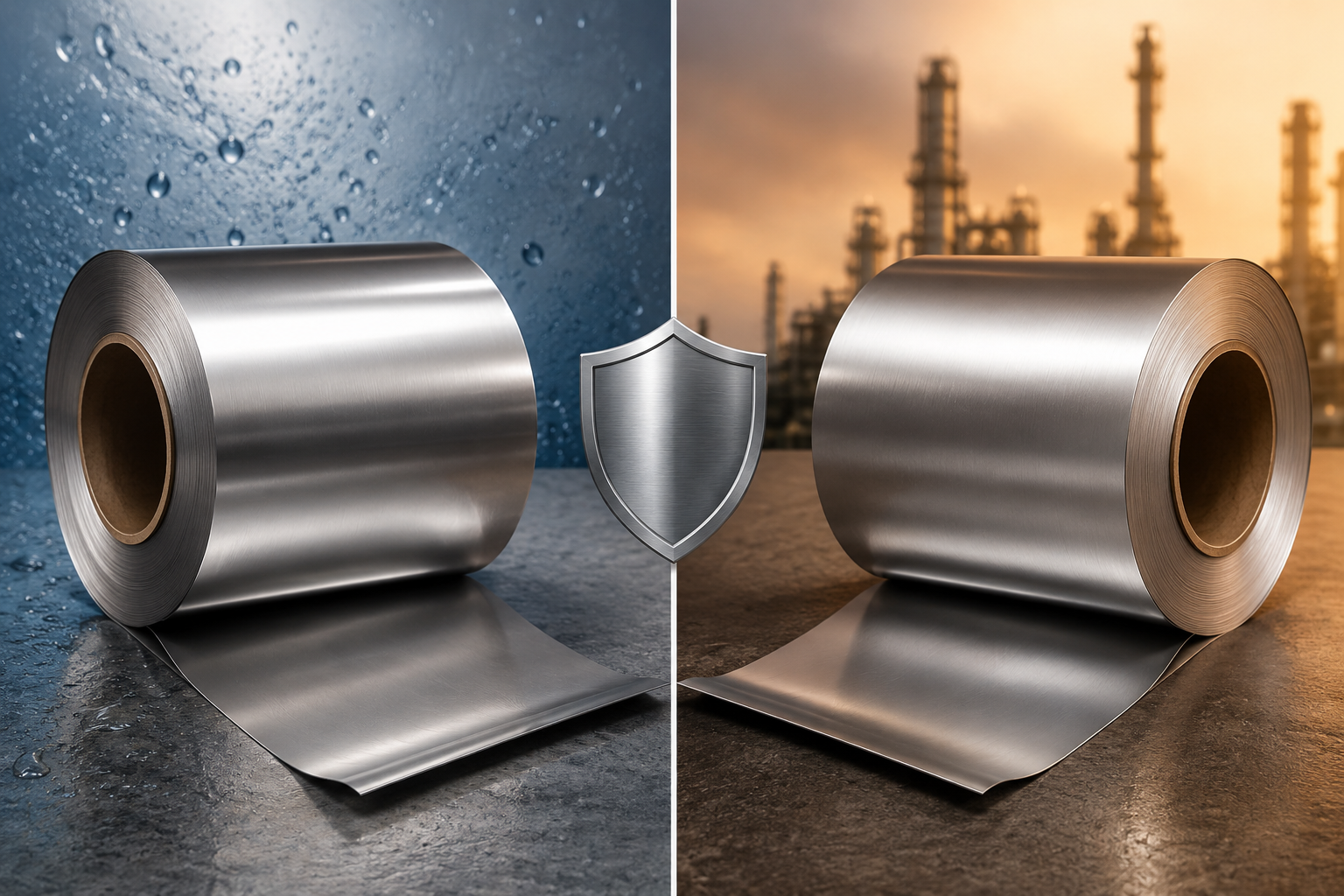
Comparative Table: 304 vs 316L Stainless Steel Foil
| Property | 304 Stainless Steel Foil | 316L Stainless Steel Foil |
|---|---|---|
| Chromium Content | 18% | 16–18% |
| Nickel Content | 8% | 10–14% |
| Molybdenum | None | 2–3% |
| Corrosion Resistance | Good in mild environments | Excellent in harsh environments |
| Weldability | Prone to carbide precipitation | Superior due to low carbon |
| Cost | Lower | Higher but cost-effective long term |
Industrial Applications of 316L Stainless Steel Foil
316L stainless steel foil is widely used in industries that demand durability and resistance to harsh environments. In the marine sector, it is applied in shipbuilding, offshore platforms, and desalination equipment where saltwater exposure is constant. The chemical processing industry relies on 316L foil for tanks, piping, and reactors that handle corrosive substances. In medical applications, its biocompatibility makes it ideal for surgical instruments and implants.
Aerospace and electronics industries also benefit, using 316L foil for shielding, precision components, and high-performance systems. Its superior corrosion resistance and longevity make it indispensable across these critical fields. For more examples, see the stainless steel foil products available for industrial use.
Stainless Steel Foil vs Aluminum: Key Differences
While aluminum foil is lightweight and inexpensive, it lacks the strength and corrosion resistance of stainless steel. In harsh environments, aluminum corrodes quickly, whereas 316L stainless steel foil remains intact.
Explore the 7 key differences between stainless steel and aluminum for a deeper comparison.
Summary
Selecting the right Stainless Steel Foil for Harsh environments can significantly improve equipment performance, reliability, and service life. While 304 stainless steel foil is an excellent choice for general-purpose and indoor applications, it is more susceptible to corrosion when exposed to chlorides, saltwater, and aggressive chemicals. In contrast, 316L stainless steel foil provides superior corrosion resistance, excellent weldability, and enhanced durability thanks to its molybdenum content and low carbon composition. Although it comes at a slightly higher initial cost, 316L offers greater long-term value by reducing maintenance, minimizing downtime, and extending the lifespan of critical components.
For demanding industries such as marine, chemical processing, food manufacturing, and medical equipment, 316L remains the most reliable stainless steel foil solution. For more resources, visit the Stainless Steel Foil blog or contact the experts directly via Contact Us.
FAQs
Q: Why is 316L stainless steel foil better for harsh environments?
A: 316L stainless steel foil for harsh environments offers superior corrosion resistance due to its molybdenum content, making it ideal for marine and chemical industries.
Q: Can 304 stainless steel foil be used in saltwater applications?
A: While 304 stainless steel foil can be used, it is prone to pitting corrosion in saltwater. For harsh environments, 316L is the recommended choice.
Q: What industries benefit most from 316L stainless steel foil?
A: Industries such as marine, chemical processing, and medical devices rely on 316L stainless steel foil for harsh environments due to its durability and longevity.
Q: Is 316L stainless steel foil more expensive than 304?
A: Yes, but the longer lifespan and reduced maintenance costs make 316L stainless steel foil for harsh environments more cost-effective in the long run.
Q: How does 316L stainless steel foil compare to aluminum foil?
A: Unlike aluminum, 316L stainless steel foil for harsh environments resists corrosion and maintains strength, making it the superior choice for industrial applications.